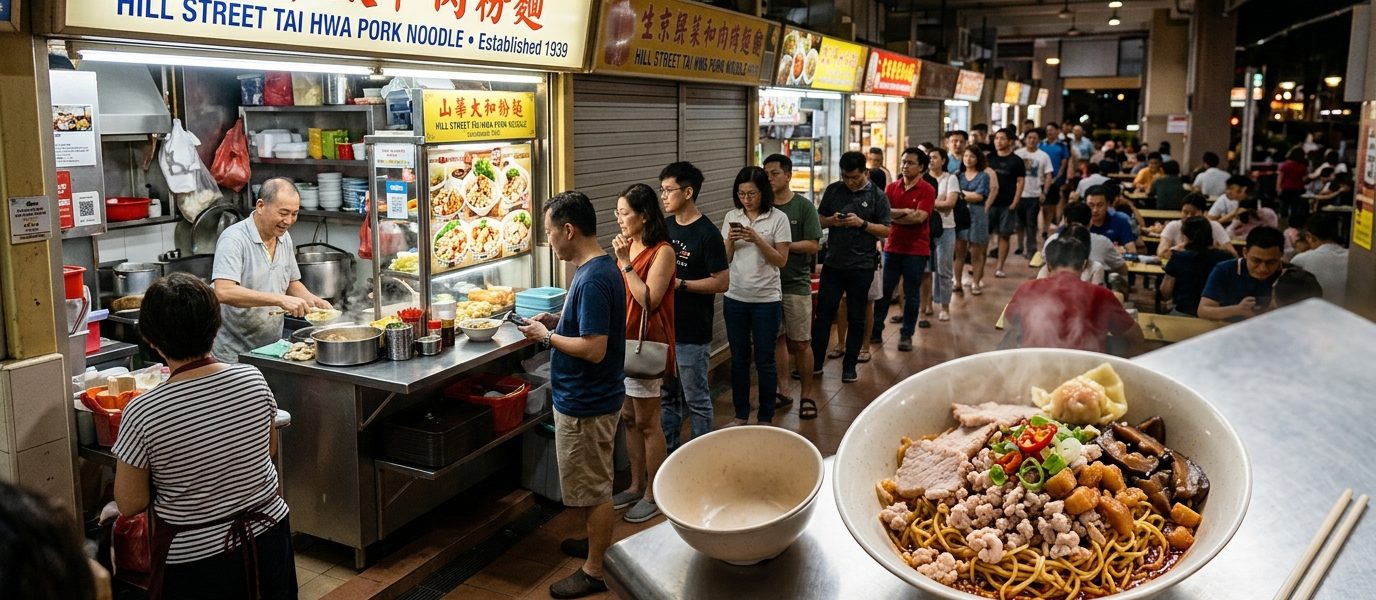
Standing in line for nearly an hour to eat a bowl of noodles might sound absurd. But when that bowl is bak chor mee from one of Singapore’s legendary stalls, the wait transforms into a ritual. The aroma of vinegar-spiked sauce, the sight of hand-minced pork sizzling in a wok, and the knowledge that you’re about to taste something crafted with decades of expertise make every minute feel justified.
The best bak chor mee Singapore offers combines springy mee pok noodles, hand-minced pork with visible fat marbling, a perfectly balanced vinegar-based sauce, and toppings like mushrooms, liver, and meatballs. Top stalls use traditional preparation methods, source quality ingredients daily, and maintain consistent noodle texture. Knowing what separates exceptional bowls from mediocre ones helps you decide which queues deserve your time.
What Makes Bak Chor Mee Worth the Journey
Bak chor mee isn’t just minced pork noodles. It represents a specific style of Teochew cooking that arrived in Singapore through generations of immigrant families. The dish balances five distinct flavour profiles in one bowl: salty from soy sauce, sour from black vinegar, sweet from ketchup, umami from pork, and heat from chilli.
The noodles matter more than most people realise. Authentic stalls use mee pok, flat egg noodles with a distinctive springy bite. When cooked properly, they should bounce back slightly when you bite down. Overcooked noodles turn mushy and can’t hold the sauce properly.
The minced pork tells you everything about a stall’s commitment. Hand-minced pork has visible texture and fat marbling. Machine-minced versions look uniform and paste-like. The fat content creates that addictive mouthfeel and carries flavour throughout the dish.
Sauce composition separates great stalls from forgettable ones. The base combines black vinegar, light soy sauce, lard, and a touch of ketchup. Some stalls add their own secret ingredients passed down through family recipes. The ratio changes everything. Too much vinegar makes your mouth pucker. Too little leaves the dish flat.
Spotting Quality Before You Order
Walk past the stall and observe the preparation area. Quality indicators appear in plain sight if you know where to look.
Check the minced pork station. You should see chunks of pork being hand-minced or chopped. The meat should have visible white fat streaks running through pink meat. If everything looks uniformly pink and smooth, they’re using pre-ground meat.
Watch how they handle noodles. Experienced hawkers blanch noodles for exactly the right duration. They shake the strainer vigorously to remove excess water. Wet noodles dilute the sauce and ruin the texture. The best stalls have a rhythm to their movements that comes from making thousands of bowls.
Look at the toppings station. Fresh ingredients sit in organised containers. Mushrooms should look plump and dark. Liver slices should be deep red, not brown. Meatballs should be handmade, slightly irregular in shape. Factory-made ones look perfectly round.
A veteran bak chor mee hawker once told me: “The sauce must coat every strand of noodle, but the bottom of the bowl should stay almost dry. That’s when you know the ratio is perfect.”
The Core Elements That Define Excellence
Noodle Selection and Preparation
Mee poh remains the traditional choice, but some stalls offer mee kia as an alternative. Mee kia noodles are thinner and rounder. They absorb sauce differently and create a distinct eating experience.
The blanching process requires precise timing. Noodles hit boiling water for 30 to 45 seconds maximum. Any longer and they lose that essential springiness. The hawker must judge doneness by texture, not a timer.
Temperature matters more than people think. Noodles go straight from boiling water into the bowl. The heat helps the sauce penetrate and creates that signature aroma when vinegar hits hot noodles.
Pork Components and Quality Markers
The best stalls use three types of pork in one bowl. Minced pork provides the base. Sliced pork adds texture variation. Pork liver brings iron-rich depth.
Hand-minced pork should have a coarse texture. You should see individual meat fibres, not a smooth paste. The fat content should be around 20 to 30 percent. This creates moisture and prevents the meat from drying out.
Sliced pork requires careful cooking. Thin slices cook in seconds. Overcooked slices turn tough and chewy. The best versions remain tender with a slight pink centre.
Liver preparation separates confident hawkers from uncertain ones. Properly cooked liver stays soft and slightly creamy inside. Overcooked liver becomes grainy and bitter. Many stalls skip liver entirely because it’s difficult to execute consistently.
Sauce Architecture
The sauce base starts with rendered pork lard. This creates the foundation for everything else. Some stalls use lard with crispy pork cracklings still floating in it.
Black vinegar provides the signature tang. Different brands create different flavour profiles. Some hawkers blend multiple vinegar types to achieve their preferred acidity level.
Light soy sauce adds saltiness and umami. Dark soy sauce appears in some recipes for colour and a hint of molasses sweetness.
Ketchup might seem out of place, but it serves a purpose. A small amount adds subtle sweetness and helps bind the other elements. Too much makes the dish taste like spaghetti.
Chilli paste or sambal sits on the side. Every stall makes their own version. Some lean spicy, others emphasise garlic or shrimp paste funk.
How to Order Like Someone Who Knows
Ordering bak chor mee involves more decisions than you might expect. Each choice changes your experience.
Dry Versus Soup
Dry versions come with sauce mixed through the noodles. A small bowl of soup sits on the side. This style lets you taste the sauce composition clearly.
Soup versions submerge everything in broth. The broth should be clear and pork-bone based. This style feels more comforting but dilutes the sauce intensity.
Most regulars order dry. It showcases the hawker’s sauce-making skills and creates more concentrated flavours.
Noodle Type
Mee pok offers that classic flat, slippery texture. It holds sauce well and has substantial bite.
Mee kia provides a different experience. The thinner strands cook faster and feel lighter. Some people find them easier to eat.
You can request a mix of both at some stalls. This gives you texture variation in one bowl.
Spice Level
Always start with less chilli than you think you need. You can add more, but you can’t remove it. The chilli interacts with the vinegar and can overwhelm the other flavours if you’re not careful.
Some stalls offer different chilli types. Fresh chilli paste tastes brighter and more vegetable-forward. Dried chilli oil brings deeper, toasted flavours.
Add-Ons and Extras
Standard toppings include minced pork, sliced pork, liver, mushrooms, and meatballs. You can request extra portions of specific items.
Liver costs extra at most stalls and not everyone enjoys the texture. If you’ve never tried it, order a small portion first.
Meatballs vary wildly between stalls. Handmade versions have irregular shapes and visible meat texture. Factory versions taste generic.
Some stalls offer fishballs, fish cake, or dumplings. These aren’t traditional but have become accepted variations.
Common Mistakes That Ruin the Experience
| Mistake | Why It Matters | Better Approach |
|---|---|---|
| Mixing everything immediately | The sauce needs a moment to settle into the noodles | Let it sit for 30 seconds before mixing |
| Adding too much chilli first | Overwhelms the vinegar balance | Start with one spoonful, taste, then adjust |
| Ordering soup version first time | Hides the sauce craftsmanship | Try dry version first to understand the stall’s style |
| Skipping the soup on the side | Cleanses palate between bites | Sip soup between mouthfuls to reset your taste buds |
| Eating too slowly | Noodles absorb sauce and turn soggy | Eat within 10 minutes of receiving your bowl |
| Ignoring the vinegar bottle | Some stalls undersauce intentionally | Add extra vinegar if the noodles taste flat |
Regional Variations Across Singapore
Different neighbourhoods have developed their own bak chor mee styles. These variations reflect the communities that settled in each area.
Chinatown stalls tend toward traditional Teochew preparations. The sauce leans more vinegar-forward. Portions stay modest. The focus remains on balance rather than abundance.
Geylang versions often include more generous portions. The sauce might be slightly sweeter. Some stalls add extra lard for richness.
Bedok and eastern neighbourhoods favour heartier bowls. You’ll find more toppings and larger noodle portions. The style feels more filling and less refined.
Central area stalls cater to office crowds. Service moves faster. Portions are calibrated for lunch breaks. The flavours might be slightly muted to appeal to broader tastes.
You can see how different hawker centres attract distinct crowds by checking out hidden neighbourhood gems where locals prefer to eat.
What Separates Michelin-Level Bowls from Good Ones
Michelin recognition changed the bak chor mee landscape. One particular stall’s journey to Michelin status demonstrates what inspectors look for.
Consistency matters more than occasional brilliance. Top stalls produce nearly identical bowls regardless of when you visit. The noodle texture, sauce ratio, and pork quality remain stable.
Ingredient sourcing sets elite stalls apart. They source pork from specific suppliers. They might use heritage breed pork or specific cuts that cost more. The mushrooms come from particular importers known for quality.
Technique refinement happens over decades. The way a hawker tosses noodles, the exact moment they add sauce, the temperature they maintain in their wok – these details compound into noticeably better results.
Attention to components most people ignore makes a difference. The soup on the side shouldn’t be an afterthought. It should be a proper pork bone broth that took hours to make. The pickled green chilli should be house-made, not from a jar.
How to Plan Your Bak Chor Mee Expedition
Timing your visit can mean the difference between a 15-minute wait and a 90-minute ordeal.
Best Times to Visit Popular Stalls
- Arrive 30 minutes before opening time if you’re targeting famous stalls
- Visit between 10:30am and 11:15am to avoid lunch rush
- Try late afternoon around 3pm when most crowds have dispersed
- Avoid weekends entirely at Michelin-starred or celebrity hawker stalls
- Check if the stall has off-peak hours on weekdays
What to Bring
Bring exact change. Many stalls don’t accept large notes. Some older hawkers prefer cash over digital payments.
Carry tissue packets. Not all hawker centres keep tables stocked. You’ll want something to wipe your hands and mouth.
Bring a companion who can chope seats while you queue. Popular stalls run out of seating during peak hours.
Managing Expectations
The best bowl you’ll ever taste might not be at the most famous stall. Personal preference plays a huge role. Some people prefer more vinegar, others want less. Some love liver, others can’t stand it.
Try at least three different stalls before deciding on your favourite. Each one represents a different interpretation of the dish.
Don’t let queue length determine quality. Some excellent stalls remain relatively unknown because they’re located in less trafficked hawker centres.
Comparing Bak Chor Mee to Other Noodle Dishes
Understanding how bak chor mee differs from similar dishes helps you appreciate its unique characteristics.
Mee pok differs from bak chor mee mainly in toppings. Mee pok traditionally comes with fishballs and fish cake. Bak chor mee centres on pork components.
Fishball noodles use similar noodles but completely different toppings and soup. The flavour profile skews toward seafood sweetness rather than vinegar tang.
Ban mian offers a comparison point for hand-made noodles. But the wheat-based dough and soup-focused presentation create an entirely different experience.
Knowing how to evaluate other hawker classics helps you develop a more sophisticated palate. The skills you use to spot quality char kway teow transfer to assessing bak chor mee.
The Cultural Context Behind Your Bowl
Bak chor mee represents more than just food. It embodies the Teochew community’s contribution to Singapore’s culinary landscape.
The dish evolved from street food sold by pushcart vendors. Hawkers would set up at busy corners and serve workers who needed filling, affordable meals. The vinegar-heavy sauce helped mask the taste of lower-quality meat when refrigeration was unreliable.
As Singapore developed, bak chor mee moved from streets into permanent hawker centres. The dish became more refined. Ingredients improved. But the core formula remained intact.
Many famous stalls trace their recipes back three or four generations. The current hawker learned from their parent, who learned from their parent. Each generation makes tiny adjustments while preserving the fundamental approach.
This generational knowledge transfer faces challenges now. Many young Singaporeans don’t want to wake at 4am to prep ingredients and work over a hot stove all day. Some of these traditional hawker trades risk disappearing without successors.
Building Your Personal Bak Chor Mee Map
Creating your own ranking of stalls makes every bowl more meaningful. You develop preferences and can articulate why you like specific versions.
Start a simple notes file on your phone. After each bowl, record:
- Stall name and location
- Date and time of visit
- Queue duration
- Noodle texture rating out of 10
- Sauce balance rating out of 10
- Pork quality rating out of 10
- Overall impression
- Price
- Would you return (yes/no)
After trying 10 stalls, patterns emerge. You’ll notice which elements matter most to your personal taste. Maybe you prioritise springy noodles over everything else. Maybe sauce balance matters more than pork quality. These insights help you choose where to spend your time.
Compare your ratings with friends. Everyone’s palate differs. What tastes perfect to you might taste too vinegary to someone else. These discussions deepen your appreciation for the dish’s complexity.
Consider exploring different hawker centres as part of your research. Places like Tiong Bahru Market offer multiple quality options in one location.
When the Queue Isn’t Worth It
Not every famous stall lives up to its reputation. Some rely on past glory while quality has declined. Others got famous through social media hype rather than actual excellence.
Red flags that suggest you should skip the queue:
- The hawker looks disengaged or rushed through orders
- Ingredients sit uncovered in the tropical heat
- Previous customers leave half-finished bowls
- The stall has multiple helpers doing all the cooking while the “master” just collects money
- Online reviews from the past six months show declining quality
- The queue moves suspiciously fast (suggests they’re cutting corners)
Trust your instincts. If something feels off, try a different stall. Singapore has dozens of excellent bak chor mee options. You don’t need to force yourself through a disappointing experience just because a stall is famous.
Sometimes the best discoveries happen when you wander into neighbourhood hawker centres locals actually use rather than following tourist guides.
Recognising When You’ve Found Your Stall
You’ll know you’ve found your ideal bak chor mee when several things align.
The flavour balance matches your personal preference. The vinegar level tastes right. The saltiness sits where you want it. The chilli heat feels appropriate.
The texture satisfies you. The noodles have the exact springiness you enjoy. The pork components are cooked the way you prefer.
The portion size matches your appetite. Some stalls serve generous bowls that fill you completely. Others offer smaller portions that leave room for other dishes.
The location works for you. Maybe it’s near your home or office. Maybe it’s in a hawker centre you enjoy visiting. Convenience matters when you want to return regularly.
The price feels fair for what you receive. You don’t mind paying a bit more for quality, but you also don’t want to feel exploited.
The waiting time stays reasonable. Even if the food is excellent, if you need to wait 90 minutes every visit, you’ll eventually stop going.
Making the Most of Every Bowl
Once your bowl arrives, a few techniques enhance the experience.
Mix the noodles thoroughly but gently. You want every strand coated with sauce, but you don’t want to break them apart. Use your chopsticks to lift and fold rather than stirring aggressively.
Taste before adding extra chilli or vinegar. Give the hawker’s intended flavour profile a chance. You can always adjust, but you can’t undo over-seasoning.
Alternate between noodles and soup. The soup cleanses your palate and prevents flavour fatigue. Each bite of noodles tastes fresh when you reset between mouthfuls.
Pay attention to how the flavours evolve. The first bite tastes different from the middle of the bowl, which differs from the last few strands. The noodles absorb more sauce as you eat. The temperature drops slightly. These changes reveal different aspects of the dish.
Finish within 10 minutes if possible. Noodles continue absorbing sauce and lose their ideal texture. The dish tastes best when everything is still hot and the textures remain distinct.
Why This Dish Deserves Your Attention
Bak chor mee represents Singapore’s hawker culture at its finest. The dish requires skill, quality ingredients, and years of practice to execute properly. It can’t be rushed or faked.
When you find the best bak chor mee Singapore offers, you’re tasting the culmination of generational knowledge. You’re supporting a craft that might not survive another generation. You’re participating in a food culture that UNESCO recognised as intangible cultural heritage.
The 45-minute queue stops feeling like a burden when you understand what you’re waiting for. You’re not just getting lunch. You’re getting a bowl of noodles made by someone who has dedicated their life to perfecting this one dish.
Start with one highly-rated stall to calibrate your expectations. Then branch out to lesser-known options. Compare styles. Develop your own opinions. Build your personal map of the best bowls across the island. Each bowl teaches you something new about what makes this dish special.