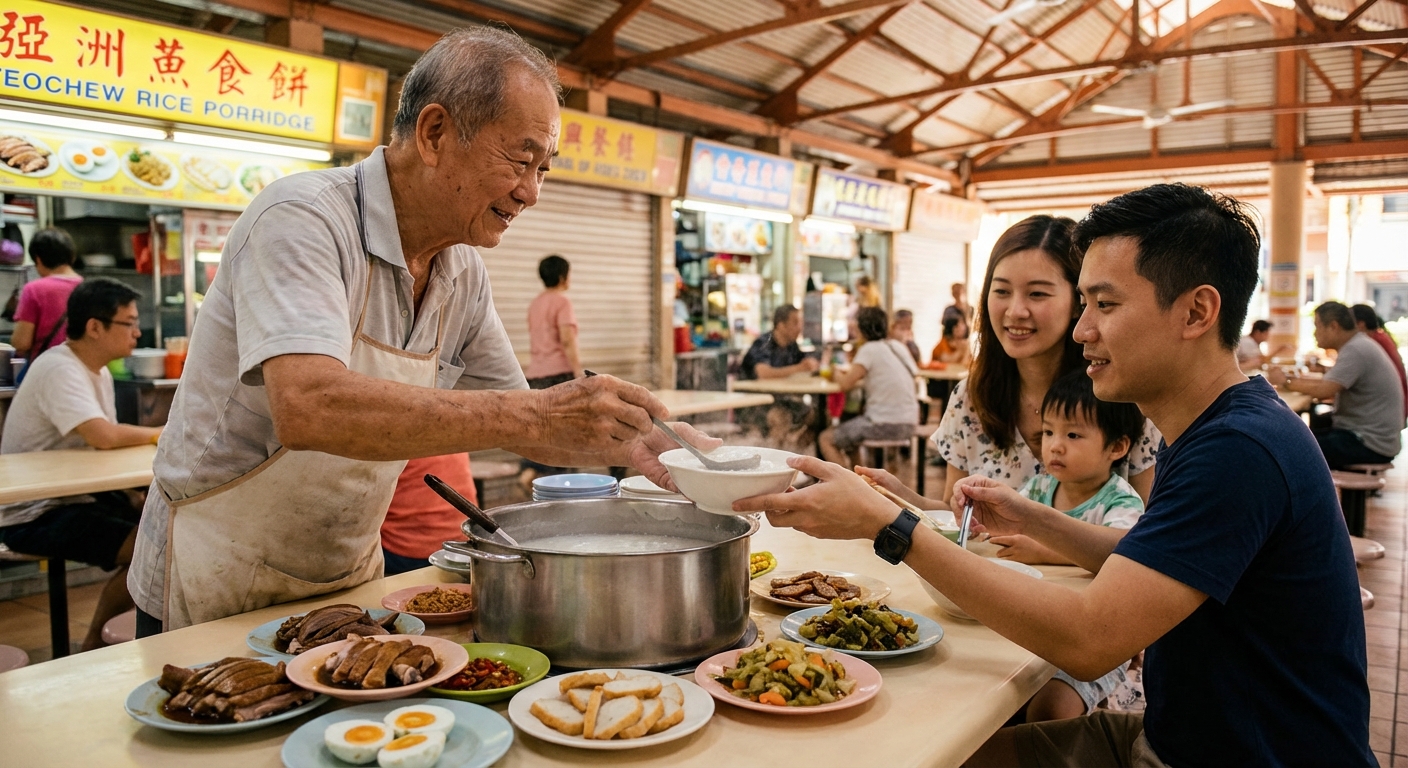
Walk into any traditional hawker centre before 9am and you’ll see them. The porridge uncles and aunties, ladling watery rice into bowls, arranging small plates of salted vegetables, steamed fish, and braised peanuts with meticulous care. This is teochew porridge singapore at its most authentic, a breakfast ritual that’s survived war, redevelopment, and the rise of air-conditioned food courts.
Teochew porridge is more than breakfast. It’s a cultural practice brought by immigrants from Chaoshan, built on simplicity, fresh ingredients, and the art of pairing watery rice with salty, savoury dishes. Today’s stalls honour century-old recipes while adapting to modern tastes, preserving a tradition that defines Singapore’s morning food landscape and connects generations through shared bowls and familiar flavours.
What Makes Teochew Porridge Different from Other Rice Dishes
Teochew porridge isn’t congee.
The rice grains stay separate, suspended in hot water rather than broken down into a thick paste. This texture is intentional. It allows each grain to absorb the flavours of the accompanying dishes without becoming heavy or stodgy.
The meal centres on balance. You eat plain, watery rice alongside intensely flavoured side dishes. Salted vegetables. Braised duck. Steamed pomfret. Fried whitebait. Each mouthful alternates between bland and bold, creating a rhythm that’s both comforting and stimulating.
This style originated in Chaoshan, a coastal region in Guangdong province. Teochew immigrants brought it to Singapore in the late 19th and early 20th centuries, setting up roadside stalls that served workers heading to the docks, markets, and construction sites.
The format was practical. Rice stretched further when cooked with extra water. Side dishes could be prepared in advance and kept at room temperature. Customers ate standing or squatting, paid a few cents, and moved on.
That efficiency still defines the experience today, even as stalls have moved indoors and prices have climbed.
How Traditional Teochew Porridge Stalls Operate Each Morning
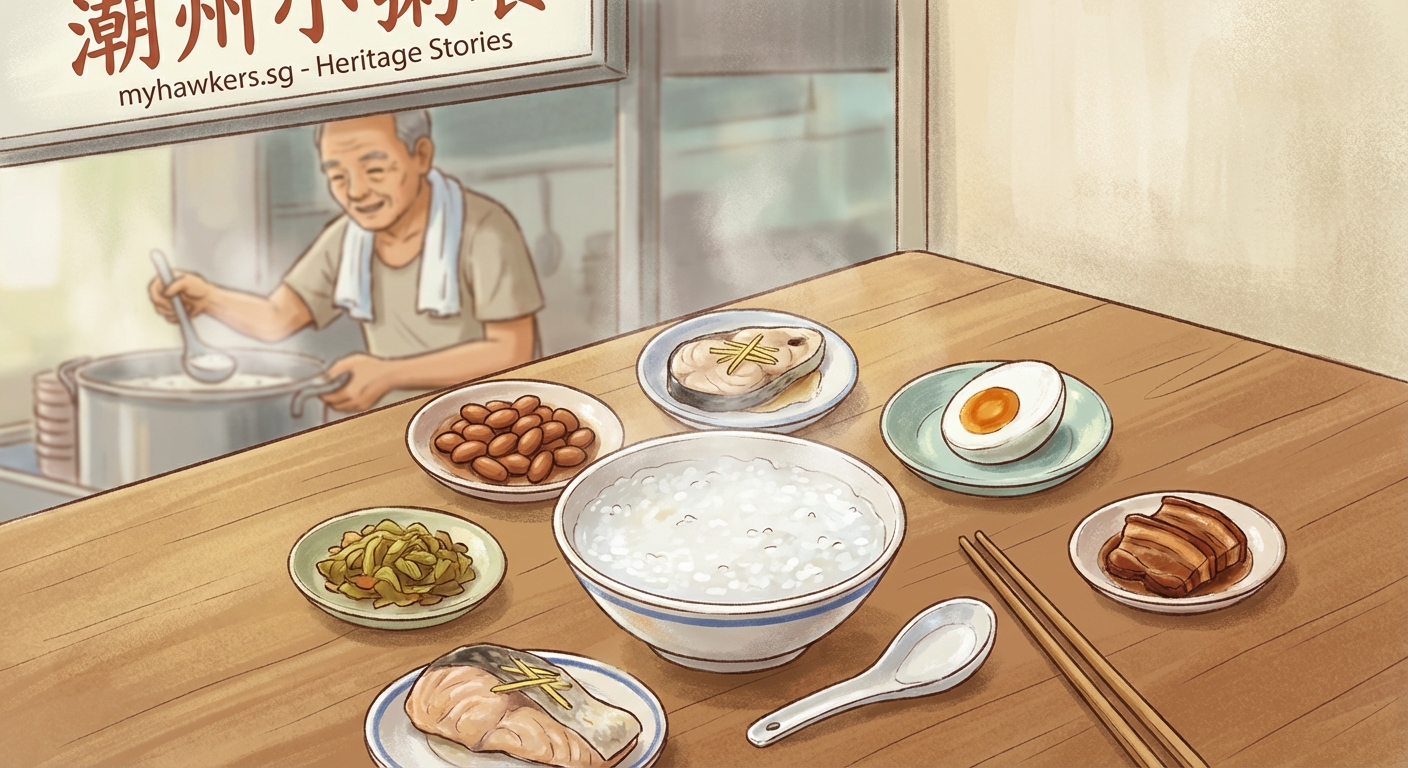
The day starts before sunrise.
- Wet market shopping happens between 5am and 6am. Stall owners select fresh fish, vegetables, and proteins based on what looks good that morning.
- Prep work begins immediately after. Fish gets steamed. Vegetables get blanched or stir-fried. Braised items like peanuts, tau kway, and duck simmer in soy-based sauces.
- Rice cooking starts around 7am. The ratio is roughly 1 part rice to 6 parts water, cooked until the grains are soft but intact.
- Service runs from 7.30am or 8am until the food runs out, often by early afternoon.
This schedule demands physical stamina. Many hawkers are in their 60s or 70s, waking before dawn six days a week. Their children often choose other careers, creating succession challenges that threaten the tradition.
Yet some younger operators are stepping in. They’re learning recipes from their parents, modernising operations where possible, and finding ways to keep the stalls viable without compromising quality.
The Side Dishes That Define a Proper Teochew Breakfast
A good teochew porridge stall offers at least a dozen side dishes. Here’s what you’ll typically find.
| Dish | Preparation | Flavour Profile |
|---|---|---|
| Salted vegetables (kiam chai) | Pickled mustard greens | Sour, salty, crunchy |
| Braised peanuts | Simmered in soy sauce and spices | Sweet, savoury, soft |
| Steamed fish | Usually pomfret or threadfin | Delicate, fresh, lightly salted |
| Braised duck | Slow-cooked in dark soy and star anise | Rich, aromatic, tender |
| Fried whitebait (ikan bilis) | Crispy small fish | Salty, umami, crunchy |
| Preserved radish omelette (chai poh neng) | Eggs fried with diced radish | Savoury, slightly sweet |
| Tau kway (fried beancurd) | Braised in soy sauce | Soft, absorbent, savoury |
| Stir-fried vegetables | Usually kailan or cabbage | Light, garlicky, fresh |
You select three to five dishes, depending on appetite and budget. The stall owner plates them individually, then brings a bowl of hot porridge to your table.
The rice acts as a palate cleanser. You take a spoonful, then a bite of fish or vegetables, then more rice. The rhythm is meditative, almost ritualistic.
Common Mistakes First-Timers Make When Ordering
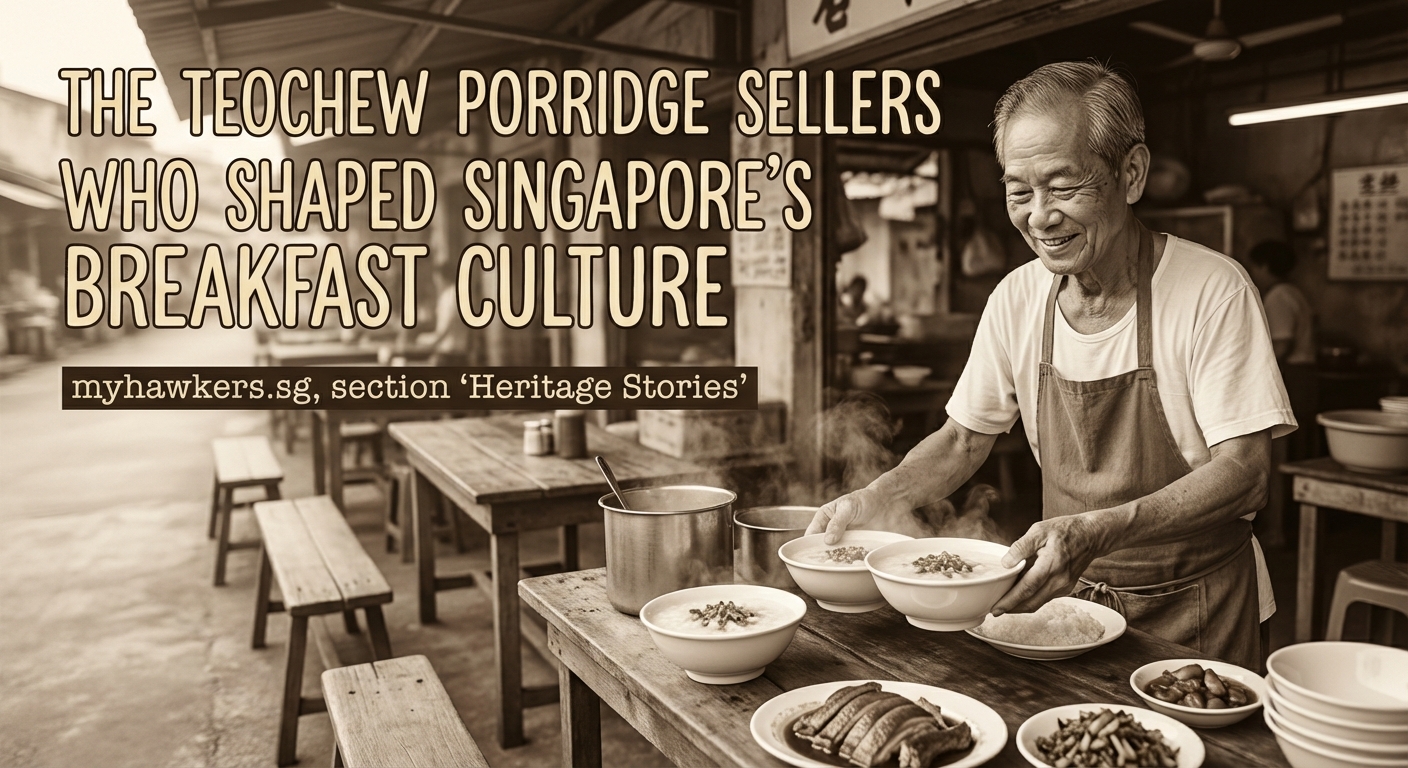
Teochew porridge has unwritten rules. Break them and you’ll still eat well, but you’ll miss the full experience.
Mistake 1: Ordering too many dishes
Three to five is ideal. More than that and the flavours blur together. You also risk wasting food, which goes against the frugal spirit of the meal.
Mistake 2: Expecting thick congee
If you want creamy, broken-down rice, order Cantonese congee instead. Teochew porridge is deliberately watery. That’s the point.
Mistake 3: Skipping the vegetables
The salted vegetables and greens provide acidity and crunch that balance the richer braised items. Without them, the meal feels one-dimensional.
Mistake 4: Arriving too late
Most stalls run out of popular dishes by noon or 1pm. If you want steamed fish or braised duck, arrive before 10am.
Mistake 5: Eating too fast
This isn’t a meal you rush. Take your time. Let the rice cool slightly. Savour each dish separately before mixing flavours.
“Teochew porridge is about restraint. You don’t pile everything onto one plate. You eat slowly, you taste each thing properly, and you finish feeling satisfied but not stuffed. That’s the beauty of it.” — Third-generation hawker at a Tiong Bahru stall
Where to Find Authentic Teochew Porridge in Singapore Today
The best stalls are scattered across the island, often in older neighbourhoods where the breakfast crowd still values tradition over convenience.
Farrer Park and Jalan Besar have several long-standing stalls. These areas were historically Teochew enclaves, and the food reflects that heritage. You’ll find stalls that have operated for 60, 70, even 90 years, passed down through three or four generations.
Tiong Bahru Market also hosts a few excellent operators. The market itself is a heritage site, and the tiong bahru market hawker centre attracts both locals and tourists who appreciate its blend of old and new.
Hong Lim Market and Food Centre in Chinatown is another reliable spot. One stall there has been serving since before World War II, maintaining recipes that predate modern refrigeration and standardised ingredients.
For those who prefer air-conditioned comfort, a few newer hawker centres have teochew porridge stalls, though purists argue the atmosphere matters as much as the food.
If you’re planning a morning food hunt, teochew porridge should be high on your list. It’s a breakfast that rewards early risers and patient eaters.
Why This Breakfast Tradition Struggles to Find Successors
The economics are tough.
A plate of teochew porridge with three side dishes costs between $4 and $6. Stall owners work 10 to 12 hours a day, six days a week, and their profit margins are thin. Fresh fish and quality ingredients aren’t cheap, and customers expect prices to stay low.
The physical demands are even tougher. Wet market runs before dawn. Hours of standing. Heavy pots and woks. No air-conditioning. Most hawkers develop back problems, knee pain, and chronic fatigue by their 50s.
Younger Singaporeans see these conditions and choose other paths. Office jobs offer better pay, shorter hours, and weekends off. Even those who grow up eating their parents’ cooking often prefer to preserve the memory rather than take over the business.
Yet some are bucking the trend. A 27-year-old in Jalan Besar recently took over his father’s stall, giving up a mookata business to preserve the family recipe. A 30-something couple in Bedok learned the trade from an uncle, modernising the prep process while keeping the flavours intact.
These stories are rare, but they’re not impossible. The key is adapting without compromising. Streamlining operations. Using better equipment. Building a brand that attracts younger customers who value authenticity and heritage.
How Teochew Porridge Compares to Other Hawker Breakfast Staples
Singapore’s morning food scene is crowded. You have kaya toast and soft-boiled eggs. Nasi lemak. Chwee kueh. Lor mee. Carrot cake. Each has its loyal following.
Teochew porridge sits in a different category. It’s quieter. Less flashy. It doesn’t photograph as well as a towering plate of char kway teow or a bowl of bak chor mee.
But it offers something those dishes don’t: flexibility. You choose your own combination of flavours and textures. You control the pace of the meal. You can eat light or heavy, depending on your appetite.
It’s also one of the few hawker breakfasts that feels genuinely healthy. The rice is plain. The vegetables are fresh. The fish is steamed, not fried. Even the braised items are relatively lean compared to the oil-heavy noodles and fried snacks that dominate other stalls.
For older Singaporeans, it’s a taste of childhood. For tourists, it’s a window into a quieter, slower version of local food culture. For hawkers, it’s a livelihood that connects them to their ancestors and their community.
What the Future Holds for Teochew Porridge Sellers
The next decade will be critical.
Many of the oldest stalls are run by hawkers in their 70s and 80s. When they retire, their recipes and techniques may disappear unless someone steps in to learn and carry on.
Some stalls are already gone. Redevelopment has claimed entire hawker centres. Rent increases have forced closures. Health issues have ended careers abruptly, with no one trained to take over.
But there’s also reason for hope.
Heritage documentation projects are recording recipes and stories before they’re lost. Food writers and bloggers are shining a spotlight on underrated hawker centres and the people who run them. Younger hawkers are finding creative ways to make the business sustainable without sacrificing quality.
Tourism also plays a role. Visitors who want authentic local experiences are drawn to places like Maxwell Food Centre, where traditional stalls sit alongside modern favourites. This foot traffic helps keep older operators viable and introduces the cuisine to new audiences.
The challenge is balancing preservation with evolution. Teochew porridge can’t stay frozen in time, but it also can’t become unrecognisable. The stalls that succeed will be those that honour the fundamentals while adapting to changing tastes, expectations, and economics.
Lessons from a Bowl of Watery Rice
Teochew porridge teaches patience. You can’t rush the cooking. You can’t hurry the meal. You sit, you eat, you savour.
It teaches respect for ingredients. Every dish is simple, but simplicity demands quality. A bad fish ruins the meal. Stale vegetables taste flat. Fresh, well-prepared food needs no fancy sauces or elaborate plating.
It teaches the value of routine. The same stalls, the same tables, the same uncles and aunties serving the same dishes year after year. There’s comfort in that consistency, a sense of belonging that transcends the food itself.
For hawkers, it’s a reminder that success isn’t always measured in profit or expansion. Sometimes it’s measured in the customers who come back week after week, in the recipes passed down through generations, in the knowledge that you’re preserving something worth keeping.
For eaters, it’s an invitation to slow down. To taste each dish separately. To appreciate the balance between plain and flavoured, soft and crunchy, hot and cool.
Why Your Next Breakfast Should Be Teochew Porridge
You won’t find it on Instagram’s explore page. It won’t go viral on TikTok. There are no queues like the ones at Tian Tian Hainanese Chicken Rice.
But that’s exactly why it matters.
Teochew porridge represents a quieter, more personal side of Singapore’s hawker culture. It’s food that nourishes without shouting. It connects you to the past without feeling stuck there. It rewards those who show up early, eat slowly, and pay attention.
The stalls won’t last forever. The hawkers are ageing. The economics are brutal. But for now, they’re still here, serving bowls of watery rice and perfectly steamed fish to anyone willing to wake up early and pull up a plastic stool.
If you care about preserving this part of Singapore’s food heritage, the best thing you can do is simple. Visit. Eat. Bring friends. Tell the hawker you appreciate their work. Come back next week.
That’s how traditions survive. Not through grand gestures or government programmes, but through small, repeated acts of support and appreciation. One bowl at a time.
Leave a Reply