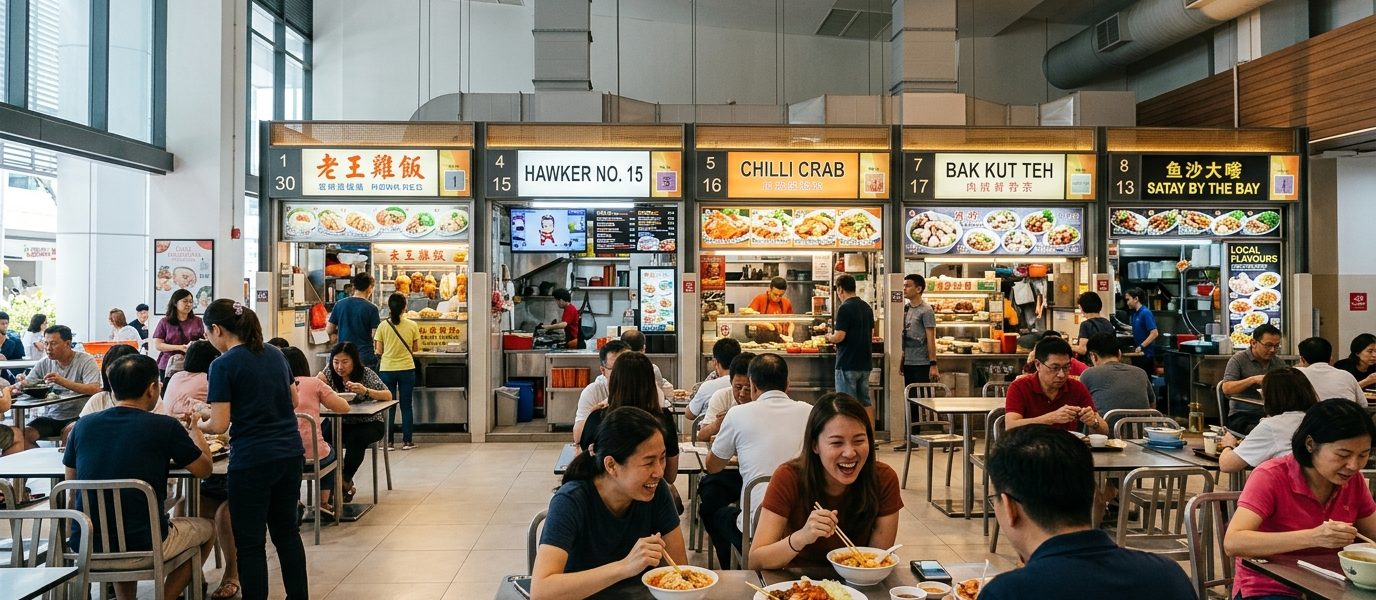
Singapore’s hawker food is legendary, but let’s be honest: eating in 32-degree heat with 85% humidity isn’t always pleasant. Sweat drips into your laksa. Your shirt sticks to the plastic chair. The elderly and young children struggle with the tropical conditions.
Good news. More hawker centres now offer air conditioning, giving you authentic local food in comfort. These aren’t fancy restaurants charging restaurant prices. They’re genuine hawker centres where you still get chicken rice for under $5, but without feeling like you’re melting.
Singapore now has multiple air conditioned hawker centres offering authentic local food in comfortable settings. From Timbre+ at Ayer Rajah to Our Tampines Hub, these venues maintain affordable hawker prices while providing relief from tropical heat. Most accept cashless payments and offer extended operating hours, making them ideal for families, tourists, and anyone seeking comfortable dining without compromising on authenticity or value.
Why Air Conditioning Matters at Hawker Centres
Temperature affects everything about your meal. Food tastes different when you’re uncomfortable. Conversations get shorter. Children get cranky.
Older Singaporeans remember when all hawker centres were outdoors. The government relocated street hawkers into purpose-built centres in the 1970s and 1980s. Most had roofs but open sides for ventilation. That design worked when ambient temperatures were cooler.
Climate change has made Singapore hotter. The National Environment Agency reports that daily mean temperatures have risen 0.25°C per decade since 1972. What felt tolerable 30 years ago now feels oppressive.
Air conditioning isn’t about luxury. It’s about making hawker food accessible to everyone: pregnant women, people with heat sensitivity, tourists unaccustomed to tropical weather, and families with infants.
Types of Air Conditioned Hawker Venues
Not all air conditioned hawker centres are the same. Understanding the differences helps you choose the right venue for your needs.
| Venue Type | Price Range | Authenticity | Best For |
|---|---|---|---|
| Traditional upgraded centres | $3 to $8 | Very high | Local favourites, authentic experience |
| Modern food halls | $5 to $12 | High | Variety, comfort, longer hours |
| Mall food courts | $4 to $10 | Medium to high | Shopping trips, family outings |
| Hybrid community centres | $3 to $8 | Very high | Neighbourhood dining, events |
Traditional upgraded centres like Bukit Timah Market maintain their original hawker stall structure but added air conditioning during renovations. You get the authentic hawker experience without compromise.
Modern food halls such as Timbre+ bring together curated hawker stalls in purpose-built air conditioned spaces. They often have craft beer options and live music, blending traditional food with contemporary atmosphere.
Mall food courts sit inside shopping centres. Some house genuine hawker stalls relocated from older centres. Others feature chain stalls. Quality varies significantly.
Hybrid community centres integrate hawker centres into larger facilities with libraries, gyms, and activity spaces. Our Tampines Hub exemplifies this model perfectly.
Finding the Best Air Conditioned Options
Location matters most. The best air conditioned hawker centre is the one near where you are.
Central Singapore offers the most options. Chinatown Complex Food Centre has air conditioned sections on upper floors. Maxwell Food Centre remains popular with tourists, though only partially air conditioned.
The East has Our Tampines Hub, fully air conditioned with over 40 stalls. Bedok Marketplace combines hawker food with a supermarket, all under one cool roof.
North Region residents frequent Yishun Park Hawker Centre, which underwent major renovations adding air conditioning throughout. Sembawang Shopping Centre’s food court houses several relocated hawker stalls.
West Side options include Jurong East’s Yuhua Market and Hawker Centre, partially air conditioned after upgrades. Timbre+ at Ayer Rajah provides fully climate-controlled dining.
“Air conditioning shouldn’t change what makes hawker food special: affordability, authenticity, and community. The best centres preserve hawker culture while adapting to modern needs.” — Veteran hawker stall operator, 35 years experience
How to Make the Most of Your Visit
- Check operating hours before going. Some air conditioned sections open later than outdoor areas.
- Visit during off-peak times for better seat availability. Lunch rush (12pm to 1:30pm) gets crowded everywhere.
- Bring a light jacket if you’re sensitive to cold. Some venues set temperatures quite low.
- Try stalls you wouldn’t normally visit. Comfortable seating encourages lingering and trying new dishes.
- Ask locals which stalls they recommend. Air conditioning attracts tourists, but locals know the best food.
Payment methods have evolved. Most air conditioned hawker centres now accept:
- PayNow and PayLah
- Credit and debit cards at many stalls
- GrabPay and other e-wallets
- Cash (always works, though some stalls prefer cashless)
Bring small notes if paying cash. Not every stall can break a $50 note, especially early morning.
What to Eat at Air Conditioned Centres
The same dishes you love at traditional hawker centres appear at air conditioned venues. Quality depends on the individual stall, not the temperature.
Must-try dishes include:
- Hainanese chicken rice from established stalls that relocated
- Char kway teow cooked over high heat (air conditioning means the cook isn’t dying from the wok’s heat)
- Laksa with rich coconut broth
- Rojak mixing fruits and vegetables with sweet black sauce
- Satay with peanut sauce and cucumber
- Hokkien mee with prawns and squid
- Carrot cake (the savoury radish kind, not dessert)
Tiong Bahru Market offers heritage charm with some air conditioned sections, perfect for trying traditional breakfast dishes like chwee kueh and lor mai gai.
Don’t assume air conditioned centres only serve Chinese food. You’ll find excellent Malay, Indian, and fusion options. Nasi lemak tastes just as good when you’re not sweating through your shirt.
Common Mistakes Visitors Make
First-timers often sit down before ordering. At hawker centres, you order first, then find a seat. Some air conditioned venues use table reservation systems with tissue packets or cards, but ordering still happens at the stall.
Another mistake: expecting restaurant service. You order at the counter, collect your food when ready (or they bring it), and clear your tray when done. Some centres have tray return stations. Use them.
Tourists sometimes avoid air conditioned centres thinking they’re too expensive or inauthentic. Neither is true. A plate of chicken rice costs the same whether you eat in heat or comfort.
Photography is fine, but be respectful. Don’t block queues or stall fronts for Instagram shots. Other diners want their food, not a photo shoot.
Accessibility and Family Considerations
Air conditioned hawker centres work better for many families. Toddlers handle the temperature better. Elderly relatives can eat comfortably. People with mobility issues appreciate the climate control.
Most modern air conditioned centres include:
- Wheelchair accessible entrances and toilets
- Lifts to upper floor seating areas
- Baby changing facilities
- Nursing rooms in community hub locations
- Step-free access throughout
Stroller navigation can be tricky during peak hours. Consider baby carriers if visiting during lunch or dinner rush.
Preserving Hawker Culture in Comfort
Some purists argue that air conditioning diminishes the authentic hawker experience. They’re wrong. Hawker culture isn’t about suffering in heat. It’s about affordable, delicious food accessible to everyone.
UNESCO recognized Singapore’s hawker culture as Intangible Cultural Heritage in 2020. The recognition celebrates the food, the skills, and the community gathering spaces. Temperature doesn’t define authenticity.
What matters:
- Hawkers cooking with traditional methods and recipes
- Affordable prices that regular Singaporeans can afford daily
- Multi-generational businesses passing down techniques
- Diverse cuisines reflecting Singapore’s multicultural society
- Community spaces where people from all backgrounds eat together
Air conditioning makes hawker centres more inclusive. A young mother with an infant can now enjoy char kway teow without worrying about heat rash. An elderly uncle recovering from surgery can eat his favourite bak chor mee in comfort. Tourists can experience authentic local food without heat exhaustion.
Planning Your Air Conditioned Hawker Journey
Start with centres near your accommodation or workplace. Familiarity helps you understand how different venues operate before venturing further.
Create a personal list of dishes you want to try. Singapore has hundreds of hawker specialties. Focusing on specific dishes prevents decision paralysis when you’re hungry and faced with 40 stalls.
Join online communities discussing hawker food. Facebook groups and forums share updates about stall closures, new openings, and hidden gems. Locals happily recommend their favourites when asked respectfully.
Consider the time of day. Breakfast stalls (serving chwee kueh, carrot cake, or porridge) often close by noon. Dinner stalls might not open until 5pm. Some centres have different stalls operating at different times.
Weather still matters even at air conditioned centres. Heavy rain affects deliveries and customer flow. Some partially air conditioned centres have outdoor sections that empty during downpours, meaning indoor areas get packed.
Making Air Conditioned Hawker Food Part of Your Routine
Regulars develop patterns. They know which day each stall takes off (most close one day weekly). They understand peak hours and adjust accordingly. They build relationships with hawkers who remember their preferences.
You can do the same. Pick one or two air conditioned centres near you. Visit regularly. Try different stalls systematically. Soon you’ll have your own favourites and know the best times to visit.
Bring colleagues for lunch. Hawker centres naturally facilitate conversation. The casual setting and affordable prices make them perfect for team meals without the formality of restaurants.
Introduce visiting friends and family to your favourite stalls. Sharing good food creates memories. The comfortable environment means you can linger over meals, talking and enjoying each other’s company without rushing to escape the heat.
Where Comfort Meets Tradition
Air conditioned hawker centres represent Singapore’s practical approach to preserving culture while adapting to changing needs. They prove you don’t have to choose between authenticity and comfort.
Whether you’re a local seeking relief from another scorching afternoon or a tourist wanting to experience hawker food without the tropical heat, these venues deliver. The chicken rice tastes just as good. The laksa remains rich and spicy. The satay still sizzles.
The difference? You can actually enjoy your meal without sweat dripping into your bowl. That’s not luxury. That’s just sensible.
Next time someone suggests hawker food, don’t let the heat stop you. Singapore’s air conditioned hawker centres offer the best of both worlds: authentic local food in genuine comfort. Your taste buds and your body temperature will thank you.