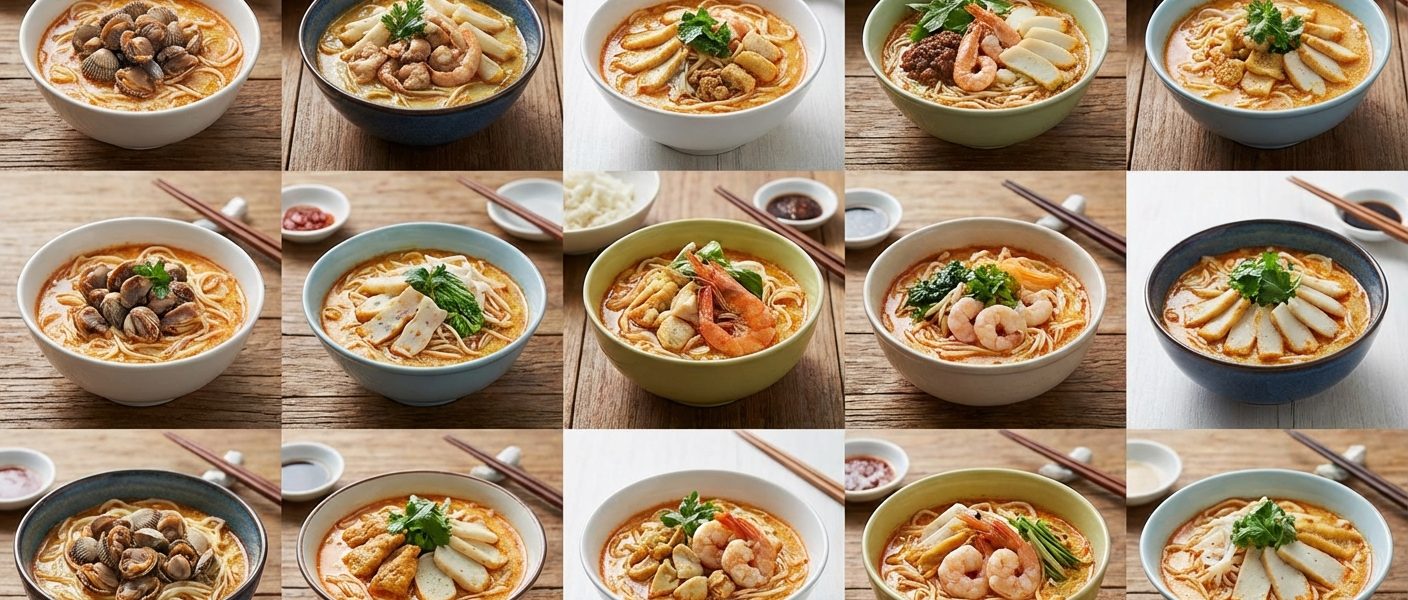
Walk into any hawker centre in Singapore and you’ll find at least one laksa stall. But not all laksa bowls are created equal. The types of laksa you’ll encounter across our island tell stories of migration, adaptation, and fierce regional pride. Some versions swim in rich coconut curry. Others pack a sour punch that’ll wake you right up. And a few rare styles might surprise even the most seasoned hawker hopper.
Singapore serves multiple types of laksa, each with distinct broths, noodles, and toppings. The most common varieties include Katong laksa with its creamy coconut curry, Penang laksa with tamarind sourness, Sarawak laksa with sambal belacan, and Johor laksa with spaghetti-like noodles. Understanding these differences helps you order confidently and appreciate the regional heritage behind each bowl.
The main types of laksa in Singapore
Singapore’s laksa landscape splits into several distinct camps. Each type carries its own flavour profile, ingredient list, and loyal following.
Here’s what you need to know about the major players.
Katong laksa
This is the version most Singaporeans picture when they hear “laksa.” Born in the Katong and Joo Chiat area, it features thick coconut curry gravy spiked with dried shrimp and laksa leaves.
The noodles come pre-cut. You eat it with a spoon only, no chopsticks needed.
Toppings typically include prawns, fishcake, tau pok, and cockles. Some stalls add chicken or otah for extra richness.
The broth should coat your spoon with an orange-red sheen. That’s the mark of proper rempah and enough coconut milk.
Penang laksa (Assam laksa)
Completely different beast. This version swaps coconut milk for a sour, fish-based broth made with tamarind.
The sourness hits first, followed by the fragrance of torch ginger flower and Vietnamese mint. Mackerel flakes give the broth its body.
You’ll find thick rice noodles (similar to laksa noodles) topped with pineapple chunks, cucumber, onion, and a dollop of thick prawn paste called hae ko.
Not many stalls serve this in Singapore, but the few that do attract devoted fans. It’s an acquired taste if you grew up on curry laksa.
Sarawak laksa
This East Malaysian version sits somewhere between Katong and Penang styles. The broth uses coconut milk but stays lighter than Katong laksa.
Sambal belacan provides the heat. The paste includes galangal, lemongrass, and shrimp paste, creating a complex flavour that’s less heavy than curry-based versions.
Toppings include shredded chicken, prawns, bean sprouts, and omelette strips. Some stalls add lime on the side.
The noodles are usually thin bee hoon, making the whole bowl feel lighter despite the coconut milk base.
Johor laksa
The rebel of the laksa family. This version uses spaghetti instead of rice noodles.
The gravy is thick, almost like a fish curry. It’s made with ikan kembung (mackerel), coconut milk, and a different spice blend than Katong laksa.
You’ll get cucumber, long beans, daun kesum (Vietnamese coriander), and bunga kantan (torch ginger flower) on top. Some versions include hard-boiled egg.
The texture is completely different from other types. The spaghetti soaks up the gravy in a way rice noodles can’t match.
How to identify each type at a glance
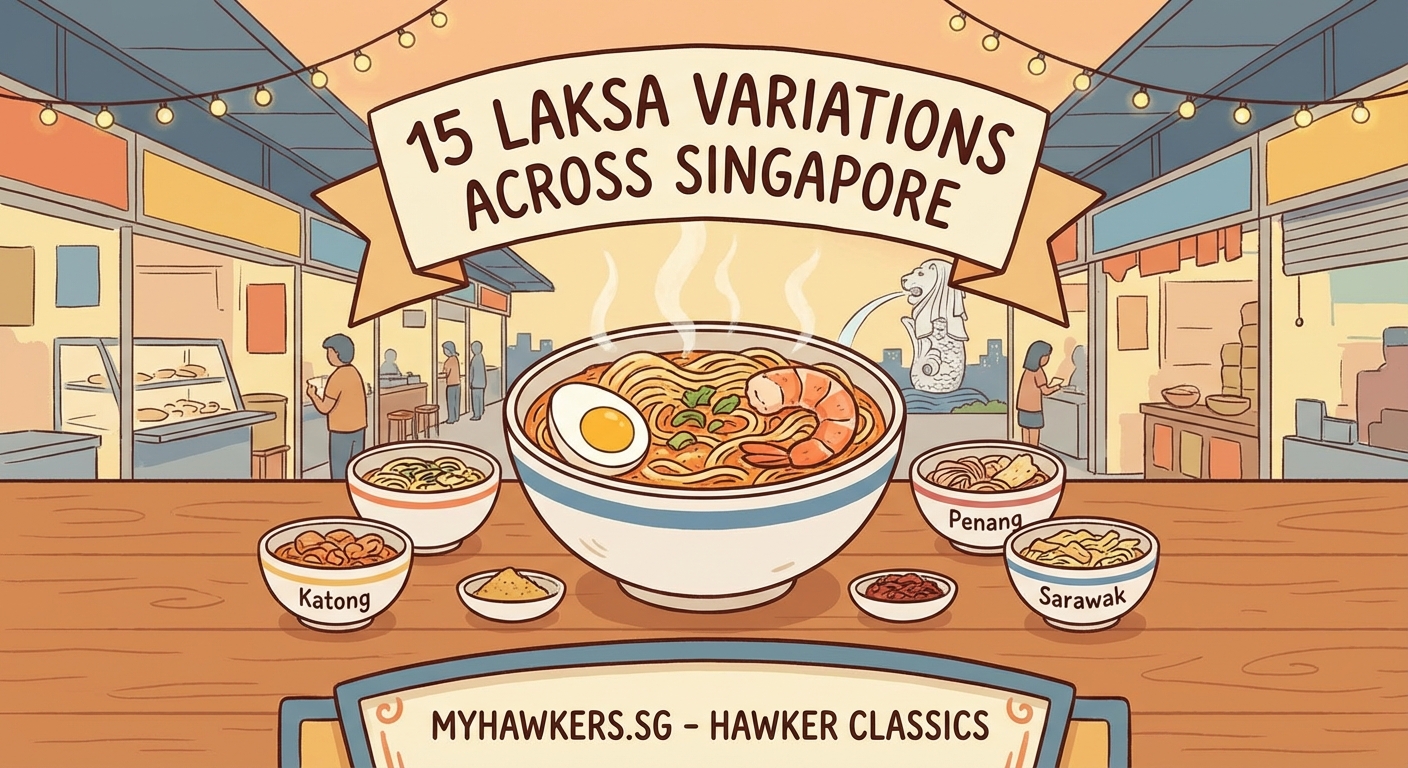
Not sure what you’re ordering? Use this table to decode the bowl before it arrives.
| Type | Broth colour | Noodle type | Key ingredients | Sourness level |
|---|---|---|---|---|
| Katong laksa | Orange-red | Thick rice noodles, cut short | Prawns, fishcake, cockles, tau pok | None |
| Penang laksa | Reddish-brown | Thick rice noodles | Mackerel flakes, pineapple, cucumber, hae ko | Very high |
| Sarawak laksa | Pale orange | Thin bee hoon | Shredded chicken, prawns, omelette | Mild |
| Johor laksa | Dark brown | Spaghetti | Cucumber, long beans, torch ginger | Medium |
The colour alone tells you most of what you need to know. If it’s bright orange and creamy, you’re getting curry laksa. If it looks thin and reddish, prepare for sour.
Regional variations you’ll encounter
Beyond the main four types, Singapore’s hawker scene includes a few interesting outliers.
Some stalls serve what they call “Nyonya laksa,” which is essentially Katong laksa with minor tweaks to the rempah blend. The difference is subtle and mostly matters to purists.
A handful of places offer “Siamese laksa” or “laksa lemak,” which leans even heavier on coconut milk and uses a sweeter spice profile.
You might also find fusion versions at modern hawker stalls. Laksa carbonara. Laksa mac and cheese. Laksa fried rice. These aren’t traditional, but they show how deeply laksa has embedded itself in our food culture.
“The best laksa is the one you grew up eating. My ah ma made Katong-style every Sunday, so that’s my benchmark. But I respect anyone who prefers the sour versions. Different tongues, different memories.” – Uncle Tan, third-generation laksa hawker
What makes each broth different
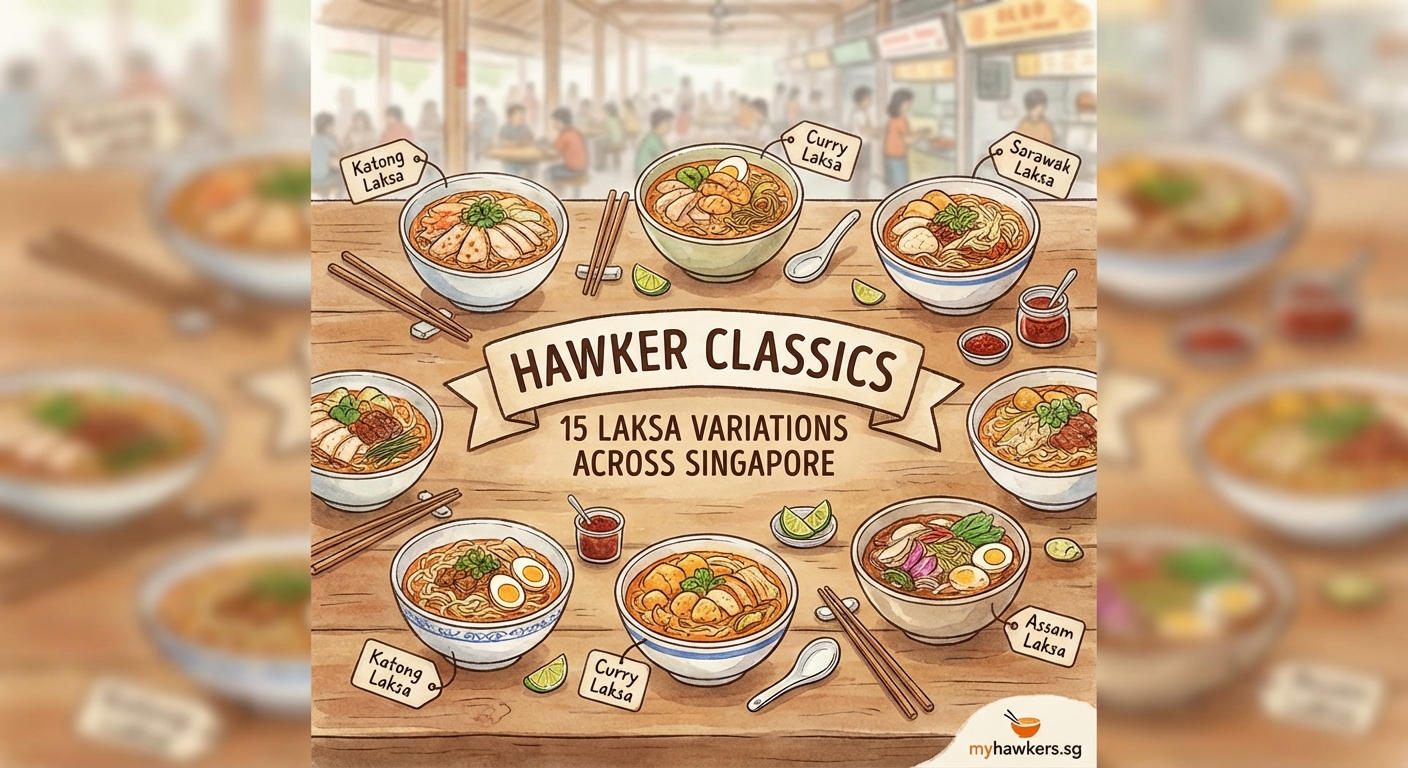
The broth defines the laksa. Everything else is just supporting cast.
Katong laksa broth starts with a rempah paste made from dried chillies, shallots, garlic, candlenuts, belacan, and turmeric. This gets fried until fragrant, then simmered with coconut milk, prawn stock, and laksa leaves.
The result is thick, creamy, and intensely aromatic.
Penang laksa takes a completely different route. The base is tamarind water mixed with fish stock from boiled mackerel. The spice paste includes galangal, lemongrass, and torch ginger flower.
No coconut milk at all. The sourness comes from the tamarind, while the fish provides umami depth.
Sarawak laksa uses a lighter rempah with more galangal and lemongrass. The coconut milk is diluted with chicken or prawn stock, creating something between a soup and a curry.
Johor laksa’s gravy is the thickest of all. The fish is blended directly into the coconut milk base, creating an almost porridge-like consistency that clings to the spaghetti.
Choosing the right laksa for your mood
Not sure which type to order? Here’s a simple decision tree.
- Want something rich and comforting? Go for Katong laksa.
- Need something refreshing and tangy? Penang laksa is your friend.
- Looking for a lighter option that’s still coconut-based? Try Sarawak laksa.
- Feeling adventurous or nostalgic for fusion food? Order Johor laksa.
The best part about Singapore’s hawker centres is you can try multiple types in one week without breaking the bank. Some spots like Maxwell Food Centre have stalls serving different laksa styles under one roof.
If you’re planning a proper laksa crawl, start with Katong laksa as your baseline. Then work your way to the more unusual versions. Your palate will thank you for the gradual progression.
Common mistakes when ordering laksa
Even regulars mess this up sometimes. Here’s what to avoid.
- Asking for “less spicy” Penang laksa. The sourness is the point. If you can’t handle sour, order a different type.
- Expecting Katong laksa to be light. It’s coconut milk-based. It’s meant to be rich. Don’t order it if you want something refreshing.
- Judging Johor laksa by traditional laksa standards. The spaghetti isn’t a mistake. It’s the whole identity of this version.
- Skipping the sambal. Most stalls provide extra sambal on the side. Use it. It transforms the bowl.
- Eating Katong laksa with chopsticks. The noodles are cut short specifically so you can use just a spoon. Fighting with chopsticks marks you as a tourist.
At air-conditioned hawker centres, you’ll often find newer stalls experimenting with presentation. Don’t let fancy plating fool you. The fundamentals still matter more than the bowl it comes in.
Where different types congregate
Certain hawker centres become known for specific laksa styles.
Katong laksa dominates the East. You’ll find the most authentic versions around Katong, Joo Chiat, and Marine Parade. Tiong Bahru Market also has a few excellent stalls serving this style.
Penang laksa appears less frequently. When you find it, it’s usually at stalls run by Malaysian families who brought the recipe down from Penang.
Sarawak laksa has gained popularity in the last decade. You’ll spot it at newer hawker centres and coffee shops across the island.
Johor laksa is the rarest. Only a handful of stalls serve it, mostly in the North and West.
If you’re hunting for hidden neighbourhood gems, ask around. The best laksa often comes from stalls that don’t show up on tourist lists.
How hawkers adapt their recipes
Most laksa hawkers inherited their recipes from parents or mentors. But they still make adjustments based on their customers and ingredient availability.
Some stalls tone down the belacan for tourists who find it too pungent. Others amp up the coconut milk to create a creamier texture that photographs better.
The type of dried chilli affects the colour and heat level. Malaysian chillies create a darker, earthier paste. Thai chillies bring more fire.
Laksa leaves can be hard to source. Some hawkers substitute with Vietnamese coriander or skip it entirely, which changes the aromatic profile.
The noodle thickness matters more than most people realize. Thicker noodles need more time to absorb the broth. Thinner ones cook faster but can turn mushy if you don’t eat immediately.
Pairing laksa with other hawker favourites
Laksa is filling, but that doesn’t stop locals from ordering sides.
Otak-otak works beautifully with Katong laksa. The grilled fish paste echoes the seafood flavours in the broth.
Ngoh hiang (five-spice meat rolls) provides a crunchy contrast to the soft noodles and rich gravy.
Some people order tau huay (soybean pudding) after laksa to cool down their mouths. The sweetness balances the spice.
If you’re at a hawker centre during breakfast hours, you might see locals having laksa alongside kaya toast. It’s not traditional, but it works.
The future of laksa in Singapore
Younger hawkers are experimenting while older ones guard traditional recipes fiercely.
You’ll find laksa with truffle oil. Laksa with sous vide prawns. Laksa served in bread bowls.
Some of these innovations stick. Most fade when the novelty wears off.
The core types of laksa, Katong, Penang, Sarawak, and Johor, will likely remain unchanged. They’ve survived decades of food trends for good reason.
What might change is availability. As dying hawker trades disappear, certain laksa styles could become harder to find.
If you spot a stall serving Penang laksa or Johor laksa, try it. These versions might not be around forever.
Understanding laksa beyond the bowl
Each type of laksa represents a different community’s adaptation to Singapore’s multicultural landscape.
Katong laksa emerged from Peranakan culture, blending Chinese and Malay influences. The pre-cut noodles reflect the Peranakan emphasis on refined eating.
Penang laksa arrived with Malaysian migrants who refused to give up their hometown flavours. Its survival in Singapore proves that sourness has its place even in a curry-loving nation.
Sarawak laksa shows how East Malaysian food culture is slowly making inroads here. Twenty years ago, you’d struggle to find it. Now it’s becoming mainstream.
Johor laksa’s spaghetti base tells a story of colonial influence meeting local ingredients. It’s weird, but it works.
When you order laksa, you’re not just eating noodles in soup. You’re tasting history, migration patterns, and cultural pride simmered into every spoonful.
Your laksa journey starts now
Don’t overthink it. Start with whichever type sounds most appealing to you.
If you love coconut curry, Katong laksa is your entry point. If you prefer sour and refreshing, go straight for Penang laksa.
Try different stalls serving the same type. You’ll notice subtle variations in spice levels, thickness, and toppings. Those differences matter.
Talk to the hawkers when it’s not peak hours. Many are happy to explain their process, especially if you show genuine interest.
Keep a mental note of which versions you prefer. Your laksa preferences will evolve as you try more bowls.
The types of laksa in Singapore offer something for every palate. You just need to find your match.