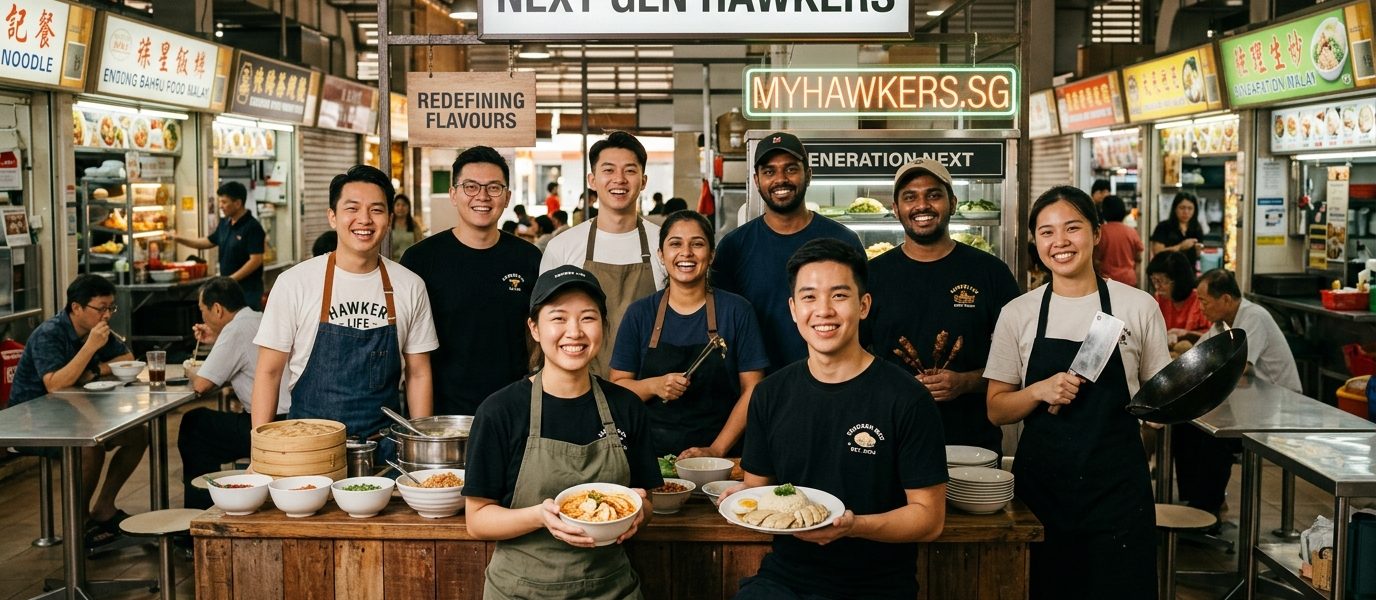
A new generation is stepping into Singapore’s hawker centres, and they’re not just filling empty stalls. They’re rewriting the playbook. These young hawkers bring culinary school training, social media savvy, and a fearless approach to flavour that’s turning heads across the island.
Young hawkers Singapore are transforming our food culture by blending traditional recipes with contemporary techniques, using technology to reach customers, and making hawker life appealing to their generation. They’re proving that hawker culture isn’t dying, it’s evolving. These entrepreneurs are creating Instagram-worthy dishes, building personal brands, and showing that a hawker stall can be both financially viable and creatively fulfilling in 2024.
Why millennials and Gen Z are choosing hawker stalls over office jobs
The stereotype of hawker work being gruelling and unrewarding is fading fast. Young people are seeing opportunities their parents never imagined.
They’re not just cooking. They’re building brands.
Many young hawkers treat their stalls like startups. They test menu items like product launches. They use Instagram and TikTok to build followings before opening day. Some even crowdfund their initial capital through pre-orders and supporter packages.
The financial math has changed too. A successful hawker can earn more than many mid-level office workers, without the corporate politics or rigid schedules. The Incubation Stall Programme and various grants have lowered the barrier to entry, making it possible to start with minimal capital.
“I was earning $3,500 a month in my marketing job. Now I’m clearing $8,000 on good months, and I’m my own boss. The 4am starts are tough, but I’d never go back to cubicle life.” – Marcus Tan, 28, third-generation char kway teow hawker
The work-life balance argument doesn’t always hold up. Yes, the hours are brutal. But many young hawkers close one or two days a week, something their parents rarely did. They build in rest periods and treat their business as a marathon, not a sprint.
What makes young hawkers different from traditional operators
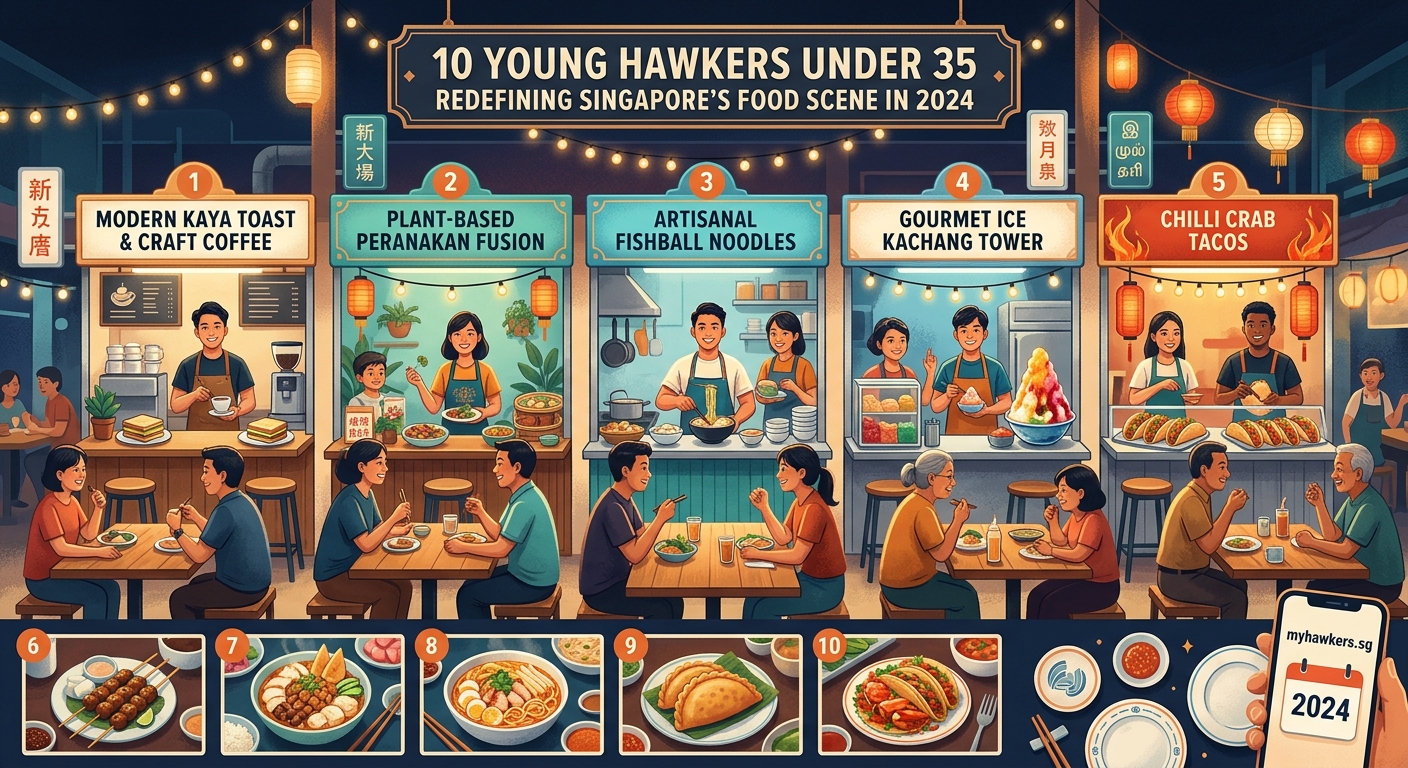
The generational divide isn’t just about age. It’s about approach.
Traditional hawkers often guard their recipes like state secrets. Young hawkers share cooking videos online. They collaborate with other stalls for special events. They’re comfortable with transparency in a way that would horrify the old guard.
Technology integration is second nature. QR code ordering, cashless payments, and delivery platform optimization aren’t afterthoughts. They’re built into the business model from day one. Some stalls track which dishes photograph best and adjust plating specifically for social media.
Menu innovation happens faster. A young hawker might test three new items in a month, keeping what works and dropping what doesn’t. Traditional operators might not change their menu in three years.
Here’s how the approaches differ:
| Aspect | Traditional Hawkers | Young Hawkers |
|---|---|---|
| Recipe development | Passed down through family, rarely modified | Blend traditional techniques with modern influences |
| Marketing | Word of mouth, regular customers | Social media, collaborations, food blogger outreach |
| Menu size | Fixed, rarely changes | Rotating specials, seasonal items, limited drops |
| Technology adoption | Cash only, manual orders | PayNow, GrabFood, online reservation systems |
| Work hours | 6-7 days a week, 12+ hour days | Strategic closures, 5-6 day weeks when possible |
| Supplier relationships | Same suppliers for decades | Shop around, try new ingredients, direct farm connections |
The ingredient sourcing tells a story too. Young hawkers are more likely to seek out specialty suppliers, organic produce, or heritage ingredients. They’ll pay more for better quality because they can charge accordingly and their customers expect it.
How young hawkers are preserving traditional dishes while adding their twist
Respect for tradition runs deeper than you might think. Most young hawkers aren’t trying to reinvent chicken rice or laksa from scratch. They’re taking what works and making it relevant to today’s palates.
The fusion approach gets criticized, but it’s more nuanced than slapping kimchi on everything. A young hawker might study their grandmother’s recipe for months before attempting any modifications. The changes often come from technique rather than ingredients.
Take the new wave of bak chor mee stalls. They’re using the same pork, the same vinegar, the same noodles. But they’re applying precision cooking methods learned in culinary school. Sous vide pork that’s impossibly tender. Broths clarified to crystal clarity. Handmade noodles with exact gluten development.
Some are reviving forgotten dishes. Dishes their parents’ generation abandoned because they were too labour-intensive or used hard-to-find ingredients. Young hawkers have the energy and the connections to make these viable again.
The dying hawker trades are getting second chances. Skills like hand-pulling noodles or making traditional kueh are being documented, taught, and commercialized by people who grew up watching YouTube tutorials.
Steps young hawkers take to build a successful stall from scratch
Starting a hawker stall isn’t romantic. It’s methodical work that separates dreamers from doers.
Here’s the actual process successful young hawkers follow:
- Spend 3-6 months working at established stalls to learn operations, even if you went to culinary school.
- Develop your signature dish and test it on friends, family, and pop-up events before committing to a permanent location.
- Apply for the Incubation Stall Programme or bid for a regular stall, understanding that location can make or break your business.
- Build your social media presence before opening day, sharing your journey and building anticipation.
- Start with a focused menu of 3-5 items you can execute perfectly, rather than trying to do everything.
- Create systems for prep work, cooking, and service that you can teach to helpers as you grow.
- Track your numbers obsessively from day one, knowing exactly what each dish costs and what your break-even point is.
- Gather feedback constantly and be willing to adjust quickly when something isn’t working.
The financial planning matters more than passion. You need to know your daily revenue target, your food cost percentage, and how many plates you need to sell to cover rent and labour. Young hawkers who succeed treat this like a business, not just a creative outlet.
Most successful young hawkers spend their first year just surviving. They’re learning their market, refining recipes, and building a customer base. The Instagram fame and media features come later, if at all.
The challenges young hawkers face that nobody talks about
The romantic narrative leaves out the hard parts. And there are many hard parts.
Physical exhaustion hits differently when you’re 25 versus 55. Your body isn’t used to standing for 10 hours straight. The heat from the wok, the repetitive motions, the sleep deprivation from early morning prep. Many young hawkers deal with chronic back pain, burn scars, and repetitive strain injuries within their first year.
Social isolation is real. Your friends are climbing corporate ladders and taking weekend trips. You’re working every Saturday and Sunday because that’s when customers come. Dating becomes complicated when you smell like fried garlic and your hands are perpetually stained from spices.
The older generation doesn’t always welcome you. Some established hawkers see young operators as threats or dilettantes. Getting advice, sourcing contacts, or even just friendly conversation can be harder than expected. The hawker community can be tight-knit in ways that exclude newcomers.
Financial pressure multiplies when you’re young. You might have student loans, aging parents to support, or friends getting married and buying flats. The irregular income from a new stall makes planning impossible. One slow week can trigger serious anxiety.
Here are the most common mistakes young hawkers make:
- Underestimating food costs and pricing too low to be sustainable
- Trying to do everything themselves instead of hiring help when needed
- Chasing social media fame instead of focusing on consistent quality
- Copying trending dishes without understanding if they fit their concept
- Neglecting the boring administrative work like licenses and accounting
- Opening in trendy locations with high rent before proving their concept
- Burning out in the first six months from working seven days a week
The mental health aspect rarely gets discussed. Running a hawker stall can be lonely and stressful. You’re responsible for everything. There’s no HR department or manager to escalate problems to. Some young hawkers struggle with the weight of that responsibility.
Where to find the most innovative young hawkers right now
The new wave isn’t concentrated in tourist hotspots. You’ll find them in neighbourhood centres where rent is reasonable and locals give honest feedback.
Bedok, Ang Mo Kio, and Jurong have become unexpected hubs for young hawker talent. These heartland locations offer lower costs and communities willing to support new businesses. The underrated hawker centres locals swear by are often where young hawkers cut their teeth.
Some young operators are choosing air-conditioned hawker centres strategically. The higher rent is offset by longer operating hours and customers willing to pay premium prices for comfort.
The incubation stalls program places young hawkers in established centres, giving them subsidized rent and mentorship. Check centres like ABC Brickworks, Chong Pang, and Yishun Park for these trial stalls. They’re testing grounds for tomorrow’s hawker stars.
Social media makes discovery easier. Follow hashtags like #sghawkers, #sgfoodie, and #hawkerculture to spot new openings. Young hawkers are vocal online, sharing their journeys and announcing new dishes in real-time.
Food trails organized by young hawkers themselves are becoming common. Groups collaborate to create tasting menus across multiple stalls, similar to restaurant weeks but at hawker prices. These events showcase innovation while building community among the new generation.
What young hawkers are teaching us about the future of food culture
This generation is proving that hawker culture can evolve without losing its soul. They’re documentation obsessed in the best way, recording recipes and techniques that might otherwise be lost. They’re making hawker work aspirational again.
The apprenticeship model is being reinvented. Instead of family-only knowledge transfer, young hawkers are teaching anyone willing to learn. Some run weekend workshops. Others post detailed recipe videos. This democratization of hawker knowledge ensures traditions survive even when families don’t continue the trade.
Sustainability matters to this generation in ways it didn’t before. They’re thinking about food waste, sourcing practices, and environmental impact. Some use compostable packaging. Others partner with urban farms for hyper-local ingredients. These aren’t just marketing gimmicks. They’re genuine attempts to make hawker food more sustainable.
The definition of success is changing too. It’s not just about surviving until retirement anymore. Young hawkers want to build something they’re proud of, that reflects their values, that they can scale or franchise or turn into a brand. Some see their stalls as stepping stones to larger food businesses.
They’re also more collaborative than competitive. Young hawkers support each other publicly, share suppliers, and cross-promote. This abundance mindset differs from the scarcity thinking that sometimes characterized older generations.
Supporting young hawkers beyond just eating their food
Patronage matters, but there are other ways to help this generation succeed.
Leave reviews. Google reviews, social media comments, and word-of-mouth recommendations help young hawkers build credibility faster than years of silent operation. Be specific about what you loved. That feedback helps them understand what’s working.
Be patient with growing pains. New stalls will make mistakes. Orders might take longer. A dish might not be perfect every time. Constructive feedback delivered kindly helps more than harsh criticism or silent departure.
Pay the actual price. Don’t expect hawker food to stay at 1990s prices forever. Quality ingredients cost money. Fair wages cost money. If a young hawker charges $6 for chicken rice instead of $3.50, there’s usually a good reason. Complaining about prices makes it harder for the next generation to sustain themselves.
Share their stories. When you find a great young hawker, tell people. Bring friends. Post about it. Tag them. The algorithmic boost from genuine engagement helps them reach more customers without paying for advertising.
Consider the neighbourhood gems when planning your food adventures. Tourist hotspots like Maxwell Food Centre are established. Young hawkers in quieter locations need the traffic more.
The real story behind young hawkers choosing this path
Strip away the media narratives and you’ll find people making calculated bets on themselves. They’re not naive dreamers. They’ve done the math. They’ve weighed the alternatives. And they’ve decided that building something tangible beats climbing someone else’s ladder.
Some come from hawker families and feel the pull of legacy. Others discovered cooking late and found their calling. Many are simply entrepreneurs who see opportunity in an industry that’s been written off as dying.
What unites them is a refusal to accept that hawker culture belongs only to the past. They’re writing a new chapter, one plate at a time. They’re proving that you can honour tradition while pushing it forward. That you can make a living while making food that matters.
The young hawkers Singapore is watching today aren’t just feeding people. They’re preserving a way of life that UNESCO recognized as culturally significant. They’re creating jobs. They’re building community. They’re showing that some things are worth waking up at 4am for.
Next time you’re planning where to eat, choose a young hawker’s stall. Try something you’ve never had before. Ask about their story. You might be tasting the future of Singapore’s food culture.