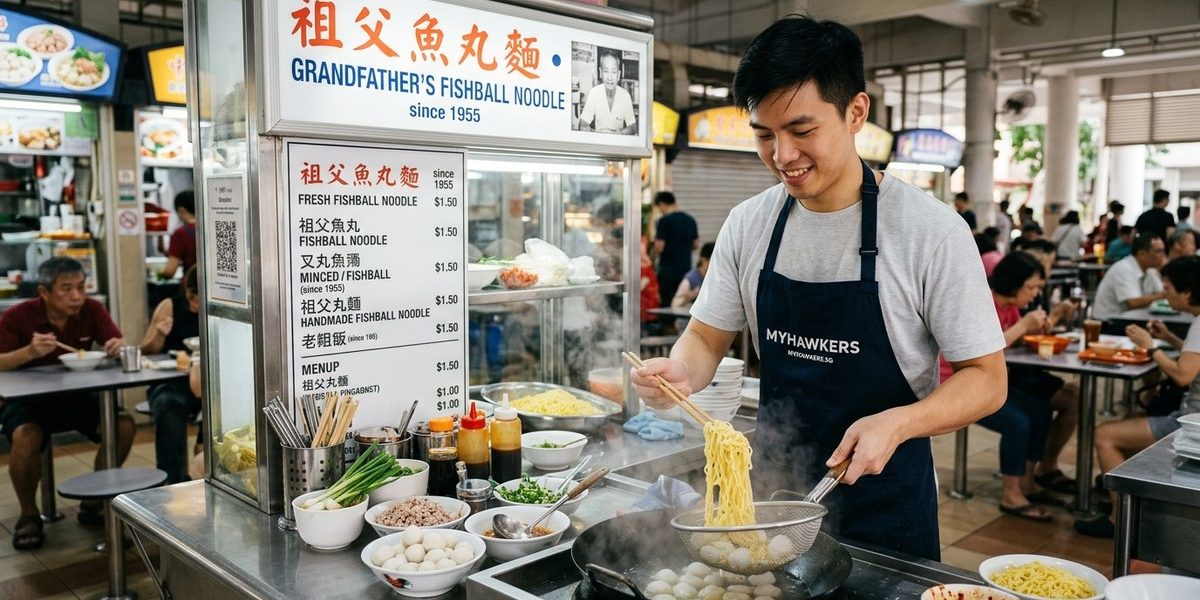
He was 26, fresh off a promotion at a tech firm, pulling in a six-figure salary. Condo, car, quarterly bonuses — the whole package. Then he quit. Not for a startup or a sabbatical, but to stand behind a bubbling pot of soup at a hawker centre, carrying his grandfather’s fishball noodle legacy. His story, which we tell in full on our pillar page (The 26-Year-Old Hawker Who Left a Six-Figure Salary to Save His Grandfather’s Fishball Noodle Stall), has struck a nerve across Singapore. It raises a question many of us whisper during lunch breaks: when does passion become worth more than pay?
When a 26-year-old Singaporean left a six-figure salary to take over his grandfather’s fishball noodle stall, it sparked a national conversation about what we value most. This article explores why young professionals now swap corporate bonuses for hawker centre heat, the real financial trade-offs, and how heritage stalls survive. Read on to understand the courage, challenges, and community behind Singapore’s most heartwarming career sacrifices.
The Numbers That Made Headlines
Leaving a six-figure salary sounds dramatic because it is. In Singapore’s cost-conscious culture, that kind of income buys stability: a 5-room HDB renovation, annual holidays, CPF contributions. So when someone walks away from it for a bowl of fishball noodles, people pay attention. But the decision isn’t as irrational as it looks on paper.
The hawker who leaves a six-figure salary often carries a different kind of wealth. He holds recipes passed down through generations. He remembers the smell of his grandfather’s kitchen at 5 am. He knows the exact blend of ikan bilis that makes the broth sing. That heritage cannot be priced. And as our ageing hawkers retire without successors, many young Singaporeans are realising that a payslip can’t replace a legacy.
What You Actually Lose and Gain
Let’s be real. Running a hawker stall is not passive income. It is hot, physical, and unpredictable. But the trade-offs go beyond salary. Here’s a straightforward comparison:
| Aspect | Corporate Job (Six-Figure) | Hawker Stall (Variable) |
|---|---|---|
| Starting income | $8,000+ monthly | $2,000 to $5,000 (if popular) |
| Work hours | 9 am to 6 pm, weekends off | 5 am to 3 pm, few off days, some split shifts |
| Stress source | KPI targets, office politics | Ingredient costs, customer complaints, rental hikes |
| Mental reward | Year-end bonus, status | Direct customer smiles, family pride |
| Retirement plan | CPF, investments, savings | Personal savings, possible sale of stall |
| Heritage value | None | Immeasurable (cultural, family, personal) |
Notice the last row. For those who choose the hawker path, heritage value tips the scale. It is not about rejecting money; it is about redefining wealth.
How to Make the Leap Yourself
Thinking of following the same path? Here is a practical sequence that successful career-switchers have used. These steps are based on real stories, including the one featured on our site.
- Start small while still employed. Keep your weekend mornings free. Go help at the stall. Learn the prep work: cleaning fishballs, slicing chillies, portioning noodles. Do not quit until you can replicate the basic recipe without looking at notes.
- Shadow the current owner for at least three months. Understand the rhythm. Which hours are busiest? How much stock gets sold? What is the average monthly profit after rent and ingredients? This knowledge is your real MBA.
- Negotiate a transition plan. If the stall belongs to a family member, discuss a gradual handover. You might start as a co-owner while still drawing a corporate salary, then phase out of your day job once the stall consistently covers your basic expenses.
- Build a cushion of 12 months of living expenses. A hawker stall may take a year to turn stable profit. Do not touch that emergency fund unless absolutely necessary.
- Rebrand without erasing tradition. Keep the original recipe intact, but update the menu board, add clear pricing, and use social media to tell your story. Customers love a narrative.
Following these steps does not guarantee success, but it greatly reduces the risk of financial disaster. As one former banker turned hawker told us:
“The first three months, I cried every night. My hands were scalded, my back ached, and I kept thinking of my old salary. But then an uncle came up and said, ‘Your grandfather’s soup tastes the same. I am glad you kept it.’ That moment was worth more than any bonus.”
Common Mistakes That Sink Six-Figure Dropouts
Not everyone who leaves a high-paying job succeeds. Here are the pitfalls to watch out for:
- Underestimating the physical toll. Standing eight hours in 35-degree heat is different from sitting in an air-conditioned office.
- Ignoring food hygiene regulations. One bad review about a hair in the soup can kill months of goodwill.
- Changing the recipe too much. Regulars come for the taste they remember. Do not make a “modern” version until you have built a loyal base.
- Hiring staff too fast. Many new hawkers burn through savings by employing helpers before the stall is profitable. Do everything yourself at first.
- Failing to register for digital payment. Singapore runs on PayNow and GrabPay. If you only take cash, you lose the young crowd.
Why This Trend Matters for Singapore’s Food Heritage
Every time a young Singaporean hawker leaves a six-figure salary to man a stall, a small piece of our culture is saved. The National Environment Agency has noted that the average age of hawkers is over 60. Without new blood, many stalls will close within the next decade. Stories like the one we documented (How a Former Banker Built Tiong Bahru’s Most Talked-About Lor Mee Stall) show that it is possible to merge corporate skills with hawker know-how.
These career-switchers bring marketing savvy, financial discipline, and social media fluency. They do not just preserve recipes; they revive them. They create Instagram-worthy plating without losing soul. They introduce delivery partnerships without compromising quality. And they prove that a hawker stall is not a step down, but a different kind of climb.
Other Heartwarming Stories of Career Sacrifice
If this story resonates with you, you will also enjoy reading about:
- From Corporate Jobs to Coffee Shops: 5 Career-Switchers Now Running Successful Hawker Stalls
- Three Generations Behind the Wok: Singapore’s Oldest Family-Run Hawker Stalls
- The Secret Recipes They Guard With Their Lives: Heritage Hawkers and Their Signature Sauces
Each of these stories underscores the same truth: our best hawker food is not just about taste. It is about love, memory, and sometimes, a leap of faith.
What We Can Learn From the Fishball Noodle Heir
The 26-year-old who left a six-figure salary to save his grandfather’s fishball noodle stall did not have a secret investor. He did not win the lottery. He simply decided that his family’s recipe was worth more than his bonus. That choice does not make him a saint or a fool. It makes him a custodian of something irreplaceable.
If you ever find yourself at that stall, order the dry version with extra chilli. Sit down and eat slowly. Taste the broth that was prepared at sunrise. And remember: behind every bowl of noodles is a person who chose passion over pay.
We hope this article arms you with both inspiration and practical knowledge. Next time you see a young face behind a hawker counter, smile and say thanks. They might have traded an office for a wok, but they are cooking up something far more valuable than a meal. They are preserving a piece of Singapore.