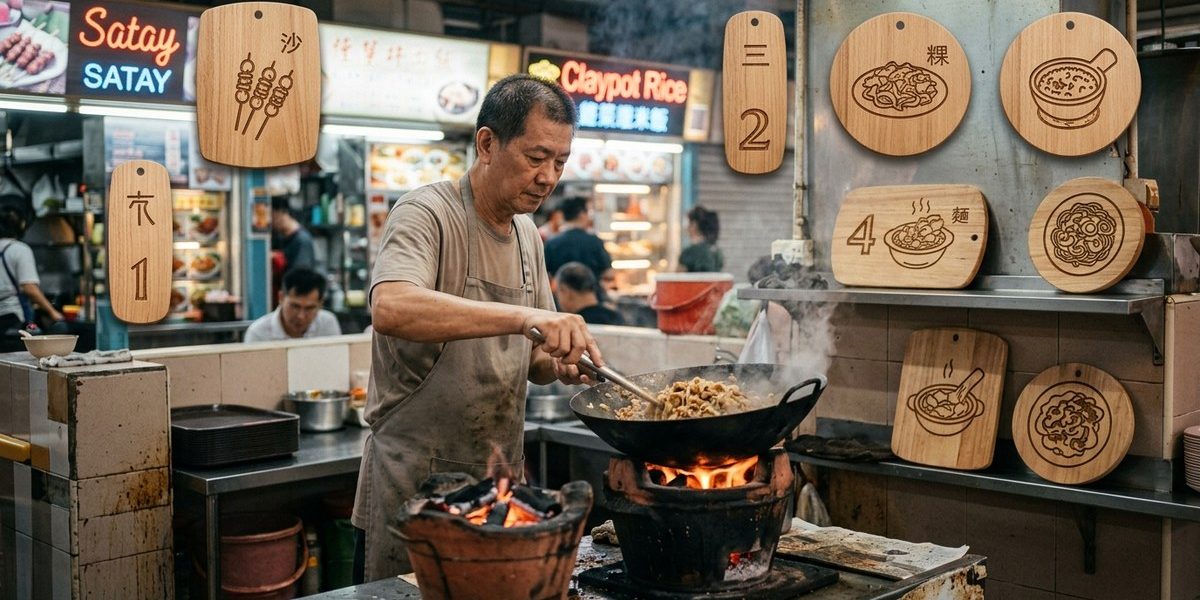
In the heart of a bustling hawker centre, a plume of fragrant smoke curls from a corner stall. The uncle behind the wok moves with a rhythm that has not changed in decades. He feeds another piece of charcoal into the fire, adjusts the airflow, and tosses a portion of noodles into the wok. The crackle and sizzle are unmistakable. This is the sound of old-school hawker cooking. And it is becoming harder to find.
Wood-fired charcoal stoves give dishes an unmatched smoky flavour that gas stoves cannot replicate. Only a handful of heritage hawker stalls in Singapore still use this method due to higher costs, stricter regulations, and the physical toll on the hawkers. This guide helps you spot these rare stalls and understand why their food tastes different. Supporting them helps preserve a dying culinary tradition.
Why Charcoal Makes a Difference
Charcoal burns at a more intense and dry heat than gas. That heat produces the sought after “wok hei” or breath of the wok. When a drop of oil hits the glowing ember, it vaporises and coats the food with a layer of smoky flavour. Gas stoves can create some wok hei, but the depth and complexity are not the same.
Here are the core reasons why charcoal remains the gold standard for certain dishes:
- Higher heat output Charcoal burns around 700 to 800 degrees Celsius. This allows the wok to sear ingredients instantly.
- Infrared radiation The hot coals radiate heat directly into the wok, cooking the food from both sides.
- Consistent temperature A well managed charcoal bed holds steady heat for hours.
- Aromatic smoke The burning wood adds subtle notes of smoke that gas cannot mimic.
- Drier environment Unlike steam from gas burners, charcoal keeps the wok dry, which helps achieve that crispy char.
But the technique is not simple. Using charcoal requires constant attention. The hawker must control the airflow, feed the fire, and adjust the wok height. One wrong move and the dish burns.
How to Identify a Heritage Charcoal Stall
Not every stall that claims to use charcoal actually does. Some use gas and add a little smoke for effect. Here is a simple process to confirm you are at a real heritage charcoal stall.
- Look for the fuel pile A true charcoal stall will have a stack of black charcoal blocks nearby. They are often stored in a basket or a metal bin.
- Listen for the crackle Charcoal pops and cracks as it burns. If you stand close, you can hear the fire. Gas is silent.
- Watch the smoke The smoke from a charcoal fire is white or grey and smells like a campfire. Gas stoves produce almost no visible smoke.
- Check the wok movement Charcoal hawkers lift the wok off the fire frequently to control heat. They also slant the wok to direct the flames.
- Ask politely Most hawkers are proud of their method. A simple “Uncle, still using charcoal ah?” will get you a smile and a story.
Common Mistakes with Charcoal Cooking
Using charcoal is an art that even experienced hawkers sometimes struggle with when they first try. The table below contrasts typical pitfalls with the methods used by veteran charcoal masters.
| Mistake | How Heritage Hawkers Avoid It |
|---|---|
| Using damp charcoal | Store charcoal in a dry area. Tap the pieces to check for a clear ringing sound. |
| Overloading the fire | Add small amounts gradually. A thick bed reduces airflow and creates smoke that taints the food. |
| Not controlling airflow | Adjust the ventilation flap or use a hand fan to regulate oxygen. |
| Cooking on uneven heat | Arrange charcoal in a pyramid shape. Flat beds cause uneven heat. |
| Burning the wok oil | Keep the wok seasoned. Never let it sit empty on high heat. |
| Charring the dish too early | Stir fry quickly and lift the wok often. Charcoal heat is relentless. |
“My father taught me that charcoal is like a living thing. You have to feed it, talk to it, and know when to pull back. If you treat it like gas, you will burn everything. The younger generation finds it too troublesome. They prefer to turn a knob. But the taste is never the same.” — Third-generation hawker, Redhill Food Centre
The Growing Challenges for Charcoal Hawkers
The number of heritage hawker stalls that still use wood-fired charcoal stoves has dropped sharply in the last decade. Several factors are pushing this tradition to the edge.
First, the cost of charcoal has risen. Good quality lump charcoal costs more than double what it did ten years ago. Second, the National Environment Agency has tightened rules on open flames inside hawker centres. Charcoal stoves require a special permit and regular inspections. Many stalls cannot afford the retrofitting needed to comply.
Third, the physical strain is immense. A charcoal hawker works in a hot, smoky environment for hours. The heat from the stove combined with Singapore’s humidity can be punishing. Younger workers often choose less demanding jobs in air conditioned kitchens.
Take a look at the story of Chinatown’s best char kway teow stall, where the 78 year old uncle still uses a charcoal stove. His sons have no interest in taking over. This pattern repeats across Singapore.
What We Stand to Lose
Each heritage hawker stall that switches to gas or closes down takes with it a piece of culinary history. The recipes may carry on, but the method will be gone. You can read about the Hokkien Mee rivalry that divides Singaporeans, where one side still uses charcoal and the other uses gas. The difference is stark.
For tourists seeking authentic Singaporean food, these stalls offer an experience that no air conditioned restaurant can match. The hiss of the fire, the glow of the coals, and the taste of a dish cooked with patience and skill. This is street food as it was meant to be.
Many of these stalls are also family run for three generations or more. Their stories are woven into the fabric of our neighbourhoods. When they go silent, we lose more than a meal.
Where to Find Them in 2026
If you want to taste the difference, start with the six heritage hawker stalls featured on our dedicated page. Each one has been verified to use wood-fired charcoal stoves. The list includes a famous char kway teow stall in Tiong Bahru, a hainanese chicken rice stall in Maxwell Food Centre, and a laksa stall in Katong that still grinds its own rempah over charcoal.
You can also explore our guide to under-the-radar hawker centres where parking is easier and queues are shorter. Some of these centres house charcoal stalls that even locals do not know about.
Keeping the Embers Alive
The best way to support these heritage hawker stalls is to eat at them. Bring a friend. Order an extra portion. Tell the uncle that his food is worth the wait. Share a photo and tag the stall. Word of mouth still matters in Singapore’s food scene.
If you are a younger hawker inspired to learn this craft, seek out a master who is willing to teach. Formal apprenticeships are rare, but several heritage hawkers have started mentoring programmes through community centres.
The next time you smell that distinctive charcoal smoke in a hawker centre, follow your nose. It will lead you to a plate of noodles or a bowl of soup that carries the soul of old Singapore. One bite and you will understand why these stalls refuse to change. And you will hope they never do.