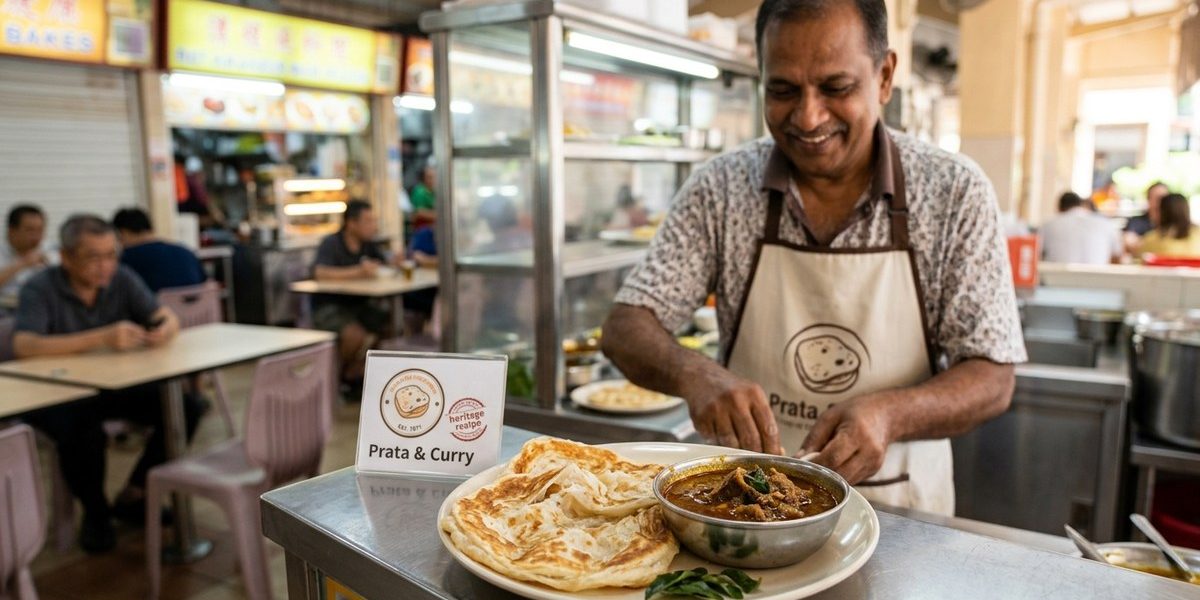
Some food legends are whispered about in kopitiams, passed down like family heirlooms. This one is about a Bedok roti prata stall that proudly serves a curry base more than half a century old. Not a recipe, not a secret spice blend, but an actual pot of curry that has been topped up day after day, never emptied, never started fresh. It sounds unbelievable, but for the regulars who have been eating here since the 1970s, it is simply how prata is supposed to taste. If you are a true blue Singaporean foodie, this is the kind of heritage hawker story that makes you grab your keys and head east.
A humble stall in Bedok serves roti prata with a curry that has been continuously cooking for over 50 years. The curry is never fully discarded; rather, fresh ingredients are added each day, creating a deep, complex flavour impossible to replicate. This heritage dish represents a dying tradition of hawker craftsmanship passed through generations. Visiting this stall is a pilgrimage every Singaporean food lover should make.
The Story Behind the 50-Year-Old Curry
The stall sits in one of those unassuming Bedok coffee shops, the kind you might walk past a hundred times without a second glance. Behind the counter is an uncle who took over from his father, who himself learned from a mamak master back in the 1970s. The curry pot is the real star. It is a large aluminium vessel, darkened with age, that has never been washed out completely. Every morning, the hawker skims the surface, adds fresh coconut milk, new spices, and a handful of roasted curry powder. The bottom remains untouched, carrying flavours from decades ago.
This is not a marketing gimmick. Regulars swear they can taste the years. The curry has a roundedness, a slight bitterness that comes from spices that have cooked and married over time. It is not spicy in a sharp way. It is more like a warm, lingering heat that builds slowly. The gravy is thick enough to cling to the prata but thin enough to soak into the crispy layers.
What Makes This Roti Prata Different
Most prata stalls focus on the dough. This stall does too, but the curry is the legend. Here is what regulars love about it:
- The prata is made fresh to order, stretched thin until almost translucent, then folded and fried on a greased griddle. The result is crispy on the outside, slightly chewy inside.
- Only plain prata is served. No egg, no cheese, no ice cream. Just plain. The uncle says the curry deserves all the attention.
- The curry is mildly spicy and slightly sweet, with visible bits of onion and curry leaves. It tastes different every few months because the base evolves.
- A small bowl of curry comes with each order, but you can ask for extra. Most people end up ordering two or three pratas just to finish the curry.
How the Curry Has Stayed Alive for Half a Century
Maintaining a perpetual curry pot is not as simple as leaving it on the stove. It requires discipline and a bit of food science. Here are the steps the hawker follows daily:
- At closing time, the curry is brought to a rolling boil for ten minutes to kill any bacteria. The pot is then covered and left at room temperature.
- The next morning, the solidified fat layer on top is removed. This fat layer acts as a natural seal, but it is discarded to keep the curry light.
- Fresh coconut milk, water, and a pre ground spice mix are added to restore the volume. The hawker says he uses the same blend his father used, sourced from a spice grinder in Little India.
- The curry is simmered for at least two hours before the first customer arrives. During service, more liquid is added as it reduces, keeping the consistency consistent.
This method is surprisingly safe when done correctly. The constant boiling and the acidity from tomatoes and tamarind prevent spoilage. Still, the hawker admits it is a trust exercise. He has been doing it for so long that he can tell by smell if the curry needs more salt or a pinch of sugar.
What to Order and When to Go
The menu is minimal. You order by the number of pratas, and the curry comes with it. Here is a quick guide:
| Item | Price (SGD) | Best For |
|---|---|---|
| 2 pieces plain prata | 3.50 | First timers who want to test the curry |
| 3 pieces plain prata | 4.50 | Regulars who know they will want more |
| Extra curry (per bowl) | 1.00 | For dipping or mixing with rice (yes, some do that) |
| Teh tarik | 1.50 | The classic pairing, perfectly pulled |
Go early. The stall opens at 7am and usually sells out by 11am. Weekends see a queue that snakes around the coffee shop. Weekday mornings are calmer, but the pratas are just as good. Avoid public holidays unless you enjoy waiting forty five minutes.
“The curry is like a living thing. Some days it tastes fiercer, some days sweeter. I never know exactly what I am going to get, but I have never been disappointed.” — regular customer who has been eating here since secondary school in the 1980s.
This blockquote from a long time regular captures the unpredictable charm of a perpetual curry. It is never identical, yet always satisfying.
Why This Bedok Stall Matters to Singapore’s Food Heritage
Singapore’s hawker culture is recognised by UNESCO, but the living traditions are disappearing. Few stalls still maintain a perpetual curry pot. It is labour intensive, requires constant attention, and does not scale well. Yet this Bedok stall proves that some techniques are worth preserving. The curry is not just a condiment; it is a record of five decades of cooking. Each batch carries echoes of the original spices, the hands that stirred it, the conversations that happened around it.
This heritage is exactly what we aim to document at My Hawkers SG. We believe that every hawker stall with a story like this deserves to be celebrated. If you enjoy learning about such living traditions, you might also appreciate the story of a Toa Payoh stall that has been serving a secret Hokkien Mee recipe for 40 years. And for a broader look at how Singapore’s hawkers moved indoors, check out this piece on the transition from pushcarts to permanent stalls.
Plan Your Visit
Getting there is straightforward. The stall is located in a coffee shop along Bedok North Street 3, near the market. The nearest MRT is Bedok station, then a short bus ride on services 2, 7, or 25. Alternatively, drive and park at the nearby HDB car park.
Bring cash. The uncle does not accept PayNow or cards. Come hungry, but not too hungry, because you might have to queue. And most importantly, come with an open mind. This is not a fancy plate of prata. It is a humble dish that carries the soul of a 50 year old curry.
The Last Bowl of Curry
Some food experiences are about novelty. This one is about patience. The curry does not reveal itself instantly. It unfolds on your tongue, layer after layer, as you dip each piece of prata. You might find yourself slowing down, savouring each bite, wondering how many other people have dipped their pratas into the same gravy over the decades. That is the magic of this Bedok roti prata stall. It connects you to a chain of eaters that stretches back to a time when Singapore was still a young nation.
Whether you are a food enthusiast, a curious local, or a visitor wanting to taste something truly unique, this stall is worth the trip. Bring a friend, order three pieces, and share a bowl of curry that has been simmering since the 1970s. You will taste the history. And you will understand why some hawkers refuse to let go of the old ways.