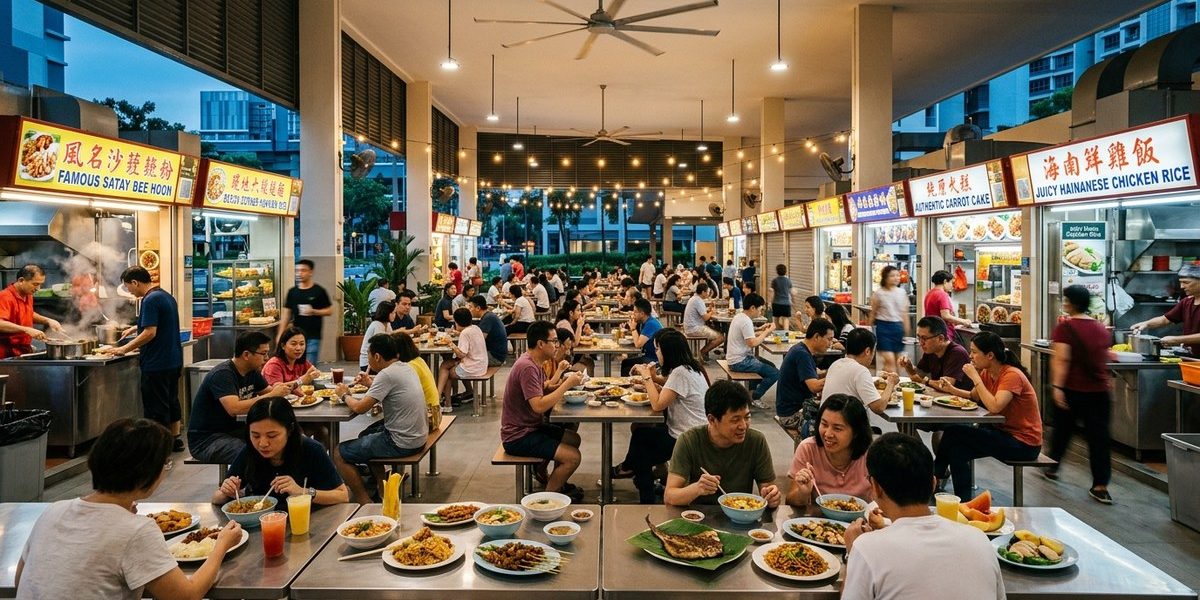
Some hawker centres get all the tourist attention. Maxwell, Lau Pa Sat, Old Airport Road. But ask anyone living in the east where they actually go on a Saturday morning, and they will point you to one place without hesitation. Bedok Interchange Hawker Centre is not just a convenient spot to grab a meal before catching a bus. It is a living museum of Singapore’s hawker heritage, a place where third generation hawkers still hand fold their dumplings and where a bowl of noodles can cost less than your morning coffee chain purchase. In 2026, it remains the undisputed king of east coast food.
Bedok Interchange Hawker Centre holds over 40 stalls serving heritage recipes that span generations. This guide covers the must try dishes, the best times to visit, and the stalls that define east coast hawker culture. Whether you want silky chwee kueh or a hearty bowl of prawn noodles, you will find honest flavours here without the tourist markup.
Why This Hawker Centre Still Reigns in 2026
Location matters. Sitting right above Bedok Bus Interchange, this centre has fed commuters, students from Temasek Polytechnic, and families from the surrounding HDB estates for decades. But location alone does not explain its staying power. The stalls here have survived because they refuse to cut corners. Many of them are run by the same families who opened them in the 1970s and 1980s. When a stall has been making the same dish for forty years, they tend to get it right.
The recent renovation in the early 2020s gave the place a fresh coat of paint and better ventilation, but the soul of the hawker centre remains unchanged. You still see aunties fanning themselves with tissue packets while waiting for their carrot cake order. You still hear the sizzle of prawn paste hitting a hot wok. And you still pay prices that make you wonder how they manage to keep the lights on.
The Stalls You Need to Know
Not every stall here is a winner. Some are average. A few are genuinely disappointing. But the ones listed below are the pillars of this food centre. They are the stalls that have queues for a reason.
1. Mei Xiang Prawn Noodle (#01-10)
The broth at Mei Xiang is dark, rich, and carries the kind of depth that only comes from hours of simmering pork bones and prawn shells. Order the large with extra taupok and let the chilli soak into the soup. Many regulars bring their own tissue pack to chope a seat before joining the queue, because this stall sells out by 1pm most days.
2. Song Zhou Fried Carrot Cake (#01-37)
Fried carrot cake in Singapore comes in two forms. White and black. Song Zhou does both, but their black version, coated in a sweet dark soy sauce and fried with preserved radish, is the one that keeps people coming back. The texture is crisp on the outside but soft inside. It is the kind of dish that makes you wonder why anyone would order the white version anywhere else.
3. Ming Hui Nasi Lemak (#01-34)
Nasi lemak is everywhere in Singapore, but Ming Hui does it with a level of care that sets it apart. The coconut rice is fragrant without being greasy. The fried chicken wing is still crispy even when you take it back to your table. And the sambal has a sour kick that cuts through the richness of the meal. At under five dollars for a full plate, this is value that is hard to beat in 2026.
4. Bedok Pau Dim Sum (#01-138)
Most people do not think of dim sum when they visit a hawker centre, but this stall changes that. The siew mai are hand folded. The har gow wrappers are thin enough to see the prawn filling inside. And the char siew sou, those flaky pastries filled with barbecued pork, sell out before 10am on weekends. If you want the full experience, go early and order one of everything.
5. Xin Mei Congee (#01-22)
Congee is comfort food for many Singaporeans, especially on a rainy morning. Xin Mei serves a version that is silky smooth, topped with century egg and shredded chicken. The texture is what sets it apart. It is not watery like some stalls serve. It has body, and the century egg adds a savoury punch that wakes up your palate.
How to Plan Your Visit
Going to Bedok Interchange Hawker Centre without a plan is a mistake. The queues can be long, and the seating area gets crowded during peak hours. Here is a simple process to make your trip smooth.
- Arrive before 11am on weekdays or before 9am on weekends. The best stalls sell out their signature dishes by noon.
- Walk the entire centre first before committing to a stall. Look at what people are eating. If a stall has a long queue of elderly aunties, join it. They know where the good food is.
- Use a tissue pack or a card to chope a table before ordering. This is standard hawker etiquette in Singapore. Place your item on the table to reserve it while you queue.
- Order from stalls that have a high turnover. High turnover means the ingredients are fresh and the wok is hot.
- Bring cash. Some stalls accept PayNow or digital payments in 2026, but a few of the older uncles still prefer cash. Do not get caught without it.
Common Mistakes to Avoid
Even experienced hawker eaters make errors when visiting a large centre like Bedok Interchange. Here are the most common pitfalls and how to avoid them.
| Mistake | Why It Hurts Your Meal | Better Approach |
|---|---|---|
| Arriving after 1pm | Popular stalls sell out their best items | Go before 11am |
| Ordering from a stall with no queue | Low turnover means older ingredients | Follow the crowd, especially elderly locals |
| Using only digital payment | Some older stalls only take cash | Bring at least $20 in cash |
| Sitting near the entrance | Tables near the entrance are hottest and busiest | Walk to the back for better airflow and quieter seating |
| Ordering everything at once | Fried items get cold fast | Eat in rounds, order fresh for each course |
The Heritage Behind the Food
Bedok Interchange Hawker Centre is not just about eating. It is about preserving a way of life that is slowly disappearing. Many of the hawkers here are in their sixties and seventies. They wake up at 4am to prepare their ingredients. They stand over hot woks for ten hours a day. And they do it because they believe in feeding people properly.
“My father started this stall in 1982. He taught me how to fold the dumplings when I was twelve years old. I never thought I would take over, but when he retired, I could not let the recipe die. This is not just a business. It is our family history.” — Third generation hawker at Bedok Pau Dim Sum
This sentiment echoes across the centre. The chwee kueh stall at #01-18 still steams their rice cakes in traditional porcelain cups. The carrot cake stall still uses a charcoal fire to get that smoky flavour. These are not gimmicks. They are techniques passed down through generations.
A Taste Test: White vs Black Carrot Cake
If you want to understand the difference between the two styles of fried carrot cake, Bedok Interchange is the perfect place to do a side by side comparison.
- White carrot cake: Mild, eggy, and slightly sweet. The radish cake cubes are fried with egg and preserved radish chye poh. The flavour is subtle and lets the texture of the radish cake shine.
- Black carrot cake: Bold, savoury, and sweet. Dark soy sauce coats every cube, and the addition of chilli gives it a spicy kick. The caramelisation from the soy sauce creates a deeper, more complex flavour.
Song Zhou at #01-37 excels at the black version. But if you prefer white, there is a stall near the drinks corner that does a decent one. Try both and decide which camp you belong to.
What to Drink
No hawker meal is complete without a proper drink. The drinks stall at Bedok Interchange is unremarkable in appearance, but they make a mean kopi c kosong. The coffee is strong, the condensed milk is generous, and the price is still under two dollars. If you want something colder, order a sugarcane juice with a splash of lime. It cuts through the richness of fried food perfectly.
The Evening Shift
Most people associate Bedok Interchange with breakfast and lunch. But the hawker centre transforms at night. The dinner crowd is different. Families replace the office workers. The stalls that remain open shift their focus to dishes like fried hor fun and satay. If you visit after 6pm, look for the stall that serves claypot rice. It takes twenty minutes to prepare, but the wait is worth it. The chicken is tender, the rice is fragrant, and the dark sauce soaks into every grain.
Why This Centre Matters for Singapore
Hawker centres are part of Singapore’s UNESCO intangible cultural heritage. But heritage is only meaningful if it is alive. Bedok Interchange Hawker Centre is alive in a way that some of the more tourist oriented centres are not. The customers here are not taking photos for social media. They are eating because the food is good and the prices are fair. That authenticity is rare in 2026.
Places like this deserve our support. Not just because the food is affordable, but because every bowl of noodles you buy helps keep a family tradition going. When you eat at Mei Xiang or Song Zhou, you are not just feeding yourself. You are telling the hawker that their craft still matters.
Your East Coast Food Pilgrimage Starts Here
If you live in the east or are willing to make the trip, Bedok Interchange Hawker Centre should be your first stop. The variety is broad enough to satisfy any craving, and the quality is consistent enough that you will leave already planning your next visit. Start with the prawn noodles. Then move to the carrot cake. Finish with a plate of nasi lemak and a cup of kopi. That is a meal that costs under fifteen dollars and tastes like a million.
For more stories about the people behind Singapore’s hawker stalls, read about why Tian Tian Hainanese chicken rice still has queues after 30 years or meet the 78 year old uncle behind Chinatown’s best char kway teow. If you want to explore more of the east coast, check out our east coast breakfast trail where locals queue before 9am. And if you are curious about the history of hawker culture in Singapore, our article on how the 1960s hawker relocation programme forever altered Singapore’s food landscape is a must read.
Go hungry. Go early. And bring your appetite.