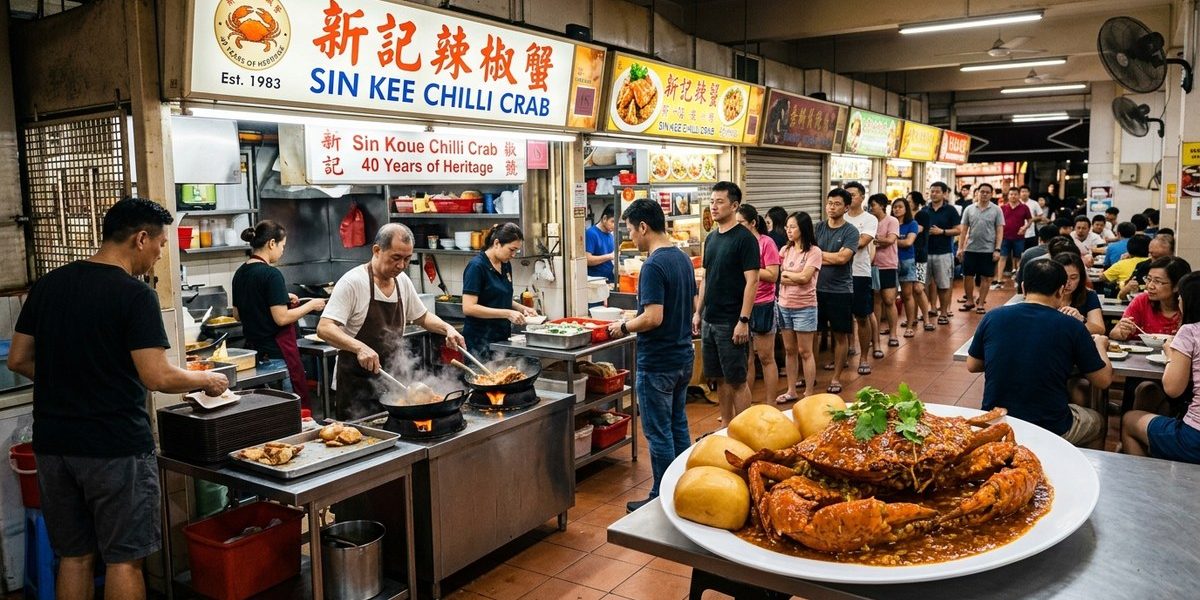
The queue snakes past the drinks stall, past the newspaper rack, and out toward the carpark. It is 5.15pm on a Tuesday. The usual crowd has already formed, a mix of uncles in slippers, young couples fresh from the MRT, and tourists clutching phone maps. They are all here for the same thing: a plate of chilli crab from a stall that has been frying, stirring, and serving since 1986.
This Bedok chilli crab stall has survived four decades because it refuses to cut corners. The gravy is still made from scratch daily, the crabs are sourced fresh each morning, and the recipe has never changed. In a city where food trends come and go, this stall proves that consistency, not hype, builds a legacy. Locals know that the queue is worth it.
The story behind the wok
Most people walk past this coffeeshop without realising they are standing in front of a piece of Singapore hawker history. The stall started in 1986, when the founder, now in his seventies, decided to bring his family’s Hokkien-style chilli crab recipe out of the home kitchen and into the public. Back then, Bedok was still growing. HDB flats were rising, families were moving in, and the neighbourhood needed good food.
The stall found its home in a corner coffeeshop along Bedok North. It was not fancy. It did not have air conditioning. But the chilli crab spoke for itself. Within a year, regulars started coming every week. Within five years, the queue became a fixture.
What makes this story different from so many others is the quiet refusal to change. The second generation took over in the early 2000s, but the wok stays the same. The gravy recipe stays the same. Even the plastic stools outside the coffeeshop have been replaced only when they cracked beyond repair.
What makes this chilli crab different
Let us talk about the crab itself. The stall uses Sri Lankan mud crabs, which are known for their sweet, firm flesh. The crabs arrive alive every morning. The team inspects each one by hand. If the shell is too soft or the crab looks tired, it goes back.
The gravy is where the magic happens. Most chilli crab sauces rely on bottled chilli paste and pre-mixed stock. This stall does not. The gravy starts with fresh tomatoes, blended into a pulp. Then comes the chilli paste, made from a blend of dried chillies, fresh bird’s eye chillies, and a secret ingredient that the family will not disclose. The wok master stirs the gravy for about 20 minutes, letting it reduce until it turns thick and glossy.
“The secret is patience,” the son told me once. “If you rush the gravy, you can taste it. The acidity is off. The sweetness is flat. You have to let the tomatoes cook down slowly.”
The result is a sauce that clings to the crab shell without being watery. It is sweet, tangy, and spicy in equal measure. Regulars know to order extra bread to mop up every drop.
How to order like a regular
First-timers often make mistakes. They order too much, or they order at the wrong time. Here is how to get it right.
- Arrive before 5pm if you want to skip the main dinner queue. The stall opens at 4pm, and the first batch of crabs is usually ready by 4.30pm.
- Order one medium crab per person. The crabs are generous. Two people sharing one large crab is enough if you also order sides.
- Ask for the gravy to be served on the side if you prefer to control the spice level. The kitchen will oblige.
- Do not skip the mantou. The fried buns are made fresh by a supplier in Geylang, and they arrive warm. Dip, do not pour.
- Call ahead if you are coming with a group of six or more. The stall can reserve crabs for you, but you must confirm by noon.
What to pair with your crab
A plate of chilli crab is never a solo act. The regulars have their rituals. Here is what they order alongside.
- Fried mantou: the essential partner. Order two baskets per person if you love the gravy.
- Cereal prawns: a lighter option that balances the richness of the crab. The batter is thin and crispy.
- Sambal kangkong: the vegetable dish that cuts through the spice. The kang kong is wok-fried with belacan and garlic.
- White rice: for those who want something plain to soak up the sauce. The rice is fluffy, not clumpy.
The stall also serves black pepper crab, which is less sweet and more peppery. It is a good choice if you want something different, but the chilli crab remains the star.
A table of common mistakes and how to avoid them
| Mistake | Why it happens | How to fix it |
|---|---|---|
| Ordering too many crabs | The crabs are large. One medium per person is enough. | Start with one each. You can always order more. |
| Going at 7pm on a Saturday | That is peak hour. The queue can be 45 minutes long. | Go on a weekday or arrive before 5pm. |
| Not bringing cash | The stall prefers cash. Some weekends, the card terminal is down. | Withdraw cash before you come. There is an ATM at the nearby mall. |
| Forgetting to check the market price | Crab prices fluctuate. A plate can cost more during festive seasons. | Ask the stall for the day’s price before you order. |
| Skipping the mantou | The gravy is too good to waste. | Order at least one basket per person. |
Why the queue still forms
Singapore has no shortage of chilli crab. You can find it at fancy restaurants, at East Coast seafood centres, and at hotel buffets. So why does this small coffeeshop stall in Bedok still draw crowds?
Part of it is nostalgia. Many of the customers grew up eating here. They bring their children now, and sometimes their grandchildren. The taste is a memory. It is the same flavour they had on their wedding day, or after their first pay cheque, or during a family reunion.
Part of it is the consistency. The stall has never changed its recipe. The gravy tastes exactly the same as it did in 1996. That kind of reliability is rare in Singapore’s food scene, where stalls often tweak recipes to cut costs or adapt to new trends.
And part of it is the setting. Eating chilli crab at a coffeeshop, with plastic plates and paper napkins, feels honest. There is no pretence. You are here for the food, and the food delivers.
For more stories about stalls that have stood the test of time, read about the 78-year-old uncle behind Chinatown’s best char kway teow or the five generations of bak chor mee inside Tai Hwa Pork Noodle’s Michelin success.
The people who keep it going
The stall is now run by the founder’s son and his wife. They start their day at 7am, when the crab supplier arrives. They inspect each crab, then begin preparing the ingredients. The gravy is made in batches throughout the day. The wok never stops.
The son told me that he never planned to take over. He worked in an office for a few years, but the pull of the family business was too strong. “I grew up in this coffeeshop,” he said. “I know every crack in the floor, every regular customer. This is where I belong.”
His wife handles the front of house. She remembers names, faces, and orders. She knows that Mr Tan from block 512 likes his crab with extra chilli, and that the couple from Tampines always orders cereal prawns on the side.
What the future looks like
The stall is not planning to expand. There are no plans for a second outlet, no plans for delivery partnerships. The family wants to keep things small. They want to maintain the quality.
But they are training a third generation. The son’s nephew, who is in his twenties, has started learning the gravy recipe. He spends weekends at the stall, watching, stirring, tasting. It will take years before he masters it. That is fine. The family believes that some things cannot be rushed.
If you want to see how other heritage stalls are preserving their recipes, check out our piece on the secret recipes they guard with their lives and the three generations behind the wok.
Where to find it and when to go
The stall is located at a coffeeshop along Bedok North Avenue 3. The easiest way to get there is to take the MRT to Bedok station, then walk about 10 minutes, or take bus 66 or 28 and alight at the block 511 stop.
Opening hours are 4pm to 10pm, Tuesday to Sunday. Monday is their rest day. The stall closes early if the crabs run out, which happens often during the school holidays and public holidays.
If you are planning a visit, combine it with a walk around the neighbourhood. Bedok has a few other hidden food spots worth trying. Our guide to Bedok North’s best kept hawker secrets will point you in the right direction.
The legacy of a simple plate
A plate of chilli crab from this stall is more than dinner. It is a connection to a Singapore that is slowly disappearing. It is a reminder that the best food does not need a fancy setting or a marketing budget. It just needs a cook who cares, a recipe that works, and customers who keep coming back.
If you have not tried it yet, go soon. The queue will still be there. But once you taste the gravy, you will understand why it is worth the wait. And if you want to read about another Bedok institution, take a look at the secret ingredient behind the Bedok chwee kueh stall that has been running for 50 years.
The next time you find yourself in the east, skip the mall restaurants. Head to the coffeeshop. Grab a seat. Order the crab. And enjoy a taste of history that is still being written, one plate at a time.