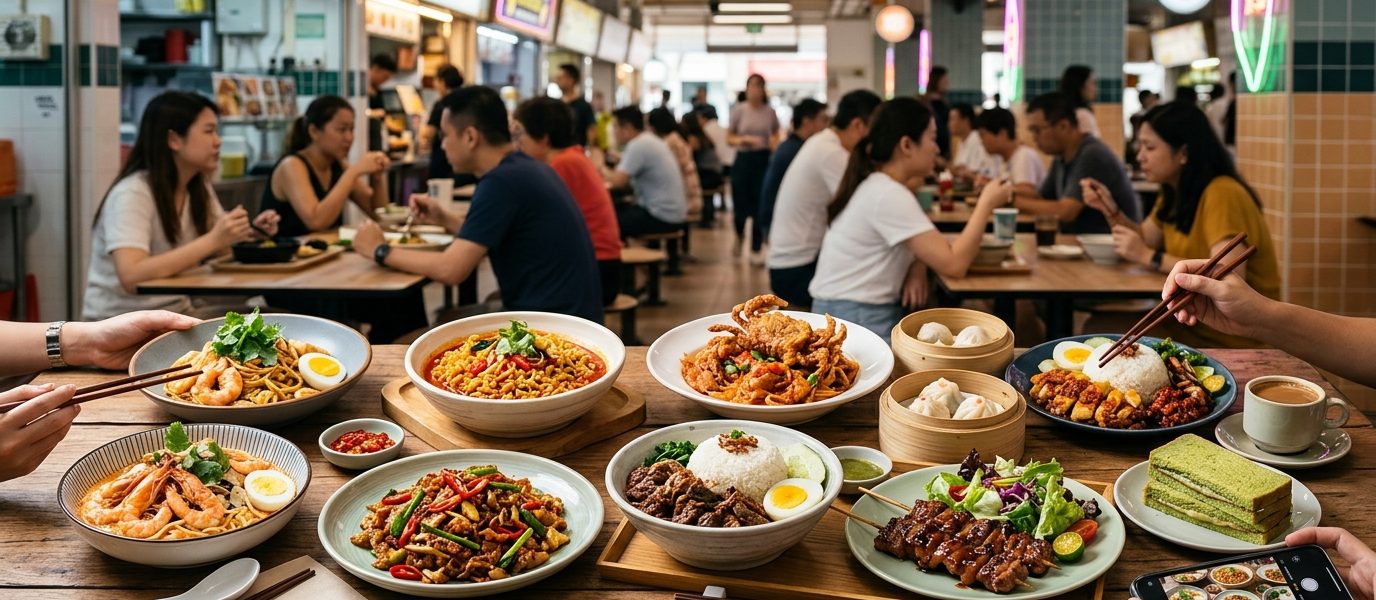
Singapore’s hawker scene is changing, and not everyone is happy about it. Walk through any modern food centre and you’ll spot stalls serving mentaiko pasta next to traditional wonton mee, Korean-style fried chicken beside your uncle’s char kway teow. The fusion hawker stalls Singapore has been buzzing about aren’t just trendy gimmicks anymore. Some are genuinely reshaping how we think about hawker food while honouring the traditions that built our food culture.
Fusion hawker stalls in Singapore blend traditional cooking methods with contemporary ingredients and techniques. The best ones respect heritage recipes while adding creative twists that appeal to younger diners. Success depends on balancing innovation with authenticity, maintaining affordable prices, and understanding which flavour combinations work. These stalls are helping preserve hawker culture by attracting new generations of both customers and hawkers.
What makes fusion hawker food different from regular hawker fare
Traditional hawker food follows recipes passed down through generations. Your chicken rice uncle makes it the same way his father taught him. Fusion stalls take those foundations and ask what happens when you add something unexpected.
The difference isn’t just about throwing random ingredients together. Good fusion respects the original dish. A stall serving truffle hokkien mee still needs proper wok hei and that smoky char. The truffle oil is an enhancement, not a replacement for technique.
Bad fusion happens when hawkers chase trends without understanding why certain flavours work together. You’ll know it when you taste it. The dish feels confused, like it’s trying too hard to be Instagram-worthy instead of delicious.
Price points matter too. Fusion hawker stalls Singapore locals actually return to keep meals under $10. Go much higher and you’re competing with restaurants, not other hawker stalls. The challenge is sourcing premium ingredients while maintaining hawker centre economics.
How fusion stalls are attracting younger hawkers and customers
The average hawker in Singapore is over 60 years old. Many stalls close because children don’t want to take over. Fusion concepts are changing that calculation.
Younger hawkers see fusion as a way to make the trade their own. They’re not just copying their parents’ recipes. They’re building something that reflects their generation’s tastes while keeping hawker culture alive.
These young food entrepreneurs often come from different backgrounds. Some worked in restaurants. Others studied overseas and brought back flavour combinations they experienced abroad. A few are career switchers who chose hawker life over corporate jobs.
The customer base shifts too. Millennials and Gen Z diners who might skip traditional hawker centres will queue for fusion stalls. They want food that feels familiar but exciting. Something they can share on social media but also actually enjoy eating.
This generational exchange benefits everyone. Older hawkers share cooking techniques. Younger ones bring marketing savvy and willingness to experiment. The fusion stalls getting it right are preserving hawker culture by evolving it.
Five fusion techniques that actually work at hawker stalls
Not every fusion experiment succeeds. Here are techniques that consistently deliver good results:
-
Premium ingredient swaps: Replace standard proteins or toppings with higher-quality versions. Think Iberico pork in char siew rice or mentaiko in fried rice. The cooking method stays traditional, but the ingredient elevates the dish.
-
Cross-cultural sauce applications: Use Asian sauces on Western dishes or vice versa. Teriyaki on pasta works. Sambal on pizza works. The key is matching flavour profiles that complement rather than clash.
-
Modern plating of traditional dishes: Same recipe, different presentation. Deconstructed laksa or bento-style chicken rice attracts younger diners while keeping the taste authentic.
-
Technique transfers: Apply French cooking methods to local ingredients, or use hawker techniques on international dishes. Sous vide char siew or wok-fried aglio olio both demonstrate this approach.
-
Regional mashups: Combine dishes from different Asian cuisines. Korean-style fried chicken with Hainanese chicken rice sauce. Japanese ramen with bak chor mee toppings. These feel less jarring than East-meets-West combinations.
“The best fusion doesn’t announce itself. You taste something familiar, then notice the twist. That surprise should make you smile, not confused.” – Third-generation hawker experimenting with modern techniques
Common mistakes fusion hawker stalls make
| Mistake | Why It Fails | Better Approach |
|---|---|---|
| Overcomplicating dishes | Too many flavours fight each other | Limit to 2-3 key fusion elements |
| Ignoring traditional technique | Loses the soul of the original dish | Master basics before innovating |
| Pricing like a restaurant | Hawker customers have price expectations | Keep most items under $10 |
| Chasing every trend | Menu becomes unfocused | Pick a clear fusion identity |
| Poor ingredient sourcing | Quality inconsistency kills repeat business | Build reliable supplier relationships |
| Neglecting presentation | Even fusion hawker food needs to look good | Invest in proper serving ware |
The biggest mistake is forgetting you’re still running a hawker stall. Speed matters. Consistency matters. Affordability matters. Fusion is the concept, but hawker fundamentals determine success.
Where to find Singapore’s best fusion hawker experiments
Fusion stalls pop up across the island, but certain locations become testing grounds for new concepts.
Newer hawker centres and food courts see more fusion experiments. Air-conditioned hawker centres attract stalls willing to try modern concepts. The comfortable environment suits diners who want to linger over their fusion creations.
Established centres like Tiong Bahru Market balance traditional and fusion stalls. You can get classic chwee kueh for breakfast, then try truffle mushroom pau for lunch. This mix lets you compare approaches side by side.
Some fusion hawkers start at less crowded neighbourhood centres where rent is lower and they can test recipes without massive queues watching their every move. Once they build a following, they might expand to busier locations.
Food halls in shopping malls host fusion concepts too, though these blur the line between hawker stall and restaurant. Prices tend higher, but the concepts often influence what eventually appears at proper hawker centres.
The best strategy is following food bloggers and Instagram accounts that track new openings. Fusion stalls generate buzz when they launch. Visit early to form your own opinion before the hype machine takes over.
What fusion hawker food reveals about Singapore’s eating culture
We’re protective of our food traditions, but we’re also constantly evolving them. That tension defines Singaporean eating culture.
Fusion hawker stalls test how far we’ll let our favourite dishes change. Some innovations get rejected immediately. Others become so popular we forget they were once controversial. Remember when salted egg yolk everything seemed weird? Now it’s mainstream.
The acceptance of fusion also reflects Singapore’s multicultural identity. We’re used to different cuisines existing side by side. Combining them feels natural here in ways it might not elsewhere.
Economic factors play a role too. Younger Singaporeans eat out more than previous generations but have less time to cook. Fusion hawker food offers variety and novelty at prices that don’t require special occasion budgets.
There’s also pride in seeing hawker culture adapt rather than fade. Every successful fusion stall is proof that hawker food can survive in modern Singapore. That matters to people who grew up eating at these centres and want their children to experience them too.
How to judge if a fusion dish respects its roots
Not every fusion attempt deserves praise. Here’s how to evaluate whether a dish honours its origins:
-
Technique check: Does the cooking method match the traditional dish? Proper wok hei for fried noodles, correct rice texture for chicken rice variations, appropriate broth depth for fusion laksa.
-
Flavour balance: Can you still taste the original dish underneath the fusion elements? The additions should enhance, not overwhelm.
-
Ingredient quality: Are they using better ingredients to justify the fusion angle, or cheaper ones hidden behind novelty?
-
Price fairness: Does the cost reflect actual ingredient upgrades, or are you paying extra just for the concept?
-
Hawker authenticity: Is this still recognisably hawker food, or has it crossed into restaurant territory in everything but location?
The best fusion hawker dishes make you think “why didn’t anyone do this before?” They feel obvious in hindsight, which means the fusion was thoughtful rather than random.
Supporting fusion stalls while preserving traditional ones
You don’t have to choose between fusion and traditional hawker food. Both deserve support.
Visit traditional stalls regularly. Those old uncles and aunties keeping original recipes alive need customers to survive. Their techniques inform what makes fusion versions work.
When you try fusion stalls, provide feedback. These hawkers are experimenting. Constructive comments help them refine their concepts. Tell them what works and what doesn’t.
Share your finds with friends, but be honest in your recommendations. Hype helps new stalls build crowds, but false praise sets wrong expectations. If something isn’t good yet, say so privately to the hawker rather than publicly online.
Understand that some fusion experiments will fail. That’s part of innovation. Not every new stall deserves to succeed just because they’re trying something different. Quality still matters most.
The hawker centres that thrive long-term will likely mix both approaches. Traditional stalls anchor the centre with proven favourites. Fusion stalls attract new customers and keep the menu exciting. Both contribute to keeping hawker culture relevant.
Why fusion hawker stalls matter for Singapore’s food future
Hawker culture faces real challenges. Rising costs, aging hawkers, changing eating habits. Fusion stalls aren’t the complete solution, but they’re part of it.
They prove hawker food can evolve without losing its identity. Young hawkers entering the trade with fusion concepts bring energy and ideas that keep centres vibrant.
The media attention fusion stalls generate benefits all hawkers. When food blogs cover a trendy new stall, they often mention traditional neighbours too. Rising tides lift all boats.
International visitors increasingly seek out fusion hawker food alongside classics. This dual appeal strengthens Singapore’s reputation as a food destination. Tourist dollars support the entire hawker ecosystem.
Most importantly, fusion stalls get younger Singaporeans excited about hawker centres again. If your first amazing hawker experience is a fusion dish, you’re more likely to return and eventually try traditional options too. Gateway foods matter.
The goal isn’t replacing traditional hawker food with fusion versions. It’s expanding what hawker food can be while respecting what it’s always been. The fusion hawker stalls Singapore celebrates today are writing the next chapter of a story that’s been evolving since our grandparents’ generation.
Making fusion hawker food part of your regular rotation
Start by identifying your favourite traditional dishes. Then look for fusion versions that reimagine them. Comparing both helps you appreciate what each approach offers.
Don’t visit fusion stalls expecting exact replicas of classics. Go with an open mind about what the dish could become. Judge it on its own merits first, then consider how it relates to the original.
Mix your hawker visits between traditional and fusion. Monday might be classic chicken rice, Wednesday a fusion take on laksa, Friday back to traditional char kway teow. Variety keeps both styles exciting.
Bring friends from different generations. Older relatives can explain what makes traditional versions special. Younger friends might spot creative elements you’d miss. These conversations deepen everyone’s appreciation.
Follow fusion hawkers on social media to catch special menu items. Many test new dishes as limited runs before adding them permanently. Being an early taster means you can influence what stays on the menu.
Remember that fusion hawker food works best when it makes you happy. If you prefer traditional versions, that’s completely valid. If fusion excites you more, embrace it. Singapore’s hawker scene is big enough for both preferences, and that diversity is what makes our food culture so rich.