Category: Heritage Stories

  • From Pushcarts to Permanent Stalls: How Singapore’s Hawkers Moved Indoors

    Singapore’s hawker centres didn’t appear overnight. They emerged from decades of deliberate urban planning, public health reforms, and a government determined to modernise the city without erasing its soul. What started as thousands of pushcart vendors lining five-foot ways and street corners became the organised, UNESCO-recognised hawker culture we know today.

    Key Takeaway

    Between 1968 and 1986, Singapore relocated over 20,000 street hawkers into purpose-built centres through a systematic resettlement programme. This transformation addressed hygiene concerns, traffic congestion, and urban planning needs whilst preserving affordable food culture. The shift created permanent infrastructure that now defines Singapore’s culinary identity and earned UNESCO recognition in 2020.

    Street Food Before the Centres

    Walk through Singapore in the 1950s and you’d find hawkers everywhere. Roadsides. Back alleys. Five-foot ways outside shophouses. Mobile vendors pushed carts through neighbourhoods, announcing their arrival with distinctive calls and sounds.

    These hawkers fed the working class. Factory workers. Construction labourers. Office clerks. A plate of char kway teow or a bowl of laksa cost mere cents. No frills. No aircon. Just good food served fast.

    But the system had problems. Serious ones.

    Hygiene standards varied wildly. Some vendors maintained spotless operations. Others didn’t. Food sat uncovered under the tropical sun. Dishwashing happened in buckets. Proper refrigeration was rare.

    Traffic became a nightmare. Hawkers set up wherever customers gathered, blocking roads and pavements. Chinatown, Geylang, and Bugis turned into permanent bottlenecks. Emergency vehicles couldn’t get through.

    Fire hazards multiplied. Cooking with charcoal and kerosene in crowded areas created constant risks. Wooden pushcarts packed together. Cooking oil. Open flames. The combination worried authorities.

    Why the Government Acted

    The post-independence government faced mounting pressure to modernise. Singapore needed to attract foreign investment. Build new housing estates. Develop proper infrastructure.

    Street hawkers didn’t fit the vision of a modern city.

    But here’s the thing. The government recognised hawker food’s cultural importance. Leaders like Lee Kuan Yew understood that cheap, accessible meals kept workers fed and costs down. Hawker culture represented Singapore’s multicultural heritage in edible form.

    The solution? Don’t ban hawkers. Relocate them.

    In 1968, the government launched the Hawker Resettlement Programme. The plan was ambitious. Move every street vendor into purpose-built centres with proper facilities. Give them permanent stalls with running water, electricity, and waste disposal.

    “We had to clean up the city, but we couldn’t destroy what made Singapore unique. Hawker food was part of our identity. The challenge was preserving it whilst modernising everything around it.” – Former urban planning official

    The programme offered hawkers a deal. Register with authorities. Get a license. Move into a designated centre when your area came up for resettlement. Refuse, and face penalties.

    Most hawkers cooperated. They had little choice. But many also saw benefits. Permanent locations. Protection from weather. Access to utilities. No more pushing heavy carts.

    How the Transition Happened

    The resettlement followed a systematic process:

    1. Identify high-concentration hawker areas through surveys and licensing data.
    2. Build hawker centres in or near these locations to minimise displacement.
    3. Allocate stalls through balloting systems, prioritising registered vendors.
    4. Provide transition support including moving assistance and temporary licenses.
    5. Clear streets once centres opened, enforcing anti-hawking regulations.
    6. Monitor operations and adjust policies based on feedback.

    The first purpose-built centres opened in the late 1960s. Queenstown. Toa Payoh. Bedok. These weren’t just shelters with cooking spaces. Architects designed them with ventilation, drainage, and seating areas.

    Early centres featured simple layouts. Rows of stalls. Shared tables. Basic amenities. Function over form. The goal was getting vendors off streets, not creating architectural landmarks.

    Some hawkers struggled initially. Fixed locations meant less flexibility. Rent, though subsidised, still cost money. Competition intensified when dozens of vendors sold similar dishes under one roof.

    But customers adapted. Centres became neighbourhood anchors. Residents knew where to find their favourite stalls. New estates got centres as part of master plans. By the mid-1970s, the model proved successful.

    The Numbers Behind the Move

    Period Hawkers Relocated Centres Built Key Changes
    1968-1975 ~8,000 45 Initial resettlement, basic facilities
    1976-1985 ~12,000 78 Improved designs, better ventilation
    1986 onwards Remaining street vendors 30+ Modernisation, aircon centres

    The programme officially ended in 1986. By then, Singapore had over 150 hawker centres. Street hawking became virtually extinct except for a handful of licensed areas.

    The transformation reshaped daily life. Workers no longer chased mobile vendors. Families gathered at centres for meals. Tourists discovered authentic local food in clean, accessible environments.

    What Changed for Hawkers

    Moving indoors fundamentally altered hawking as a profession.

    Fixed costs replaced variable ones. Street hawkers paid informal fees to gangsters or moved constantly to avoid authorities. Centre stalls came with official rent, utilities, and cleaning fees. Predictable but unavoidable.

    Competition intensified. A street corner might have two or three char kway teow sellers. A centre could have ten. Standing out required better food, faster service, or lower prices.

    Hygiene standards became enforceable. Inspectors could visit anytime. Violations meant fines or license suspension. Vendors installed proper sinks, refrigerators, and grease traps. Food safety improved dramatically.

    Operating hours standardised. Most centres established core hours, though individual stalls could choose when to open. The old practice of late-night mobile hawkers faded.

    Specialisation increased. With permanent locations, hawkers invested in equipment and refined recipes. Reputations built over years. Some stalls became institutions, drawing queues daily.

    The transition wasn’t smooth for everyone. Older hawkers retired rather than adapt. Some businesses failed in the new competitive environment. But overall, the system worked.

    Design Evolution Over Decades

    Early centres prioritised function. Get vendors indoors. Provide basics. Move on.

    Later designs incorporated lessons learned:

    • Better ventilation systems to handle cooking smoke and heat
    • Wider walkways for easier customer flow
    • Improved waste management with centralised collection
    • Separate wet and dry areas for different food types
    • Accessible facilities for elderly and disabled patrons

    The 1990s brought aesthetic upgrades. Centres like Maxwell Food Centre received heritage designations. Renovations balanced modernisation with character preservation.

    The 2000s introduced air-conditioning. Not everywhere, but in select centres catering to office crowds and tourists. Places like these air-conditioned hawker centres showed how the model could evolve without losing authenticity.

    Recent designs emphasise sustainability. Solar panels. Rainwater harvesting. Energy-efficient lighting. Hawker centres now reflect contemporary environmental values whilst maintaining their core purpose.

    Cultural Impact of the Shift

    Moving hawkers indoors preserved food culture in unexpected ways.

    Recipes stabilised. Street hawkers might change dishes based on ingredient availability or customer whims. Centre stalls developed signature versions that customers expected consistently.

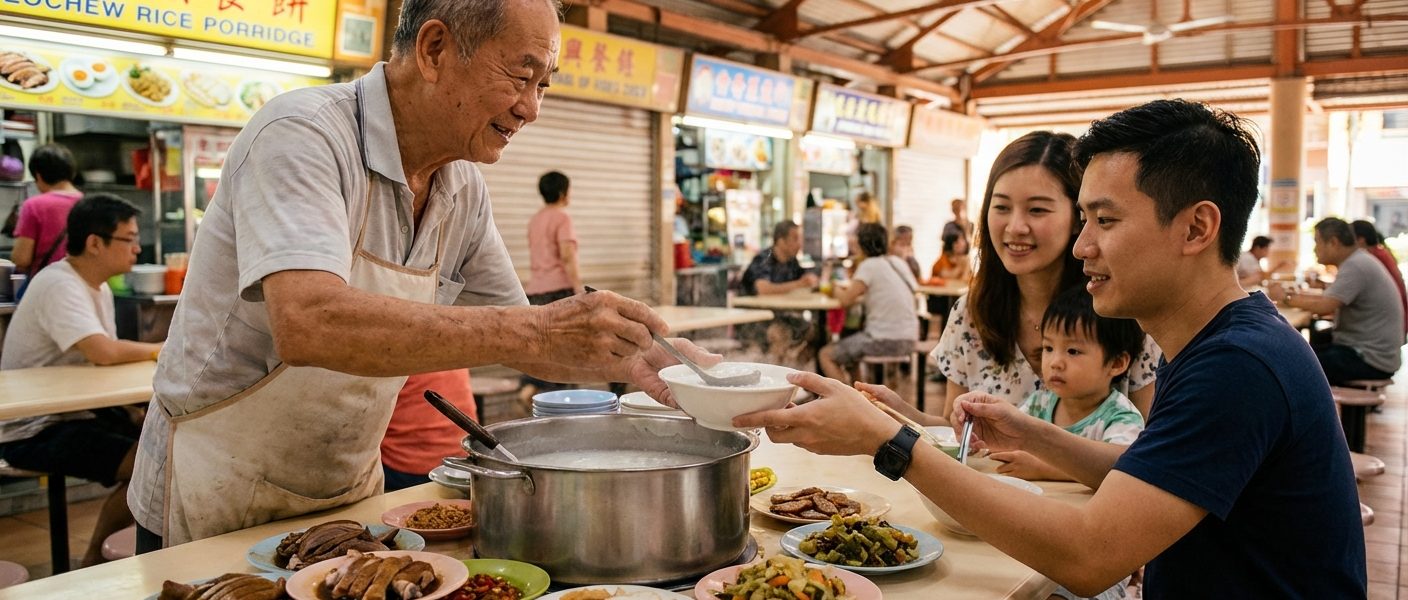
    Knowledge transfer improved. Permanent locations made apprenticeships viable. Children could learn family recipes in stable environments. Some stalls now span three or four generations.

    Documentation became possible. Food writers could revisit the same stalls. Researchers could study techniques. Media could feature specific vendors, building their reputations.

    The centres themselves became cultural institutions. Neighbourhoods identified with their local centres. Tiong Bahru Market represents more than food. It’s community memory in built form.

    Tourism discovered hawker centres. What started as local infrastructure became international attractions. Visitors seeking authentic experiences found them at centres, not restaurants. This recognition culminated in UNESCO inscribing hawker culture on its Representative List of Intangible Cultural Heritage in 2020.

    Challenges That Emerged

    Success brought new problems.

    Ageing hawkers. Many vendors are now in their 60s and 70s. Physical demands of hawking take a toll. Retirement looms, but successors are scarce. Young Singaporeans see hawking as hard work with limited returns.

    Rising costs. Rent remains subsidised, but ingredients, utilities, and labour cost more. Keeping prices affordable whilst maintaining quality gets harder. Some famous stalls raise prices and face backlash.

    Gentrification pressures. Prime location centres attract redevelopment interest. Balancing heritage preservation with urban renewal creates tensions. Communities resist changes that might displace beloved hawkers.

    Authenticity debates. As centres modernise, some argue they lose character. Air-conditioning changes the atmosphere. Renovations erase patina. Social media crowds disrupt regular customers. Finding the right balance proves difficult.

    Government Support Programmes

    Authorities recognised these challenges and responded:

    • Incubation stalls with reduced rent for new hawkers
    • Skills training programmes teaching cooking and business management
    • Grants for equipment upgrades and stall improvements
    • Succession schemes helping hawkers transition businesses to next generation
    • Heritage centre designations protecting significant locations

    The Hawkers’ Development Programme, launched in 2011, specifically targets sustainability. It funds apprenticeships, marketing support, and productivity improvements.

    These efforts show continued commitment to hawker culture. The government that moved vendors indoors now works to keep the system viable.

    Comparing Then and Now

    The contrast between 1960s street hawking and modern centres is stark:

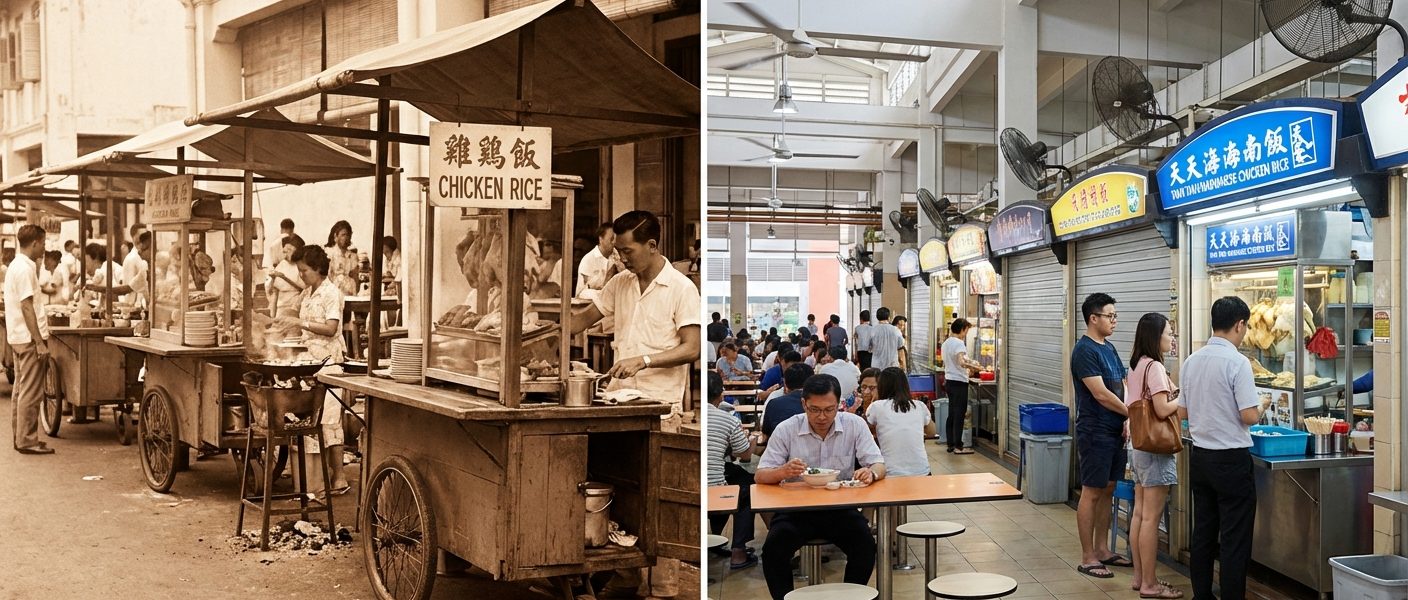
    Then: Mobile vendors. No fixed location. Variable hygiene. Weather dependent. Informal payments. Limited equipment. Personal recipes passed orally.

    Now: Permanent stalls. Licensed operations. Regular inspections. Climate-controlled options. Transparent fees. Professional equipment. Some documented recipes and training programmes.

    Yet core elements remain. Affordable prices. Multicultural variety. Hawker-customer relationships. Speed of service. The essence survived the transformation.

    Some hidden neighbourhood gems maintain old-school vibes despite modern infrastructure. They prove the model can accommodate both change and continuity.

    Lessons from the Transition

    Singapore’s experience offers insights for other cities grappling with street food regulation:

    • Preservation requires adaptation. Keeping culture alive sometimes means changing its form.
    • Infrastructure matters. Proper facilities improve food safety without destroying authenticity.
    • Gradual implementation works. The 18-year resettlement programme allowed adjustment periods.
    • Location is crucial. Building centres where hawkers already operated maintained customer bases.
    • Support systems help. Training, subsidies, and transition assistance increased cooperation.
    • Long-term thinking pays off. What seemed disruptive in the 1970s now defines national identity.

    Other Asian cities studied Singapore’s model. Some adapted elements. Others rejected the approach as too controlling. Each context demands different solutions.

    Why Some Hawkers Still Remember Streets Fondly

    Not everyone celebrates the transition. Older hawkers sometimes reminisce about street days.

    The freedom appealed. Set up where customers were. Move if business was slow. No rent when sick. Flexibility that centres don’t offer.

    The atmosphere felt different. Street hawking was theatre. Vendors performed. Customers watched. Cooking happened in full view. The intimacy of a pushcart stall differs from a centre kiosk.

    Relationships were more personal. Regular customers knew where to find their favourite vendor. The hawker remembered their preferences. Centre crowds can feel anonymous by comparison.

    But most acknowledge the trade-offs. Better facilities. Stable income. Protection from elements. Fewer bribes and harassment. The benefits outweighed the losses.

    How Centres Define Modern Singapore

    Today’s hawker centres are everywhere. Every neighbourhood has at least one. Some areas have several.

    They serve multiple functions beyond feeding people:

    • Community gathering spaces where neighbours meet
    • Affordable dining options keeping living costs manageable
    • Tourist attractions showcasing local culture
    • Employment for thousands of vendors and workers
    • Preservation of traditional cooking methods and recipes

    The centres shaped urban planning. New estates include hawker centres in initial designs. They’re considered essential infrastructure, like schools and clinics.

    Food culture evolved around them. Singaporeans judge neighbourhoods partly by their hawker centres. Good centres increase property values. Lau Pa Sat and similar locations became landmarks.

    The centres even influenced language. “Hawker centre” entered the vocabulary as a distinctly Singaporean term. It describes something that exists nowhere else quite the same way.

    The UNESCO Recognition

    In December 2020, UNESCO inscribed Singapore’s hawker culture on its Representative List of Intangible Cultural Heritage of Humanity.

    The recognition validated decades of preservation efforts. It acknowledged that moving hawkers indoors didn’t destroy culture. It transformed and protected it.

    The inscription highlighted several elements:

    • Multicultural food heritage reflecting Singapore’s diversity
    • Intergenerational knowledge transmission through family stalls
    • Community bonding facilitated by shared dining spaces
    • Affordable food access supporting social cohesion
    • Urban planning integration preserving tradition amid modernisation

    This global recognition increased tourism interest. More visitors seek authentic hawker experiences. Centres like those featured in breakfast hawker guides see growing international crowds.

    But UNESCO status brings responsibility. Authorities must maintain authenticity whilst allowing evolution. Balance commercial pressures with cultural preservation. Ensure accessibility without overcrowding.

    What the Future Holds

    Hawker centres face an uncertain next chapter.

    Succession remains the biggest challenge. Without new hawkers, stalls close permanently. Decades of culinary knowledge disappear. Some famous stalls already shuttered when founders retired.

    Automation offers partial solutions. Cooking robots. Automated dishwashing. Self-service kiosks. Technology could reduce physical demands. But it might also change the hawker experience fundamentally.

    Hybrid models are emerging. Some hawkers operate centre stalls plus delivery services. Others run multiple locations with employed cooks. The traditional single-hawker, single-stall model evolves.

    Younger vendors bring different approaches. They market on social media. Experiment with fusion dishes. Target different demographics. Long-standing favourites coexist with innovative newcomers.

    Government policies will shape outcomes. Continued subsidies. Support programmes. Heritage protections. Regulatory flexibility. These decisions determine whether hawker culture thrives or becomes museum pieces.

    From Streets to Centres and Beyond

    The story of Singapore hawkers moving indoors isn’t just about urban planning. It’s about negotiating modernity without abandoning identity.

    The government could have banned street hawking outright. Many cities did. Singapore chose preservation through transformation. The decision required vision, resources, and decades of sustained effort.

    The result is imperfect. Some authenticity was lost. New challenges emerged. But hawker culture survived and flourished in ways street vending never could have sustained.

    Today’s centres represent a living compromise. They’re not the romantic street scenes of old. But they’re not sterile food courts either. They occupy a middle ground that works for Singapore’s unique context.

    Understanding this history helps appreciate what you see when visiting a hawker centre. Those rows of stalls represent more than food options. They’re the physical embodiment of how a city chose to honour its past whilst building its future. Every plate of chicken rice or bowl of laksa connects to that larger story of transformation and preservation.