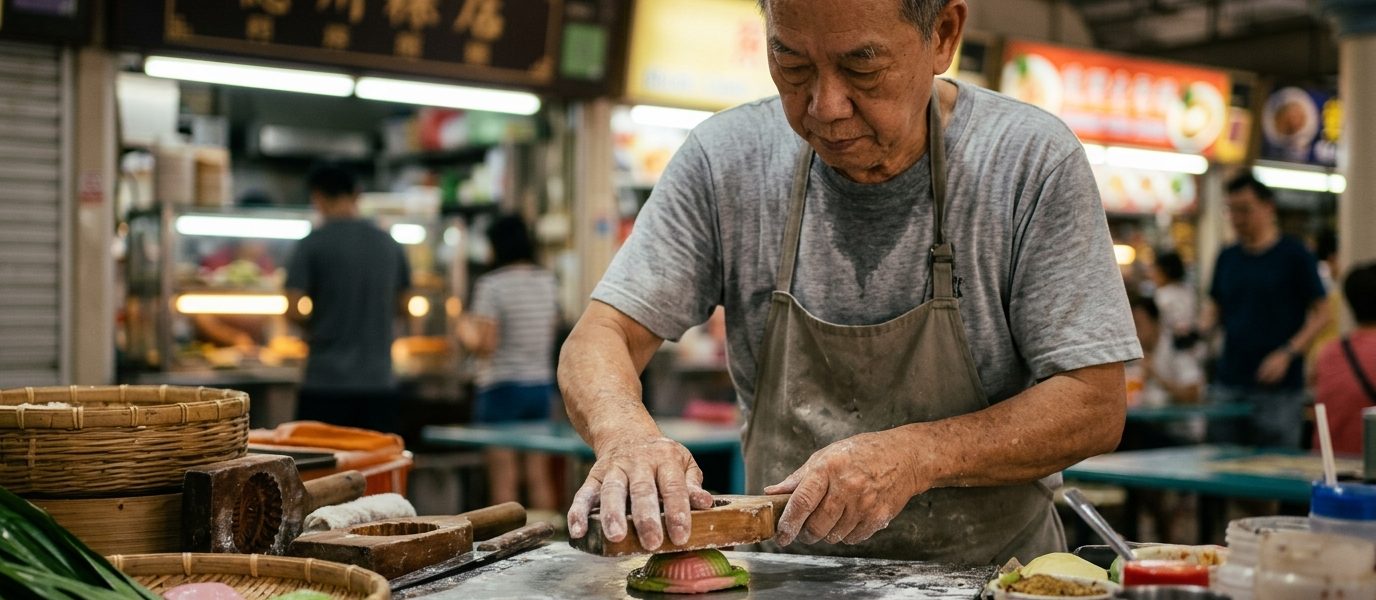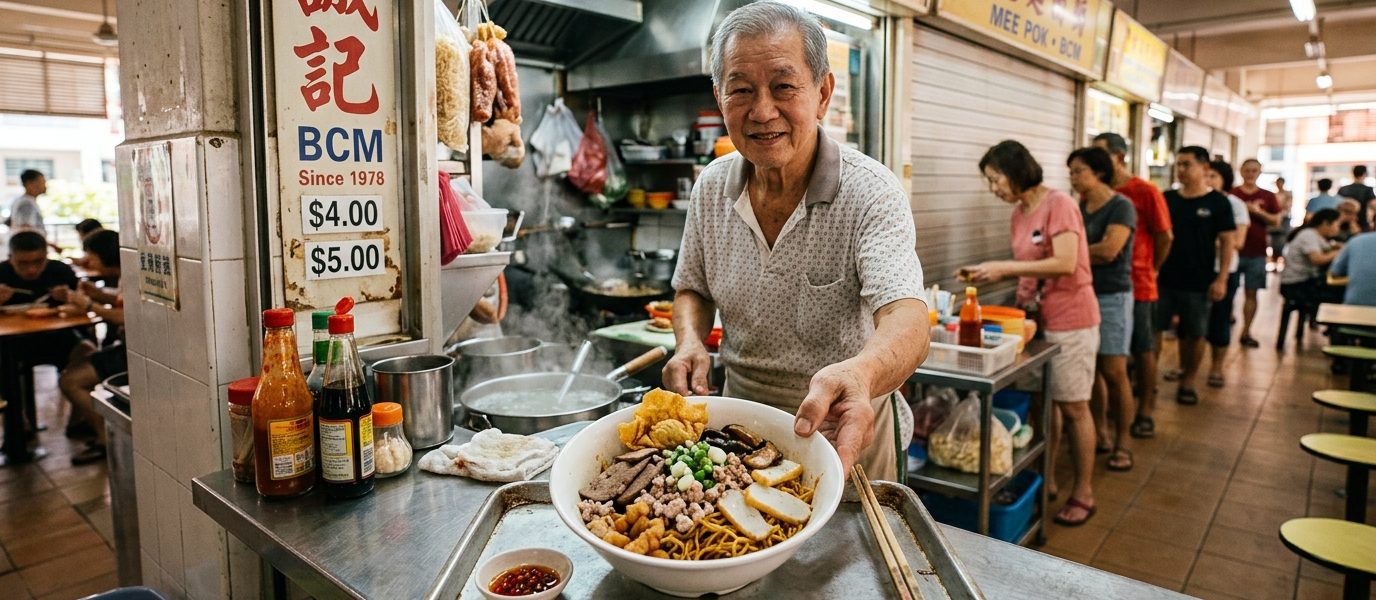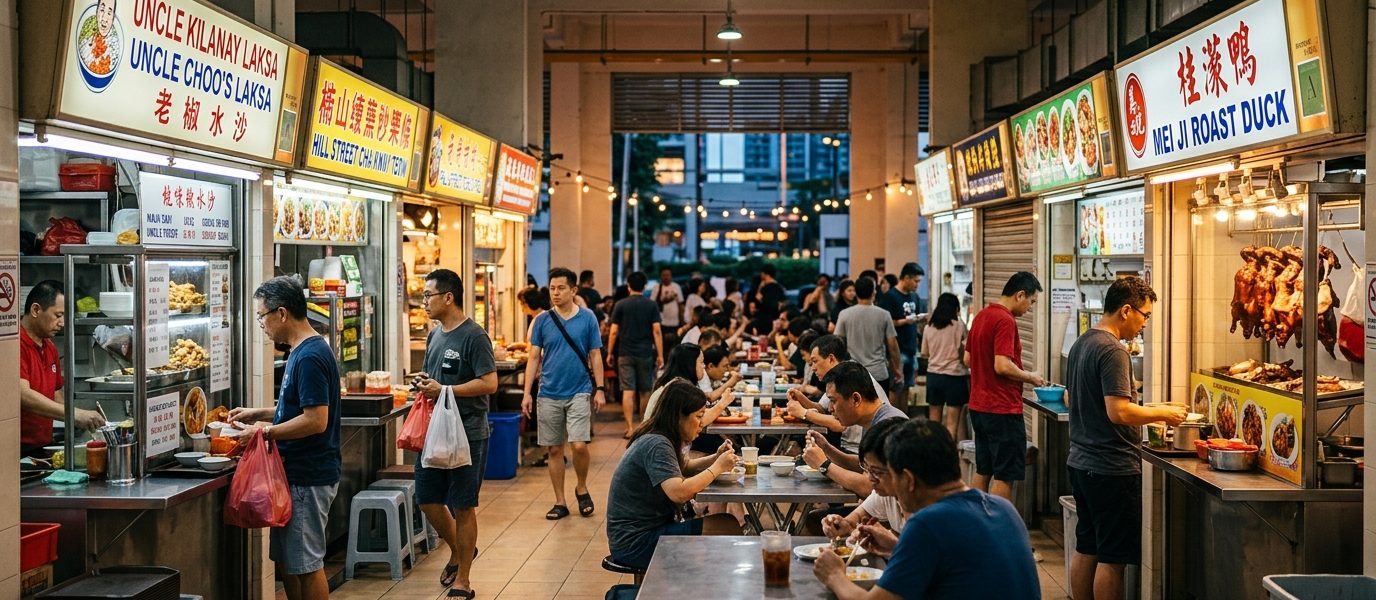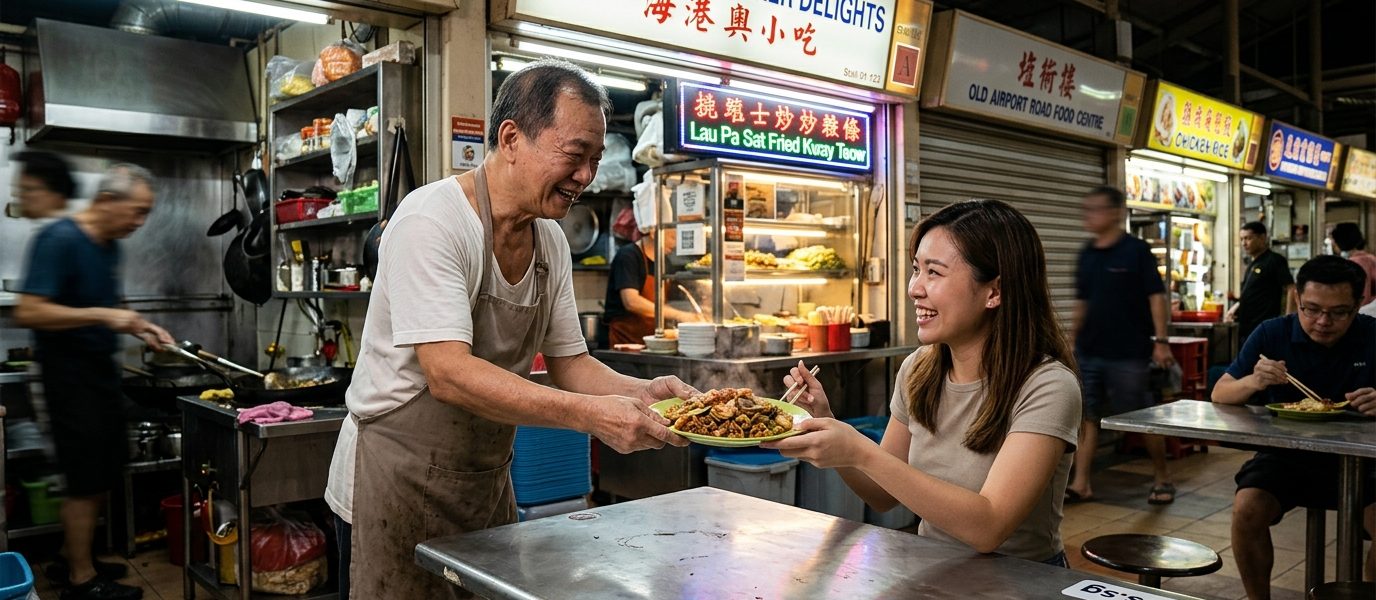
You won’t find these hawker stalls on Instagram’s top posts or in glossy travel magazines. The queues here are filled with uncles in singlets, office workers on lunch break, and aunties who’ve been coming here for decades. These are the hidden hawker stalls Singapore locals guard like family recipes, tucked in HDB estates and quiet corners where tourists rarely wander.
Singapore’s best hawker food hides in neighbourhood centres far from tourist hotspots. Locals know these stalls through word of mouth, family traditions, and years of trial and error. This guide reveals how to find them, what to order, when to visit, and the unwritten rules that separate visitors from regulars at these cherished establishments.
Why Locals Avoid the Famous Hawker Centres
Walk into Maxwell Food Centre on any weekend afternoon and you’ll understand immediately. Tour groups cluster around the same three stalls. Prices creep higher each year. The atmosphere feels more like a food court than a hawker centre.
Locals know better.
They head to places like Redhill Food Centre, where a plate of char kway teow costs two dollars less and tastes twice as good. Or Berseh Food Centre, where the laksa auntie still remembers how spicy you like it from three visits ago.
These hidden neighbourhood gems offer something money can’t buy at tourist centres: authenticity. No one’s performing for cameras here. Hawkers cook the way they’ve always cooked, for people who’ll notice if the wok heat isn’t high enough or the broth tastes different.
The difference shows in small details. Regulars get extra ingredients without asking. Stall owners adjust spice levels based on your face, not a number you point to. Someone might tell you to come back tomorrow because today’s batch isn’t up to standard.
How to Actually Find Hidden Hawker Stalls
Forget Google Maps’ top results. The best stalls rarely rank first because they don’t optimize for search engines or pay for ads. Here’s how locals really find them.
Follow the HDB Aunties and Uncles
Watch where residents go during meal times. If you see a steady stream of elderly folks heading to a particular hawker centre at 7am, they know something you don’t. They’ve been eating there for thirty years.
The breakfast crowd never lies. These people have tried every stall within walking distance. When they consistently choose one over others, pay attention.
Look for Handwritten Signs and Old Stall Fronts
Fancy signage costs money. Hawkers who’ve been around for decades often stick with faded banners and handwritten menus. Their reputation does the marketing.
If a stall looks like it hasn’t updated its decor since 1985, that’s usually a good sign. The food kept customers coming back long enough that renovation seemed unnecessary.
Check Opening Hours That Don’t Make Sense
A char kway teow stall that only opens 11am to 2pm? A chicken rice place closed on Tuesdays and Wednesdays? These odd schedules often indicate a hawker who doesn’t need to maximize hours because demand already exceeds supply.
Some stalls open only for breakfast or dinner. Others close whenever they sell out, which might be 1pm on a Saturday. This inconvenience filters out casual diners and attracts people who plan their day around the food.
Ask Taxi Drivers and Delivery Riders
These folks eat out constantly and know every corner of Singapore. Strike up a conversation. Ask where they go when they’re actually hungry, not just grabbing something fast.
Delivery riders especially know which stalls get consistent orders from the same customers week after week. That loyalty signals quality.
The Unwritten Rules at Local Hawker Stalls
Walking into a neighbourhood hawker centre as an outsider requires some cultural awareness. Break these rules and you’ll get served, but you’ll mark yourself as a tourist.
| Do This | Not That |
|---|---|
| Return your tray and bowls to the collection point | Leave everything on the table |
| Order in person at the stall, then find a seat | Sit first and expect table service |
| Bring exact change or small notes | Pay with a $50 note for a $3.50 meal |
| Chope your seat with tissue packets or an umbrella | Leave your phone or wallet on the table |
| Wait patiently without hovering over the hawker | Stand right in front blocking other customers |
| Nod or say thank you when food arrives | Ignore the person who brings your food |
These small gestures matter more at neighbourhood centres than tourist spots. The same faces appear here daily. Regulars notice who respects the space and who treats it like a theme park.
Five Steps to Becoming a Regular at Any Hawker Stall
Earning regular status takes time, but the payoff includes better portions, insider tips, and sometimes dishes not on the menu. Here’s the process.
-
Visit at consistent times on the same days. Hawkers remember patterns. Come every Tuesday at 12:30pm for a month and they’ll start recognizing you.
-
Order the same thing initially. Don’t experiment wildly on your first three visits. Let them associate you with a specific dish. This builds familiarity.
-
Learn basic Hokkien, Cantonese, or Malay food terms. Even butchered pronunciation shows effort. “Siew dai” for less sweet, “gao” for extra, “mai” for without. These simple words go far.
-
Bring friends and recommend the stall. Hawkers notice when someone brings new customers. It shows genuine appreciation beyond just eating there yourself.
-
Respect their off days and closing times. If they close at 2pm, don’t show up at 1:55pm expecting service. If they’re closed on Wednesdays, don’t knock on the shutter asking if they can make an exception.
“The best customers are the ones who understand our rhythm. They know when we’re tired, when we’re rushing, when to chat and when to just let us cook. Those people get treated like family.” – Hawker with 40 years at Toa Payoh Lorong 8 Market
Reading the Signs of a Truly Good Hidden Stall
Not every quiet hawker stall deserves your time. Some are empty for good reason. Learn to spot the difference between hidden gem and genuinely mediocre.
The Queue Appears at Odd Hours
No line at noon doesn’t mean anything if there’s a queue at 6:45am or 6pm. Peak hours vary by stall. Some breakfast places have their rush before most tourists wake up. Dinner stalls might see action only after 7pm when workers get home.
Watch the composition of the queue too. If it’s mostly older folks and families with young children, the stall has multi-generational appeal. That takes decades to build.
Ingredients Look Fresh and Abundant
Peek at their prep station if you can. Fresh vegetables, quality meat, ingredients prepped in small batches throughout service rather than everything done at 5am. These details indicate a hawker who hasn’t cut corners to save money.
Stalls that run out of ingredients mid-service often restock with fresh supplies rather than stretching what they have. That commitment to quality over profit margin separates great from good.
The Hawker Refuses Certain Modifications
When someone says they can’t make your laksa less spicy because it would ruin the balance, listen. Hawkers who protect their recipes even at the cost of a sale care more about the food than the money.
This confidence comes from knowing their version works. They’ve refined it over thousands of servings. Your preference matters less than the dish’s integrity.
Other Stall Owners Eat There
The ultimate endorsement. When hawkers choose to spend money at a neighboring stall instead of cooking for themselves, that speaks volumes. They know what goes into good hawker food and recognize it in others.
Where Locals Actually Eat by Neighbourhood
Different areas of Singapore have their own hidden hawker ecosystems. Here’s where residents go when they want the real thing, not the tourist version.
Bukit Merah: Redhill Food Centre and ABC Brickworks dominate local conversations. Less famous than Maxwell but arguably better for certain dishes.
Ang Mo Kio: Chong Boon Market and Food Centre hides excellent wanton mee and carrot cake stalls that have been around since the 1970s. The HDB blocks surrounding it guarantee a steady local crowd.
Bedok: Bedok South Market draws people from across the East for its prawn noodles and char kway teow. The morning coffee shop crowd here is legendary.
Toa Payoh: Multiple centres compete here, but Lorong 8 Market stands out for its old-school atmosphere and hawkers who’ve never left their original spots.
Clementi: Clementi 448 Market might look rundown, but locals swear by several stalls here. The chicken rice and economic rice options especially.
These centres share common traits. They’re surrounded by older HDB estates. They haven’t been renovated into sterile, air-conditioned food courts. The average age of both hawkers and customers skews higher.
What to Order at an Unfamiliar Stall
You’ve found a promising hidden stall. Now what? Making the right first order matters more than you’d think.
Start with Their Signature Dish
Every stall has one thing they’re known for locally. Look for clues: which dish has the longest description on the menu, what most people around you are eating, or just ask “what’s good here?”
That last question works better than you’d expect. Hawkers appreciate directness. They’d rather tell you their specialty than watch you order something mediocre and never return.
Avoid Complicated Modifications Initially
Order it standard the first time. The hawker designed that dish with specific proportions and flavors in mind. You need to taste their vision before you start customizing.
After you’ve tried the original version, then you can request adjustments. But earning the right to modify comes after showing you understand what they’re trying to achieve.
Notice What Regulars Add Themselves
Some stalls provide condiments at the table for a reason. Regulars know to add extra chili, or mix in the pickled vegetables a certain way, or squeeze the lime at a specific point while eating.
Watch and learn. These little rituals often make the difference between good and great.
Common Mistakes That Mark You as an Outsider
Even well-intentioned visitors make errors that signal unfamiliarity with hawker culture. Avoid these and you’ll blend in better.
Taking photos of everything. A few shots? Fine. But photographing your food from six angles while it gets cold? That’s tourist behavior. Locals eat first, Instagram later if at all.
Expecting English everywhere. Many older hawkers speak primarily Chinese dialects or Malay. Learn to point, use simple words, or show photos of dishes. Getting frustrated about language barriers helps no one.
Complaining about prices. If you think $4.50 for a plate of char kway teow is expensive, you’re comparing it to the wrong things. Consider the skill, the ingredients, the decades of experience. These hawkers aren’t getting rich.
Rushing the hawker. Good food takes time. If someone’s cooking your order fresh, that might mean waiting 15 minutes during peak hours. Hovering or asking “how much longer?” won’t speed things up.
Ignoring the tissue packet system. Tissue packets on tables mean someone’s claimed that seat. Don’t move them or sit there anyway. This chope system is sacred in Singapore.
Why These Hidden Stalls Matter Beyond the Food
Neighbourhood hawker centres serve as community anchors. They’re where residents bump into old friends, where elderly folks socialize over morning coffee, where parents bring kids who’ll later bring their own kids.
When tourists only visit famous centres, they miss this social fabric. The heritage of Singapore’s hawker culture lives not in UNESCO recognition but in these daily interactions.
Hidden stalls also preserve recipes and techniques that might otherwise disappear. Without the pressure to modernize or cater to international palates, hawkers here cook the way their parents taught them. Each bowl of bak chor mee or plate of economic rice carries decades of accumulated knowledge.
Supporting these stalls financially matters too. When locals stop coming because tourists have driven up prices and changed the atmosphere at famous centres, the neighbourhood spots become even more crucial. They’re where hawker culture survives in its most authentic form.
The Best Times to Visit Hidden Hawker Stalls
Timing determines whether you get the full experience or just mediocre leftovers. Here’s when to go.
Breakfast stalls: Arrive between 7am and 9am. Come later and popular items might be sold out. The morning crowd also tends to be more local, giving you a better sense of the authentic atmosphere.
Lunch spots: Get there by 11:30am if possible. The noon to 1pm rush can be intense at good stalls. Either beat it or wait until 1:30pm when things calm down.
Dinner places: Many neighbourhood centres see their peak between 6pm and 7:30pm when workers get home. If you can visit slightly earlier or later, you’ll have a more relaxed experience.
Weekend mornings: Some of the best hidden stalls only open on Saturdays and Sundays. These are often side businesses run by people with day jobs, or hawkers who’ve semi-retired but can’t quite give up cooking.
Avoid visiting right before closing time. You’ll get whatever’s left, not the best version of the dish. Hawkers are also tired and less likely to engage in the small interactions that make these places special.
How to Show Appreciation Without Being Awkward
Western tipping culture doesn’t apply at hawker centres, but there are other ways to express gratitude that locals understand.
Simply returning multiple times speaks volumes. Hawkers notice repeat customers. Your continued patronage means more than words.
Bringing friends demonstrates genuine recommendation. When you trust a stall enough to stake your reputation on it with visitors or new residents, hawkers appreciate that vote of confidence.
Learning their name and using it creates connection. “Uncle, one char kway teow” sounds different than just barking your order. This small personalization acknowledges them as individuals, not just service providers.
Respecting their craft by eating properly matters too. Don’t drown everything in chili sauce before tasting it. Don’t mix dishes in ways that clash. Show that you’re paying attention to what they’ve created.
Finding Hidden Hawker Stalls in Your Own Neighbourhood
If you live in Singapore, the best hidden stalls might be within walking distance. Here’s how to discover them.
Start eating breakfast at your nearest hawker centre every Saturday. Rotate through different stalls. Talk to the regulars. Ask questions. Within a month, you’ll know which stalls deserve your regular business.
Join neighbourhood Facebook groups and forums. Residents love discussing their favorite food spots. These hyperlocal recommendations beat any published guide.
Follow the kopitiam uncles. They’re at the hawker centre daily, often for hours. They’ve tried everything. Strike up conversations over coffee. Most are happy to share opinions.
Pay attention to which stalls have older hawkers still working. These folks are cooking because they love it, not because they need the money. That passion shows in the food.
When Hidden Stalls Stop Being Hidden
Success can ruin a hidden stall. Once food bloggers discover it, once it appears on “best of” lists, once tour groups add it to their itineraries, something changes.
Prices increase. Quality sometimes drops as hawkers struggle with higher volume. The local crowd gets displaced by visitors. The very thing that made the stall special disappears.
Some hawkers handle fame well. They maintain standards, limit hours to prevent burnout, and stay true to their original vision. Others get overwhelmed or see an opportunity to maximize profit.
This cycle is why locals are protective about their favorite spots. Sharing recommendations means risking the loss of something irreplaceable. If you’re fortunate enough to discover these hidden hawker stalls Singapore locals treasure, treat them with care.
Don’t broadcast every find on social media. Don’t write detailed reviews with exact locations and stall numbers. Enjoy the food, respect the space, and maybe share quietly with people you trust to do the same.
Your Real Hawker Education Starts Now
Reading about hidden hawker stalls only takes you so far. The real learning happens when you venture into neighbourhood centres, make mistakes, try unfamiliar dishes, and slowly build relationships with the people behind the woks and steamers.
Start this weekend. Pick a hawker centre you’ve never visited in an HDB estate far from tourist areas. Go during breakfast or dinner when locals eat. Order something you can’t pronounce. Sit among the regulars and observe.
You won’t become an insider overnight. But each visit teaches you something new about how Singaporeans really eat, what matters to the people cooking your food, and why these hidden stalls represent the soul of the city’s food culture. That education is worth more than any published list of the “top ten” anything.
The best hawker experiences aren’t photographed, aren’t reviewed, and aren’t found on the first page of search results. They’re discovered through patience, respect, and genuine curiosity about the food and people that make Singapore’s hawker culture extraordinary.