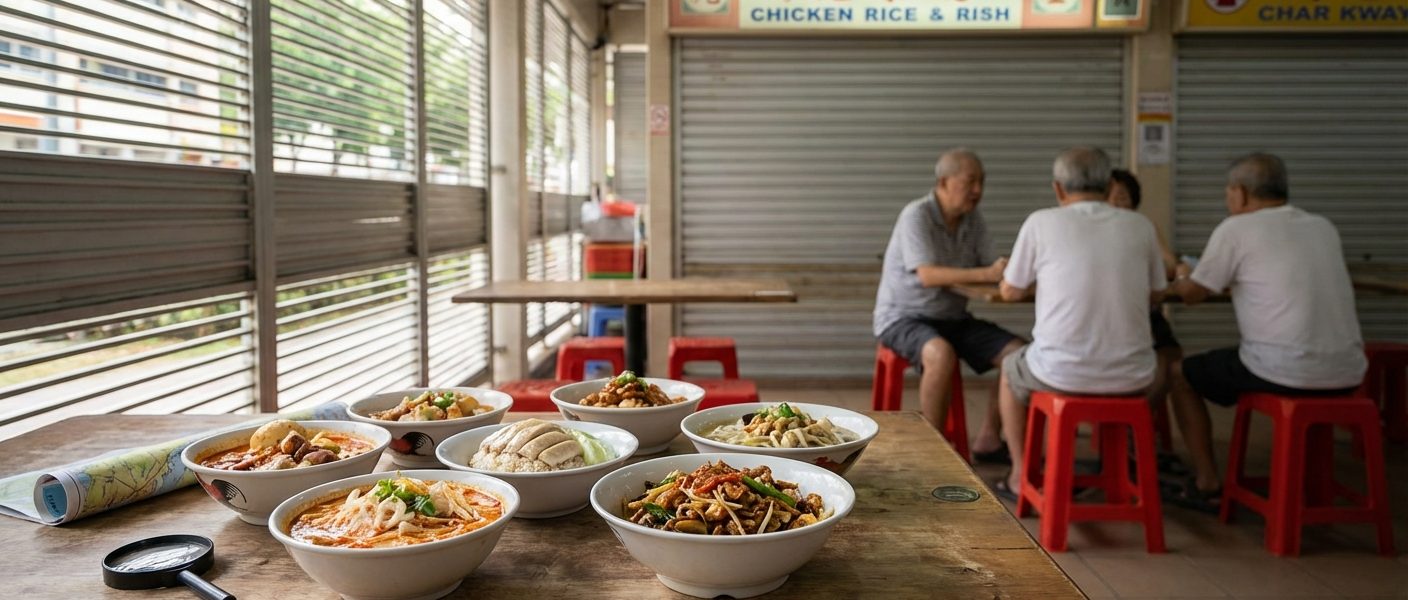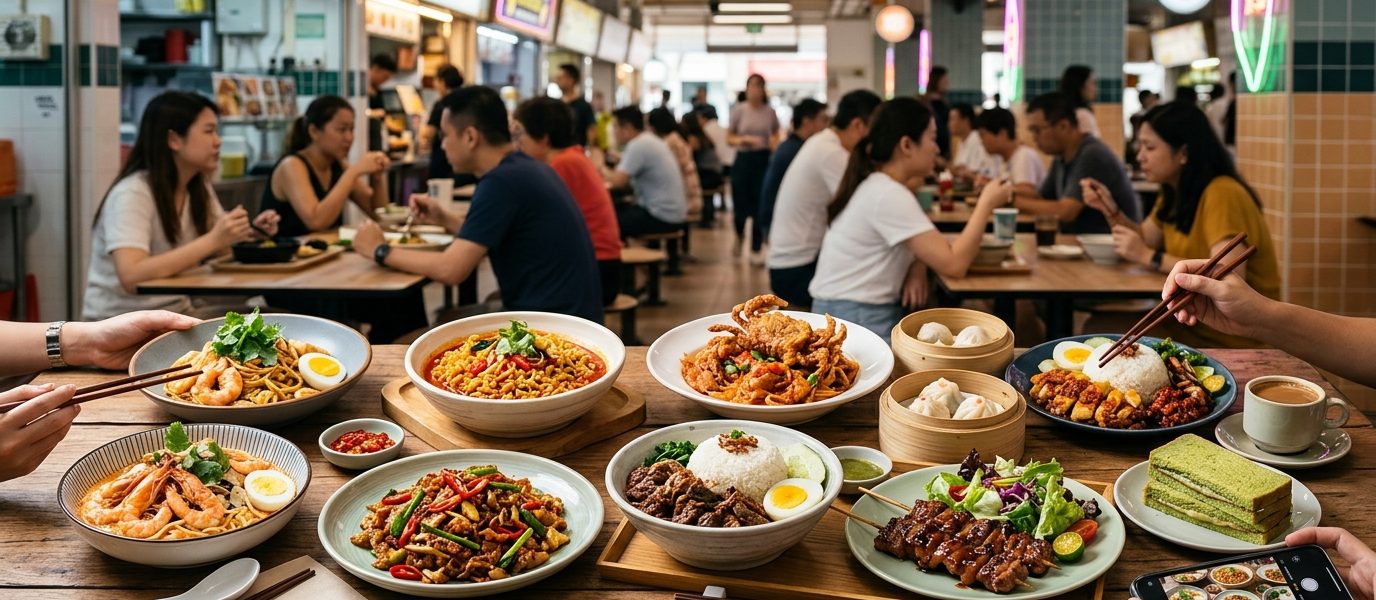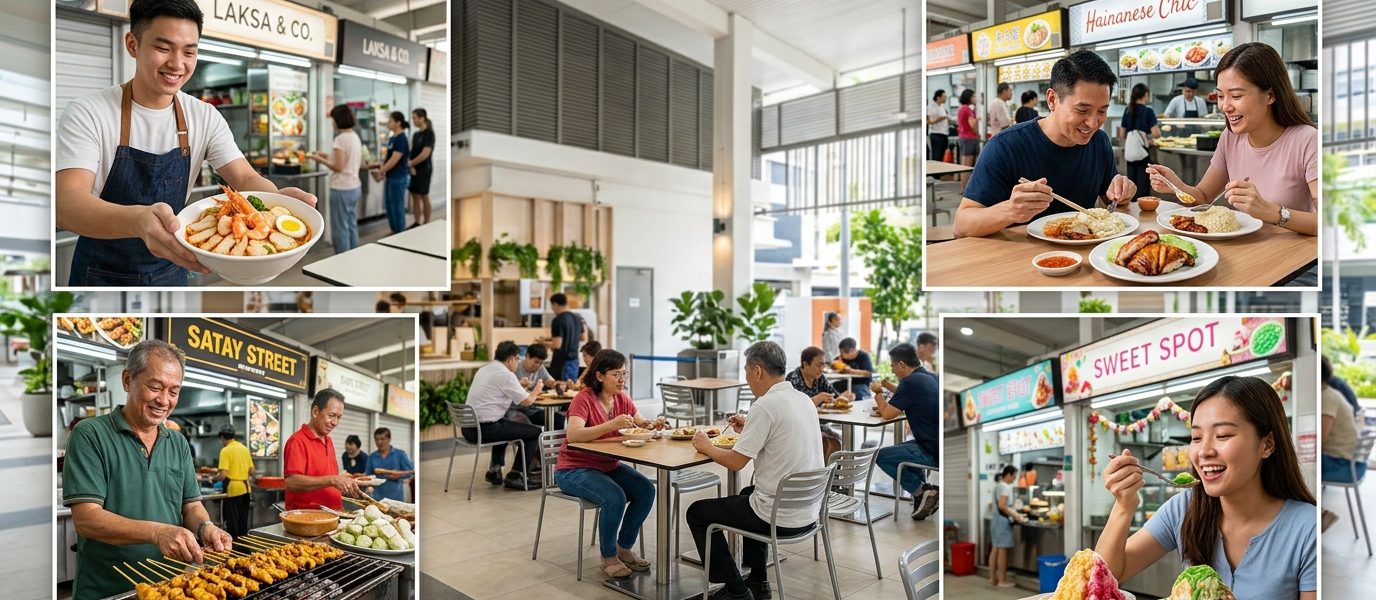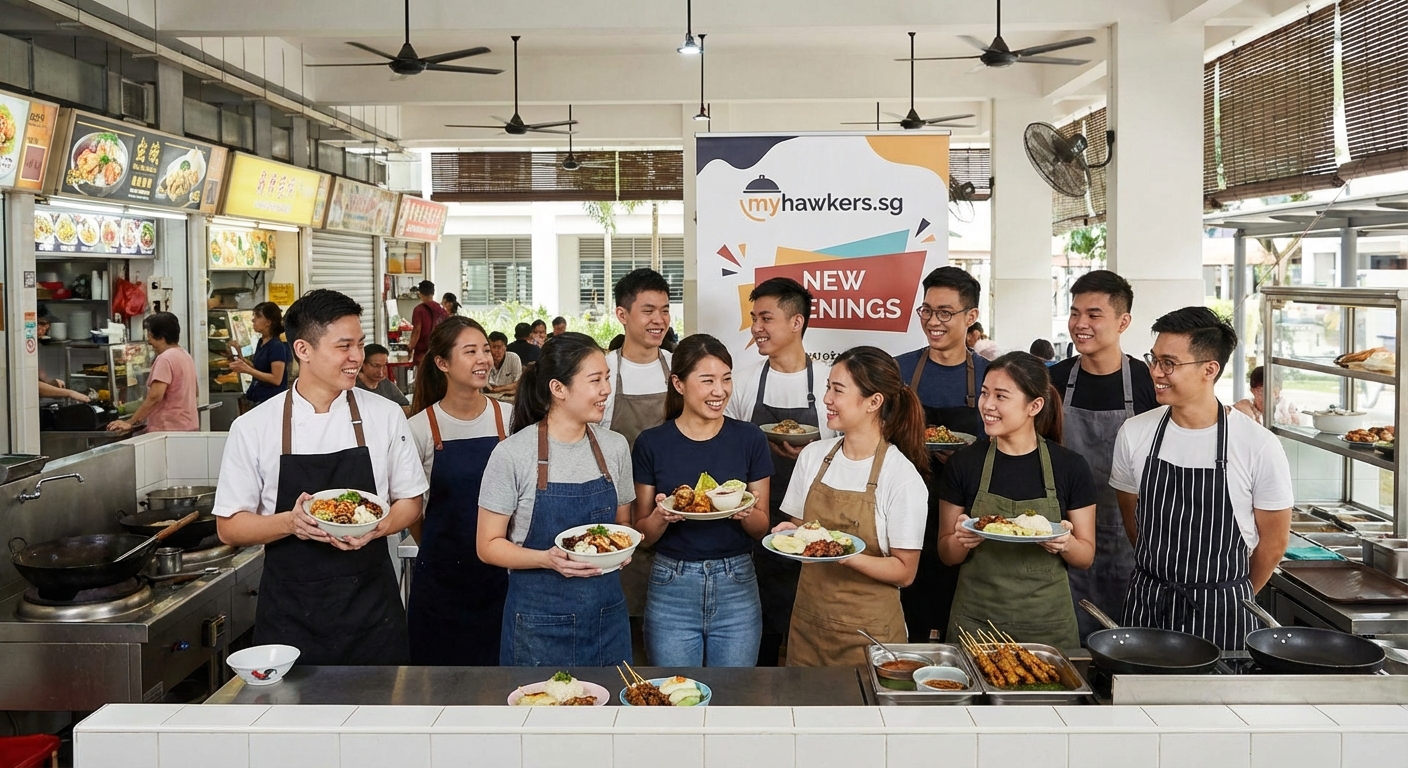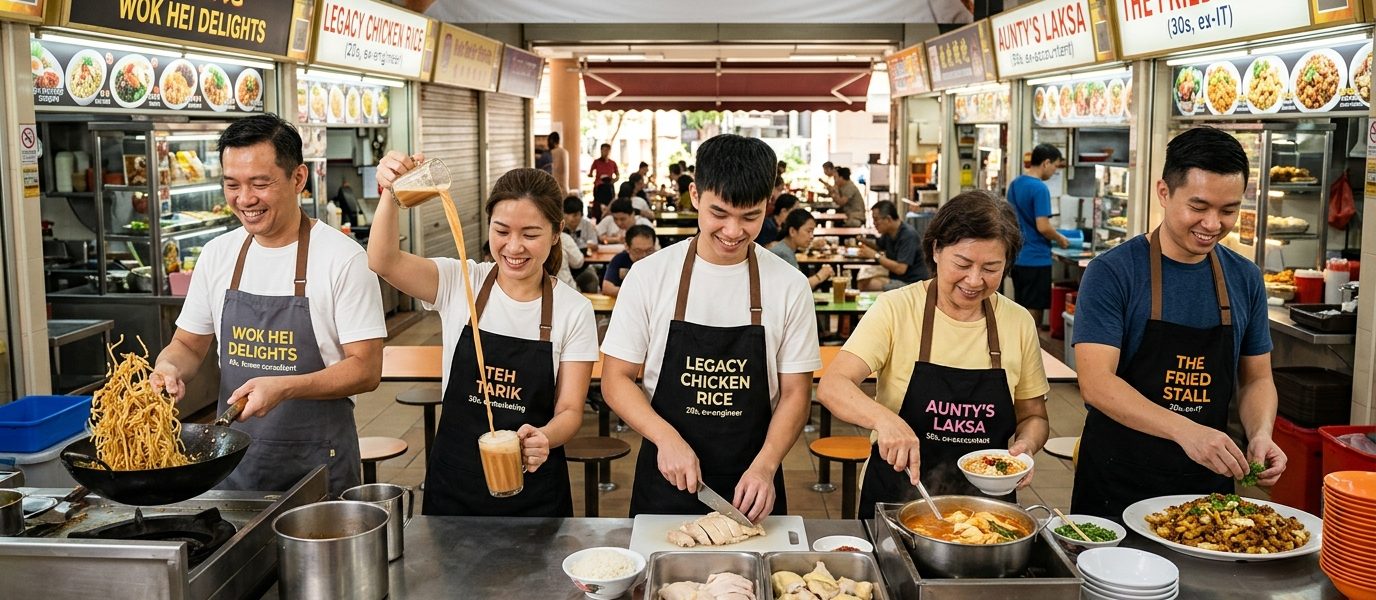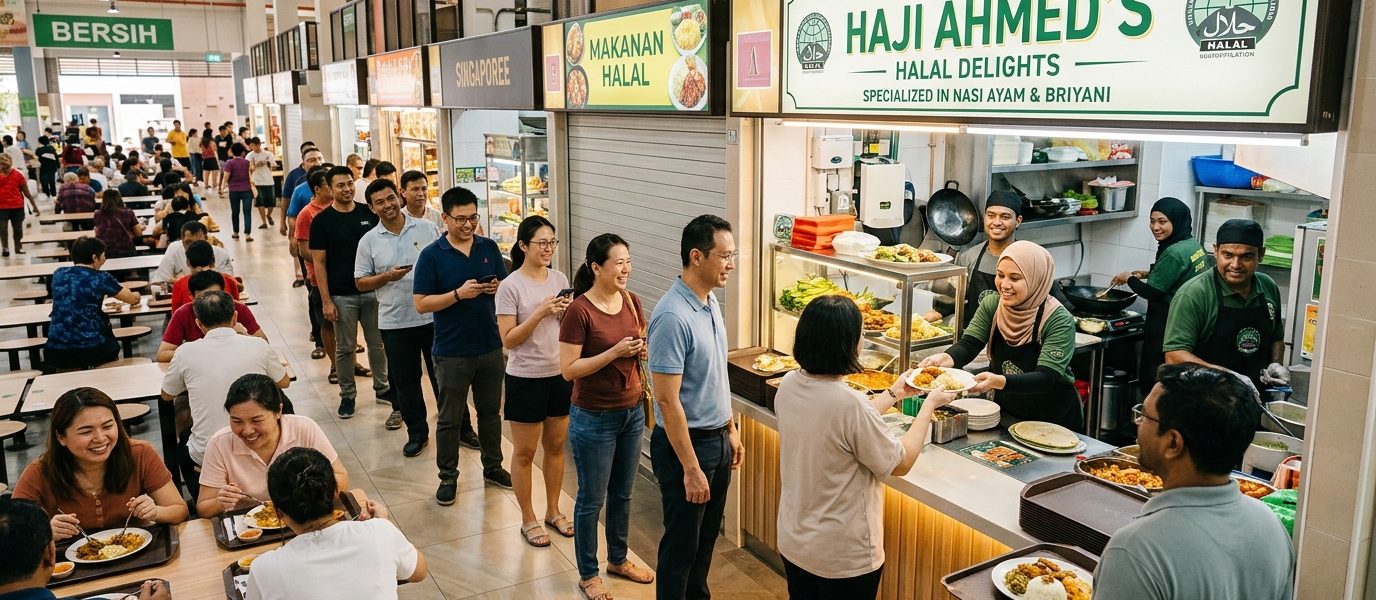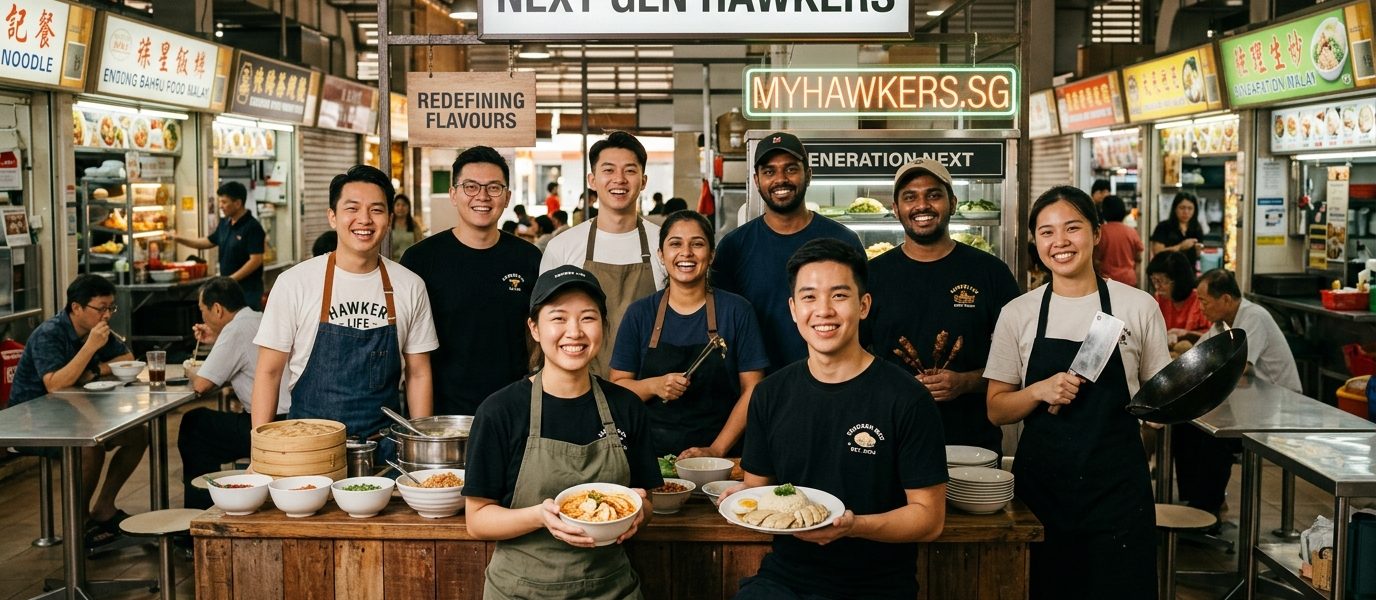
Singapore’s hawker centres have always been where old meets new, but right now something different is happening. A wave of young hawkers in Singapore is stepping into stalls once run by their grandparents, and they’re not just copying recipes. They’re rethinking everything from marketing to menu design while keeping the soul of hawker food intact.
Young hawkers in Singapore are transforming the food scene by blending traditional recipes with modern techniques, social media savvy, and sustainability practices. This generation faces unique challenges like high rental costs and labour shortages, yet they’re keeping hawker culture alive through innovation. Their approach balances respect for heritage with the demands of contemporary diners, creating a bridge between generations of food lovers.
Why young people are choosing hawker life
The stereotype says young Singaporeans avoid hawker work because it’s too tough. Long hours, hot kitchens, thin margins.
That’s partly true. But there’s another story unfolding.
Some millennials and Gen Z folks are choosing hawker stalls deliberately. Not as a backup plan, but as a calling. They see an opportunity to preserve something meaningful while building a business that reflects their values.
Take the 28-year-old running a chicken rice stall at Tiong Bahru Market. She left a banking job to learn her grandmother’s recipes. Now she’s adapting them with organic chicken and house-made chilli that took her six months to perfect.
Or the 32-year-old couple serving laksa with a vegan option. They’re not abandoning tradition. They’re expanding it to include diners who would otherwise walk past.
What sets this generation apart
Young hawkers bring skills their predecessors never needed. Digital literacy tops the list.
They know how to build an Instagram presence. They understand Google reviews matter. Some even run TikTok accounts showing behind-the-scenes prep work that turns curious viewers into actual customers.
But it’s not just about social media. This generation thinks differently about the entire hawker model:
- Menu transparency: Listing ingredients clearly, noting allergens, explaining cooking methods
- Sustainability focus: Reducing single-use plastics, sourcing locally when possible, composting food waste
- Customer engagement: Responding to feedback online, adjusting recipes based on comments, building community
- Design consciousness: Creating cohesive branding, investing in better signage, making stalls visually appealing
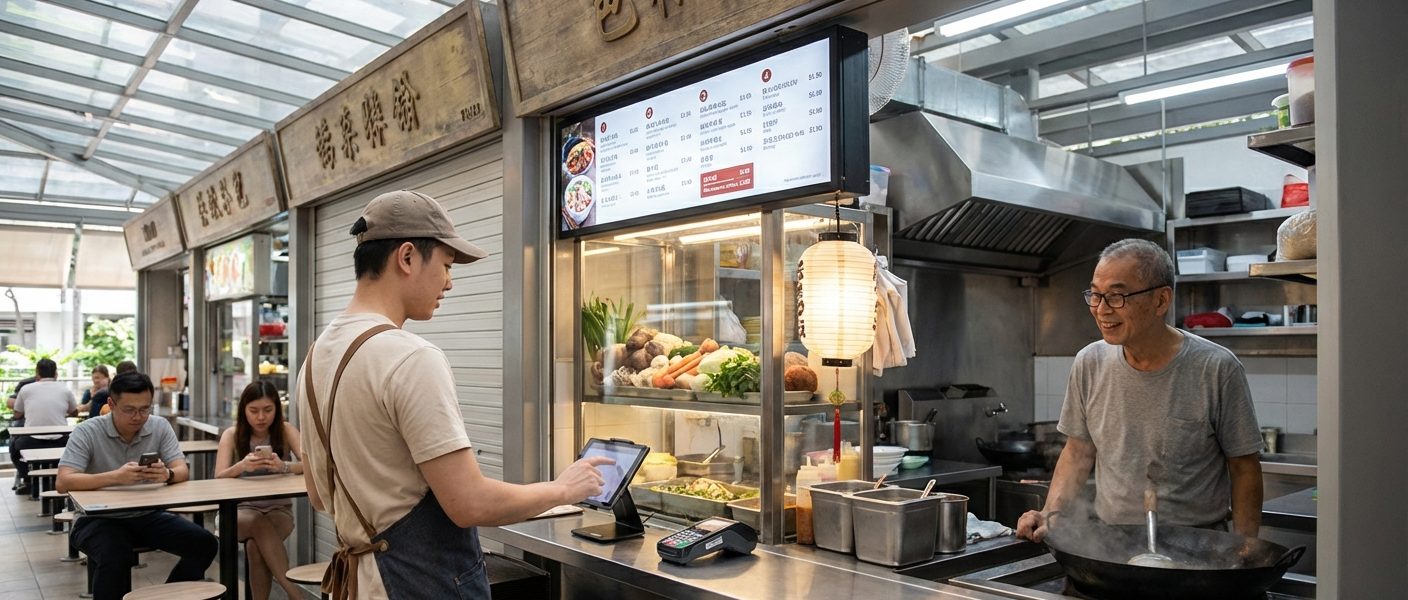
- Operational efficiency: Using QR code ordering, implementing cashless payments, streamlining workflows
These aren’t just trendy additions. They’re survival tactics in a competitive food landscape where air-conditioned hawker centres and cafes are pulling away younger diners.
The real challenges nobody talks about
Starting a hawker business sounds romantic until you face the actual numbers.
Rental bids at popular centres can hit $5,000 monthly. Equipment costs another $20,000 to $50,000. Then there’s ingredients, utilities, and the fact that you might not break even for a year.
Young hawkers also struggle with something their parents didn’t: expectations of work-life balance. When you’re running a stall, there’s no clocking out at 6pm. Prep starts at 4am. Cleanup ends at 10pm. Days off are rare.
Here’s what the journey typically looks like:
- Learning phase (6-12 months): Apprenticing under a master hawker, usually a family member or mentor
- Recipe development (3-6 months): Testing variations, gathering feedback, refining techniques
- Licensing and setup (2-4 months): Navigating NEA requirements, building out the stall, sourcing suppliers
- Soft launch (1-2 months): Limited menu, adjusting operations, building initial customer base
- Full operations (ongoing): Scaling production, managing costs, maintaining quality consistency
Each stage has its own pitfalls. Many give up during the learning phase when the physical demands hit. Others struggle in months three to six when savings run low and customer traffic stays unpredictable.
“People see the Instagram posts and think it’s glamorous. They don’t see me scrubbing pots at midnight or negotiating with suppliers who want payment upfront. But when a regular customer brings their kid and says ‘this tastes exactly like what my mother used to make,’ that’s when you know it’s worth it.” – 29-year-old char kway teow hawker
How they’re modernising without losing authenticity
The biggest criticism young hawkers face is that they’re diluting tradition. Changing recipes. Making things too fancy. Losing the essence of hawker food.
But most young hawkers are obsessive about authenticity. They’re just expressing it differently.
Instead of guarding recipes as secrets, they’re documenting them. Creating written records so knowledge doesn’t die with one generation. Some even post cooking videos, which older hawkers see as giving away trade secrets but younger ones view as cultural preservation.
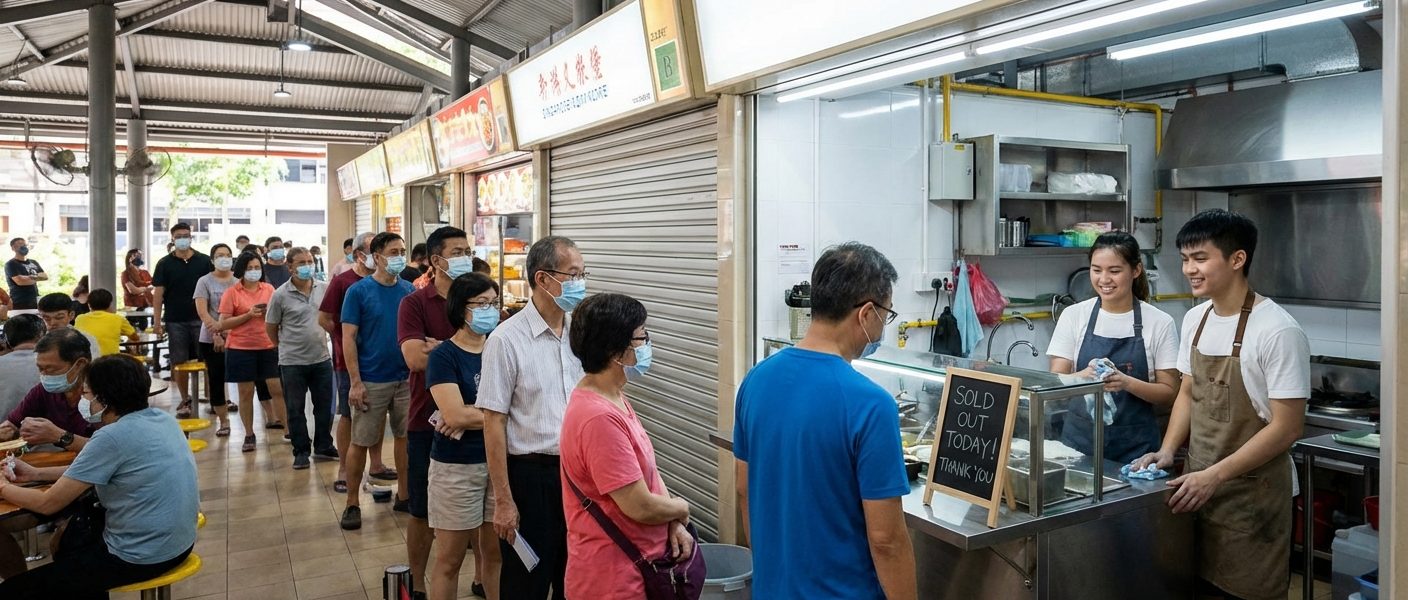
They’re also willing to experiment in ways that would horrify purists. Fusion isn’t a dirty word to them. A 26-year-old at Maxwell Food Centre serves bak chor mee with a mala option. Traditionalists scoff. Customers queue for 45 minutes.
| Traditional Approach | Modern Adaptation | Why It Works |
|---|---|---|
| Cash only | Multiple payment options | Convenience for tourists and younger locals |
| Fixed menu | Seasonal specials | Keeps regulars interested, showcases ingredient quality |
| Word of mouth marketing | Social media presence | Reaches new demographics, builds brand identity |
| Family recipes kept secret | Transparent sourcing and methods | Builds trust, appeals to health-conscious diners |
| Single signature dish | Core dish plus variations | Accommodates dietary restrictions, increases average spend |
The key is knowing which elements are sacred and which are flexible. The wok temperature for char kway teow? Non-negotiable. Offering a less-oily version? Perfectly fine.
The technology question
Walk through hidden neighbourhood hawker centres and you’ll spot the generational divide immediately.
Older stalls have handwritten signs and cash boxes. Younger ones have QR codes and card readers. Some have gone further, installing automated wok stirrers or temperature-controlled soup pots.
Is this progress or losing the human touch?
Young hawkers argue it’s about survival. Labour is expensive and scarce. If a machine can handle repetitive stirring, the hawker can focus on seasoning and plating. The skill doesn’t disappear. It just gets applied differently.
Critics worry we’re heading toward a future where hawker food is made by robots. But the young hawkers I’ve spoken to see technology as a tool, not a replacement. They’re using it to handle the grunt work so they can spend more time on what actually requires human judgment.
Learning from the masters
Despite all their innovations, successful young hawkers share one trait: humility.
They know they can’t just show up with a culinary degree and start slinging char kway teow. They need to learn from people who’ve been doing this for 40 years.
Many spend months or years apprenticing. Not just learning recipes, but understanding the rhythm of hawker work. When to prep what. How to read a crowd. Which shortcuts are acceptable and which compromise quality.
This mentorship is crucial but increasingly rare. Older hawkers are retiring without successors. The knowledge gap is real. Some young hawkers are stepping in to bridge it, but they need to prove themselves first.
That means:
- Showing up consistently, even when it’s brutally hot
- Accepting criticism about technique without getting defensive
- Respecting the traditional methods before trying to improve them
- Building relationships with suppliers and fellow hawkers
- Understanding that reputation takes years to build and seconds to destroy
The economics of staying afloat
Let’s talk money because that’s what ultimately determines who survives.
A typical hawker dish costs $3 to $6. Ingredients might be $1 to $2. That leaves $1 to $4 for rent, utilities, labour, and profit. The margins are razor-thin.
Young hawkers are finding creative ways to improve economics without drastically raising prices:
- Optimising portions: Reducing waste through precise measurement
- Strategic sourcing: Buying direct from farms or forming co-ops with other stalls
- Menu engineering: Highlighting high-margin items, removing unprofitable ones
- Extended hours: Capturing breakfast and late-night crowds
- Catering and delivery: Adding revenue streams beyond dine-in
Some are also rethinking the traditional model entirely. Instead of a single stall, they’re running pop-ups at different locations. Or they’re partnering with cloud kitchens to reach delivery customers without the overhead of a physical space.
These approaches aren’t without controversy. Purists argue that hawker food belongs in hawker centres, not delivered in plastic containers. But young hawkers counter that adaptation is how hawker culture has always survived.
What customers actually want
Here’s the tension: customers say they want authentic hawker food at traditional prices. But their behaviour tells a different story.
They’ll queue at Tian Tian chicken rice but also line up for the trendy new stall charging $8 for deconstructed laksa. They claim to love old-school hawkers but also expect air-conditioning and Instagram-worthy plating.
Young hawkers are navigating this contradiction daily. They’re trying to satisfy multiple audiences:
- Older locals who want things exactly as they remember
- Younger Singaporeans who want healthier, more diverse options
- Tourists who want authentic experiences but also recognise familiar flavours
- Food bloggers who want visual appeal and a compelling story
It’s impossible to please everyone. Smart young hawkers pick their lane and own it. Some lean hard into tradition, positioning themselves as guardians of heritage recipes. Others embrace innovation, marketing themselves as the new generation of hawker food.
Both approaches can work. The mistake is trying to be everything to everyone.
Building community, not just customers
The best young hawkers understand something crucial: hawker centres are community spaces, not just food courts.
They’re places where neighbours catch up over breakfast. Where office workers decompress after long days. Where families celebrate small victories and comfort each other through losses.
Young hawkers who succeed are those who participate in this community fabric. They remember regular customers’ orders. They chat with the aunties at the next stall. They help each other out when someone runs out of ingredients or needs to close early for a family emergency.
This isn’t just good business. It’s how hawker culture perpetuates itself. The relationships matter as much as the recipes.
Some young hawkers are taking this further by organising events, collaborating on special menus, or advocating for better conditions across the hawker community. They’re thinking beyond their individual stalls to the health of the entire ecosystem.
The sustainability challenge
This generation cares deeply about environmental impact. But hawker operations are inherently wasteful.
Disposable plates and cutlery. Plastic bags. Food waste. High energy consumption from cooking equipment running 12 hours daily.
Young hawkers are trying to address this:
- Switching to biodegradable containers
- Offering discounts for customers who bring their own containers
- Composting vegetable scraps
- Installing energy-efficient equipment
- Sourcing from suppliers with better environmental practices
But every sustainable choice costs more. And customers aren’t always willing to pay extra. So young hawkers are stuck making difficult trade-offs between their values and their viability.
Some are finding middle ground. Using regular plates for dine-in customers. Partnering with apps that provide reusable container systems. Gradually shifting to sustainable options as they become more affordable.
It’s slow progress, but it’s happening. And it’s driven almost entirely by young hawkers who see sustainability as non-negotiable.
Where this is all heading
The future of hawker culture depends on whether young people keep choosing this path. Right now, the numbers are concerning.
For every young hawker opening a stall, several older ones are closing without successors. The net result is a slow decline in hawker diversity and vibrancy.
But there are hopeful signs. Government initiatives are making it easier to enter the trade. Media coverage is romanticising hawker work in ways that attract curious young people. And the success stories of young hawkers are inspiring others to consider this path.
The hawker centres that will thrive are those that support young hawkers. That means reasonable rents, flexible lease terms, mentorship programmes, and infrastructure that makes the work less physically punishing.
It also means customers need to show up. Not just for the famous stalls, but for the new ones trying to establish themselves. Your $4 lunch is someone’s dream and livelihood.
Why this generation matters
Young hawkers in Singapore aren’t just keeping hawker culture alive. They’re ensuring it evolves.
Culture that doesn’t adapt becomes museum pieces. Beautiful to look at but disconnected from daily life. Young hawkers are preventing that fate by making hawker food relevant to contemporary Singapore.
They’re proving you can respect tradition while embracing change. That innovation doesn’t mean abandonment. That the next generation can honour what came before while building something new.
Visit neighbourhood hawker centres and you’ll see this happening in real time. Young faces behind stalls serving food that tastes like memory but feels like now.
That’s the magic young hawkers are creating. And it’s worth supporting, celebrating, and protecting.
The hawker culture we’re building together
Hawker culture isn’t something that exists independently of us. It’s what we create through our choices, our support, and our participation.
Every time you try a new stall run by a young hawker, you’re voting for the future of this culture. Every positive review, every recommendation to a friend, every return visit matters more than you might think.
These young hawkers are taking enormous risks. Financial, professional, personal. They’re betting their futures on the belief that Singaporeans still care about hawker food enough to support the next generation of makers.
That bet only pays off if we show up. Not just occasionally, but consistently. Not just for the famous names, but for the newcomers still finding their voice.
The hawker culture we want tomorrow is the one we support today. And right now, that means giving young hawkers the space, grace, and patronage they need to grow into the masters they’re working to become.