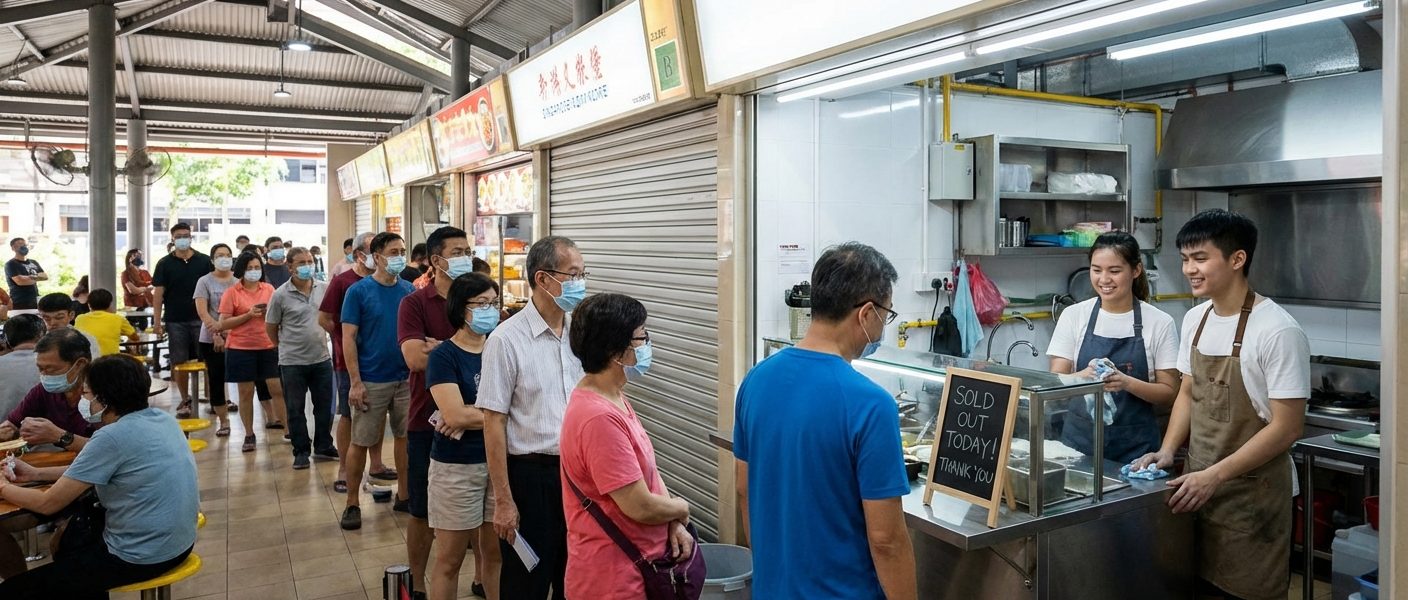
Walking past a hawker stall with a “Sold Out” sign at 2pm on a Tuesday tells you everything. These aren’t accidents or lucky breaks. Behind every successful hawker stall Singapore has celebrated in recent years lies a combination of smart decisions, relentless work, and an understanding of what diners actually want.
Successful hawker stalls in Singapore share common traits: focused menus, strategic location choices, strong operational discipline, and authentic food quality. New hawkers who sold out daily within their first month understood their target customers, priced competitively, and built word-of-mouth through consistency rather than gimmicks. This guide examines real cases and extracts actionable lessons for aspiring food entrepreneurs.
What separates stalls that thrive from those that struggle
The gap between a thriving stall and one barely surviving often comes down to preparation before opening day.
Most successful hawker stalls Singapore food critics rave about started with owners who worked at other stalls first. They learned the rhythm of hawker centre life. Peak hours. Supplier relationships. How to handle a lunch rush when 50 orders come in 20 minutes.
Take the nasi lemak stall that opened at Tiong Bahru Market in early 2024. The owner spent six months as an assistant at another stall. She observed customer preferences. Noted which items sold out first. Tracked when crowds thinned.
When she opened, she knew exactly what to prepare and in what quantities.
Here’s what research on new hawker stalls reveals:
- Stalls that sold out daily had 2-4 signature items, not 15 mediocre ones
- Owners worked 12-14 hour days for the first three months minimum
- They chose locations based on foot traffic data, not just rental costs
- Most tested recipes on friends and family for months before launch
- They built relationships with at least three backup suppliers
The difference shows up in week one. Prepared hawkers adjust portion sizes based on real feedback. They tweak recipes when customers mention specific preferences. They don’t run out of ingredients at 11am.
Five elements every sold out stall mastered
Menu focus beats variety every time
Successful stalls resist the urge to please everyone.
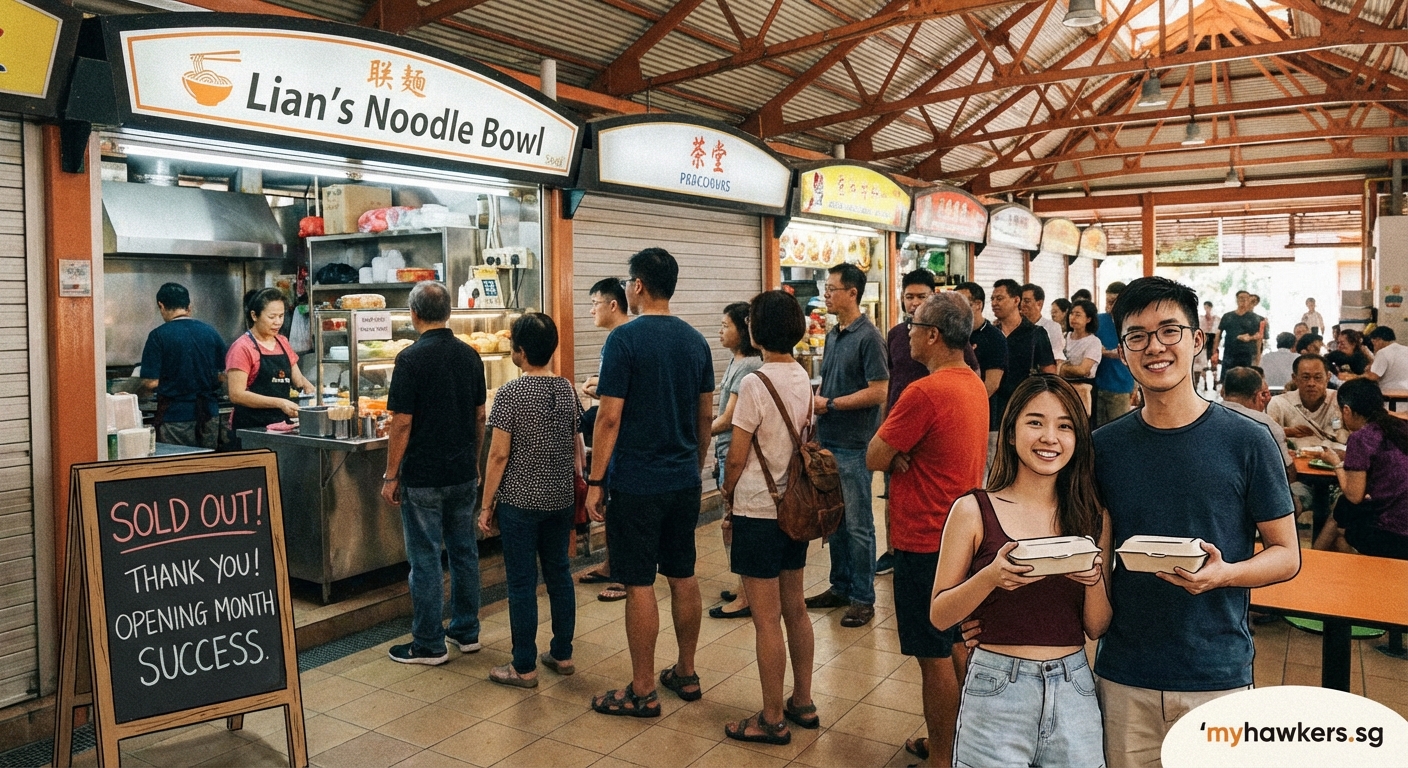
A chicken rice stall in Ang Mo Kio serves exactly three things. Steamed chicken. Roasted chicken. Rice. That’s it. No char siew. No vegetables. No soup add-ons.
They sold out by 1:30pm daily for their first two months.
Why? The cook perfected those three items. Every chicken had the same tender texture. Every grain of rice carried the right amount of garlic and ginger oil. Customers knew what to expect.
Compare that to new stalls offering 20 items. The wonton noodles taste different each visit. The char siew runs out. Quality becomes inconsistent because the cook spreads attention too thin.
“I tell new hawkers the same thing every time. Master three dishes first. When you can cook them blindfolded and customers queue for them, then maybe add a fourth.” – Veteran hawker mentor at Bedok Food Centre
Location strategy that actually works
Rental costs matter, but foot traffic determines survival.
Smart hawkers study their target customers first. A Western food stall targeting office workers needs to be near business districts. A traditional porridge stall serving retirees should set up in mature estates.
One successful zi char stall opened in a neighbourhood hawker centre locals swear by rather than a tourist spot. Their calculation was simple. Tourists visit once. Residents return weekly.
Within three weeks, they had regular customers ordering the same dishes every Tuesday and Friday.
Location factors that mattered most:
- Proximity to MRT stations or bus interchanges
- Presence of complementary stalls that draw crowds
- Adequate seating during peak hours
- Parking availability for weekend family crowds
- Visibility from main walking paths
The char kway teow uncle who set up near an entrance with clear sightlines outsold his competitor tucked in a corner, despite having nearly identical recipes.
Pricing that builds trust and volume
Successful hawker stalls Singapore customers recommend often price 10-15% below what the food could command elsewhere.
This isn’t about being cheap. It’s strategic.
A bak chor mee stall priced their signature bowl at $4.50 when similar quality elsewhere cost $5.50-$6. They made slightly less per bowl but sold 300 bowls daily instead of 150.
The math worked in their favour. Higher volume meant fresher ingredients from daily turnover. More customers meant more word-of-mouth. Lower prices built goodwill that translated to forgiveness when they occasionally ran out early.
| Pricing Strategy | Result | Customer Perception |
|---|---|---|
| Premium pricing from day one | Slow initial adoption, high pressure to justify cost | “Better be worth it” skepticism |
| Market-rate pricing | Moderate traffic, blends in | Neutral, forgettable |
| Value pricing with quality | Fast adoption, queues form | “Confirm must try” excitement |
| Below-cost pricing | Unsustainable, quality suffers | Distrust about ingredients |
The sweet spot sits at value pricing. Charge enough to sustain quality ingredients and fair wages. Price low enough that trying you feels like a no-brainer.
Operational consistency that builds reputation
Every successful stall had systems in place from week one.
The hokkien mee stall that sold out daily kept detailed prep lists. They knew exactly how many prawns to clean, how much pork belly to slice, how many eggs to crack before opening.
When ingredients ran low, they had backup suppliers on speed dial. When the wok needed replacing, they had a spare ready.
This level of preparation meant customers got the same experience whether they visited on Monday or Saturday. Same taste. Same portion size. Same friendly service.
Inconsistency kills new stalls faster than bad food. One great meal followed by two mediocre ones erases trust.
Building word-of-mouth without social media gimmicks
The stalls that truly succeeded didn’t rely on Instagram hype.
They focused on the person eating in front of them. Made sure that customer left satisfied enough to tell a colleague. That’s how sustainable growth happens.
One laksa stall owner made it a point to chat with customers. Not forced small talk, but genuine interest. “How’s the spice level?” “Is the cockles portion okay?” “Should I add more hum?”
Customers felt heard. They became advocates.
When someone posted about the stall online, it happened organically. The owner didn’t ask for tags or check-ins. The food and experience spoke for themselves.
Common mistakes that sink new hawker stalls
Even hardworking hawkers fail when they miss these critical errors.
Underestimating startup capital needs: Rent, equipment, licenses, and ingredients for the first month cost more than most budgets account for. Successful stalls had 6-8 months of operating expenses saved before opening.
Ignoring customer feedback: A lor mee stall insisted their recipe was “authentic” even as customers repeatedly mentioned the gravy was too thick. They struggled for months before finally adjusting. By then, many had written them off.
Poor ingredient sourcing: Cheap ingredients show up in taste. One chicken rice stall tried to save money using lower-grade chicken. Customers noticed immediately. Sales never recovered, even after they switched to better suppliers.
Inconsistent operating hours: Stalls that randomly closed or opened late lost customer trust fast. Office workers who got turned away twice never came back.
Neglecting cleanliness: Food safety isn’t negotiable. Stalls with visible grime or questionable hygiene practices got reported. Some never reopened after temporary closures.
Real examples of first month success stories
The carrot cake stall that found its niche
A young couple opened a chai tow kway stall specializing in both white and black versions. They studied the great carrot cake debate and decided to perfect both styles rather than pick a side.
Their edge? They offered a half-and-half option. Customers could get both styles in one plate.
This simple innovation attracted curious diners. The execution kept them coming back. Within three weeks, they sold out by 2pm daily.
The breakfast specialist who owned the morning rush
Another successful case involved a stall focusing exclusively on breakfast items. They opened at 6am and closed by 11am.
Their menu: kaya toast sets, soft-boiled eggs, and traditional coffee/tea. That’s it.
They positioned near an MRT station with heavy morning commuter traffic. Office workers grabbed breakfast there before heading to work. By 9am, most items were sold out.
The owner went home by noon, prepped for the next day, and maintained this rhythm profitably.
The zi char stall with a booking system
One ambitious zi char operator implemented a simple booking system using WhatsApp. Customers could reserve tables and pre-order dishes for dinner.
This solved the biggest zi char problem: unpredictable demand leading to either waste or stockouts.
Pre-orders meant accurate ingredient purchasing. Reserved tables meant better crowd management. Within a month, they had regular customers booking weekly family dinners.
What aspiring hawkers should do before opening
If you’re serious about running a successful hawker stall, follow this sequence:
- Work at an existing hawker stall for at least 3-6 months
- Choose your signature dish and perfect it through repeated testing
- Research locations by visiting during different times and days
- Build relationships with multiple suppliers for each key ingredient
- Create detailed prep and operational checklists
- Save enough capital to operate at a loss for 6 months
- Soft launch with friends and family to test systems
- Open with a focused menu of 2-4 items maximum
- Gather feedback actively and adjust quickly
- Maintain absolute consistency in quality and operating hours
This isn’t glamorous. It’s methodical, exhausting work.
But it’s also the pattern followed by young hawkers redefining Singapore’s food scene who’ve built sustainable businesses.
Financial realities successful stalls navigate
Money management separates survivors from casualties.
Successful hawker stalls Singapore banks would actually lend to maintain detailed financial records from day one. They track:
- Daily ingredient costs
- Portion costs per dish
- Actual versus projected sales
- Peak versus off-peak performance
- Waste and spillage
This data reveals patterns. Maybe the lunch crowd prefers smaller, cheaper portions. Perhaps weekend customers order more expensive items. These insights drive menu and pricing adjustments.
One economical rice stall discovered through tracking that their $3.50 two-dish option had the highest profit margin despite being their cheapest offering. They promoted it more heavily and saw profits increase even as average transaction values dropped slightly.
The math worked because volume increased faster than margin decreased.
Building resilience for the long term
The first month’s success means nothing if you burn out by month six.
Sustainable hawker businesses require:
Physical stamina: Standing for 10-12 hours daily takes a toll. Successful hawkers invest in proper footwear, anti-fatigue mats, and regular exercise to maintain health.
Mental toughness: Difficult customers, equipment breakdowns, and slow days test patience. Having a support system helps. Many successful hawkers credit their families or fellow hawker friends for keeping them motivated.
Financial buffers: Even successful stalls have slow periods. Saving during peak months creates cushions for renovation closures, equipment replacement, or personal emergencies.
Continuous improvement: The best hawkers never stop learning. They visit other stalls. Try new techniques. Adjust recipes based on changing tastes.
One char kway teow specialist visits wet markets weekly to check ingredient quality across different suppliers. This vigilance maintains the consistency that built their reputation.
Why some stalls stay successful while others fade
Initial success creates its own challenges.
Stalls that maintain sold-out status beyond the first month share these traits:
- They resist the urge to expand the menu too fast
- They maintain ingredient quality even when profits allow cheaper alternatives
- They treat regular customers well without taking them for granted
- They stay humble and keep improving
- They plan for succession or scaling thoughtfully
The nasi lemak stall that thrived in their first month still sells out two years later. The owner still arrives at 4am to cook rice. Still fries each chicken wing to order. Still smiles at customers even on exhausting days.
That consistency built a reputation that survives competition and changing trends.
Making your hawker dream work in today’s Singapore
The hawker trade isn’t dying. It’s evolving.
Successful hawker stalls Singapore celebrates today prove that quality, consistency, and smart business practices still win. The fundamentals haven’t changed. Good food at fair prices, served by people who care, will always find customers.
What’s changed is the level of professionalism required. You can’t just cook well anymore. You need to understand costs, manage suppliers, maintain hygiene standards, and build customer relationships.
The barrier to entry is higher, but so is the potential reward. Hawkers who treat their stalls as serious businesses, not just cooking hobbies, build enterprises that support families and create legacies.
If you’re considering this path, start preparing now. Work in a hawker centre. Learn the realities. Test your recipes. Save your capital. Study successful stalls. Build your skills.
When you finally open, you’ll join the ranks of successful hawker stalls Singapore is proud to call its own. Your “Sold Out” sign will be earned through preparation, hard work, and genuine care for the food you serve.