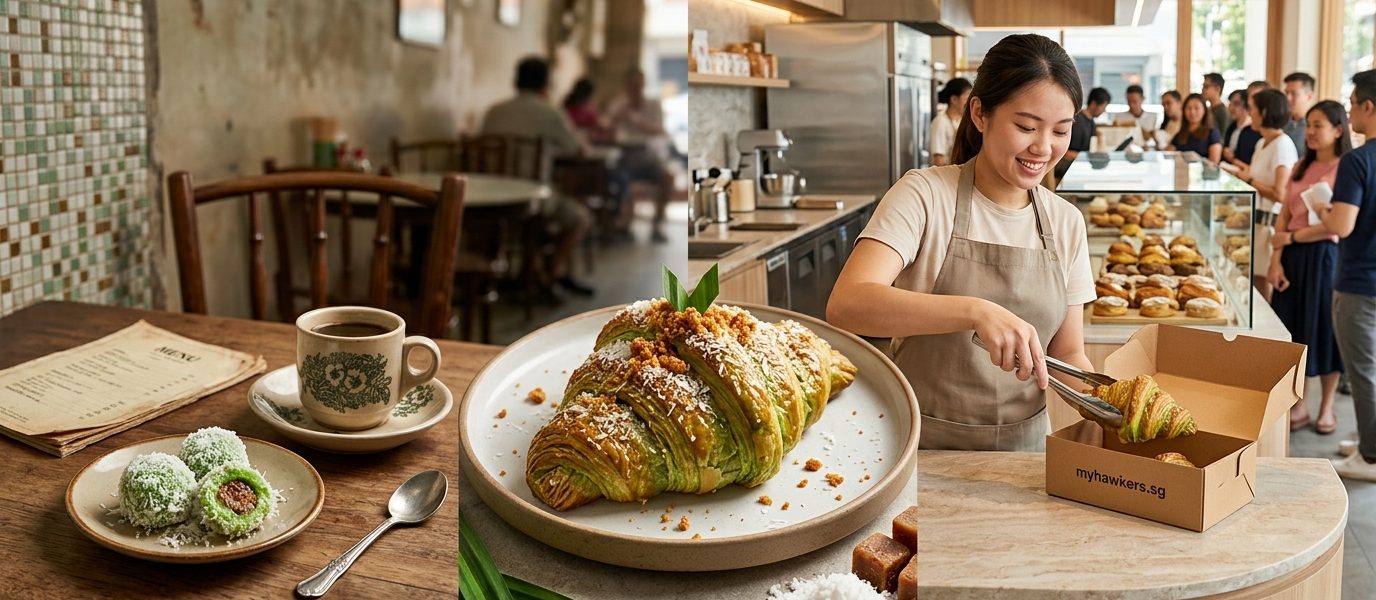
The ondeh ondeh croissant has taken Singapore by storm, flooding Instagram feeds and sparking weekend queues at cafes across the island. This unlikely marriage between a traditional Malay kueh and French pastry represents everything Singaporeans love about food innovation: bold flavour combinations, Instagram-worthy aesthetics, and a deep respect for heritage ingredients. But what makes this fusion pastry so special, and where can you actually find a good one?
The ondeh ondeh croissant blends French laminated pastry techniques with pandan-infused gula melaka filling and desiccated coconut. This viral fusion pastry emerged from Singapore’s experimental cafe scene in 2023, combining buttery croissant layers with the signature burst of palm sugar that defines traditional ondeh ondeh. Success depends on proper lamination, authentic pandan flavour, and getting the filling ratio right.
What Makes an Ondeh Ondeh Croissant Different
Traditional ondeh ondeh is a glutinous rice ball coated in coconut and filled with liquid gula melaka that bursts in your mouth. The croissant version reimagines this experience entirely.
Instead of glutinous rice, you get buttery, flaky croissant layers. The pandan flavour comes from infused dough or filling rather than the outer coating. And that signature gula melaka burst? It’s engineered into pockets within the pastry structure.
The best versions maintain three non-negotiable elements:
- A proper laminated croissant base with visible layers
- Genuine pandan flavour, not artificial colouring or essence
- Gula melaka that actually flows when you bite in
Many cafes attempt this fusion but fall short on execution. Some use pre-made croissants with pandan cream slapped on top. Others nail the pastry but use brown sugar instead of authentic gula melaka. The difference is immediately obvious to anyone who grew up eating real ondeh ondeh.
The Technical Challenge Behind the Pastry
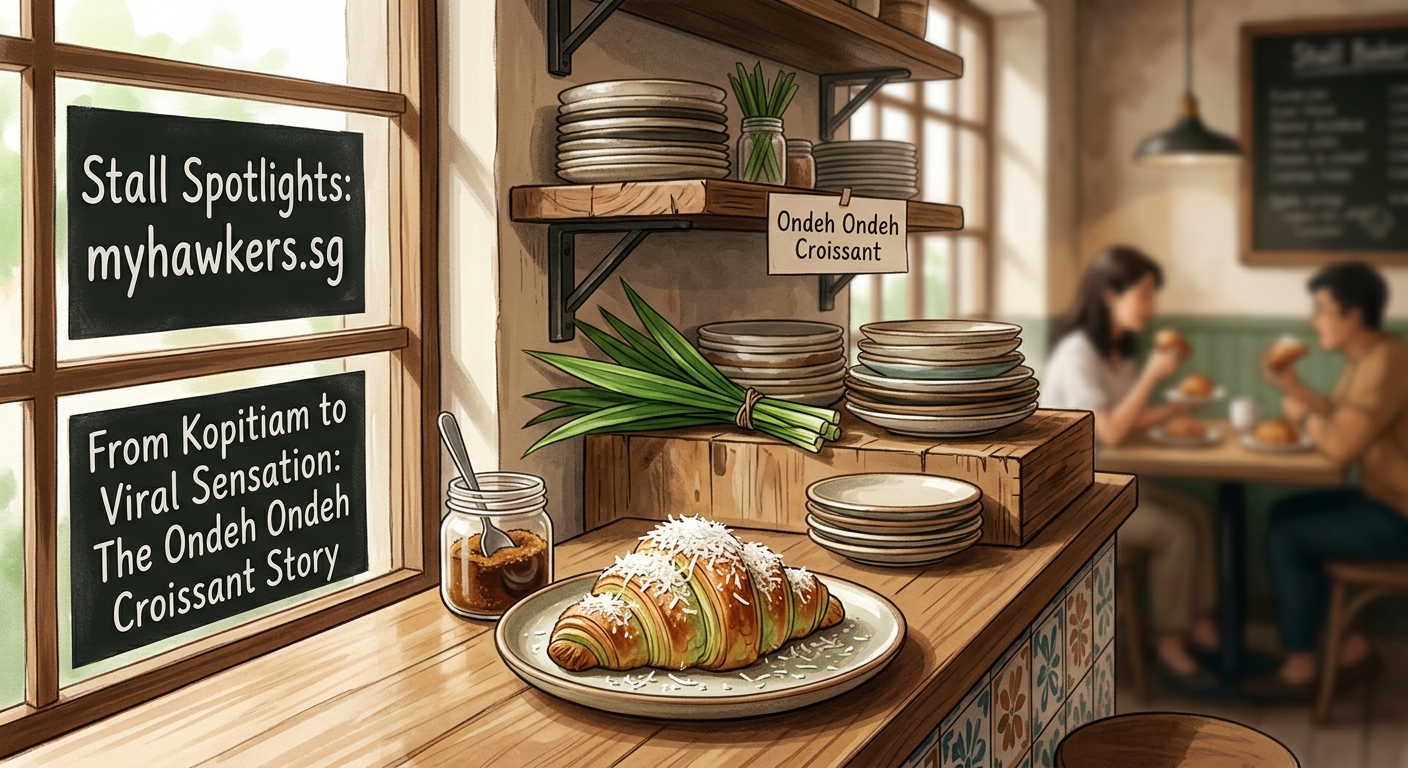
Creating an ondeh ondeh croissant is significantly harder than making either component separately. Croissant dough requires precise temperature control and multiple folds to create those signature layers. Adding moisture-heavy pandan and liquid gula melaka threatens to destroy the lamination entirely.
Professional bakers solve this through several techniques:
- Encasing gula melaka in a stable paste or gel that melts during baking
- Incorporating pandan into the butter block rather than the dough
- Using a hybrid filling that combines coconut cream with controlled moisture content
- Baking at specific temperatures to set the structure before the filling liquefies
The timing matters enormously. Underbake the croissant and the layers stay doughy. Overbake it and the gula melaka caramelizes into hard candy. The sweet spot exists in a narrow five-minute window.
“The hardest part isn’t making the croissant or the ondeh ondeh filling separately. It’s getting them to coexist in the same pastry without one destroying the other. The moisture from pandan and gula melaka wants to kill your lamination.” – Pastry chef at a popular Singapore fusion bakery
Where the Trend Actually Started
Unlike many viral food trends that trace back to a single stall, the ondeh ondeh croissant emerged from multiple cafes experimenting simultaneously in 2023. Several bakeries in the Tiong Bahru and Tanjong Pagar areas began offering versions within weeks of each other.
The trend reflects a broader movement in Singapore’s food scene. Young hawkers and cafe owners are increasingly looking to traditional kueh for inspiration, reimagining classics through modern techniques. You see it in kueh lapis cakes with new flavour profiles, ang ku kueh with unconventional fillings, and now croissants stuffed with ondeh ondeh components.
Social media accelerated the spread. One viral TikTok video showing gula melaka oozing from a croissant garnered over 2 million views. Suddenly every cafe with a pastry program wanted their own version.
The fusion also taps into nostalgia. Millennials who grew up buying ondeh ondeh from neighbourhood aunties now have disposable income for premium cafe versions. It’s comfort food elevated, familiar yet novel enough to justify the $7 to $9 price tag.
Common Mistakes That Ruin the Experience
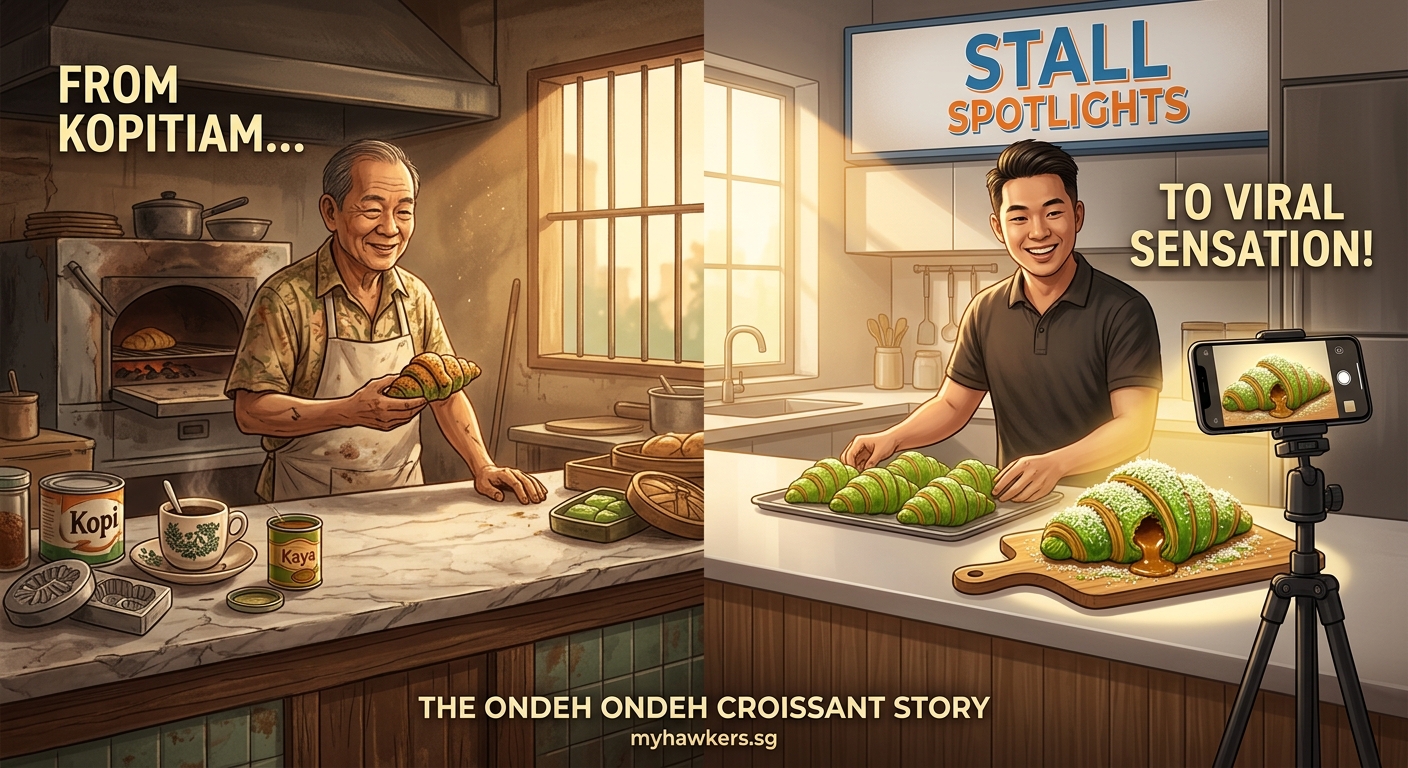
Not all ondeh ondeh croissants are created equal. Here are the most frequent failures you’ll encounter:
| Mistake | Why It Happens | How to Spot It |
|---|---|---|
| Soggy bottom layers | Excess moisture from filling | Pastry feels wet, not crisp |
| Artificial pandan taste | Using essence instead of real leaves | Chemical aftertaste, neon green colour |
| No gula melaka flow | Using solid brown sugar | Filling is grainy, doesn’t ooze |
| Poor lamination | Incorrect folding or temperature | Few visible layers, dense texture |
| Coconut overload | Too much desiccated coconut | Dry mouthfeel, overwhelms other flavours |
The worst versions taste like someone dumped pandan essence into regular croissant dough and called it fusion. The best versions require you to eat them immediately because the gula melaka actually flows and the coconut stays fragrant.
Temperature matters for consumption too. These croissants are best eaten warm, ideally within 30 minutes of baking. The gula melaka thickens as it cools, losing that signature ondeh ondeh burst. Many cafes will warm them up on request if you’re eating in.
Finding Authentic Versions Around Singapore
The ondeh ondeh croissant scene concentrates in specific neighbourhoods. Tiong Bahru leads the pack, with several artisan bakeries offering their interpretations. The area’s reputation for heritage meets modern food culture makes it a natural testing ground for fusion pastries.
Tanjong Pagar and Telok Ayer also host multiple options, catering to the CBD lunch crowd willing to queue for Instagram-worthy treats. Weekend mornings see the longest waits, often 20 to 30 minutes at popular spots.
Interestingly, traditional hawker centres have largely avoided this trend. The equipment and techniques required for proper croissant lamination don’t fit the typical hawker stall setup. This remains firmly in cafe and bakery territory, though a few innovative hawker stalls have experimented with ondeh ondeh-inspired pastries using different bases.
Price points range from $6.50 to $9.50 per croissant. The higher end usually indicates made-to-order preparation or premium ingredients like organic pandan leaves and artisanal gula melaka from specific Malaysian suppliers.
The Broader Fusion Pastry Movement
The ondeh ondeh croissant sits within a larger trend of kueh-inspired baked goods. Singapore’s pastry scene has recently produced:
- Kueh lapis croissants with spiced layers
- Pineapple tart danishes
- Ang ku kueh mochi donuts
- Nonya kueh-flavoured macarons
- Pulut hitam cream puffs
This movement represents more than just novelty. It’s a form of cultural preservation through innovation. As traditional kueh makers age and fewer young people learn these crafts, cafes and bakeries are introducing classic flavours to new audiences through familiar formats.
The technique also flows in reverse. Some traditional kueh makers now incorporate French pastry techniques into their work, creating hybrid desserts that don’t fit neatly into either category.
Making Your Own at Home
Attempting an ondeh ondeh croissant at home is ambitious but possible. You’ll need several days and specific equipment.
The process breaks down into manageable stages:
- Prepare pandan extract from fresh leaves (not essence)
- Make gula melaka filling and stabilize it with cornstarch or agar
- Create croissant dough with proper butter lamination
- Incorporate pandan into the butter block or dough
- Shape, fill, proof, and bake at precise temperatures
Most home bakers find the lamination most challenging. Croissant dough requires a cool kitchen, ideally below 20°C. Singapore’s humidity and heat work against you. Many successful home attempts happen in air-conditioned rooms with dough chilled between every fold.
The filling ratio matters enormously. Too much gula melaka and your croissant becomes a soggy mess. Too little and you lose the signature burst. Professional recipes typically use 15 to 20 grams of stabilized filling per croissant.
Fresh pandan leaves make a noticeable difference over store-bought extract. Blend the leaves with a small amount of water, strain through muslin, and you get vibrant green juice with authentic flavour. This juice can flavour the dough, the filling, or both.
Why This Fusion Works
Not every food mashup succeeds. The ondeh ondeh croissant works because the components share complementary characteristics.
Both traditional ondeh ondeh and croissants rely on textural contrast. Ondeh ondeh pairs chewy glutinous rice with crunchy coconut and liquid filling. Croissants contrast crispy exterior with soft interior layers. The fusion maintains this textural play while introducing new elements.
The flavour profiles also align. Butter and coconut are both rich and fatty. Pandan adds aromatic complexity that complements rather than fights the butter. Gula melaka provides sweetness with caramel notes that enhance the browned croissant exterior.
Even the eating experience translates. Both foods are meant to be consumed in a few bites. Both create a slight mess (coconut falling off ondeh ondeh, croissant flakes everywhere). Both taste best fresh.
The fusion also respects both traditions rather than diminishing either. A well-made ondeh ondeh croissant doesn’t taste like a croissant with random Asian flavours thrown in. It tastes like a thoughtful reinterpretation that honours the essence of ondeh ondeh while showcasing proper French pastry technique.
The Instagram Factor
Let’s be honest: the ondeh ondeh croissant photographs beautifully. The cross-section shot showing layers of pastry, green pandan filling, and oozing gula melaka has become the standard way to showcase these pastries online.
Cafes have leaned into this. Many now plate the croissants with extra desiccated coconut, pandan leaves for garnish, and small pools of gula melaka on the side. Some even provide special lighting setups at designated photography tables.
This Instagram-ability drives sales but also raises quality standards. A croissant that doesn’t ooze gula melaka when cut won’t generate shares. Pastries with poor lamination look unappealing in cross-section. The visual demands push bakers to perfect their technique.
The trend has created a feedback loop. Better-looking pastries get more social media attention, driving more customers, justifying higher prices, enabling better ingredients, resulting in even more photogenic products.
Beyond the Hype
Food trends in Singapore tend to burn bright and fast. Remember salted egg everything? Mala fever? Cheese tea? The ondeh ondeh croissant has shown surprising staying power, now entering its second year of popularity.
Several factors contribute to its longevity. The technical difficulty creates a natural barrier to entry. Not every cafe can make a proper version, so quality spots maintain their customer base. The nostalgic connection to traditional ondeh ondeh gives it emotional resonance beyond pure novelty.
The pastry has also evolved. Early versions were simple croissants with pandan cream. Current iterations feature multiple filling layers, coconut incorporated into the lamination, and even savoury versions using salted gula melaka.
Some bakeries now offer ondeh ondeh croissant workshops, teaching customers the lamination and filling techniques. This educational angle extends the trend’s lifespan while building deeper appreciation for the craft involved.
When Tradition Meets Technique
The ondeh ondeh croissant represents something larger than a viral pastry. It shows how Singapore’s food culture continues to innovate while respecting tradition. The same spirit that created chicken rice and laksa now produces fusion pastries that honour heritage ingredients through modern techniques.
This isn’t fusion for fusion’s sake. It’s thoughtful innovation that requires understanding both the traditional kueh and the French pastry technique. The best versions come from bakers who’ve mastered croissant lamination and genuinely appreciate what makes ondeh ondeh special.
Whether you’re a food enthusiast hunting down the latest viral trend or someone curious about how traditional flavours translate into modern formats, the ondeh ondeh croissant offers a delicious case study. Just make sure you eat it warm, have napkins ready for the gula melaka, and maybe skip the diet for a day. Some experiences are worth the indulgence.