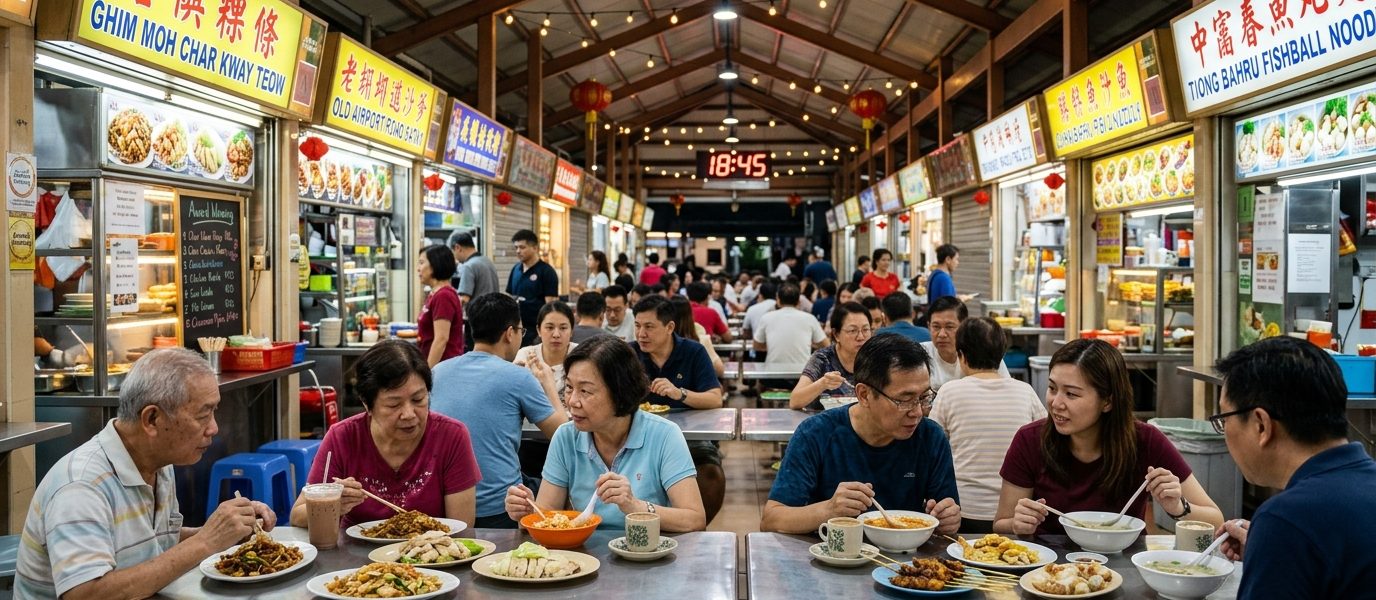
Most tourists flock to Maxwell or Lau Pa Sat, queuing for the same Instagram-famous stalls everyone else has photographed. Meanwhile, locals are tucking into char kway teow and bak chor mee at neighbourhood spots that serve better food with half the wait time. These hidden hawker centres Singapore residents visit weekly offer the same UNESCO-recognised hawker culture, minus the tour groups and inflated expectations.
Singapore’s hidden hawker centres offer authentic local flavours without tourist crowds. From Ayer Rajah’s Malay specialities to Yuhua Village’s old-school zi char, these seven neighbourhood gems serve exceptional food at honest prices. Visit during off-peak hours, bring cash, and follow the queues to find each centre’s signature dishes worth travelling across the island for.
Why Neighbourhood Hawker Centres Beat Tourist Hotspots
The best hawker food rarely appears on top-ten lists.
Neighbourhood centres operate on a different rhythm. Stall owners know their regulars by name and nasi lemak order. Prices reflect actual costs, not tourist markups. You’ll find dishes that haven’t changed recipes in three decades because the same uncle still cooks them every morning at 4am.
These centres also reveal how different communities eat. A Malay-majority neighbourhood serves rendang that would make your Indonesian colleagues jealous. Chinese-dominant areas might have five different roast meat stalls, each with devoted followers who’ll argue their char siew is superior.
The atmosphere differs too. Instead of harried tourists checking Google Maps between bites, you’ll see office workers on lunch break, retirees playing chess after breakfast, and families celebrating a child’s good exam results over dinner.
Seven Hidden Gems Worth The Journey
1. Ayer Rajah Food Centre
Tucked behind AYE near one-north, this centre serves the surrounding HDB estates and nearby industrial workers.
The Malay stalls here are exceptional. Nasi padang spreads include beef rendang so tender it falls apart, sambal goreng that balances sweet and spicy perfectly, and sayur lodeh with just the right coconut milk richness. The mee rebus stall has been run by the same family since 1987, and their gravy recipe hasn’t changed once.
Arrive before 11am on weekdays. The lunch crowd from the business parks fills every table by noon. The chicken rice stall near the back consistently sells out by 1pm.
2. Yuhua Village Market & Food Centre
West siders know this Jurong centre well, but it remains invisible to most visitors.
The zi char stall serves portions meant for families, with wok hei so strong you can smell it from three stalls away. Their salted egg yolk prawns and cereal butter prawns are weekend favourites. The carrot cake stall offers both black and white versions, and locals have fierce preferences about which is superior.
What makes Yuhua special is the hawker community itself. Stall owners help each other during rush periods, sharing ingredients when someone runs short. This cooperative spirit shows up in the food’s consistency.
3. Haig Road Market & Food Centre
Yes, Haig Road appears on some lists, but most people only know about the famous prawn noodle and nasi lemak stalls.
The real treasures hide in plain sight. The economic bee hoon stall serves massive portions for under four dollars. The yong tau foo uses handmade paste, not the frozen commercial stuff. The Indian rojak stall makes their sauce fresh daily, adjusting spice levels based on the chillies they bought that morning.
The coffee shop uncle at the drinks stall remembers orders. Tell him once you take kopi-c kosong, and he’ll remember it six months later.
4. Chong Pang Market & Food Centre
Yishun’s hawker scene gets unfairly overlooked because of neighbourhood stereotypes.
Chong Pang proves the haters wrong. The bak chor mee here rivals anything in town, with springy noodles and pork that’s been marinated overnight. The chicken cutlet stall serves portions that hang off the plate edges. The kueh stall sells out of ondeh ondeh and ang ku kueh by mid-morning most days.
The centre underwent renovations recently but kept its character intact. Unlike some modernised centres that feel sterile, Chong Pang still has that lived-in warmth where aunties gossip over kopi and uncles debate football results.
5. Bukit Merah View Market & Food Centre
This Redhill centre serves the surrounding mature estates with zero pretension.
The chwee kueh stall grinds their rice flour fresh, resulting in softer, more delicate cakes than mass-produced versions. The fishball noodle soup uses fish caught that morning from Jurong Port, and you can taste the difference. The chicken rice uses kampung chicken on weekends, which costs more but delivers flavour regular chicken can’t match.
What locals love most is the consistency. These stalls don’t have off days. The same quality shows up whether you visit on a Tuesday afternoon or Saturday morning.
6. Whampoa Makan Place
Balestier residents guard this centre like a secret, though it’s hiding in plain sight along Whampoa Drive.
The fried Hokkien prawn mee here uses a recipe from the 1960s. The wok never fully cools between orders, maintaining that constant high heat that creates proper caramelisation. The fried oyster omelette achieves the perfect crispy-edge, soft-centre balance that lesser versions never manage.
The rojak stall makes their sauce using a granite mortar, grinding ingredients by hand because the owner insists machine-ground paste lacks depth. Is he right? One taste answers that question.
7. Empress Road Market & Food Centre
This Farrer Park centre operates in the shadow of more famous neighbours, which works perfectly for locals who prefer it that way.
The chicken rice stall here roasts their birds over charcoal, a method most hawkers abandoned decades ago because it’s labour-intensive and expensive. The result justifies the effort. The skin achieves a crispness that steamed or boiled chicken never reaches, while the meat stays impossibly moist.
The laksa uses a family recipe that includes candlenuts, dried shrimp, and a secret ingredient the owner won’t reveal. Regular customers have tried bribing, begging, and flattering, all without success.
How To Make The Most Of Your Visit
Finding great food at hidden centres requires a different approach than visiting tourist spots.
Before you go:
- Check opening hours because neighbourhood centres follow local rhythms, not tourist schedules
- Bring cash since many stalls don’t accept cards or PayNow
- Note the nearest MRT and bus connections because Grab costs add up
- Look up signature dishes beforehand so you don’t waste stomach space on mediocre options
When you arrive:
- Walk the entire centre first before ordering anything
- Observe which stalls have queues of locals, not tourists
- Check if stalls display prices clearly, which signals honest operations
- Notice which dishes people around you are eating
During your meal:
- Sit where you can watch stall operations if you’re interested in technique
- Return trays and clear your table because that’s basic courtesy
- Try ordering in the stall owner’s preferred language when possible
- Save room for trying multiple stalls instead of overeating at one
The table below shows common mistakes and how to avoid them:
| Mistake | Why It Happens | Better Approach |
|---|---|---|
| Visiting during peak lunch (12pm-1pm) | Following tourist timing | Arrive at 11am or after 1:30pm |
| Ordering only famous dishes | Relying on online lists | Ask neighbouring diners what’s good |
| Expecting English menus everywhere | Tourist centre assumptions | Learn basic dish names in Mandarin or Malay |
| Comparing portions to restaurant sizes | Different pricing models | Understand hawker portions are meant to be affordable |
| Judging quality by centre appearance | Aesthetic bias | Focus on food quality and stall hygiene instead |
Reading The Signals That Separate Good From Great
Not every stall at a neighbourhood centre serves exceptional food.
Some operate on autopilot, serving acceptable but uninspired versions of classic dishes. Others cut corners, using frozen ingredients or premixed sauces. Learning to spot the difference saves disappointing meals.
Green flags to look for:
- Ingredients prepped fresh on-site, not delivered pre-cut
- Stall owners who taste their own food between orders
- Queues that include elderly Chinese uncles and Malay aunties, the harshest food critics
- Handwritten signs indicating sold-out items, showing they cook in batches
- Prices that seem almost too cheap, because they haven’t raised them in years
Red flags to avoid:
- Stalls with elaborate menus covering too many cuisines
- Ingredients that look identical to neighbouring stalls, suggesting shared suppliers
- Staff who seem disengaged or rushed beyond normal busy-period stress
- Dishes that arrive suspiciously fast during off-peak hours
- Prices significantly higher than surrounding stalls without obvious quality difference
The best hawker food comes from people who’ve been cooking the same dish for so long, they can tell if the wok temperature is off by five degrees just by sound. You can’t fake that kind of expertise, and you can’t rush it. When you find it, you’ll know within three bites.
Understanding Neighbourhood Hawker Culture
These centres function as community living rooms.
Regulars have unspoken reserved tables. The coffee shop uncle knows who takes sugar, who drinks kopi-o, and who switched to teh because their doctor said cut the caffeine. Stall owners watch each other’s stalls during toilet breaks. When someone falls sick, others cover their shifts.
This social fabric affects the food. Stall owners cook for people they’ll see again tomorrow, not anonymous tourists passing through. Reputation matters when your customers are also your neighbours. One bad batch of laksa and you’ll hear about it for months.
The centres also preserve recipes that might otherwise disappear. When a hawker retires, sometimes a younger family member takes over. Other times, a regular customer who learned by watching offers to continue the legacy. Either way, the dish survives another generation.
Some centres face uncertain futures. Rising costs, lack of successors, and redevelopment pressures threaten their existence. Visiting these places, trying their food, and sharing your experience helps ensure they survive long enough for the next generation to appreciate them.
Navigating Beyond The Usual Suspects
Once you’ve tried these seven centres, the ultimate guide to Tiong Bahru Market offers another layer of hawker culture where heritage architecture meets exceptional food.
For those who prefer eating without sweating through their shirt, 15 air-conditioned hawker centres provide comfort without sacrificing authenticity.
Understanding why certain places become tourist magnets helps you appreciate the quieter alternatives. Maxwell Food Centre’s continued popularity demonstrates that fame and quality can coexist, but also why locals seek options elsewhere.
Making Hidden Centres Part Of Your Routine
The best way to appreciate neighbourhood hawker centres is treating them like locals do.
Pick one near your home or workplace. Visit weekly. Try a different stall each time until you’ve sampled everything worth eating. Notice which dishes taste better on certain days. Learn the stall owners’ names. Become a regular.
This approach transforms hawker centre visits from tourist activities into genuine cultural participation. You’ll start recognising other regulars. The chicken rice uncle might start preparing your order when he sees you join the queue. The drinks stall auntie remembers you prefer less ice.
These small interactions matter more than perfect Instagram photos. They represent the real hawker culture that UNESCO recognised, the everyday social bonds formed over affordable, delicious food.
Why These Centres Matter Beyond The Food
Singapore’s hawker centres represent something increasingly rare in modern cities.
They’re public spaces where economic class doesn’t determine access. The construction worker and the office executive eat the same food at the same tables, paying the same prices. A family of four can eat well for twenty dollars. A student can afford lunch on a tight budget.
This democratic quality makes hawker centres essential to Singapore’s social fabric. They prevent food from becoming a luxury good. They ensure cultural dishes remain accessible to communities that created them. They provide gathering spaces that shopping malls and food courts can’t replicate.
When neighbourhood centres thrive, they anchor communities. When they close, something irreplaceable disappears. Every visit, every meal, every recommendation helps ensure these places survive.
The hidden hawker centres Singapore locals cherish don’t need fame. They need customers who appreciate what they offer, respect the craft involved, and return often enough to keep the stalls viable. Be that customer. Your taste buds and the hawker community will both benefit.