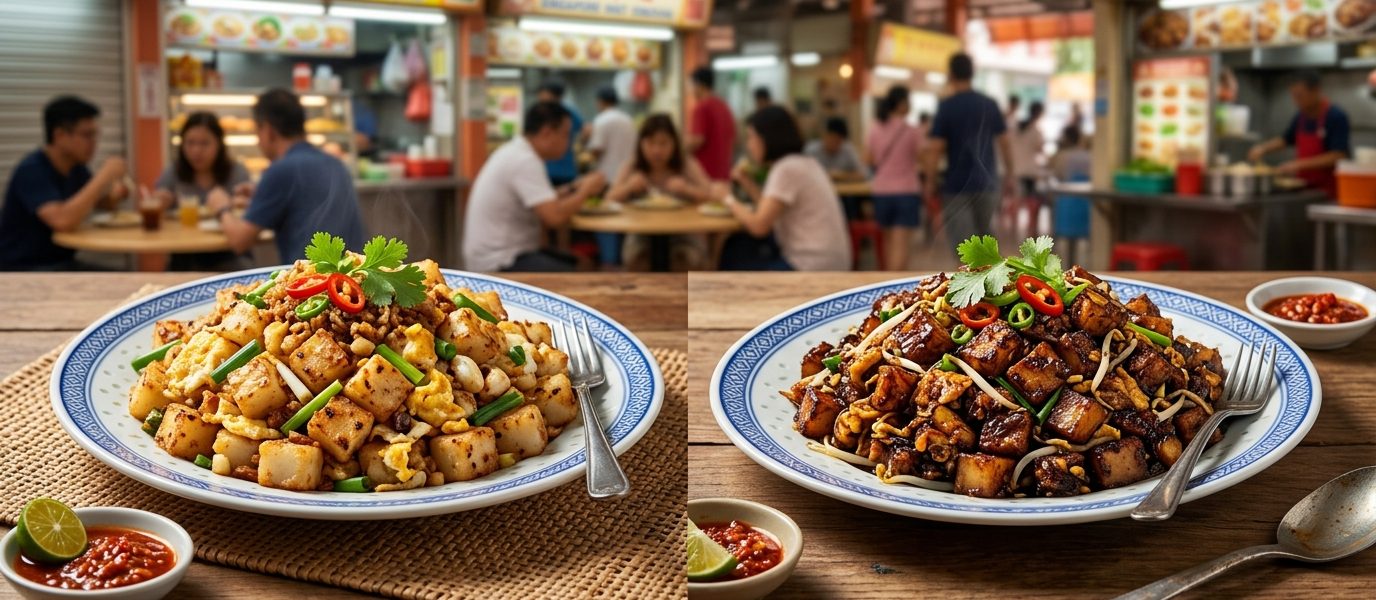
Walk into any hawker centre at breakfast time and you’ll spot the telltale sight: a hawker uncle wielding two woks, one churning out pristine white cubes, the other turning out glossy dark squares. Both are carrot cake, or chai tow kway, yet they look nothing alike. The debate over which version reigns supreme has divided Singaporeans for generations, splitting families at kopitiam tables and sparking passionate arguments in online forums.
Black carrot cake gets its colour and sweetness from dark soy sauce, creating a sticky, caramelised finish. White carrot cake stays plain, letting the radish cake’s natural flavour shine through a light, eggy coating. Both use identical base ingredients but diverge completely in technique, taste, and regional popularity. Your preference often reveals which neighbourhood you grew up in.
What makes carrot cake black or white
The name confuses first-timers. There are no carrots involved. The dish uses white radish, or chai tow in Teochew dialect, which gets grated, steamed with rice flour, and left to set into firm blocks. Hawkers cut these blocks into cubes and fry them with eggs, garlic, and preserved radish.
White carrot cake stops there. The hawker fries everything together until the eggs coat the cubes in a light, fluffy layer. The radish cake stays soft inside with crispy edges. You taste the natural sweetness of the radish, the richness of the eggs, and the salty punch from the preserved radish bits.
Black carrot cake takes an extra step. The hawker adds sweet dark soy sauce halfway through cooking. The sauce caramelises against the hot wok, coating each cube in a sticky, sweet-savoury glaze. The colour shifts from white to deep brown. The texture becomes chewier, almost gummy in spots where the sauce concentrates.
The cooking techniques that create each style
Making white carrot cake demands restraint. The hawker heats the wok until it smokes, adds oil, tosses in garlic until fragrant, then throws in the radish cake cubes. The cubes need to sear without sticking. Too much stirring prevents browning. Too little causes burning.
After the cubes develop golden edges, beaten eggs go in. The hawker stirs constantly now, breaking the eggs into small curds that cling to every surface. Preserved radish adds at the end for texture. White pepper and spring onions finish the plate.
Black carrot cake follows the same start but diverges at the egg stage. Once the eggs begin to set, dark soy sauce streams in. The hawker must work fast, tossing everything to distribute the sauce evenly before it burns. The sugar in the soy sauce caramelises within seconds. The eggs absorb the dark colour. The radish cubes turn glossy.
Some hawkers add a touch of sweet sauce or molasses for extra depth. Others rely purely on dark soy. The best versions balance sweetness with the savoury base, creating layers of flavour that build with each bite.
| Aspect | White Carrot Cake | Black Carrot Cake |
|---|---|---|
| Colour | Pale yellow from eggs | Dark brown from soy sauce |
| Texture | Fluffy egg coating, crispy edges | Sticky, slightly chewy |
| Sweetness | Minimal, natural radish sweetness | Pronounced sweet-savoury balance |
| Garlic presence | More noticeable | Masked by soy sauce |
| Preserved radish | Distinct salty crunch | Blended into overall flavour |
| Best eaten | Immediately, while crispy | Tolerates sitting better |
Regional preferences across Singapore
Travel around the island and you’ll notice patterns. Older neighbourhoods in the east and central areas lean heavily toward white. Stalls at Tiong Bahru Market serve almost exclusively white versions, with locals queueing before 8am for their fix.
Head west or north and black carrot cake dominates. Jurong, Woodlands, and Yishun hawker centres stock more black than white. Some stalls don’t even offer white as an option.
The divide isn’t absolute. Most established stalls prepare both versions, letting customers choose or order half-half. Tourist-heavy centres like Maxwell Food Centre always stock both to accommodate different palates.
Older Teochew communities traditionally favour white. The black version emerged later, possibly influenced by Cantonese cooking styles that embrace sweet soy-based sauces. Younger Singaporeans show less regional loyalty, choosing based on mood rather than tradition.
How to order like a local
- Approach the stall and state your preference clearly: “One white” or “One black.”
- Specify if you want extra egg by saying “加蛋” (jia dan) or simply “extra egg.”
- Mention if you prefer less oil: “少油” (shao you) or “not too oily.”
- For half-half portions, say “一半一半” (yi ban yi ban) or “half-half.”
- Collect your plate, grab chilli sauce from the condiment station, and find a seat before the plate cools.
Most hawkers fry each order fresh. Expect a five to ten minute wait during peak hours. The wait matters. Pre-fried carrot cake sitting under heat lamps loses its texture. The eggs turn rubbery. The crispy edges soften.
A veteran hawker at Bedok South once told me: “White carrot cake shows your skill. Cannot hide behind sauce. Every mistake shows. Black carrot cake forgives more, but getting the sweetness right takes years.”
Common mistakes when trying each version
First-timers often judge white carrot cake as bland. They expect bold flavours and find subtlety instead. The dish rewards slower eating. Let each bite sit on your tongue. Notice how the preserved radish saltiness balances the egg richness. Feel the contrast between crispy exterior and soft interior.
Black carrot cake trips up people who expect dessert-level sweetness. Quality versions balance sweet and savoury precisely. Too much sweetness signals cheap sauce or inexperienced cooking. The best black carrot cake still tastes savoury first, with sweetness supporting rather than dominating.
Another mistake: drowning either version in chilli sauce immediately. Taste the carrot cake plain first. Understand what the hawker created. Then add chilli if you want heat. Some stalls offer exceptional chilli that complements the dish. Others provide generic bottled sauce that masks everything.
Temperature matters more than people realise. Carrot cake tastes best piping hot. The eggs stay fluffy. The radish cake maintains its texture. Let it cool and everything changes. The eggs firm up. The oil congeals. The magic disappears.
The ingredients that separate good from great
All carrot cake starts with radish cake blocks. Hawkers either make their own or buy from suppliers. Homemade blocks use fresher radish, resulting in sweeter, more fragrant cake. The texture holds together better during frying. Commercial blocks sometimes crumble or turn mushy.
Egg quality shows immediately in white carrot cake. Fresh eggs create fluffy, bright yellow curds. Old eggs produce thin, watery results that slide off the radish cubes. Top stalls crack eggs to order. Budget operations use pre-beaten eggs from containers.
The preserved radish, or chai poh, provides crucial saltiness and texture. Good chai poh has a firm bite and clean salty taste. Poor quality chai poh turns soft and tastes overwhelmingly salty or oddly sweet. Hawkers should rinse and chop it fresh daily.
For black carrot cake, the dark soy sauce makes or breaks the dish. Premium dark soy offers complex sweetness with molasses notes. Cheap versions taste one-dimensionally sweet with chemical undertones. Some hawkers blend different soy sauces to achieve their signature flavour.
Where each style shines brightest
White carrot cake works better for breakfast. The lighter profile suits morning appetites. Pair it with kopi and you have a complete meal that energises without weighing you down. The eggy flavour complements coffee surprisingly well.
Black carrot cake handles afternoon and evening eating better. The sweetness satisfies post-lunch cravings. The heavier profile works as a substantial snack. Some people treat it as comfort food, seeking that specific sweet-savoury combination when stressed or tired.
For sharing with friends unfamiliar with Singaporean food, white carrot cake proves easier to appreciate. The flavours read as more universally accessible. Black carrot cake polarises newcomers. They either love the sweet-savoury combination or find it confusing.
Home cooks attempting either version should start with white. The technique is more forgiving. You can taste and adjust as you go. Black carrot cake requires precise timing. Add the soy sauce too early and it burns. Too late and it doesn’t caramelize properly.
- White carrot cake pairs well with light soy sauce for dipping
- Black carrot cake needs no additional condiments in most cases
- Both versions benefit from a squeeze of fresh lime
- Sambal belacan works better with white than black
- Neither version reheats well, so order only what you’ll eat immediately
The breakfast culture surrounding carrot cake
Carrot cake occupies a special place in Singapore’s morning routine. Office workers grab plates before heading to work. Retirees gather at familiar hawker centres for their daily dose. Students fuel up before school.
The dish appears on almost every breakfast menu across the island. Some stalls serve it all day, but the morning crowd always peaks. Hawkers prepare fresh radish cake blocks overnight, ready to fry at dawn.
Eating carrot cake for breakfast signals local identity. Tourists rarely order it in the morning, gravitating toward chicken rice or laksa instead. Singaporeans know that breakfast carrot cake, fried fresh when the wok is properly seasoned from the night before, hits differently than lunch portions.
The communal aspect matters too. Carrot cake stalls become social hubs. Regulars exchange greetings with hawkers who remember their preferences. “Uncle, one white, less oil, extra egg” becomes a daily ritual that structures the morning.
Making the choice between black and white
Your preference often reflects your upbringing. Children raised on white carrot cake find black versions too sweet. Those who grew up eating black find white bland. Neither group is wrong. The dishes serve different purposes and satisfy different cravings.
Mood plays a role too. Some days call for the clean simplicity of white. Other days demand the indulgent sweetness of black. Experienced carrot cake enthusiasts maintain no fixed loyalty, choosing based on context.
Weather influences decisions. Hot, humid days make white carrot cake more appealing. The lighter profile feels less heavy. Rainy mornings pair well with black carrot cake’s comforting sweetness.
If you’re genuinely torn, order half-half. Most hawkers accommodate this request without issue. You get both experiences on one plate, allowing direct comparison. Just eat it fast before everything cools down.
Why this debate will never end
Food preferences connect to memory and identity in ways that transcend logic. Your favourite carrot cake version links to childhood breakfasts, family outings, neighbourhood hawker centres that no longer exist. Defending your preference means defending those memories.
The debate also reflects Singapore’s diversity. Different communities brought different cooking traditions. Those traditions evolved, mixed, and created variations that now define specific neighbourhoods and generations. Black and white carrot cake represent that ongoing evolution.
As long as hawkers keep frying both versions, the debate continues. New generations form their own preferences. Old-timers defend their traditional choices. The conversation never grows stale because the food remains deeply personal.
Whether you’re team black or team white, the real winner is Singapore’s hawker culture. Both versions showcase the skill, dedication, and creativity that make our food scene special. Every plate of carrot cake, regardless of colour, represents decades of refined technique and cultural heritage worth preserving.