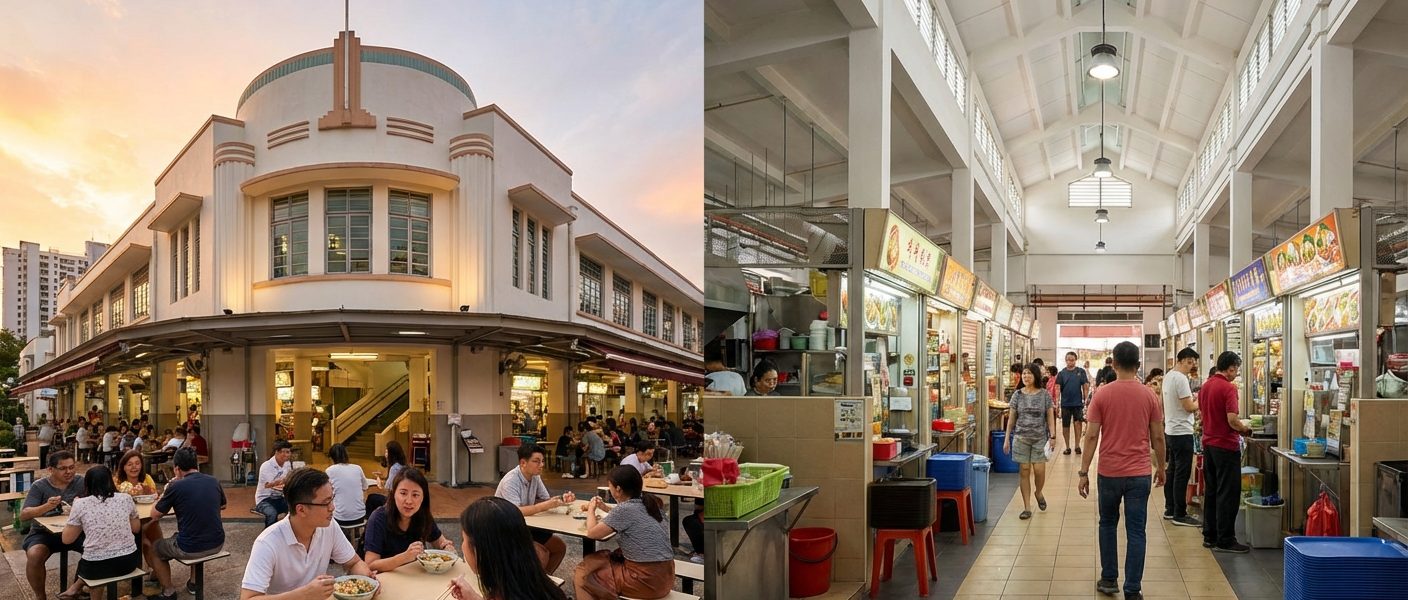
Walking into Tiong Bahru Market feels like stepping into Singapore’s living food history. The aroma of freshly steamed chwee kueh mingles with the sizzle of char kway teow, while queues snake around stalls that have fed generations of families. This isn’t just another hawker centre. It’s where elderly uncles debate the best lor mak recipe over kopi, where young families introduce their children to flavours their grandparents grew up with, and where tourists get their first real taste of what makes Singapore’s hawker culture worth protecting.
Tiong Bahru Market houses over 80 hawker stalls serving everything from heritage Teochew porridge to Michelin-recognised pig’s organ soup. This tiong bahru market food guide covers the essential stalls to visit, what dishes to order, optimal visiting times, and practical tips for navigating one of Singapore’s oldest and most beloved food centres with confidence.
Heritage Stalls You Cannot Miss
Some stalls have been serving the same recipes for over four decades. Their longevity isn’t about luck. It’s about consistency, quality, and that intangible something that keeps people coming back.
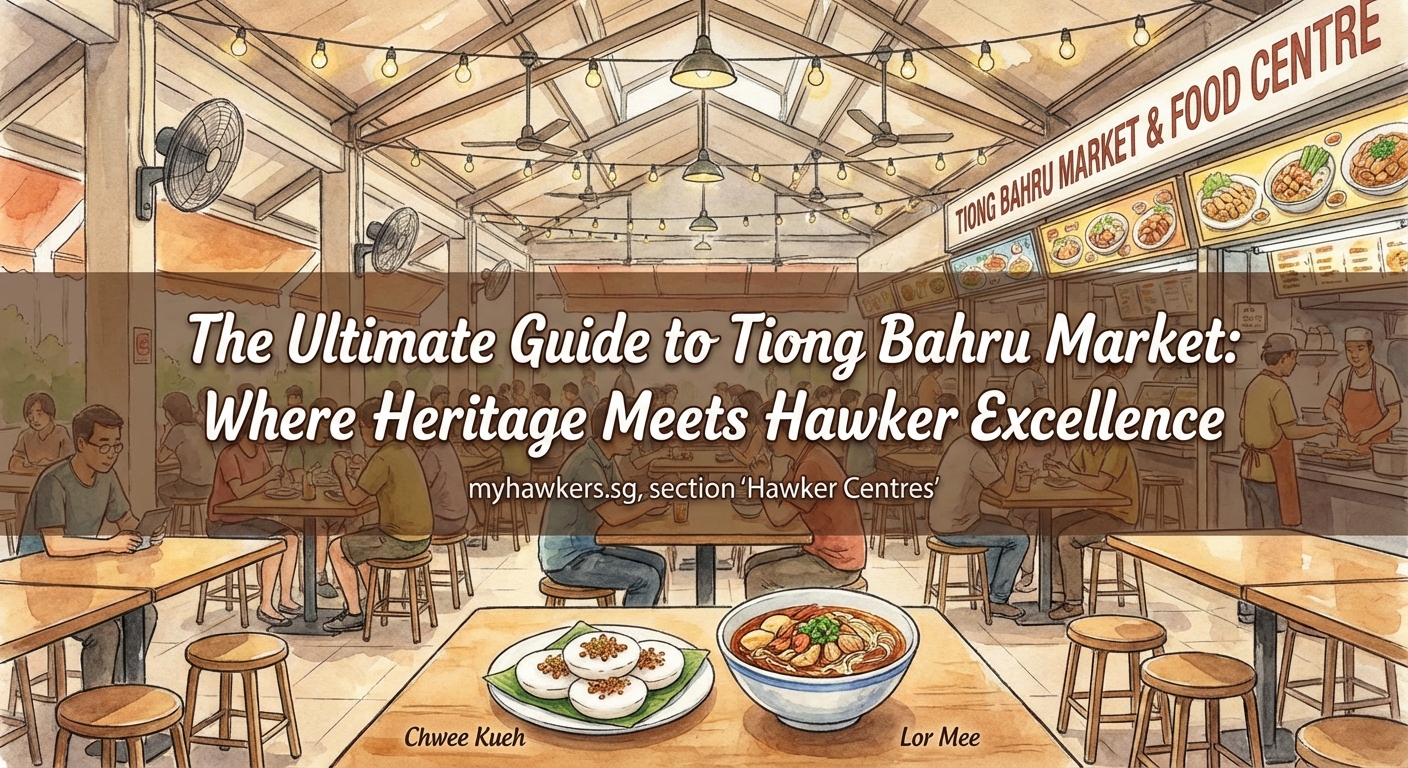
Jian Bo Shui Kueh sits near the entrance on the first floor. The chwee kueh here is legendary. Each steamed rice cake arrives perfectly silky, topped with preserved radish that balances sweet and savoury in a way that lesser versions never achieve. The uncle who runs it has been doing this since the 1980s. He still hand-grinds the rice each morning. You can taste the difference.
Lor Mee 178 draws crowds from opening time. Their lor mak is thick, rich, and properly seasoned with that deep umami flavour that comes from hours of simmering. The noodles have the right bounce. The fish pieces are generous. The crispy bits on top add texture without getting soggy. Get there before 9am on weekends or prepare to wait.
Tiong Bahru Pau occupies a corner spot that always has a queue. Their pau are made fresh throughout the day. The char siew filling is sweet without being cloying. The dough is fluffy and holds its shape. Many regulars buy a dozen at a time to freeze at home.
Michelin-Recognised Excellence
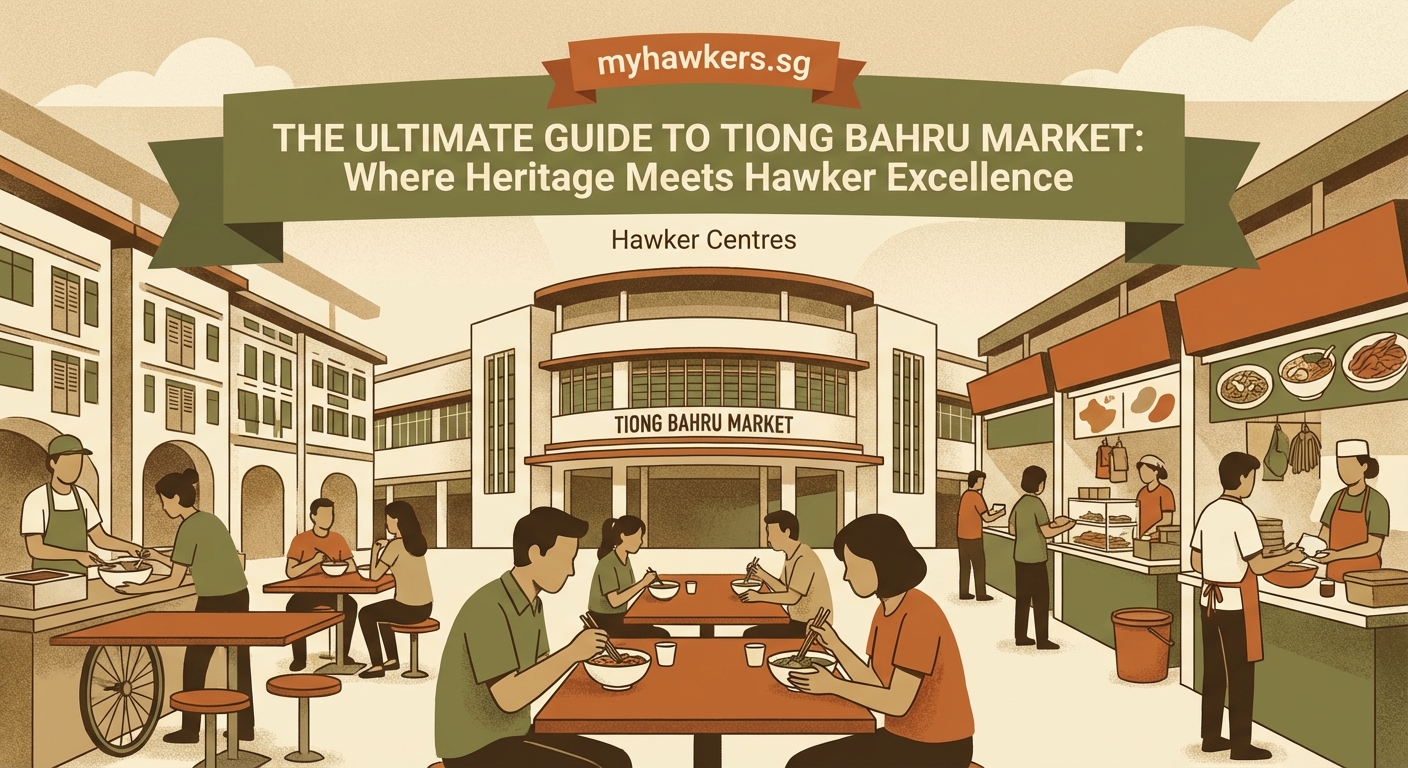
Outram Park Fried Kway Teow earned its Michelin Bib Gourmand recognition for good reason. Fried Kway Teow Meng operates with the kind of precision you’d expect from someone who has been perfecting one dish for decades. Each plate gets individual attention. The wok hei is consistent. The balance between sweet dark soy sauce, savoury fish cake, and smoky Chinese sausage hits exactly right.
Lian He Ben Ji Claypot Rice also holds a Michelin Bib Gourmand. Their claypot rice takes time because they cook each pot to order. The rice at the bottom develops that crispy crust everyone fights over. The chicken is tender. The lap cheong adds sweetness. The soy sauce mixture ties it together. Worth the 20-minute wait.
Breakfast Champions
Breakfast at Tiong Bahru Market is serious business. Locals have their routines. They know which stall opens earliest, which one runs out first, and exactly what time to arrive.
Tiong Bahru Hainanese Boneless Chicken Rice serves from 6am. Their chicken is poached perfectly. The rice is fragrant. The chilli sauce has proper kick. Office workers grab takeaway boxes before heading to the MRT. Retirees sit down with newspapers and take their time.
Ah Chiang’s Porridge opens at 5:30am for the early crowd. Their Teochew porridge comes with an array of side dishes. You pick what you want. The porridge itself is simple, just rice and water cooked until creamy. The sides do the heavy lifting. Braised peanuts, salted vegetables, fried whitebait, steamed fish. Each component adds a different flavour and texture.
Sin Hoi Sai Eating House does a mean plate of Economic Bee Hoon. You point at what you want from the array of dishes. They pile it onto rice or noodles. The curry is thick. The chap chye has that slow-cooked sweetness. The luncheon meat is fried crispy. It’s comfort food that costs less than a fancy coffee.
Lunch and Dinner Favourites
Midday brings a different energy. Office workers flood in. Tour groups arrive. The pace picks up.
Guan Kee Fried Kway Teow offers an alternative to the Michelin stall. Some locals actually prefer it. The taste profile is slightly different. More garlic. Less sweet. Both versions have devoted fans. Try both and decide for yourself.
Tiong Bahru Yi Sheng Fried Hokkien Prawn Mee cooks their noodles over charcoal. You can smell it from across the food centre. The prawns are large. The squid is tender. The stock is rich with prawn flavour. They don’t skimp on ingredients.
Jin Jin Dessert serves traditional Chinese desserts that work perfectly after a heavy meal. Their cheng tng is refreshing. The tau suan is smooth without being gluey. The bubur cha cha has generous chunks of sweet potato and yam.
What to Order at Each Stall
Knowing what each stall does best saves you from disappointment. Not everything on every menu is worth ordering.
| Stall Name | Must-Order Dish | Skip This | Price Range |
|---|---|---|---|
| Jian Bo Shui Kueh | Chwee Kueh (4 pieces) | Nothing else on menu | $3 to $4 |
| Lor Mee 178 | Lor Mak with everything | Plain noodles | $4 to $6 |
| Outram Park Fried Kway Teow | Fried Kway Teow with cockles | Smaller portions | $5 to $7 |
| Lian He Ben Ji | Claypot Chicken Rice | Takeaway version | $6 to $8 |
| Tiong Bahru Hainanese Chicken Rice | Chicken rice set | Roast chicken | $4 to $6 |
| Jin Jin Dessert | Cheng tng or tau suan | Overly sweet options | $2 to $3 |
Navigating Peak Hours
Timing matters. A lot.
Weekday mornings between 7am and 9am see the breakfast rush. Retirees arrive early. Office workers grab food before work. By 9:30am, things calm down.
Lunch hits hard from 11:30am to 1:30pm. Nearby office workers flood the centre. Tables are scarce. Popular stalls have long queues. If you want to eat during lunch, arrive by 11am or wait until 2pm.
Weekend mornings are chaos. Families come for breakfast. Tourists arrive. Queues form by 8am at popular stalls. The best strategy is arriving before 7:30am or after 10am when the initial rush subsides.
Dinner is surprisingly manageable on weekdays. Most stalls stay open until 7pm or 8pm. The crowd thins out after the lunch rush. You can actually find seats and order without waiting long.
How to Eat Like a Local
Locals have systems. They don’t wander aimlessly hoping to find a seat.
- Scout for a table first before ordering. Hawker centre etiquette means you can reserve a table with a packet of tissue or a personal item.
- Send one person to chope the table while others queue for food. This is standard practice. Don’t feel bad about it.
- Order from multiple stalls if eating with a group. Share everything. This lets you try more dishes.
- Bring cash. Many stalls still don’t accept cards. Some take PayNow but not all.
- Clear your own table when done. Tray return stations sit at various points around the centre.
- Don’t rush the cooking. Some dishes take time. Claypot rice needs 20 minutes. Proper char kway teow can’t be rushed.
“The best time to visit Tiong Bahru Market is Tuesday through Thursday mornings around 8am. You miss the weekend tourist rush, the stalls are fully stocked, and the uncles and aunties are in good moods. That’s when you get the best service and the freshest ingredients.” – Regular customer of 30 years
Beyond the Famous Names
Not every great stall has a Michelin star or appears in guidebooks. Some of the best food hides in plain sight.
Tiong Bahru Fishball Noodles makes their fishballs by hand daily. The texture is bouncy without being rubbery. The noodles are springy. The soup is clean and clear. No MSG aftertaste.
The Carrot Cake stall near the back does both black and white versions properly. The radish is fresh. The eggs are generous. The wok hei is there. Locals order the black version for its sweet caramelised flavour.
Heng Heng Cooked Food serves Malay dishes that don’t get enough attention. Their sambal kangkong has proper heat. The ikan goreng is crispy. The begedil are fluffy inside with a crunchy exterior.
Drinks to Complete Your Meal
Food is only half the equation. The right drink matters.
Traditional Kopi and Teh stalls serve coffee and tea the old-school way. Thick, sweet, strong. A kopi-o kosong (black coffee without sugar) cuts through rich, oily food perfectly. Teh-c (tea with evaporated milk) is smoother and less sweet than regular teh.
Fresh sugarcane juice from the juice stall provides natural sweetness and helps with digestion after a heavy meal. They press it fresh when you order.
Soya bean milk, served hot or cold, is a protein-rich option that pairs well with fried items. The version here is made fresh daily with just the right amount of sweetness.
Common Mistakes Tourists Make
Watching tourists navigate the market reveals patterns. Same mistakes, different faces.
- Ordering too much food at once. Portions are generous. Start with one or two dishes and order more if still hungry.
- Sitting at tables with reserved signs. That tissue packet or umbrella means someone is coming back. Find an empty table.
- Expecting air conditioning. This is a traditional hawker centre. Fans provide some relief but it gets hot and humid.
- Arriving at 11:30am on Saturday expecting to find seats easily. This guarantees frustration.
- Assuming every stall takes cards. Bring cash. There’s an ATM nearby but the queue can be long.
- Ordering the most expensive item thinking it’s the best. Often the simplest dish is what the stall does best.
What Makes Tiong Bahru Different
Every hawker centre has its own character. Tiong Bahru Market has several things going for it.
The building itself dates back to 1951. It underwent major renovation in 2004 but kept its essential character. The Art Deco architecture of the surrounding estate creates atmosphere you don’t find in newer developments.
The mix of old and new stalls creates variety. Third-generation hawkers serve alongside newcomers trying to make their mark. You can eat a breakfast recipe that hasn’t changed in 40 years, then grab dessert from a stall that opened last year.
The wet market on the ground floor adds authenticity. Seeing whole fish on ice, fresh vegetables in baskets, and butchers cutting meat reminds you this is a real community market, not a tourist attraction dressed up as one.
The neighbourhood itself matters. Tiong Bahru has transformed into a hip area with cafes and boutiques, but the market remains grounded in its hawker roots. Old-timers and young families share tables. That mix is rare.
Practical Information for First-Timers
Getting there is straightforward. Tiong Bahru MRT station on the East-West Line is a five-minute walk. Exit at Exit B and follow the signs.
The market is open daily. Most hawker stalls operate from 6am or 7am until early evening. Some close by 2pm or 3pm after selling out. Monday is a common rest day for many stalls. Check before making a special trip.
Facilities include toilets on the second floor, a small playground outside for children, and covered walkways that provide shelter during rain.
Parking is available but limited. The carpark fills up fast on weekends. Public transport is the better option.
Accessibility has improved with ramps and lifts, though some areas remain challenging for wheelchairs during peak hours when crowds pack tight.
Combining Food with Neighbourhood Exploration
Tiong Bahru Market sits in the heart of one of Singapore’s most interesting neighbourhoods. Make a morning of it.
Walk through the Art Deco estate after breakfast. The buildings date from the 1930s and feature curved balconies, spiral staircases, and porthole windows. Architecture enthusiasts find plenty to photograph.
Browse the independent bookshops and cafes that have opened in recent years. Books Actually stocks literary fiction and local authors. Tiong Bahru Bakery serves excellent croissants if you want a Western-style coffee after your hawker breakfast.
The Tiong Bahru Air Raid Shelter offers a glimpse into World War II history. It’s not always open but worth checking if you’re interested.
Street art appears on various walls around the estate. Local and international artists have contributed murals that add colour to the heritage buildings.
Why This Market Matters
Singapore’s hawker culture faces challenges. Rising costs. Younger generations choosing other careers. Changing tastes. Markets like Tiong Bahru represent what’s worth preserving.
The hawkers here aren’t just cooking food. They’re maintaining traditions, passing down recipes, and creating gathering spaces for communities. When you buy a plate of char kway teow from someone who has been cooking it for 30 years, you’re participating in something bigger than a transaction.
This tiong bahru market food guide exists because these stalls deserve recognition, support, and customers who appreciate what they do. Every meal you eat here, every dollar you spend, helps ensure these recipes and traditions survive another generation.
Making the Most of Your Visit
Go with an appetite. Go with an open mind. Go ready to try things you might not recognise.
Don’t stress about finding the “best” stall. Taste is personal. What one person raves about might not suit your palate. The fun is in trying different versions and forming your own opinions.
Talk to the hawkers if they’re not too busy. Many have fascinating stories about how they learned their craft, what’s changed over the decades, and why they keep doing this work despite the long hours and hard labour.
Bring friends or family. Hawker food is meant to be shared. Ordering multiple dishes and passing plates around is how locals eat. It’s more fun and you get to taste more variety.
Come back multiple times. One visit barely scratches the surface. Regular customers develop relationships with hawkers, learn the rhythms of the market, and discover hidden gems that guidebooks miss. Tiong Bahru Market rewards loyalty and repeat visits with experiences that tourists rushing through can never access.