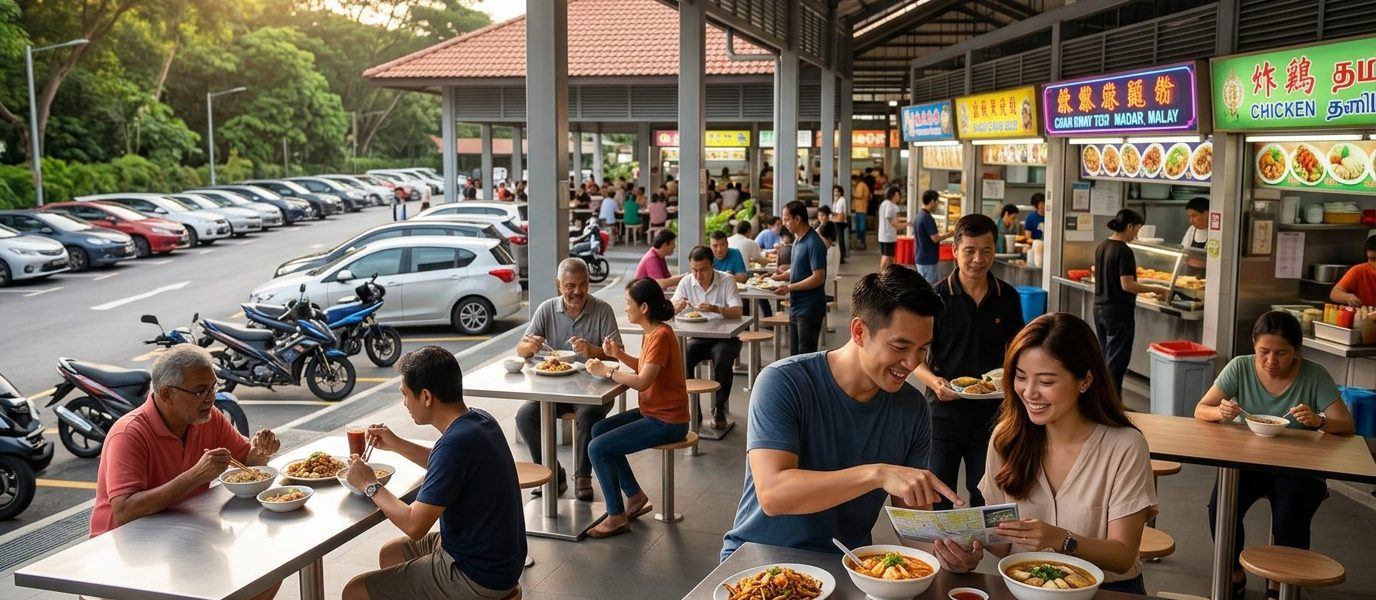
You know the drill. Circle the car park three times, wait for someone to leave, then rush to chope a table before the lunch crowd swallows every seat. Popular hawker centres like Maxwell or Old Airport Road might serve incredible food, but the parking nightmare often makes you wonder if it’s worth the hassle.
Good news. Singapore has plenty of underrated hawker centres where you’ll actually find parking and food that rivals the famous spots. These neighbourhood gems fly under the radar because they’re not in tourist guides or Instagram feeds. But locals who know, know.
Singapore’s underrated hawker centres offer ample parking and exceptional food without the crowds. Neighbourhoods like Yishun, Bedok, and Bukit Panjang house hidden gems where you can park easily, find seats immediately, and enjoy authentic hawker fare at lower prices. These centres often feature veteran hawkers with decades of experience, making them ideal alternatives to overrun tourist spots.
Why parking matters when choosing your hawker centre
Parking availability transforms your entire hawker experience. When you don’t spend 20 minutes hunting for a lot, you arrive relaxed and ready to enjoy your meal. You’re not rushing because your parking coupon is about to expire. You can actually browse different stalls instead of grabbing the first thing you see.
The connection between parking and food quality isn’t obvious until you think about it. Hawker centres with terrible parking attract tourists and office workers during peak hours. The stalls adjust their recipes for speed and volume. Salt levels go up. Cooking times get shorter. Quality suffers.
Centres with decent parking in residential areas serve neighbourhood regulars who eat there multiple times a week. These uncles and aunties won’t tolerate subpar food. The hawkers know it. Standards stay high because their customers will notice if the char kway teow tastes different on Tuesday.
Finding hawker centres that locals actually use
The best underrated hawker centres share common traits. They’re located in mature estates, not near MRT stations or tourist attractions. They have multi-storey car parks nearby or ample surface parking. Opening hours cater to residents, with strong breakfast and dinner crowds but quieter lunchtimes.
These centres also feature stalls run by veteran hawkers who’ve been cooking the same dish for 30 years. You won’t find trendy fusion concepts or Instagram-worthy presentations. Just solid execution of traditional recipes.
Check the age of the hawker centre building itself. Centres built in the 1980s and 1990s often have better parking ratios because town planning standards were different. Newer centres in land-scarce areas might look modern but offer frustrating parking situations.
“The best hawker food is always in places where people live, not where tourists visit. If you see school uniforms and office wear at different times of day, you’ve found a real neighbourhood centre.” – Veteran food blogger
Top underrated hawker centres with parking you need to try
Yishun Park Hawker Centre sits next to a massive HDB car park that never fills completely. The centre itself stays relatively quiet even during peak hours. Stalls here include an excellent prawn mee with rich soup stock, a roast meat stall where the char siew actually has the right fat ratio, and a nasi lemak that draws regulars from neighbouring estates.
Parking here costs standard HDB rates. You can easily find a lot within 50 metres of the centre entrance. The surrounding park makes it pleasant for a post-meal walk.
Bedok 511 Market & Food Centre offers both open-air parking and covered lots in the adjacent HDB blocks. This centre houses over 50 stalls but maintains a relaxed atmosphere because it serves a residential catchment rather than office workers.
The economic rice stalls here are particularly good. Dishes change daily based on what’s fresh. Prices remain reasonable because the customer base is price-sensitive retirees and young families.
Bukit Panjang Hawker Centre and Market features a dedicated car park that rarely reaches capacity outside dinner hours. The centre underwent renovation a few years back but retained most of its long-standing hawkers. You’ll find exceptional chicken rice, a fish soup stall that uses fresh catches daily, and a vegetarian stall with surprising variety.
The mix of old and new creates an interesting dynamic. Veteran hawkers maintain traditional standards while newer stalls experiment with less common dishes like Teochew porridge and Hakka thunder tea rice.
Marsiling Mall Hawker Centre might be the most underrated on this list. Located in the far north, it sees minimal tourist traffic. The car park here is generous, and you’ll always find seats even during weekend lunch.
Standout stalls include a wonton mee where they still make the dumplings by hand each morning, a satay stall with perfectly charred skewers, and a dessert stall serving traditional Teochew sweets that most younger Singaporeans have never tried.
How to spot quality at lesser-known centres
Quality indicators work differently at neighbourhood centres compared to famous ones. Long queues don’t necessarily mean better food here. Sometimes the queue exists because the uncle works alone and cooks slowly.
Watch for these signs instead:
- Regulars who order without looking at the menu
- Hawkers who remember customer preferences
- Fresh ingredients visible at the stall front
- Cooking happening to order, not from pre-cooked batches
- Older customers eating alone, which suggests they come frequently
- Stalls that run out of food before closing time
The absence of certain things also signals quality. No flashy signboards. No promotional posters. No English menus. These stalls rely on repeat customers, not walk-ins.
Check if the hawker actually tastes their own food during service. Good cooks adjust seasoning throughout the day as ingredients and weather change. If you see them sampling the soup or sauce, that’s a positive sign.
Planning your visit to maximize the experience
Timing matters enormously at residential hawker centres. Visit between 10am and 11am for breakfast items when everything is freshly prepared. The morning crowd has thinned but hawkers haven’t started rushing for lunch prep.
For lunch, aim for 11:30am or after 1:30pm. The narrow lunch window means you’ll either beat the crowd or wait until it passes. Dinner works best around 6pm before the after-work rush or after 8pm when families have finished eating.
Weekday visits generally offer better experiences than weekends. Hawkers are more relaxed, ingredients are fresher because turnover is predictable, and you can actually have conversations with the stall owners.
Bring cash. While many stalls now accept PayNow, the older generation of hawkers still prefers notes and coins. Having exact change speeds up service and endears you to the uncle or auntie.
Common mistakes when visiting underrated hawker centres
| Mistake | Why It Happens | Better Approach |
|---|---|---|
| Ordering from the newest-looking stall | Assumes modern equals better | Choose stalls with worn equipment and regular customers |
| Asking for modifications to traditional dishes | Tourist mindset | Order as-is first, request changes only on return visits |
| Visiting only during peak hours | Following conventional meal times | Try off-peak hours for better quality and service |
| Judging by stall appearance | Instagram conditioning | Focus on food preparation and customer base instead |
| Leaving immediately after eating | Treating it like fast food | Linger over coffee, observe the centre dynamics |
The biggest mistake is treating these centres like tourist attractions. They’re community spaces. The food is excellent, but the social fabric matters too. Regular customers chat with hawkers. Uncles play chess between meals. Aunties catch up on neighbourhood gossip.
Rushing in, eating, and leaving means you miss the context that makes the food meaningful. These hidden neighbourhood gems thrive because they’re woven into daily life, not because they serve Instagrammable dishes.
Understanding the parking situation at each centre
Different hawker centres have different parking setups. Some share car parks with adjacent HDB blocks, which means you’re competing with residents during evening hours. Others have dedicated lots that fill during meal times but stay empty otherwise.
Multi-storey car parks offer the most reliable parking but require a short walk. Surface lots are convenient but limited in capacity. Street parking exists near some centres but comes with timing restrictions and higher rates.
Calculate your total time commitment. A centre with slightly further parking but no queue might save time compared to a centre where you circle for 15 minutes then wait 20 minutes for food.
Consider the parking grace period too. Some centres sit in zones with 10-minute grace periods, others allow 15 minutes. If you’re just grabbing takeaway, this matters.
Season parking might make sense if you find a centre you love. Monthly rates at HDB car parks near hawker centres are reasonable, and you’ll never stress about finding a lot.
What makes these centres better than the famous ones
The famous hawker centres suffer from their own success. When a centre appears in every tourist guide, stall owners face pressure to serve hundreds of customers daily. Recipes get simplified. Ingredients get standardized. The personal touch disappears.
At underrated centres, hawkers can maintain quality because volume is manageable. They know their regulars by face. They adjust portions based on who’s ordering. They’ll tell you honestly if something isn’t up to standard today.
Prices stay lower too. Rent at neighbourhood centres costs less than at tourist hotspots. Hawkers don’t need to factor in marketing or branding. The savings get passed to customers.
The atmosphere differs completely. Nobody’s taking photos of their food for 10 minutes before eating. Conversations happen in Hokkien and Teochew, not English. The centre functions as a community hub, not a food court.
You’ll also find dishes that famous centres don’t bother with anymore. Things like pig organ soup, fish ball noodles with handmade balls, and traditional Malay kueh that take hours to prepare. These items survive at neighbourhood centres because regular customers request them.
Making the most of your hawker centre parking experience
Start building a mental map of centres with good parking in different regions. Keep a list on your phone with parking notes, best stalls, and optimal visiting times. This transforms random meals into a systematic exploration of Singapore’s hawker culture.
Try the complete breakfast hunter’s map approach for morning visits. Many underrated centres serve exceptional breakfast items that disappear by noon.
Bring family or friends who appreciate authentic hawker food. These centres work best when you can order multiple dishes and share. The variety lets you understand each stall’s strengths.
Talk to the hawkers when they’re not busy. Ask how long they’ve been cooking. Inquire about their signature dishes. Many have fascinating stories about learning from their parents or adapting recipes over decades. These conversations enrich your appreciation of what you’re eating.
Document your visits simply. A photo of the stall sign and a few notes about what you ordered helps you remember gems you want to revisit. Don’t obsess over food photography. Eat while it’s hot.
Why these centres deserve your attention now
Hawker culture is changing rapidly. Veteran hawkers retire without successors. Rental increases push some stalls to close. Neighbourhood centres face redevelopment as estates undergo renewal.
The underrated centres with good parking represent a specific moment in Singapore’s development. They’re old enough to have established hawkers with refined skills but not so old that they’ve been demolished or renovated beyond recognition.
Visit them now while the original hawkers still cook. Learn their stories. Taste their food. Support their businesses. These aren’t just convenient alternatives to crowded centres. They’re repositories of culinary knowledge and community bonds that won’t exist in another decade.
When you find a centre you love, become a regular. Order the same dish from the same stall. Let the uncle or auntie recognize you. This is how hawker culture perpetuates itself, through relationships between cooks and eaters that span years.
The centres with easy parking and excellent food exist because they serve communities, not crowds. By visiting them, you become part of that community. You help ensure these hawker stalls only locals know about can continue operating for years to come.
Your next meal is waiting in a car park you can actually find
Stop circling Maxwell Food Centre hoping for a miracle parking spot. Singapore’s underrated hawker centres offer everything you want: easy parking, available seats, authentic food, and reasonable prices. They’re hiding in plain sight across the island, waiting for drivers who value convenience as much as flavour.
Pick one centre from this guide. Drive there this weekend. Park easily. Order confidently. Eat slowly. You’ll wonder why you ever bothered with the famous spots.
The best hawker experiences don’t require queuing for an hour or paying for expensive parking. They happen at neighbourhood centres where the uncle remembers how you like your kway teow and the auntie adds extra sambal without asking. Find your spot. Make it a regular thing. That’s how you really eat like a local.