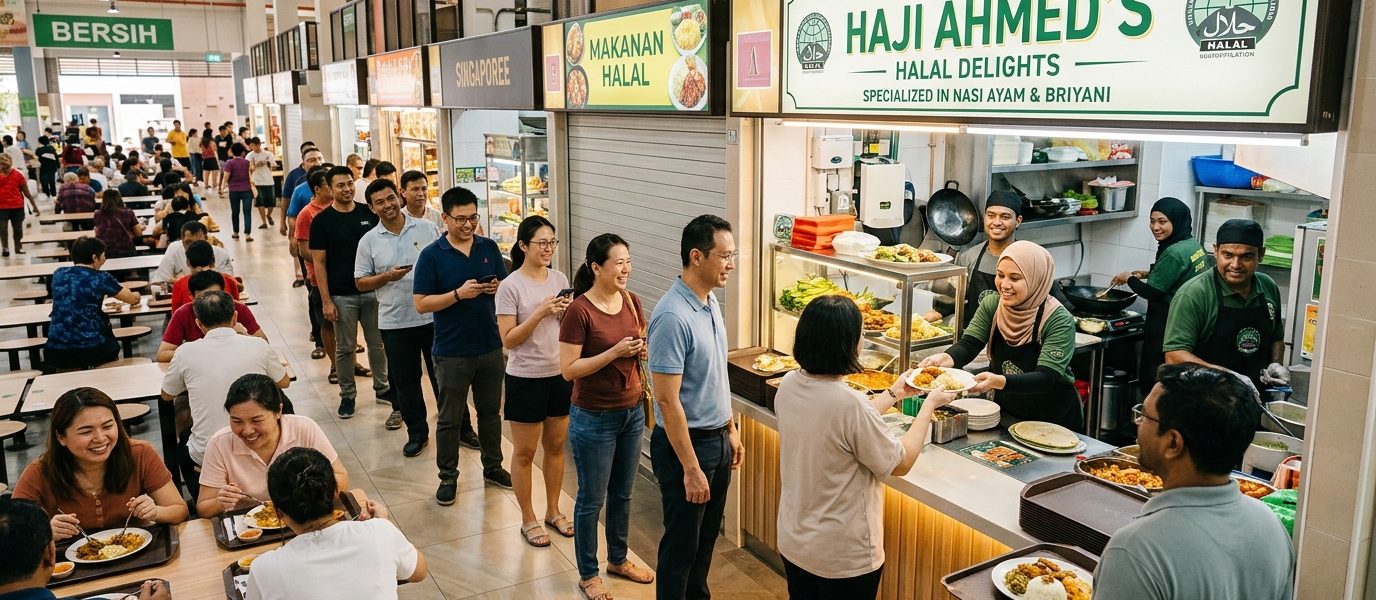
Finding authentic halal food at hawker centres used to mean settling for the same few stalls everyone already knows. Not anymore. Singapore’s halal hawker scene has grown beyond the usual suspects, with passionate hawkers serving everything from char kway teow to biryani that rivals restaurant quality. These stalls aren’t just halal certified. They’re genuinely good, the kind locals return to week after week.
Singapore’s best halal hawker stalls span every region and cuisine style, from Malay nasi lemak and Indian briyani to Chinese-style chicken rice and char kway teow. This guide covers Muslim-owned stalls with verified halal certification, organised by location and dish type, helping you find authentic flavours without compromising on taste or religious requirements. Most dishes cost under $6.
Understanding halal certification at hawker centres
Not all halal stalls display the same certification level.
Some carry full MUIS certification with the green halal logo prominently displayed. Others are Muslim-owned and operate according to halal principles but haven’t gone through formal certification. Both are valid options depending on your comfort level.
MUIS-certified stalls undergo regular audits and strict ingredient checks. You’ll see the certificate near the ordering counter or pasted on the stall front. Muslim-owned stalls without formal certification often source halal ingredients and follow Islamic dietary laws, but lack official documentation.
For tourists and visitors unfamiliar with Singapore’s food scene, stick to stalls with visible MUIS certification. For residents comfortable with the hawker’s reputation, Muslim-owned stalls often deliver equally authentic flavours at slightly lower prices.
How to spot quality halal hawker stalls
Knowing where to look makes all the difference.
Here’s what separates the best halal hawker stalls Singapore offers from mediocre ones:
- Check the queue during peak hours. Long lines before noon or during dinner service usually mean locals trust the food.
- Look for fresh ingredients displayed at the stall front. Chicken rice stalls should have whole chickens hanging, nasi lemak vendors should fry their own ikan bilis.
- Observe the cooking process. Stalls that prepare dishes fresh per order rather than pre-cooking in bulk typically deliver better flavour.
- Ask about opening hours. Many top stalls sell out by early afternoon and close when ingredients run out.
- Notice the stall’s age and history. Second or third generation hawkers often maintain recipes passed down through decades.
| Quality Indicator | What to Look For | Red Flag |
|---|---|---|
| Certification | MUIS certificate displayed clearly | No visible halal documentation |
| Freshness | Ingredients prepped throughout service | Everything pre-cooked hours earlier |
| Queue Length | Consistent crowd during meal times | Empty during peak hours |
| Cooking Method | Made to order | Reheated from large batches |
| Price Point | $4 to $7 for most dishes | Suspiciously cheap or overpriced |
Central region halal hawker gems
The heart of Singapore holds some exceptional halal stalls tucked into neighbourhood centres.
Fitra Chicken Rice at multiple locations
This small chain started at Tiong Bahru Market and expanded due to overwhelming demand. The rice carries that perfect balance of chicken fat and garlic, while the poached chicken stays impossibly tender.
They now operate at Bedok, Tampines, and their original Tiong Bahru location. Each branch maintains the same quality control. Expect to pay around $4 for a standard plate.
The chilli sauce sets them apart. It’s got heat without overwhelming the chicken’s natural flavour. Many regulars order extra rice just to eat with the sauce.
786 Char Kway Teow at Bukit Merah View Market
Finding halal char kway teow that matches traditional versions takes effort. This stall nails it.
The wok hei (breath of wok) comes through in every bite. They use fresh cockles, quality lap cheong (Chinese sausage), and fry each plate individually over roaring heat. The noodles get that slight char without turning greasy.
Operating hours run from early morning until around 2pm. Once they sell out, they close. Weekend queues can stretch 30 minutes, but the line moves steadily.
Haji Kadir Food Chains at Golden Mile Food Centre
This Indian Muslim stall has served briyani and murtabak for over three decades. The mutton briyani uses basmati rice cooked with whole spices, creating layers of flavour that cheap versions never achieve.
Their murtabak comes stuffed generously with minced meat, onions, and egg. The dough gets stretched paper-thin before hitting the griddle. You can watch the entire process from the queue.
Portions run large. A single briyani plate easily feeds one hungry person with rice to spare. Prices hover around $6 to $8 depending on your protein choice.
Eastern Singapore’s halal food scene
The east side holds several hidden neighbourhood gems worth the MRT ride.
Pondok Wak Nah at Bedok South Market
Nasi padang done right means rice surrounded by multiple dishes, each contributing different flavours and textures. This stall offers over 15 dishes daily, from rendang to sambal goreng.
The rendang beef melts without falling apart. The sambal carries enough heat to make you sweat slightly. Vegetables like long beans and cabbage get cooked with dried shrimp and chilli paste.
You point at what you want, they pile it onto your plate, and you pay based on the number of items selected. Most combinations cost $5 to $7. Come before 12:30pm for the full selection.
Green Chilli Chicken Rice at Sims Vista Market
Despite the name, this stall serves both green and red chilli with their chicken rice. The green version uses cili padi blended with ginger and lime, creating a bright, sharp heat that cuts through the rich chicken.
Their roasted chicken outsells the steamed version three to one. The skin crisps perfectly while the meat stays juicy. Rice gets cooked in chicken stock with pandan leaves for extra fragrance.
They open only for breakfast and lunch, closing by 3pm most days. Weekday mornings see shorter queues than weekends.
Western region standouts
West side residents don’t need to travel far for excellent halal hawker food.
Mohamadia Coffee Stall at Clementi Avenue 2 Market
This family-run stall specialises in traditional Malay breakfast items. Their nasi lemak costs $1.80 for the basic version, making it one of Singapore’s most affordable quality meals.
The sambal gets made fresh daily using dried chilli, belacan, and tamarind. It’s got depth beyond just heat. The ikan bilis and peanuts stay crunchy even after sitting in the sambal.
For $1.80, you get rice, sambal, ikan bilis, peanuts, and a slice of cucumber. Add-ons like fried chicken wing, otah, or luncheon meat cost extra. Even a fully loaded plate rarely exceeds $5.
“We wake up at 4am to prepare everything fresh. The sambal alone takes two hours. You can’t rush good food.” – Uncle from Mohamadia Coffee Stall
Sukarnih Chicken Rice at Margaret Drive Hawker Centre
Another excellent chicken rice option, this time specialising in the Ipoh style. The chicken gets poached in superior stock, then dunked in ice water to create that signature smooth texture.
Their rice leans less oily than Hainanese versions, with a cleaner chicken flavour. The dark soy sauce they serve alongside has a slight sweetness that complements the ginger paste perfectly.
Prices match most chicken rice stalls at $4 for a standard plate. They also sell roasted pork, but keep it completely separate from halal preparation areas and equipment.
Northern Singapore’s halal offerings
The northern heartlands contain several worthy stops.
Shawarma N Kebab and Sweets at Buangkok Hawker Centre
Middle Eastern food at hawker prices feels almost too good to be true. This stall serves proper shawarma with meat shaved fresh from the rotating spit, stuffed into warm pita with garlic sauce, pickles, and vegetables.
A chicken shawarma wrap costs $6. Beef and lamb versions run slightly higher. They also serve kebab plates with rice, hummus, and salad for $8 to $10.
The meat gets marinated overnight with a spice blend the owner won’t fully reveal. Whatever the secret, it works. The shawarma stays moist without being greasy, and the garlic sauce has enough punch to linger pleasantly.
Must-try dishes at each stall type
Different halal hawker stalls specialise in different items. Knowing what to order maximises your experience.
At chicken rice stalls:
– Order roasted over steamed if you want crispy skin
– Ask for extra chilli sauce on the side
– Try the chicken rice soup, often underrated but flavourful
At nasi padang stalls:
– Go before 1pm for the full dish selection
– Mix different sambal types for variety
– Don’t skip the vegetables, they balance the rich curries
At Indian Muslim stalls:
– Briyani tastes better with raita and papadum
– Murtabak works better as a shared dish than solo meal
– Ask for extra curry gravy if you like saucy rice
At char kway teow stalls:
– Specify your preferred spice level when ordering
– Request extra cockles if you enjoy them
– Eat immediately while the wok hei is still present
Common mistakes when hunting halal hawker food
Even experienced eaters make these errors.
Arriving too late means missing out on popular dishes. Many stalls prepare limited quantities and close when sold out. Aim to reach breakfast stalls by 9am, lunch spots by 11:30am.
Assuming all Muslim-owned stalls serve the same quality leads to disappointment. Like any cuisine, halal hawker food varies dramatically in execution. Do your research or ask locals for recommendations.
Skipping stalls in air-conditioned hawker centres because you want the “authentic” outdoor experience means missing excellent food. Temperature control doesn’t determine quality.
Ordering the most expensive item assuming it’s the best rarely works out. Hawker stalls often excel at one or two signature dishes regardless of price. A $4 chicken rice can easily beat a $10 seafood option at the same stall.
Forgetting to check opening hours wastes travel time. Many hawker stalls operate limited schedules, some only opening three or four days per week. Verify before making the trip.
Regional variations worth understanding
Halal hawker food reflects Singapore’s diverse Muslim communities.
Malay stalls typically serve nasi lemak, mee rebus, mee siam, and various kueh. The flavours lean towards coconut milk richness, belacan funk, and tamarind tang.
Indian Muslim stalls focus on briyani, murtabak, prata, and various curries. Spice blends run complex, with cardamom, cinnamon, and star anise featuring prominently.
Chinese Muslim stalls offer chicken rice, char kway teow, and noodle soups adapted to halal requirements. They maintain traditional Chinese cooking techniques while using halal-certified ingredients.
Middle Eastern and Turkish stalls bring shawarma, kebabs, and falafel. These remain less common but growing in number, especially in newer hawker centres.
Understanding these distinctions helps set proper expectations. Don’t expect Malay-style char kway teow to taste identical to Chinese versions. Both are excellent in different ways.
Planning your halal hawker centre visits
Strategic planning makes the difference between frustration and satisfaction.
Weekday mornings (8am to 11am):
– Shortest queues at popular stalls
– Freshest ingredients just prepped
– Full menu selection available
– Easier parking and seating
Weekday lunch (12pm to 2pm):
– Peak crowds but fastest turnover
– Some stalls may run out of certain items
– Best time to gauge a stall’s popularity
– Harder to find seating
Weekend mornings (9am to 12pm):
– Moderate crowds, festive atmosphere
– Families dining together
– Some stalls open later than weekdays
– Good for leisurely meals
Evening service (6pm to 8pm):
– Different stalls than morning service
– Supper options start appearing
– Cooler temperatures for outdoor centres
– After-dark specialties begin service
Using technology to track halal hawker stalls
Several apps and resources help locate halal-certified hawker stalls.
The MUIS Halal app provides a searchable database of all certified establishments. You can filter by location, cuisine type, and certification status. The app updates regularly when new certifications get approved.
Google Maps reviews often mention halal status in comments. Search for the hawker centre name plus “halal” to find relevant stalls. Photos in reviews help identify the exact stall location within larger centres.
Social media groups dedicated to halal food in Singapore share new openings and recommendations. These communities often visit and verify stalls before posting, saving you research time.
Food blogs focusing on Muslim-friendly dining provide detailed reviews with photos, prices, and operating hours. Many maintain updated lists organised by region or dish type.
Budget considerations for halal hawker meals
Hawker food remains Singapore’s most affordable quality dining option.
Most standard plates cost $4 to $6. Chicken rice, nasi lemak, and mee rebus typically fall in this range. Portions satisfy one person comfortably.
Premium dishes like briyani or seafood noodles run $7 to $10. These often come with larger portions or higher-cost proteins like mutton or prawns.
Drinks add $1.50 to $2.50 to your total. Plain water from drink stalls costs less than canned beverages. Some stalls offer free Chinese tea.
A complete meal including main dish, drink, and perhaps a side rarely exceeds $8 per person. Families of four can eat well for under $30.
Bringing your own water bottle and reusable containers saves money and reduces waste. Most hawker centres have water coolers available.
Why these halal hawker stalls matter to Singapore’s food culture
Halal hawker stalls represent more than just Muslim-friendly dining options.
They preserve traditional recipes that might otherwise disappear. Second and third-generation hawkers maintain cooking methods passed down through families, keeping cultural heritage alive through food.
They prove that religious dietary requirements don’t mean compromising on flavour or variety. The best halal hawker stalls Singapore offers compete directly with non-halal versions in taste, technique, and popularity.
They create inclusive dining spaces where Muslims and non-Muslims eat side by side, sharing tables and recommendations. This everyday interaction builds understanding across communities.
They make quality food accessible regardless of income level. A construction worker and a corporate executive can both afford the same excellent chicken rice for lunch.
Where halal hawker food goes from here
The scene continues evolving with young hawkers bringing fresh perspectives.
Some experiment with fusion concepts, like nasi lemak burgers or briyani bowls. Others focus on elevating traditional dishes with premium ingredients while keeping prices reasonable.
Social media exposure helps deserving stalls gain recognition faster than previous generations. A viral post can transform an unknown stall into a must-visit destination within weeks.
Rising costs pressure hawkers to increase prices or reduce portions. The best stalls find creative solutions, like offering smaller portions at lower prices alongside standard servings.
Succession remains a challenge. Not all hawker children want to continue the family business. Some stalls close when owners retire, taking decades of knowledge with them.
Finding your own halal hawker favourites
The stalls covered here represent a starting point, not an exhaustive list.
Singapore holds hundreds of excellent halal hawker stalls across every region. Your personal favourites will depend on your taste preferences, location, and willingness to experiment.
Try stalls in your neighbourhood first. Building relationships with nearby hawkers creates a sense of community and ensures you always know where to find a good meal.
Branch out gradually to different regions and cuisine styles. What you discover in an unfamiliar hawker centre might become your new regular spot.
Ask questions when ordering. Most hawkers appreciate genuine interest in their food and happily explain ingredients or cooking methods.
Keep mental notes of what works. Remember which stalls nail specific dishes, then return for those specialties rather than expecting every item to excel.
The best halal hawker stalls Singapore has to offer keep changing as new generations take over, recipes evolve, and tastes shift. Staying curious ensures you’ll always find something worth eating.