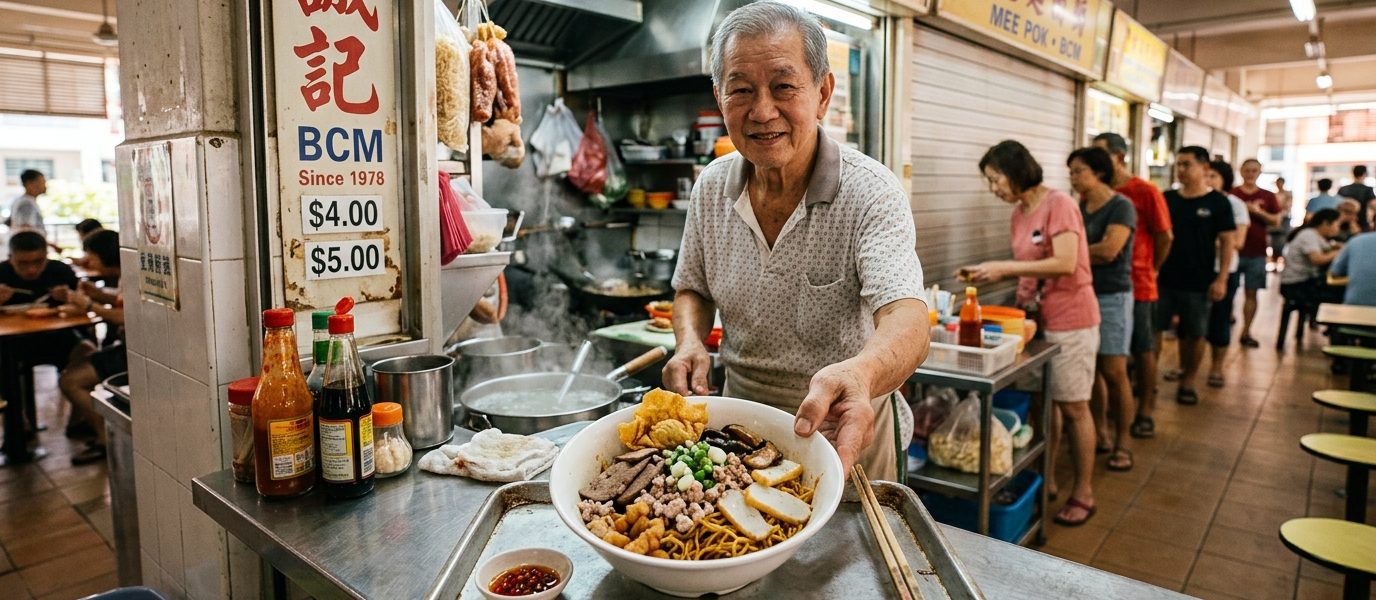
Ang Mo Kio doesn’t usually top the list when Singaporeans talk about noodle destinations. But wander through its hawker centres on a weekday morning and you’ll find something different. Stalls run by veterans who’ve been pulling noodles by hand for decades. Recipes passed down through families. Bowls that cost less than a coffee but taste better than anything you’ll find in the CBD.
Ang Mo Kio’s noodle scene thrives on tradition and affordability. From wanton mee at Lu Ge to hand-pulled mee hoon kueh at old-school stalls, the neighbourhood offers authentic flavours without tourist markups. Most bowls cost between $3.50 and $5, served by hawkers with 30-plus years of experience. Visit before 11am for the freshest ingredients and shortest queues at these local gems.
What makes Ang Mo Kio’s noodle stalls different
The neighbourhood sits away from tourist circuits. No food bloggers camping out for Instagram shots. Just residents who know what good noodles taste like and won’t settle for less.
Most stalls here opened in the 1980s and 90s. The hawkers learned their craft before food courts became air-conditioned and menus went digital. They still cook the same way. Blanch noodles in boiling water. Toss with lard and dark soy. Add toppings fresh from the wet market.
Prices stay reasonable because rent hasn’t skyrocketed like it has in Chinatown or Orchard. A bowl of wanton mee costs $4.50. Bak chor mee runs about $4. You can eat well for under $6, which matters when you’re feeding a family or grabbing breakfast before work.
The customer base shapes the quality too. Regulars visit three, four times a week. They’ll notice if the char siew tastes different or the noodles come out soggy. That accountability keeps standards high without Michelin stars or media coverage.
Five noodle styles you need to try
Hand-pulled mee hoon kueh
The dough gets kneaded until smooth, then pinched into irregular pieces that land directly in boiling soup. Each piece has a different thickness. Some parts stay chewy. Others turn silky soft.
One stall at Block 226 has been doing this for over 30 years. The uncle still pulls every piece by hand. No machines. No shortcuts. The soup base uses ikan bilis boiled for hours until the stock turns cloudy and rich.
Order the version with minced pork and vegetables. The rough edges of the noodles catch bits of meat and soup. Every spoonful tastes different.
KL-style pork noodles
This style came from Malaysian hawkers who settled in Singapore. The soup tastes darker and more herbal than typical bak chor mee. They use a mix of pork bones, liver, and kidneys, plus Chinese herbs like dang gui and goji berries.
The noodles come with liver slices that stay pink in the middle. Intestines that crunch without being rubbery. Minced pork fried until crispy at the edges.
Some people find the herbal taste too strong. But if you grew up eating this, nothing else compares. The best version in Ang Mo Kio sits at Block 162. Opens at 8am. Sells out by 1pm.
Wanton mee done right
Lu Ge Wanton Mee at Block 226 proves you don’t need fancy locations to serve excellent noodles. The stall operates from a corner unit. No signboard. Just a handwritten menu taped to the counter.
What makes it special? The wantons get wrapped fresh every morning. Thin skin. Generous prawn and pork filling. They fry some and boil others. Order both.
The noodles themselves have that perfect springy texture. Not too soft. Not too firm. Tossed with just enough lard and soy sauce. A colleague once said this was the best wanton mee he’d tried in 15 years. Hard to argue after tasting it.
Traditional bak chor mee
Seng Kee used to be the big name here. The founder ran the stall for decades before health issues forced him to close. But other stalls carry on the tradition.
Good bak chor mee needs balance. The vinegar shouldn’t overpower everything. The chilli should have depth, not just heat. The minced pork needs to be fried until caramelised but not dry.
The mee pok noodles matter too. They should be flat and slightly rough. Smooth noodles won’t hold the sauce properly. You want every strand coated in that mix of vinegar, lard, and chilli oil.
Look for stalls where the hawker mixes your bowl tableside. That means they’re adjusting the sauce ratio for each customer instead of pre-mixing everything in bulk.
Ipoh curry noodles
Block 332 serves what might be Singapore’s largest portion of curry noodles. The bowl arrives overflowing with thick yellow noodles, tau pok, fish balls, and cockles.
The curry itself leans sweeter than Indian versions. Coconut milk softens the spice. The consistency stays thin enough to drink like soup but thick enough to coat the noodles.
This isn’t everyday food. The richness hits hard. But on a rainy morning or when you need comfort food, nothing else works quite as well.
How to find the best bowls
-
Visit before 10am on weekdays. Weekends bring crowds from other neighbourhoods. Early morning means fresh ingredients and hawkers who aren’t rushed.
-
Look for stalls with older hawkers. Grey hair usually signals decades of experience. These are the people who learned from the previous generation and haven’t changed their methods.
-
Check if they’re preparing ingredients on-site. Fresh wantons being wrapped. Noodles being pulled. Soup simmering in large pots. These signs indicate they’re not relying on pre-made components.
-
Ask the person next to you what they ordered. Regulars know the best dishes. They’ll tell you if the dry version tastes better than soup, or if you should add extra chilli.
-
Notice the queue composition. If you see construction workers, office staff, and retirees all waiting together, the food crosses demographics. That’s usually a good sign.
Common mistakes that ruin your noodle hunt
| Mistake | Why it matters | Better approach |
|---|---|---|
| Visiting after 2pm | Many stalls close or run out of fresh ingredients | Aim for breakfast or early lunch |
| Ordering the largest size first | Portions can be generous and you might want to try multiple stalls | Start with regular portions |
| Skipping the chilli | House-made chilli often defines the dish | Always try at least a small amount |
| Comparing prices to food courts | Hawker centres operate on different economics | Judge by quality and portion size instead |
| Taking too long to decide | Hawkers appreciate efficiency during peak hours | Know your order before reaching the counter |
| Assuming new stalls are better | Longevity often indicates consistent quality | Prioritise established stalls first |
What the hawkers won’t tell you
Most stalls have an optimal time window. The soup tastes best between 9am and 11am, after it’s been simmering for a few hours but before it reduces too much. Noodles get pulled fresh in the morning. By afternoon, they’re using what’s left from the morning batch.
Some hawkers adjust recipes based on weather. Rainy days mean slightly more ginger in the soup. Hot days mean less oil in the sauce. They won’t announce these changes. You just taste the difference.
A veteran noodle hawker once told me: “People think cooking is about following recipes exactly. But good hawker food means adjusting for the weather, the crowd, even your own energy that day. The noodles should taste consistent, but the path to get there changes.”
Regulars get subtle advantages. An extra piece of char siew. Slightly more chilli oil. The hawker remembers how you like it prepared. This isn’t favouritism. It’s efficiency. They’re not asking you the same questions every visit.
Many stalls accept CDC vouchers now. But they prefer cash. Digital payments slow down service during peak hours. Bring small notes if you can.
Why neighbourhood noodle culture matters
Ang Mo Kio represents how hawker food was meant to work. Affordable meals for working people. Recipes refined through repetition. Quality maintained through community accountability rather than media hype.
When a stall closes because the hawker retires, that specific version of the dish often disappears. The nephew who takes over might cook differently. Or no one takes over at all. This happens more often than people realise.
Supporting these stalls means more than just eating well. It preserves a way of cooking that doesn’t translate to restaurants or food courts. Hand-pulled noodles require physical stamina. Wanton wrapping takes years to master. These skills don’t transfer easily to the next generation.
The hidden neighbourhood gems across Singapore face similar challenges. Each area has its specialty. Each hawker brings something slightly different to familiar dishes.
Practical details for your visit
Most Ang Mo Kio hawker centres open by 7am. Stalls operate on individual schedules. Some close by 2pm. Others stay open until dinner. Monday closures are common, so check before making a special trip.
Block 226 and Block 162 concentrate the best noodle options. Block 453 and Block 724 have decent stalls too but fewer choices. Block 332 sits slightly further but worth the walk for curry noodles.
Parking can be tight during meal times. The MRT station connects to most hawker centres within 10 minutes walking. Bus services run frequently if you’re coming from other parts of the island.
Seating fills up between 11am and 1pm. Arrive earlier or later if you want to eat without hovering over someone finishing their meal. Some hawker centres have added sheltered walkways, useful during afternoon rain.
Bring cash for smaller stalls. Larger hawker centres have ATMs but they’re often out of service. Most stalls price dishes between $3.50 and $6. Budget $8 to $10 if you’re trying multiple items.
The stalls locals actually visit
- Lu Ge Wanton Mee at Block 226: Opens around 8am, closes when they sell out (usually by 2pm)
- Hand-pulled mee hoon kueh at Block 226: The uncle with the grey apron, usually there by 7:30am
- KL-style pork noodles at Block 162: Look for the stall with the dark herbal soup
- Ipoh curry noodles at Block 332: Large portions, accept CDC vouchers
- Traditional bak chor mee at Block 453: Run by a second-generation hawker
Each stall has regulars who’ve been eating there for 20, 30 years. You’ll see the same faces every week. They read newspapers while eating. They know exactly how much to pay without checking the menu. They finish their bowls and leave without ceremony.
That’s the rhythm of neighbourhood hawker culture. No fuss. No performance. Just good food eaten quickly before heading to work or back home.
If you’re hunting for authentic hawker experiences beyond Ang Mo Kio, local favourites exist in every neighbourhood. The challenge is finding them before they close for good.
Where Ang Mo Kio fits in Singapore’s noodle landscape
The neighbourhood doesn’t compete with famous destinations like Maxwell or Tiong Bahru. It serves a different purpose. This is where people eat regularly, not occasionally.
You won’t find Michelin-starred stalls here. No international food critics writing reviews. Just consistent quality maintained through decades of practice. The kind of place where a $4 bowl tastes better than a $12 bowl in a shopping mall.
Some food enthusiasts chase novelty. New stalls. Fusion concepts. Instagram-worthy presentations. But sometimes the best food comes from someone who’s been cooking the same dish for 35 years and sees no reason to change.
Ang Mo Kio preserves that approach. The hawkers aren’t trying to reinvent noodles. They’re just trying to make them properly, the way they learned, the way their customers expect.
That might sound boring to tourists hunting for the next viral food spot. But for locals who eat hawker food several times a week, consistency matters more than innovation.
The breakfast hawker centres across Singapore each have their character. Ang Mo Kio’s strength is accessibility and reliability. You know what you’re getting. You know it’ll be good. You know it won’t cost much.
Why these noodles deserve more attention
Singapore’s food reputation rests partly on hawker culture. But media attention concentrates on a handful of famous stalls. Tourists queue for an hour at Tian Tian while equally good chicken rice sits five minutes away with no wait.
The same pattern affects noodle stalls. Everyone knows about Hill Street Tai Hwa. Fewer people know about the wanton mee stall that’s been operating in Ang Mo Kio since 1989.
This creates an imbalance. Famous stalls raise prices because they can. They hire assistants because demand exceeds what one person can handle. Quality sometimes slips because the original hawker isn’t cooking every bowl anymore.
Meanwhile, neighbourhood stalls maintain standards because they have to. Their customers will go elsewhere if the food declines. They can’t rely on tourist traffic or social media hype. They survive on repeat business from people who live nearby.
That pressure produces excellent food. Not always. Some neighbourhood stalls are mediocre. But the good ones stay good because the economics demand it.
Ang Mo Kio’s best noodle stalls fall into this category. They’ve been good for decades. They’ll stay good as long as the hawkers keep cooking. After that, who knows?
Making the most of your noodle hunt
Start with one stall. Eat slowly. Notice the texture of the noodles. How the sauce coats them. Whether the toppings complement or overwhelm the base flavour.
Compare that experience to noodles you’ve had elsewhere. Not to rank them, but to understand what makes each version distinct. The same dish prepared by different hawkers can taste completely different.
Try variations. If you usually order soup noodles, try dry. If you always skip the liver, order it once. Your preferences might surprise you.
Talk to the hawker if they’re not busy. Ask how long they’ve been cooking. Where they learned. What makes their version different. Most are happy to chat between orders.
Visit at different times. Morning noodles taste different from afternoon noodles. The soup changes as it simmers. The hawker’s energy shifts throughout the day. These small differences affect your experience.
Bring friends who care about food. Eating alone works fine, but sharing opinions makes the hunt more interesting. Someone might notice flavours you missed. Or hate something you loved. Those conversations deepen your understanding.
Document what you try, but don’t let photography interrupt the meal. A simple note in your phone works better than staging shots. Record what you ordered, what you paid, what stood out. Review those notes before your next visit.
The bowls that built a neighbourhood’s reputation
Ang Mo Kio won’t appear on tourist maps as a food destination. The hawker centres look ordinary. The stalls don’t have English menus or air-conditioning. Nothing about the setup suggests you’ll find Singapore’s best noodles here.
But that’s exactly why you should visit. Because the best hawker food often exists in unremarkable settings. Served by people who’ve been cooking longer than you’ve been alive. Eaten by customers who care more about taste than trends.
The noodles here represent what Singapore’s hawker culture was built on. Skill passed down through generations. Recipes refined through thousands of repetitions. Quality maintained through community standards rather than external validation.
These stalls won’t last forever. Hawkers retire. Recipes disappear. Neighbourhoods change. But right now, today, you can still taste what made Singapore’s food scene special in the first place.
So skip the famous spots for once. Take the MRT to Ang Mo Kio. Walk to Block 226 or Block 162. Order a bowl from someone who’s been cooking it for 30 years. Taste what happens when skill, tradition, and necessity combine.
That’s where you’ll find the best noodles in Ang Mo Kio. Not in the newest stall or the one with the longest queue. But in the corner unit where an uncle pulls noodles by hand every morning. Where a bowl costs $4 and tastes like someone’s been perfecting it for decades.
Because they have.