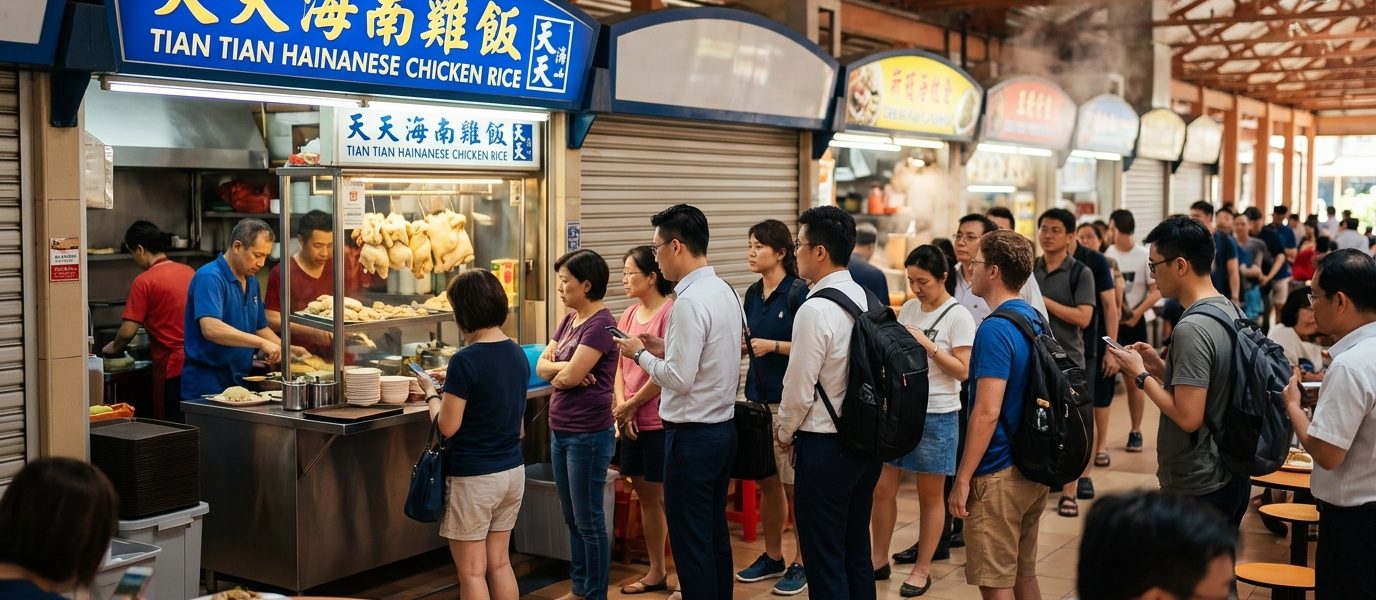
The line snakes around the corner at Maxwell Food Centre before 10am most days. Tourists clutch guidebooks. Locals check their phones. Everyone waits for the same thing: a plate of chicken rice from Tian Tian.
The Tian Tian Hainanese Chicken Rice queue averages 30 to 45 minutes during peak hours, with shorter waits before 11am or after 2pm. The stall’s fame stems from perfectly poached chicken, fragrant rice cooked in chicken stock, and a chilli sauce recipe unchanged since 1987. Three locations now serve the same menu, though Maxwell remains the flagship.
What Makes People Queue for Tian Tian
The stall opened in 1987 at Maxwell Food Centre. Owner Foo Kui Lian started with a simple goal: serve chicken rice the way his family made it in Hainan.
The chicken comes out silky. Not dry, not rubbery. The skin stays intact. The meat pulls away from the bone easily.
The rice absorbs chicken stock, ginger, and pandan. Each grain separates. The fragrance hits you before the plate reaches your table.
The chilli sauce balances heat with garlic and lime. The dark soy sauce adds sweetness. The ginger paste cuts through the richness.
Anthony Bourdain visited in 2013. The stall appeared on Netflix. Travel blogs ranked it among Singapore’s best hawker food. The crowds never left.
Why Maxwell Food Centre remains the top tourist hawker destination in 2024 explains how this location became a must-visit spot for food lovers worldwide.
Understanding the Queue System
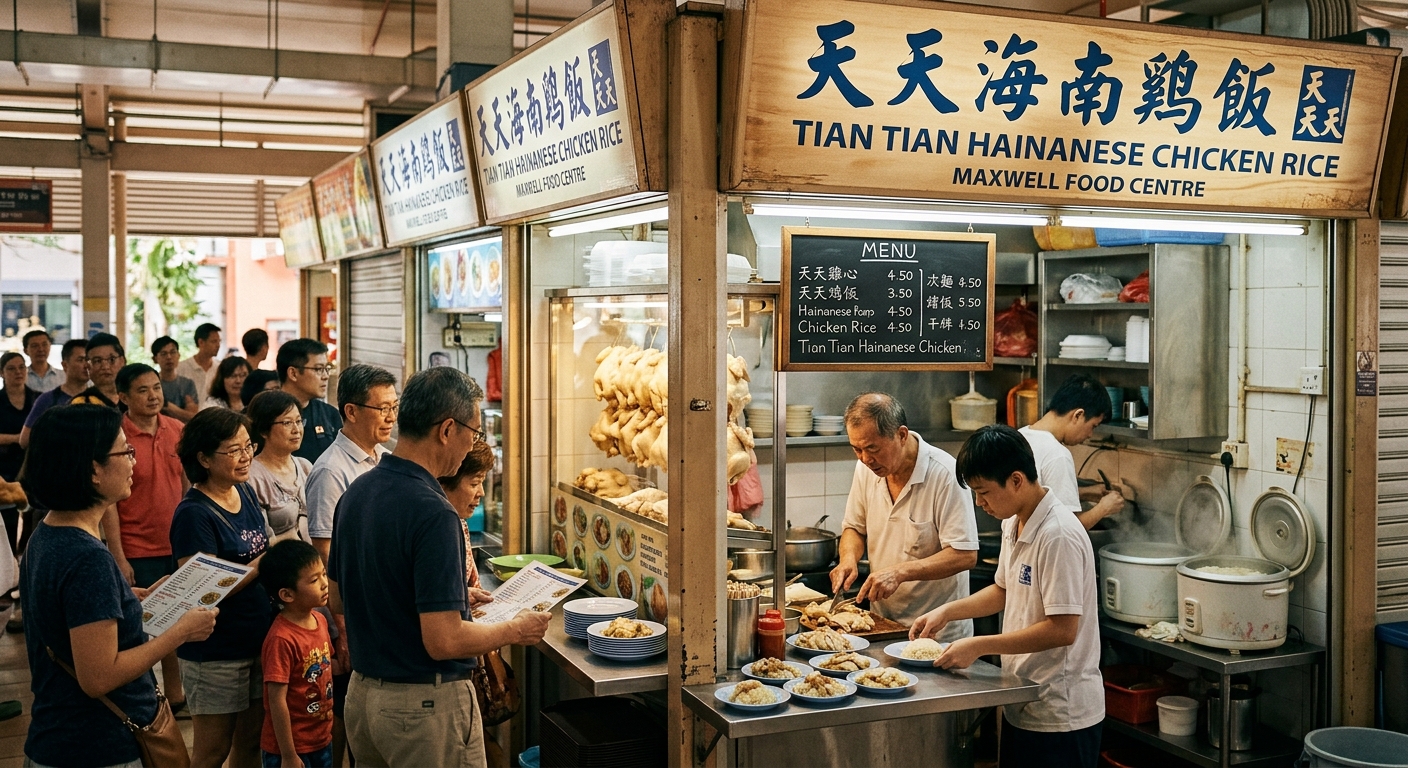
Tian Tian runs two stalls at Maxwell: number 10 and number 11. Both serve the same menu. Both have separate queues.
Here’s how it works:
- Join either queue (check which looks shorter)
- Wait your turn to order at the counter
- Pay when you order
- Collect a number ticket
- Find a seat anywhere in the food centre
- Return when your number appears on the display
- Collect your food and enjoy
The system moves faster than it looks. Staff take orders efficiently. Chickens hang ready. Rice stays warm in large pots. Plates go out constantly.
Typical Wait Times Throughout the Day
| Time Period | Average Wait | Crowd Level | Best For |
|---|---|---|---|
| 10am to 11am | 20 to 30 minutes | Moderate | Early lunch |
| 11am to 1pm | 40 to 60 minutes | Very busy | Peak experience |
| 1pm to 2pm | 30 to 45 minutes | Busy | Standard visit |
| 2pm to 4pm | 15 to 25 minutes | Light | Avoiding crowds |
| After 4pm | 10 to 20 minutes | Very light | Late lunch |
Weekends see longer queues. Public holidays bring the biggest crowds. Rainy days offer shorter waits as some people skip the trip.
The stall opens at 10am Tuesday through Sunday. It closes Monday. Chicken runs out by 7pm most days, sometimes earlier on weekends.
Why the Wait Feels Worth It
The chicken rice arrives simple. No garnish. No fancy plating. Just chicken, rice, cucumber slices, and three small dishes of sauce.
The first bite tells you why people queue. The chicken tastes clean. The texture feels tender. The rice carries enough flavour to eat alone.
You can order different portions:
- Half chicken serves two people comfortably
- Quarter chicken works for one person
- Whole chicken feeds four
- Rice comes in regular or large portions
- Extra chilli sauce costs 50 cents
Prices stay reasonable for a famous stall. A quarter chicken with rice costs around $5. A whole chicken runs about $20.
“We cook the chicken the same way my father taught me. No shortcuts. Fresh chickens every morning. The rice must taste of chicken stock, not just oil and salt. That’s why people come back.” – Foo Kui Lian, owner
Common Mistakes Tourists Make
Many first-time visitors make the same errors:
- Arriving at noon expecting a short wait
- Ordering only chicken without trying the rice
- Skipping the chilli sauce thinking it’s too spicy
- Forgetting to collect their number ticket
- Standing near the stall instead of finding a seat
- Not bringing cash (the stall accepts PayNow but cash moves faster)
- Comparing it directly to other chicken rice styles
Hainanese chicken rice differs from roasted chicken rice. The cooking method produces different textures. The sauces serve different purposes. Both styles have merit.
Alternative Times and Locations
Tian Tian now operates three locations:
Maxwell Food Centre (original)
1 Kadayanallur Street, #01-10/11
Opens 10am, closed Mondays
Bedok Interchange Hawker Centre
207 New Upper Changi Road, #02-09
Opens 10am, closed Thursdays
Clementi 448 Market & Food Centre
Block 448 Clementi Avenue 3, #01-83
Opens 10am, closed Wednesdays
The Bedok and Clementi outlets use the same recipes. The chicken comes from the same supplier. The sauces taste identical.
Queue times at these locations run shorter. Bedok sees 10 to 20 minute waits during lunch. Clementi averages 15 minutes. Both offer the same experience without the tourist crowds.
What to Expect Beyond the Chicken Rice
Maxwell Food Centre houses over 100 stalls. You’ll find other famous names here:
- Zhen Zhen Porridge (stall 32)
- Jin Hua Fish Head Bee Hoon (stall 16)
- China Street Fritters (stall 1)
The centre sits in Chinatown. Nearby attractions include Buddha Tooth Relic Temple, Chinatown Heritage Centre, and Ann Siang Hill’s cafes.
Most people spend 45 minutes to an hour eating. The metal tables and plastic stools don’t invite lingering. The heat doesn’t help either, though fans run constantly.
For those seeking more comfortable hawker experiences, 15 air-conditioned hawker centres every Singaporean should know about offers climate-controlled alternatives across the island.
How to Beat the Crowds
Smart timing makes all the difference:
Weekday Strategy
Arrive at 10am when the stall opens. The queue stays manageable for the first hour. You’ll finish eating before the lunch rush starts.
Weekend Approach
Visit after 2pm. Most tourists eat between 11am and 1pm. The afternoon sees fewer people. You still get fresh chicken.
Rainy Day Advantage
Check the weather forecast. Light rain keeps crowds away. The covered food centre stays dry. Queues shrink by half.
Alternative Location
Try the Bedok or Clementi outlets first. If you enjoy it, you’ve saved time. If you want the original experience, you know what to expect at Maxwell.
Comparing Tian Tian to Other Maxwell Stalls
Maxwell houses several chicken rice stalls. Tian Tian gets the most attention, but others serve quality food:
Lian He Ben Ji Claypot Rice (stall 40)
Shorter queues. Different style. Uses claypot cooking method. Worth trying if Tian Tian runs out.
Ah Tai Hainanese Chicken Rice (stall 4)
Local favourite. Similar preparation. Fewer tourists. Costs slightly less.
Maxwell Hainanese Chicken Rice (stall 40)
Another solid option. Consistent quality. Almost no queue.
Each stall has supporters. Taste preferences vary. Some people prefer slightly different sauce ratios or rice texture. Trying multiple stalls helps you decide.
Hidden neighbourhood gems: 7 underrated hawker centres locals swear by introduces lesser-known spots where you’ll find excellent chicken rice without any wait.
What Regulars Order
Experienced customers have their preferences:
- Half chicken with large rice (for sharing)
- Extra chilli sauce on the side
- Iced lime juice or barley water from nearby drink stalls
- Sometimes add char siew from the roast meat stall next door
The chicken comes at room temperature. This is intentional. Hainanese chicken rice traditionally serves the meat just above room temperature to preserve texture.
If you prefer hot chicken, ask politely. The staff can accommodate. But most regulars eat it as served.
Managing Your Visit
Plan your Maxwell trip around these tips:
Bring a small bag for your belongings. Tables fill up fast. Saving seats with tissue packets works (it’s a local custom). Don’t leave valuables unattended.
Wear comfortable clothes. The food centre gets warm. Shorts and t-shirts make sense. Dress codes don’t exist here.
Bring cash in small denominations. Cards work but cash moves faster. ATMs sit nearby if needed.
Come hungry. The portions satisfy. Sharing lets you try other stalls too.
Take photos before eating. The food looks best fresh. Natural light works better than flash.
The Chicken Rice Learning Curve
First-timers often need guidance on eating technique:
Mix the sauces on your plate, not directly on the rice. Take a bit of chicken, dip it in chilli sauce, then eat with a spoonful of rice. The ginger paste pairs especially well with the chicken skin.
The dark soy sauce adds sweetness. Use it sparingly. Too much overwhelms the other flavours.
The soup that comes with your meal is chicken stock. Sip it between bites. It cleanses your palate.
Some people add chilli sauce to their rice. Others keep everything separate. No wrong method exists.
What Happens When Chicken Runs Out
Popular days see the stall selling out early. When fresh chickens run out, service stops.
The staff posts updates on social media. Check their Facebook page before travelling far. The website doesn’t update in real time.
If you arrive and find them sold out:
- Try another chicken rice stall in Maxwell
- Visit the Bedok or Clementi outlets
- Return the next day earlier
- Sample different Maxwell specialties instead
Running out happens more during public holidays, long weekends, and when tour groups visit. Calling ahead doesn’t help because they don’t take reservations.
The Heritage Behind the Hype
Tian Tian represents more than good food. It shows how hawker culture preserves traditional recipes across generations.
The cooking method hasn’t changed in 37 years. The same family runs the business. The prices stay accessible to everyone.
This accessibility matters. Hawker centres democratize food. Office workers eat beside tourists. Students share tables with retirees. Everyone pays the same price.
UNESCO recognized Singapore’s hawker culture as intangible cultural heritage in 2020. Stalls like Tian Tian demonstrate why this recognition matters.
Traditional recipes survive because hawkers keep making them. Young people learn these methods. Visitors from around the world taste authentic preparations.
Setting Realistic Expectations
The Tian Tian Hainanese Chicken Rice queue represents a trade-off. You exchange time for a taste of Singapore’s most famous chicken rice.
Will it change your life? Probably not.
Will it taste good? Absolutely.
Will you understand why Singaporeans take chicken rice seriously? Definitely.
The experience includes more than the food. You’re eating at a historic hawker centre. You’re participating in a local tradition. You’re tasting a recipe that’s remained consistent for decades.
Some visitors find the wait excessive for simple chicken rice. Others appreciate the quality and atmosphere. Your enjoyment depends partly on expectations.
Come curious rather than skeptical. Come hungry rather than rushed. Come ready to experience how Singaporeans eat rather than expecting restaurant service.
Why the Queues Keep Growing
New visitors arrive daily. Singapore attracts millions of tourists annually. Food blogs multiply. Social media spreads photos. The cycle continues.
The stall’s consistency helps. Every plate meets the same standard. Bad batches don’t happen. The recipe doesn’t change with trends.
The location helps too. Maxwell sits in Chinatown, near hotels and attractions. Tourists pass by naturally. The food centre itself draws visitors.
Competition exists, but Tian Tian’s reputation creates momentum. People want to try what others recommend. The queue itself signals popularity.
Making the Most of Your Wait
Use queue time productively:
- Study the menu board (it’s simple but knowing your order speeds things up)
- Scout for empty tables (send someone ahead to secure seats)
- Chat with other people in line (you’ll hear interesting stories)
- Watch the stall operate (seeing the process adds appreciation)
- Read about other Maxwell stalls (plan your next meal)
The queue moves steadily. Staff work efficiently. The system handles volume well.
Complaining about the wait doesn’t help. Everyone chose to queue. The food comes at the same pace regardless of frustration.
Is Tian Tian Worth Your Time?
This question has no universal answer. It depends on your priorities.
Queue if you:
– Want to try Singapore’s most famous chicken rice
– Enjoy experiencing popular food spots
– Have time flexibility in your schedule
– Appreciate traditional hawker culture
– Don’t mind crowds
Skip if you:
– Have limited time in Singapore
– Prefer discovering hidden gems
– Dislike queuing regardless of reward
– Want air-conditioned dining
– Already tried excellent chicken rice elsewhere
Other outstanding chicken rice exists across Singapore. The ultimate guide to Tiong Bahru Market: where heritage meets hawker excellence highlights another heritage location with exceptional hawker food and shorter queues.
Your Chicken Rice Journey Starts Here
The Tian Tian queue teaches patience. It rewards curiosity. It delivers a plate of chicken rice that’s become part of Singapore’s food story.
Whether you queue at Maxwell or visit a quieter outlet, you’re tasting a recipe that’s fed millions. You’re participating in a tradition that spans generations. You’re experiencing why Singaporeans consider chicken rice a national dish.
Bring comfortable shoes, an empty stomach, and realistic expectations. The queue will test your patience. The chicken rice will remind you why some things are worth waiting for.