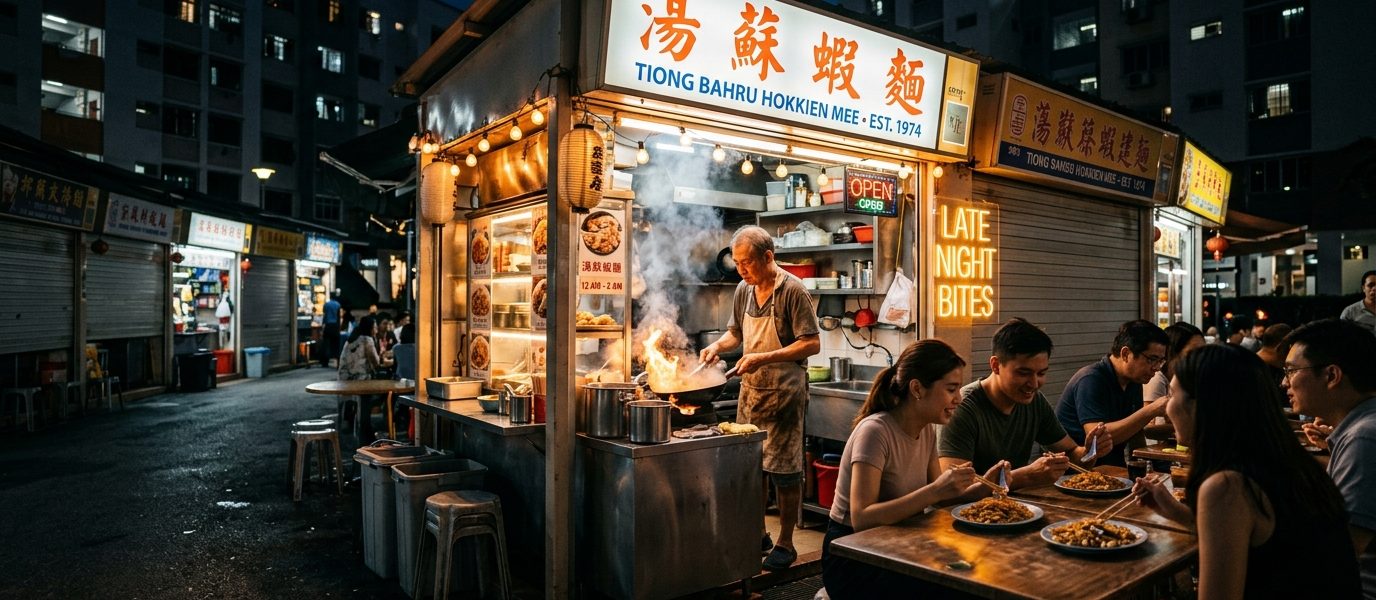
Singapore never really sleeps, and neither does its hawker scene. When the clock strikes midnight and most kitchens have closed, a different breed of hawker stalls comes alive. These are the night owls of our food culture, the ones who feed shift workers, insomniacs, party goers, and anyone who believes the best meals happen when most people are asleep.
Late night hawker stalls in Singapore serve everything from frog porridge to bak chor mee between 10pm and 6am. These stalls cater to shift workers, night owls, and food enthusiasts seeking authentic flavours during unconventional hours. Most cluster around [Geylang](https://en.wikipedia.org/wiki/Geylang), Chinatown, and industrial estates, with some operating exclusively after midnight to avoid daytime competition.
Why some hawkers only operate after dark
Most hawkers wake up before sunrise to prep for the breakfast and lunch crowd. But a handful do the opposite. They sleep through the day and fire up their woks after sunset.
The reasons vary. Some inherited family businesses that always operated at night. Others found their niche serving workers who clock off when everyone else is heading to bed. A few simply prefer the cooler temperatures and the different energy that comes with cooking after dark.
There’s less competition too. If you sell bak chor mee at 2am, you’re not fighting with ten other noodle stalls for customers. You’re the only game in town.
“Night time customers are different. They’re hungrier, more adventurous, and they appreciate what we do. During the day, everyone’s rushing. At night, people actually sit down and enjoy their food.” – Uncle Lim, third generation night hawker
Where to find hawker stalls open late night in Singapore
Late night hawker action concentrates in specific pockets around the island. You won’t find these stalls at your typical neighbourhood centres.
Geylang leads the pack. The stretch between Lorong 9 and Lorong 29 comes alive after 11pm. Frog porridge, crayfish bee hoon, and zi char stalls serve packed tables until 4am or later. If you’re hunting for authentic late night dining experiences, this is ground zero.
Chinatown Complex houses several stalls that keep unconventional hours. Some open at 2am to catch the post club crowd and early morning market workers. Others run from 10pm to 6am, bridging the gap between dinner and breakfast.
Golden Mile Complex and the surrounding area serve the Thai community and night shift workers. Several stalls operate past midnight, offering boat noodles, tom yum, and Thai BBQ.
Industrial estates near Jurong, Woodlands, and Changi have hawker centres that cater to factory workers on night shifts. These spots open as early as 11pm and stay busy until sunrise.
Planning your late night hawker hunt
Timing matters more at night than during regular hours. A stall that opens at 1am might sell out by 3am. Another might not get going until after 2am, even if the sign says midnight.
Here’s how to plan your visit:
- Call ahead if you can find a number. Many night hawkers list their mobile on social media.
- Arrive within the first hour of opening for the full menu. Popular items disappear fast.
- Bring cash. Most night stalls don’t take cards, and ATMs can be scarce in industrial areas.
- Check if they operate daily or only on weekends. Many night hawkers take Monday and Tuesday off.
- Have a backup plan. Night stalls close without warning if they run out of ingredients or if the hawker isn’t feeling well.
The best discoveries happen when you’re willing to travel. That char kway teow stall in Bedok that only opens at midnight won’t deliver to your doorstep. You need to go there.
What makes night hawker food different
The food itself changes after dark. Portions tend to be bigger. Flavours hit harder. There’s an intensity to late night hawker cooking that daytime versions sometimes lack.
Part of it is the audience. People eating at 2am want comfort, substance, and bold flavours. They’re not looking for light and healthy. They want that plate of fried noodles to feel like a proper meal.
The cooking style shifts too. Many night hawkers cook in smaller batches because they’re serving a steady trickle rather than a lunch rush. This often means fresher wok hei, better texture, and more attention to each plate.
| Aspect | Daytime Hawkers | Night Hawkers |
|---|---|---|
| Operating hours | 6am to 3pm | 10pm to 6am |
| Peak period | 12pm to 1pm | 1am to 3am |
| Customer base | Office workers, families | Shift workers, night owls, tourists |
| Portion size | Standard | Often larger |
| Menu variety | Full range | Focused specialties |
| Competition level | High | Low to moderate |
The culture of eating late
Late night hawker culture isn’t new. It goes back decades, rooted in Singapore’s port history and 24 hour economy. When the docks operated around the clock, workers needed feeding at all hours.
That tradition continues today, even as the port has moved and industries have changed. The hawker stalls that adapted to serve night workers built loyal followings that span generations.
There’s a ritual to it. The same taxi drivers show up at the same stall every night around 3am. The same security guards grab supper before their shift ends at 6am. These aren’t random visits. They’re part of a routine as fixed as any breakfast habit.
Tourists have caught on too. Food bloggers and travel guides now feature late night hawker spots as must visit destinations. What was once purely functional eating for workers has become a attraction in its own right.
Common mistakes people make
First timers often get the timing wrong. They show up at 11pm expecting full service, but the stall isn’t even set up yet. Or they arrive at 5am thinking it’s still peak hours, only to find everything sold out.
Mistakes to avoid:
- Assuming all hawker centres have late night options. Most close by 10pm.
- Going alone if you want to try multiple dishes. Late night portions are generous.
- Expecting the same menu as daytime operations. Night stalls often specialize in just a few items.
- Skipping the neighbourhood stalls in favour of tourist areas. The best night hawkers often operate in residential estates.
- Not checking if the stall operates on public holidays. Many take these days off.
Another common error is treating late night hawker food like a novelty. These aren’t gimmicks. They’re serious operations run by skilled cooks who’ve chosen to work while others sleep. Approach with the same respect you’d give any established hawker institution.
What to order at your first late night visit
Start with the stall’s signature dish. Night hawkers typically focus on one or two items they’ve perfected over years. Don’t overthink it.
If it’s a noodle stall, get the noodles. If they’re known for frog porridge, order that. Save the adventurous ordering for your second visit once you understand what they do best.
Portions run large at night, so consider sharing if you’re with friends. This lets you sample more stalls in one outing without overeating.
Drinks matter too. Most night hawkers serve strong coffee or tea to keep their customers alert. The teh peng hits different at 2am than it does at 2pm. Some stalls also offer fresh sugarcane juice or barley water for those who want something cooling.
The future of late night hawker culture
Night hawkers face unique challenges. Fewer young people want to work overnight hours. Rising costs make it harder to sustain operations with smaller customer bases. Some neighbourhood hawker centres that once had multiple night stalls now have none.
But demand hasn’t disappeared. Singapore’s 24 hour economy still needs feeding. Delivery platforms have created new opportunities for night hawkers to reach customers beyond their immediate vicinity.
Some younger hawkers are experimenting with hybrid models. They’ll do a late night shift Thursday through Saturday, then switch to daytime hours midweek. Others partner with coffee shops or bars to set up temporary night operations.
The stalls that survive tend to be the ones with strong reputations and loyal followings. They’ve built trust over years or decades. Customers know what to expect and keep coming back.
Making the most of odd hours dining
Late night hawker hunting works best as an intentional activity, not an afterthought. Plan it like you would a proper food crawl.
Group visits work well. Split the bill, share dishes, and you can cover more ground. Plus, eating at 2am is more fun with company.
Consider pairing your hawker visit with other late night activities. Catch a movie at a 24 hour cinema, then head to Geylang for supper. Or time it after a concert or event when you’re already out and hungry.
If you’re serious about documenting Singapore’s hawker heritage, night stalls deserve attention. These are stories worth preserving, traditions that might not survive another generation without recognition and support.
The experience differs from daytime hawker visits. There’s less crowd noise, more space to sit, and often more time to chat with the hawker. You’ll learn things about the food, the neighbourhood, and Singapore’s working culture that don’t come up during lunch rushes.
Beyond the usual suspects
Everyone knows about the famous Geylang frog porridge spots. But plenty of excellent night hawkers operate under the radar.
Look for stalls near hospitals. Medical staff working night shifts need reliable food options. The hawkers serving them have adapted their menus and timing to match hospital schedules.
Check industrial parks in Woodlands, Jurong, and Tuas. Factory workers on night shifts support small ecosystems of hawkers. These stalls often serve hearty, affordable meals designed to fuel physical labour.
Some air conditioned centres have started extending hours for specific stalls. It’s not common yet, but the trend is growing as operators recognize the demand.
The best finds come from asking around. Chat with taxi drivers, security guards, or anyone who works nights. They know which stalls are worth visiting and which ones to skip.
When hunger strikes after midnight
Late night hawker stalls represent a vital part of Singapore’s food culture that often gets overlooked. They serve communities that don’t fit the standard 9 to 5 schedule. They preserve cooking traditions while adapting to modern demands. And they prove that great food doesn’t need daylight to shine.
Next time you’re up past midnight and feeling hungry, skip the fast food. Find a proper hawker stall that’s been feeding night owls for decades. Order something hot and filling. Sit at a plastic table under fluorescent lights. Watch the city’s other half go about their business while you eat. That’s when you’ll understand why these stalls matter, and why they’re worth seeking out no matter what time your stomach starts growling.