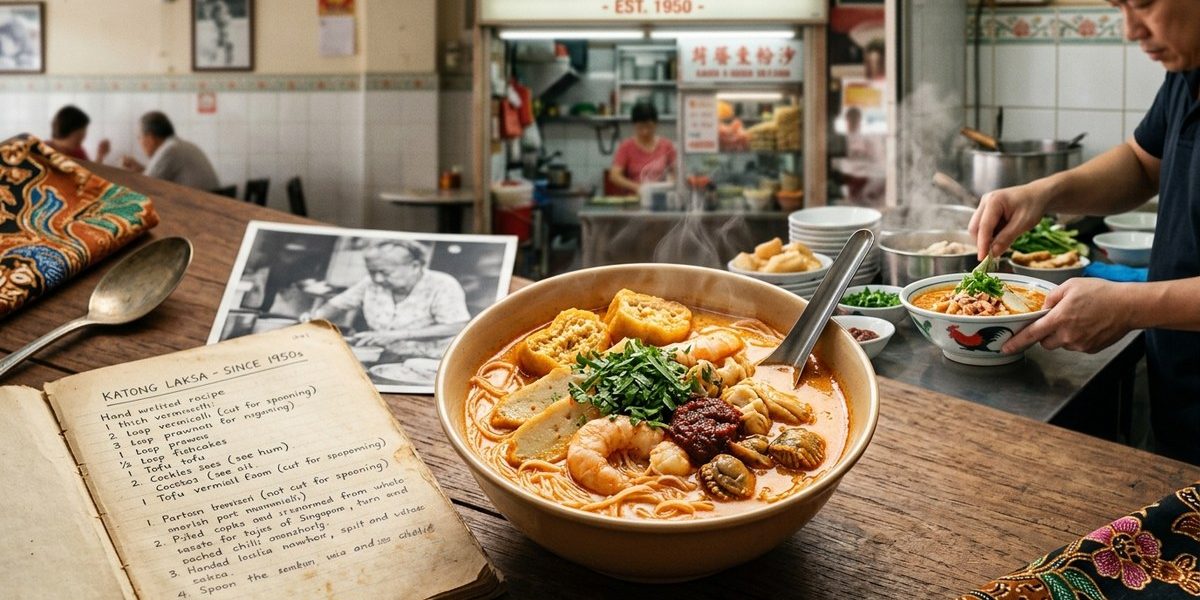
Singapore’s vibrant hawker culture is a tapestry woven with stories, traditions, and flavours passed down through generations. Among its most iconic dishes, Katong Laksa stands out as a true heritage treasure. Its rich, spicy broth and thick rice noodles have delighted locals and visitors alike for decades. Behind every bowl lies a fascinating story of cultural blending, culinary innovation, and passionate hawkers committed to preserving this heritage. Understanding the roots of the Katong Laksa heritage recipe reveals not only a delicious dish but also a slice of Singapore’s identity.
The Katong Laksa heritage recipe is a cherished part of Singapore’s hawker history. Its unique preparation, local adaptations, and the stalls that keep it alive reflect the city’s multicultural roots and culinary innovation. Discovering its story offers a deeper appreciation of Singapore’s food culture and the importance of preserving these traditional recipes for future generations.
Tracing the origins of Singapore’s Katong Laksa heritage recipe
Singapore’s Katong Laksa is more than just a bowl of noodles. It embodies a blend of Peranakan, Chinese, and Malay influences shaped by the multicultural fabric of the Katong-Joo Chiat neighbourhood. The dish’s history can be traced back to the 1950s when local hawkers began experimenting with different ingredients and techniques to cater to diverse tastes. Over time, the dish evolved into a signature style characterized by its spicy, coconut milk-based broth and distinctive thick rice noodles.
The birth of a local favourite
The story of Katong Laksa begins with immigrant communities settling in the eastern parts of Singapore. Peranakan cooks, known for their rich culinary heritage, started creating a noodle dish that combined local spices with their traditional recipes. The addition of sambal chili, coconut milk, and a unique prawn-based broth set the foundation for what would become a beloved local specialty.
The significance of the heritage recipe
The essence of the Katong Laksa heritage recipe lies in its specific techniques and ingredients. Traditional methods involve simmering prawn shells and spices for hours to develop a rich broth. The noodles are thick rice varieties, often hand-cut or specially sourced. The dish is typically garnished with ingredients like sliced fish, boiled eggs, and a dollop of sambal chili for extra heat.
How the recipe has passed through time
Many hawker stalls still follow the original heritage recipe closely. However, some have adapted to modern tastes or ingredient availability. For instance, certain stalls may add a touch of sugar or use different spice blends. Despite these variations, the core elements—spicy coconut broth, thick rice noodles, and fresh seafood—remain unchanged, preserving the dish’s authenticity.
How the heritage recipe is kept alive today
Preserving the Katong Laksa heritage recipe depends on the dedication of hawkers who have inherited it from their ancestors. Stalls like 328 Katong Laksa and Roxy Laksa are renowned for their commitment to authenticity. They often use traditional cooking methods, secret recipes, and sourcing local ingredients to ensure each bowl remains true to its roots.
Key techniques in making authentic Katong Laksa
| Technique | Description | Common mistakes |
|---|---|---|
| Broth simmering | Slow simmer prawn shells and spices for hours | Rushing the process results in a bland broth |
| Noodle preparation | Using thick rice noodles, often hand-cut | Using thin or overcooked noodles diminishes texture |
| Garnishing | Fresh seafood, herbs, and chili | Overcrowding the bowl with too many ingredients can overpower the flavours |
The importance of ingredient sourcing
The quality of ingredients significantly impacts the taste. Many hawkers prefer sourcing fresh prawns, fragrant spices, and authentic rice noodles from local suppliers. The secret recipes often include specific spice blends, passed down through families, adding depth and complexity to the broth.
“A good bowl of Katong Laksa isn’t just about ingredients. It’s about the care, tradition, and techniques that have been passed down for generations,” shares veteran hawker Mr. Tan from Roxy Laksa.
The role of community and tradition
The hawker community plays a vital part in keeping the heritage alive. Young hawkers often learn from elder cooks, absorbing their techniques and stories. Some stalls even host heritage cooking classes, allowing new generations to learn and continue the tradition.
Techniques and traditions that define the heritage recipe
Certain techniques and ingredients are non-negotiable in true Katong Laksa. They set the dish apart from its regional cousins.
Practical steps to recreate the heritage recipe at home
- Prepare the broth by boiling prawn shells with spices, coconut milk, and herbs for at least two hours.
- Cook the noodles separately in boiling water until just tender.
- Assemble the bowl with noodles, seafood, and garnishes, then ladle the hot broth over.
Common mistakes to avoid
- Using pre-made spice powders instead of making fresh spice blends
- Overcooking noodles, making them mushy
- Adding too much seasoning, overpowering the delicate broth
Variations and modern adaptations
While the heritage recipe remains largely unchanged, some stalls experiment with toppings like tofu puffs or different seafood. These variations aim to cater to evolving tastes without losing the dish’s essence.
Keeping the heritage vibrant in a changing world
In recent years, the popularity of Katong Laksa has surged beyond local boundaries. Food festivals, social media, and tourism initiatives have highlighted its cultural significance. Several hawker stalls now actively promote the history behind their recipes, attracting food enthusiasts worldwide.
Supporting the preservation of hawker heritage
Efforts such as official heritage recognition, cooking workshops, and documenting recipes online help keep this culinary tradition alive. The government and local associations encourage young hawkers to learn these techniques, ensuring the heritage recipe continues to thrive.
How visitors can experience authentic Katong Laksa
- Visit renowned stalls like 328 Katong Laksa or Roxy Laksa
- Attend hawker cooking classes or heritage tours
- Support hawker stalls that emphasize traditional techniques
Passing down a spicy legacy
Understanding the story of the Katong Laksa heritage recipe reminds us of the importance of cultural preservation through food. Every bowl served in a hawker centre encapsulates generations of history, skill, and passion. By supporting these traditional stalls, we help safeguard a vital part of Singapore’s culinary identity.
Practical tips for aspiring home cooks
- Use fresh prawn shells and spices for broth
- Respect traditional techniques
- Read stories and watch videos from hawkers to learn authentic methods
Embrace the journey of learning
Cooking a heritage dish like Katong Laksa can be a rewarding experience. It connects you to Singapore’s history and the communities that maintain its flavours. Invite friends or family to join, turning a simple meal into a cultural celebration.
Reinvigorating a beloved dish for future generations
The story of Katong Laksa reminds us that food is a living tradition. It evolves but remains rooted in history. Whether you visit a hawker stall or try your hand at making it, appreciating its heritage enhances every mouthful. Keep the spirit alive by sharing stories, supporting hawkers, and passing on the recipe to others eager to taste Singapore’s history.
Enjoy the process of discovering and preserving this spicy icon. Each effort ensures that future generations will continue to enjoy a bowl of Katong Laksa that’s rich in history and flavour.