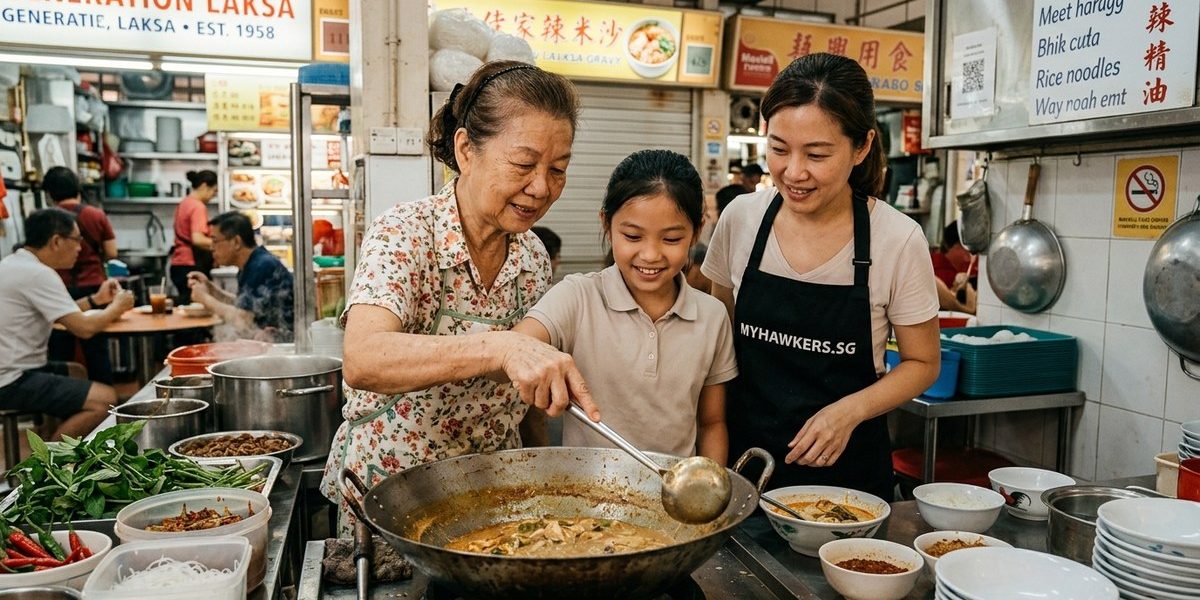
Singapore’s hawker centres are more than just places to grab a quick bite. They are living museums of Singapore’s rich culinary heritage. Many of the dishes we enjoy today have origins stretching back decades, crafted by hawkers whose recipes have been handed down through families for generations. These heritage recipes form the backbone of Singapore’s multicultural food scene. By understanding their stories and techniques, we can better appreciate the cultural tapestry that makes our hawker culture so unique.
Singapore’s heritage hawker recipes are treasures of our culinary history. Passed down through families, they embody cultural stories and traditional techniques, offering a gastronomic link to our past in 2026.
The Roots of Singapore’s Heritage Hawker Recipes
Singapore’s diverse population — comprising Chinese, Malay, Indian, Peranakan, and other communities — has created a vibrant mosaic of hawker dishes. Many of these recipes originated from humble beginnings, often crafted by generations of hawkers who improvised and refined their craft over time. These recipes are more than just ingredients and methods; they carry stories of migration, adaptation, and community bonding.
For example, Hainanese chicken rice, now a national icon, was brought to Singapore by Hainanese immigrants. Over time, recipes evolved, with each family adding their own touch. Similarly, dishes like laksa and char kway teow reflect a blend of cultural influences, each with its own heritage story.
The Significance of Preserving Heritage Recipes
Preserving these recipes is vital for maintaining our cultural identity. They serve as culinary time capsules, connecting younger generations to their roots. Many hawkers consider their recipes family secrets, guarded and passed down with reverence. Documenting and sharing these recipes helps safeguard our culinary legacy from fading away as modern food trends take hold.
In 2026, initiatives such as UNESCO recognition for Singapore’s hawker culture have heightened awareness of this heritage. These recognitions inspire younger hawkers to learn traditional techniques and uphold authentic flavours.
How to Uncover and Appreciate Heritage Hawker Recipes
Learning about heritage recipes involves more than just tasting. It’s about understanding the techniques, ingredients, and stories behind each dish. Here are some practical ways to appreciate and contribute to this cultural preservation:
- Visit and Support Heritage Hawker Stalls: Seek out well-established stalls with a long history. Many of these hawkers are proud to share their stories and recipes.
- Engage with Hawkers: Strike up conversations about their recipes and cooking methods. They often have family secrets that add depth to each dish.
- Learn the Techniques: Observe the cooking process carefully. Many heritage recipes require specific techniques that have been passed down over decades.
How to Recreate Heritage Recipes at Home
Recreating these recipes allows you to experience their authentic flavours firsthand. Here’s a simple step-by-step guide for beginners:
- Research and Gather Ingredients: Many heritage recipes use special ingredients like preserved radish for lor bak or specific spices for nasi lemak. Use authentic sources or local markets.
- Follow Family Recipes or Trusted Sources: Look for recipes shared by hawkers or documented in heritage cookbooks. Singapore heritage hawker recipes often contain detailed techniques.
- Practice the Techniques: Pay attention to key steps like the timing of stir-frying or the consistency of sauces. These details make a big difference.
- Adjust to Taste: As you become more familiar with the recipe, tweak seasonings to match the authentic flavour profile.
“Many heritage recipes are about the process as much as the ingredients,” advises veteran hawker chef Mr Lee. “Respect the techniques, and the flavours will come alive.”
Common Techniques and Pitfalls
| Technique | Common Mistake |
|---|---|
| Stir-frying over high heat | Burning ingredients or uneven cooking |
| Making sauces from scratch | Using pre-made sauces that mask authenticity |
| Properly marinating meat | Over-marinating or under-marinating, losing texture |
| Using fresh ingredients | Relying solely on preserved or frozen items |
Iconic Heritage Dishes and Their Stories
Many dishes have fascinating origins, often linked to specific families or communities. Here are some examples:
- Hainanese chicken rice: Developed by Hainanese immigrants who brought their roasting and poaching techniques. The dish evolved into Singapore’s signature comfort food. The secret lies in the precise temperature control during poaching.
- Char Kway Teow: Originally a street food from Penang, it was adapted by Singaporean hawkers with local ingredients like fish cake and cockles. The key technique involves stir-frying over very high heat to achieve a smoky aroma.
- Laksa: A Peranakan creation blending Chinese and Malay flavours, featuring rice noodles in spicy coconut milk broth. The richness of the broth depends on simmering spices and seafood.
Why Preserving Heritage Recipes Matters Today
Heritage recipes are cultural artefacts. They teach us about our ancestors’ ingenuity and resilience. In 2026, as modern culinary trends emerge, these recipes anchor us to our roots. They foster community pride and encourage new generations to cherish local food traditions.
Supporting hawkers who serve these dishes ensures their craft survives. It also helps sustain the livelihoods of families who have kept these recipes alive. Documenting and passing down these recipes further cements their place in Singapore’s culinary history.
How You Can Help Keep the Heritage Alive
- Visit traditional hawker stalls regularly. Your patronage encourages hawkers to continue their craft.
- Share stories and recipes with friends and family. Pass down what you learn or experience.
- Join workshops or heritage food events. Many hawker centres and community groups organise cooking classes.
- Support heritage cookbooks and documentation projects. These resources are vital for research and preservation.
Practical Process for Documenting a Heritage Recipe
- Interview the hawker or elder family member. Record their stories and techniques.
- Test the recipe at home. Follow their instructions closely.
- Record your process and adjustments. Note what works and what doesn’t.
- Share your version online or with local community groups to inspire others to appreciate and try heritage recipes.
A Final Word on Heritage Hawker Recipes
Singapore’s hawker recipes are more than just dishes; they are cultural legacies. Each one embodies stories of migration, adaptation, and community. By learning, supporting, and passing down these recipes, we help preserve an integral part of our national identity. Take the time to visit a hawker stall with a storied history or try recreating a dish at home. Your effort keeps our culinary heritage vibrant for generations to come.