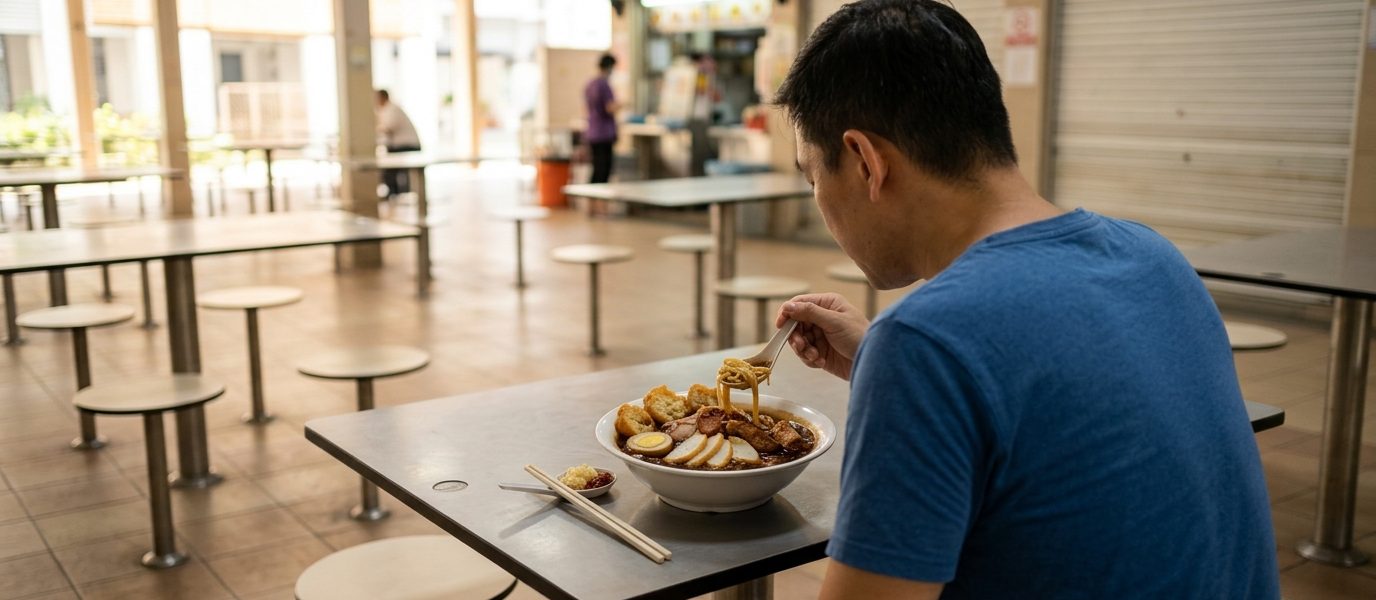
There’s something deeply satisfying about a bowl of lor mee done right. The thick, savoury gravy clinging to springy noodles, the sharp hit of vinegar cutting through the richness, the crunch of fried fish giving way to tender braised pork. It’s comfort food that demands skill, patience, and a proper recipe handed down through generations.
But finding truly excellent lor mee has become harder. Many stalls have closed. Others have diluted their recipes to save costs. The best bowls now hide in unexpected places, often in hawker centres that tourists skip and even locals overlook.
Singapore’s best lor mee stalls blend thick, well-spiced gravy with fresh noodles and quality toppings. Top choices include Tiong Bahru Lor Mee for balanced flavour, Xin Mei Xiang for traditional preparation, and Lorong Ah Soo for generous portions. Visit during off-peak hours for the freshest batches. Add vinegar and chilli gradually to find your perfect balance. Expect to pay between $3.50 and $6 for a satisfying bowl.
What makes lor mee worth hunting for
Lor mee belongs to Hokkien cuisine, originating from Fujian province before making its way to Singapore with early immigrants. The dish centres on thick yellow noodles bathed in a starchy gravy made from sweet potato flour, dark soy sauce, five-spice powder, and a rich stock simmered for hours.
The gravy separates good lor mee from mediocre versions. It should coat the noodles without turning gluey. The flavour needs depth, a balance between sweet, savoury, and aromatic that comes from proper stock and the right spice blend.
Traditional toppings include braised pork belly, fried fish pieces, fish cake, hard-boiled egg, and fried wonton strips. Some stalls add ngoh hiang or braised intestines. Each component plays a role. The fried elements provide texture contrast. The braised pork adds richness. The egg helps mellow the intensity.
A veteran hawker once told me that lor mee gravy should be thick enough to coat a spoon but thin enough to flow when you stir. That’s the sweet spot most stalls miss.
Where to find the best bowls across Singapore
Tiong Bahru Lor Mee at Old Airport Road Food Centre
This stall draws consistent crowds for good reason. The gravy hits that ideal consistency, neither too thick nor watery. The five-spice flavour comes through without overpowering. They fry their fish fresh throughout service, ensuring crispy pieces rather than soggy leftovers.
Their braised pork belly arrives tender with a good fat-to-meat ratio. The noodles have proper bite. Most importantly, the gravy tastes clean, without the metallic aftertaste that comes from poor quality dark soy sauce.
Arrive before 10am for the shortest queues. They typically sell out by early afternoon. If you’re planning a morning food crawl, the ultimate Tiong Bahru food crawl covers other essential stops nearby.
Xin Mei Xiang Zheng Zong Lor Mee
Operating from Blk 51 Old Airport Road Food Centre, Xin Mei Xiang takes a more traditional approach. Their gravy skews darker and more intensely flavoured. The garlic presence is stronger here. They’re generous with the fried fish and include crispy fried lard as standard.
The noodles come from a specific supplier who makes them slightly thicker than usual. This helps them hold up better to the heavy gravy. Their braised pork includes both belly and shoulder cuts, giving you options for texture.
Some find the flavour too robust. Others consider it the most authentic version in Singapore. Try a small bowl first to gauge your preference.
Lorong Ah Soo Lor Mee
Tucked in a neighbourhood centre in Hougang, this stall serves enormous portions. A regular bowl here equals a large elsewhere. The gravy leans sweeter than others, appealing to those who find traditional lor mee too savoury.
They offer an unusually wide selection of add-ons including braised duck, special fish cake, and extra crispy bits. The stall owner personally oversees the gravy preparation each morning, adjusting the seasoning based on the day’s stock.
The location keeps tourist crowds away. Most customers are residents who’ve been coming for years. This is proper neighbourhood hawker centre territory.
178 Lor Mee at Tiong Bahru Market
Don’t confuse this with the Old Airport Road stall. This version at Tiong Bahru Market operates independently and has its own character. The gravy here is lighter in colour and less sweet.
They pride themselves on making everything in-house, including the fish cake and ngoh hiang. The fried fish uses threadfin, giving it a different texture from the usual dory or batang.
Service is notably fast even during peak hours. They’ve streamlined their operation without cutting corners on quality. Good choice when you’re short on time but refuse to compromise on taste.
Yuan Chun Famous Lor Mee
Located at Bukit Merah View Market & Food Centre, Yuan Chun has operated for over three decades. The current generation still follows the original recipe, though they’ve upgraded their ingredients.
Their signature move is adding a splash of the braising liquid directly into each bowl. This intensifies the flavour and adds another layer of complexity. The pork belly gets braised separately with star anise and cinnamon, giving it a distinct aromatic quality.
They open early, making them ideal for breakfast hunters who want something substantial to start the day. The stall typically runs out of ingredients by 1pm on weekends.
How to order like someone who knows
Follow this sequence for the best experience.
- Start with a regular bowl to gauge portion size and flavour profile.
- Request extra vinegar and chilli on the side rather than mixed in.
- Ask if they have fresh fried fish ready or if they need to fry a new batch.
- Specify your preferred pork cut if they offer options.
- Add premium toppings only after trying the base version.
Most stalls appreciate when customers show genuine interest in their food. Asking about preparation methods or ingredient sources often leads to better service and insider tips.
Common mistakes that ruin the experience
Many first-timers sabotage their own bowl without realising it. Here’s what to avoid.
| Mistake | Why it matters | Better approach |
|---|---|---|
| Adding too much vinegar immediately | Masks the gravy’s complexity and prevents proper tasting | Start with one teaspoon, taste, then adjust gradually |
| Ordering during the last hour of service | Gravy has been sitting, ingredients picked over | Visit during mid-morning or early lunch |
| Skipping the fried components | Loses essential textural contrast | Always include at least fried fish or wonton |
| Not stirring before eating | Gravy settles, noodles clump, toppings separate | Mix thoroughly to distribute flavour evenly |
| Comparing directly to Hokkien mee | Completely different dishes with different goals | Appreciate lor mee on its own terms |
Reading the signs of quality before you order
You can assess a lor mee stall before committing to a bowl. Look for these indicators.
The gravy pot should be actively simmering, not just sitting on low heat. Fresh batches mean better consistency and flavour. If the gravy looks separated or has a skin forming on top, that’s a red flag.
Ingredient prep areas tell you about freshness standards. Quality stalls keep their fried fish in small batches and fry throughout service. Seeing a huge pile of pre-fried fish sitting under heat lamps suggests compromised texture.
Customer composition matters more than queue length. A mix of ages and ethnicities, especially older Chinese customers, usually indicates authentic preparation. If the crowd skews heavily toward tourists or office workers grabbing something convenient, the stall might prioritise speed over tradition.
Aroma should be complex and inviting, with five-spice notes and a rich, meaty base. If you only smell sweet soy sauce or if there’s an artificial seasoning smell, the stock likely lacks depth.
Regional variations worth trying
While the core recipe remains consistent, some stalls have developed distinctive styles.
Teochew-style lor mee uses a lighter, clearer gravy with more emphasis on garlic and white pepper. The noodles are often thinner. This version appears less frequently but has devoted followers who prefer the cleaner flavour profile.
Halal lor mee substitutes chicken or beef for pork while maintaining the essential gravy character. Several Muslim-owned stalls have perfected this adaptation, proving the dish’s flexibility. The gravy often includes additional spices to compensate for the different protein base.
Modern fusion versions occasionally appear in food courts and cafes. These might add ingredients like sous vide pork belly, truffle oil, or premium seafood. They’re interesting experiments but rarely surpass traditional preparations.
Timing your visit for the best bowl
Lor mee quality fluctuates throughout service hours. Understanding these patterns helps you plan better.
Early morning (7am to 9am) gets you the first batch of gravy, often the most carefully balanced. Ingredients are at their freshest. Queues are shorter. The downside is some stalls need time to hit their rhythm, and the gravy might not have developed full depth yet.
Mid-morning (9am to 11am) represents peak quality for most stalls. The gravy has simmered enough to develop complexity. The hawker has settled into their routine. Ingredients haven’t been sitting long. This window offers the best balance of quality and availability.
Lunch rush (11:30am to 1:30pm) means longer waits but also guarantees turnover. Popular stalls will be making fresh batches and frying fish constantly. However, the hawker is under pressure and might not execute each bowl as carefully.
Late service (after 2pm) is risky. Many stalls run low on premium ingredients. The gravy has been cooking for hours and might taste tired or over-reduced. Some hawkers start mixing in new gravy with old, creating inconsistent flavour.
What to eat alongside your lor mee
Lor mee is substantial enough to be a complete meal, but certain accompaniments enhance the experience.
Iced barley or chrysanthemum tea provides a cooling contrast to the rich, warm gravy. The slight sweetness helps cleanse your palate between bites.
Youtiao (Chinese cruller) for dipping adds another textural element. Some stalls sell them directly. Otherwise, grab a fresh piece from a nearby stall before ordering your lor mee.
Fresh cut chilli with dark soy sauce on the side lets you add heat without overwhelming the dish’s carefully balanced flavours. Most stalls provide this automatically, but ask if you don’t see it.
Avoid ordering other heavy, gravy-based dishes at the same meal. The flavours will compete and dull your appreciation of each dish.
Price expectations and value assessment
Lor mee pricing has remained relatively stable compared to other hawker dishes. Here’s what different price points typically indicate.
Budget range ($3 to $4) usually means smaller portions and basic toppings. The gravy might use less premium ingredients or shortcuts in preparation. Still perfectly edible but less complex.
Standard range ($4 to $5.50) represents most established stalls. You get proper portions, quality gravy, and the full complement of traditional toppings. This is the sweet spot for value.
Premium range ($5.50 to $7) might include specialty ingredients, larger portions, or location premiums for places like Maxwell Food Centre. Evaluate whether the extras justify the cost.
Add-ons typically cost $0.50 to $1.50 each. Extra pork, special fish cake, or additional eggs fall into this category. Build your ideal bowl gradually rather than ordering everything at once.
Why some famous stalls disappoint
Reputation doesn’t always match current reality. Several once-legendary lor mee stalls have declined in quality over the years.
Recipe changes happen when stalls switch suppliers or adjust formulas to cut costs. The gravy might taste thinner or rely more on commercial seasoning packets. Long-time customers notice immediately, but the stall’s reputation carries it forward.
Succession issues affect many hawker businesses. The second or third generation might lack the same dedication or skill. They maintain operations but can’t replicate the magic that built the original following.
Scaling problems emerge when a stall tries to serve too many customers. They pre-prepare more components, compromise on cooking times, or rush assembly. Volume kills quality.
If a recommended stall disappoints, don’t dismiss lor mee entirely. Try another option. Individual execution matters more than any ranking or review.
Preserving this hawker tradition
Lor mee faces the same challenges as other traditional hawker dishes. Rising costs, labour shortages, and changing tastes threaten its future.
Several younger hawkers have taken over family lor mee businesses, bringing fresh energy while respecting traditional methods. They’re experimenting with sustainable ingredient sourcing and more efficient operations without compromising the core recipe.
Supporting these stalls means more than just buying a bowl. Share your positive experiences. Bring friends. Visit regularly rather than just once for the Instagram photo. These small actions help ensure lor mee remains part of Singapore’s food landscape.
Some stalls have started offering cooking classes or recipe sharing sessions. If you’re interested in the craft beyond just eating, ask about opportunities to learn. Most hawkers appreciate genuine curiosity about their work, similar to the stories behind dishes like traditional char kway teow.
Making the most of your lor mee journey
Finding your favourite lor mee stall takes time and multiple attempts. Don’t expect the first bowl to be revelatory. Your palate needs calibration.
Start with one of the established names to understand the baseline. Then branch out to neighbourhood stalls and lesser-known options. Pay attention to what you prefer: sweeter or more savoury gravy, thick or thin noodles, generous toppings or minimal additions.
Keep notes on your phone. Record the stall name, location, what you ordered, and your impressions. This helps you remember standouts and avoid repeating disappointing experiences.
Visit during different times of day to see how quality varies. A stall that impresses at 10am might disappoint at 2pm, or vice versa.
Consider the context too. Sometimes a decent bowl hits differently when you’re genuinely hungry or when the weather’s perfect. The best lor mee isn’t always about objective quality. It’s about finding the version that satisfies you personally.
Your next bowl awaits
The search for exceptional lor mee never really ends. Even after finding your favourite, there’s always another stall to try, another hawker’s interpretation to experience, another neighbourhood centre to visit.
Start this weekend. Pick one stall from this guide and make the trip. Order a regular bowl with standard toppings. Add vinegar gradually. Notice the gravy’s texture, the noodles’ bite, the way the flavours develop as you eat.
Then try another stall next week. Compare. Adjust your preferences. Build your own mental map of where to go when the craving hits.
Singapore’s lor mee scene rewards curiosity and persistence. The best bowl might be waiting at a stall you’ve walked past a hundred times without noticing, or in a hawker centre you’ve never had reason to visit. The only way to find out is to keep looking, keep tasting, and keep appreciating the skill that goes into every steaming bowl.