You’ve tasted it before. That plate of char kway teow that makes you close your eyes and savour every bite. Then you try another stall down the road and wonder why it tastes flat, oily, or just ordinary. The difference isn’t luck. It’s technique, ingredients, and decades of muscle memory that most hawkers won’t spell out for you.
Superior char kway teow depends on five critical factors: extremely high wok heat, fresh flat noodles that aren’t over-soaked, proper ingredient sequencing, quality lard and dark soy sauce, and a hawker’s ability to cook each plate individually. Stalls that compromise on any of these elements produce mediocre versions. The best hawkers have mastered all five through years of practice and refuse to take shortcuts.
The wok temperature makes or breaks everything
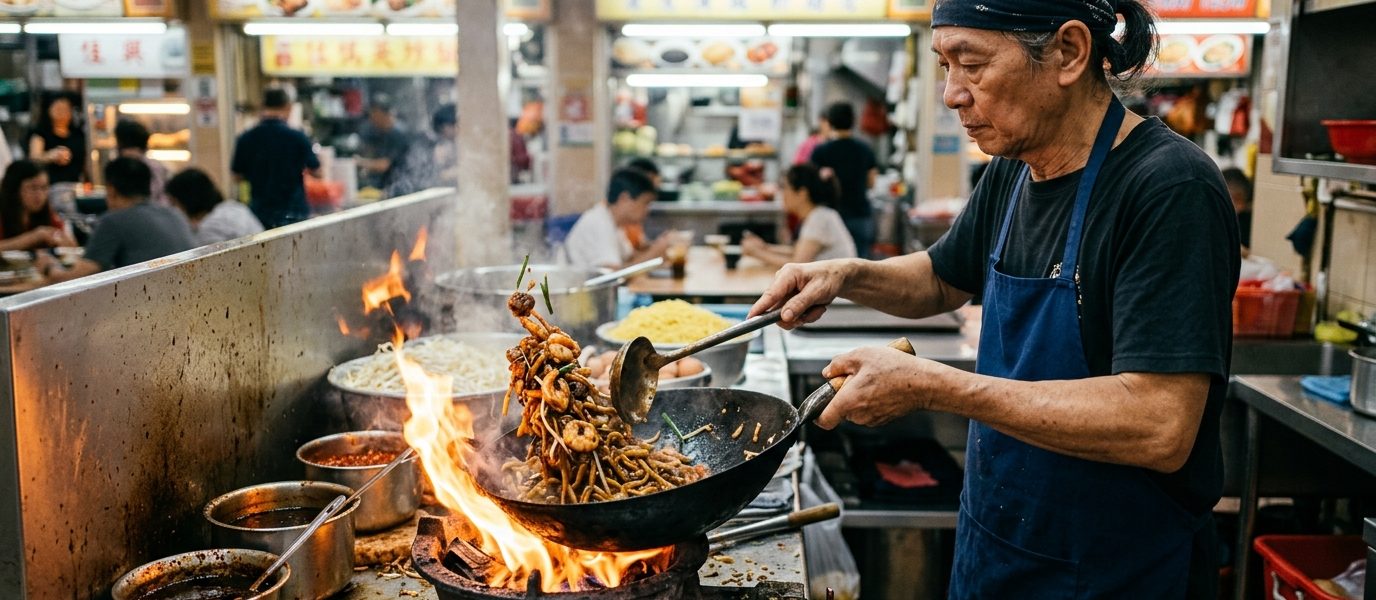
Walk past any hawker centre and you’ll notice something. The best char kway teow stalls have flames that leap higher than the wok itself. That’s not showmanship. It’s necessity.
Char kway teow needs wok hei, that smoky, almost metallic flavour you can’t replicate at home. Your kitchen stove tops out around 15,000 BTU. A proper hawker burner hits 100,000 BTU or more. The noodles need to sear, not steam.
When the wok isn’t hot enough, the kway teow releases moisture instead of caramelising. You end up with soggy, stuck-together noodles swimming in liquid. The entire dish becomes heavy and greasy instead of light and fragrant.
The best hawkers preheat their woks until they’re almost glowing. They know exactly when to toss in the ingredients. Too early and everything steams. Too late and the noodles burn before developing flavour.
This is why meet the 78-year-old uncle behind Chinatown’s best char kway teow who still refuses to use anything but charcoal burners. Electric or gas doesn’t give him the same control.
Fresh noodles versus the pre-soaked trap
Here’s something most diners don’t realise. Not all kway teow comes equal.
The flat rice noodles should arrive at the stall fresh each morning. They should feel slightly firm, not mushy. Some stalls pre-soak their noodles in water to save time during the lunch rush. This destroys the texture before the noodles even hit the wok.
Fresh kway teow has a natural springiness. When cooked properly, each strand separates cleanly. Pre-soaked noodles clump together and break apart into mushy fragments.
Top-tier hawkers inspect their noodle delivery every single day. If the batch feels wrong, they send it back. They’d rather close early than serve subpar plates.
The noodles also can’t sit around too long. After four or five hours, even fresh kway teow starts to dry out and crack. This is why the best stalls at the ultimate guide to Tiong Bahru Market often sell out by 2pm. They only buy what they can cook while it’s still perfect.
Ingredient sequencing separates amateurs from masters
Watch a mediocre hawker and a master cook the same dish. The mediocre one dumps everything in at once. The master follows a precise sequence that looks effortless but took years to internalise.
Here’s the proper order:
- Heat the wok until smoking
- Add lard and let it melt completely
- Toss in garlic and lap cheong, let them crisp
- Crack eggs directly into the wok, let them set slightly
- Add cockles and fish cake, sear for 30 seconds
- Toss in the kway teow, spread it out
- Drizzle dark soy sauce around the wok edge, not directly on noodles
- Add bean sprouts and chives only in the final 15 seconds
Each ingredient needs a different amount of heat and time. Cockles overcook in seconds and turn rubbery. Bean sprouts need just enough heat to soften but stay crunchy. Eggs should form ribbons, not scramble into dry bits.
The dark soy sauce goes on the wok’s edge because the metal caramelises it instantly. Pour it directly on the noodles and you get uneven colouring with burnt spots.
“People think char kway teow is simple. Just fry everything together, right? Wrong. The timing between each ingredient is maybe five to ten seconds. Miss it and the whole plate is ruined. I’ve been doing this for 40 years and I still pay attention to every second.” – Ah Seng, veteran hawker
The lard and dark soy sauce quality gap
Let’s talk about the two ingredients that create the signature char kway teow flavour: lard and dark soy sauce.
Cheap lard tastes like grease. Good lard tastes clean, almost sweet, with a subtle pork fragrance. The best hawkers render their own lard from pork fat every morning. The crispy lard croutons left over get tossed into the dish for texture.
Stalls that use bottled vegetable oil or generic lard from the supermarket produce flat-tasting char kway teow. You can taste the difference immediately. The noodles lack depth and richness.
Dark soy sauce varies even more dramatically. Premium brands have a complex, slightly sweet molasses flavour. Budget versions taste purely salty with artificial colouring. Some stalls even dilute their dark soy sauce to save money.
Here’s a comparison table:
| Element | Premium Version | Budget Shortcut | Taste Impact |
|---|---|---|---|
| Lard | Freshly rendered daily | Bottled commercial lard | Rich vs flat and greasy |
| Dark soy sauce | Aged, naturally brewed | Cheap, artificially coloured | Complex vs one-dimensional |
| Cockles | Fresh, bought daily | Frozen or canned | Sweet vs rubbery |
| Lap cheong | Quality Chinese sausage | Generic processed sausage | Fragrant vs bland |
| Bean sprouts | Crisp, bought same day | Wilted, pre-washed | Crunchy vs soggy |
The cost difference between premium and budget ingredients might be $2 per plate. But most hawkers operate on thin margins. Raising prices by even 50 cents can drive customers to cheaper competitors.
The stalls that maintain quality anyway are the ones worth finding. They’re betting on reputation over volume. You’ll notice they have regular customers who’ve been coming for decades, not just tourists chasing Instagram photos.
Cooking one plate at a time versus batch production
This is the hardest truth about why char kway teow tastes better at certain stalls.
The best versions are cooked individually. One plate. One wok. Two minutes of undivided attention.
Some stalls try to cook two or three portions simultaneously to handle queues faster. The wok gets overcrowded. The temperature drops. The noodles steam instead of sear. Everything turns mushy.
You can spot these stalls easily. They have shorter queues and faster service. But the char kway teow tastes ordinary because the hawker sacrificed technique for speed.
The legendary stalls cook one plate at a time, even during the lunch rush. Yes, you’ll wait 30 minutes. But when your plate arrives, it’s perfect. The noodles have that smoky char. Every ingredient is cooked exactly right. The flavours are balanced.
This is also why certain stalls at hidden neighbourhood gems that locals swear by taste better than famous tourist spots. They’re not rushing to serve 200 plates before 2pm. They’re focused on making each plate correctly.
The muscle memory factor nobody talks about
Here’s something you can’t teach from a recipe. The best char kway teow hawkers have fried hundreds of thousands of plates. Their hands know exactly how the wok should feel when they flip the noodles. Their eyes recognise the precise moment when the eggs are ready.
This muscle memory means they can adjust on the fly. If the noodles are slightly drier than usual, they add a splash of water. If the wok temperature drops, they know to wait five seconds before adding the next ingredient.
Newer hawkers follow the steps correctly but lack this intuition. Their char kway teow might taste good, but it won’t be extraordinary. They haven’t developed the thousands of micro-adjustments that turn a decent plate into an unforgettable one.
This is why five generations of bak chor mee at Tai Hwa earned a Michelin star. Technique passed down through generations creates consistency that new stalls simply can’t match.
Common mistakes that ruin perfectly good ingredients
Even stalls using quality ingredients can mess up the execution. Here are the most common errors:
- Over-soaking the noodles: Makes them mushy and prone to breaking
- Adding too much dark soy sauce: Turns the dish bitter and overly salty
- Cooking cockles too long: Creates a rubbery, fishy texture
- Skipping the lard: Results in flat, one-dimensional flavour
- Using low heat: Produces steamed noodles instead of fried ones
- Overcrowding the wok: Drops the temperature and prevents proper searing
- Adding bean sprouts too early: They turn limp and release excess water
- Not cleaning the wok between plates: Old burnt bits contaminate the next serving
You’d be surprised how many stalls make at least two or three of these mistakes regularly. They wonder why customers don’t return.
The attention to detail required for consistently excellent char kway teow is exhausting. This is partly why you see fewer young hawkers taking up the trade. It’s physically demanding, the margins are tight, and customers often can’t articulate why one plate tastes better than another.
What to look for when choosing a stall
Now that you understand the technical differences, here’s how to identify superior char kway teow before you order:
Watch the wok. If the flames aren’t leaping high, walk away. If the hawker is cooking multiple plates simultaneously, that’s another red flag.
Check the queue. Not just the length, but who’s in it. Older uncles and aunties who’ve been eating hawker food their whole lives know quality. Tourists follow Instagram recommendations.
Observe the ingredients. Are there containers of fresh cockles on ice? Can you see the hawker adding lard from a ceramic pot instead of pouring oil from a bottle?
Listen to the sizzle. Proper char kway teow makes a sharp, crackling sound when the noodles hit the wok. A dull, wet sound means the temperature is too low.
Smell the air. You should detect a smoky, slightly sweet aroma with hints of caramelised soy sauce. If it just smells oily, keep walking.
Some of the hawker stalls that open at odd hours produce exceptional char kway teow precisely because they’re not rushing through peak hours. They can focus on each plate.
The generational knowledge at risk
Many of Singapore’s best char kway teow hawkers are in their 60s and 70s. They learned from their parents or uncles who started frying noodles in the 1950s and 60s.
This knowledge isn’t written down anywhere. It exists in their hands, their timing, their ability to read the wok. When they retire, that expertise often disappears.
Some stalls have successfully passed down their techniques. Others haven’t found anyone willing to work the brutal hours for modest income. The stalls close and the recipes die with them.
This is why organisations are working to document hawker culture before it’s too late. But even detailed videos can’t capture the subtle adjustments that come from 40 years of practice.
If you find a char kway teow stall that consistently produces exceptional plates, support them. Tell your friends. Go regularly. These hawkers are preserving a culinary tradition that took generations to perfect.
Why settling for mediocre char kway teow is a choice
You now understand why char kway teow tastes better at certain stalls. It’s not mysterious. It’s high heat, fresh ingredients, precise sequencing, quality lard and soy sauce, individual plate cooking, and decades of experience.
The question is whether you’ll settle for the convenient option or seek out the real thing.
The best char kway teow in Singapore isn’t hiding. It’s at stalls where hawkers have been perfecting their craft for 30, 40, even 50 years. They’re the ones with queues of regulars who refuse to eat anywhere else. They’re the ones who close when they run out of fresh ingredients instead of switching to inferior substitutes.
Next time you’re at a hawker centre, take a moment to watch the char kway teow stall before ordering. Look for the signs of mastery. Wait for the plate cooked with care instead of speed. Your tastebuds will know the difference immediately.
The hawkers who maintain these standards despite rising costs and declining interest in the trade deserve your support. They’re keeping alive a piece of Singapore’s food heritage that can’t be replicated by chains or food courts. Every perfect plate they serve is a small act of cultural preservation.