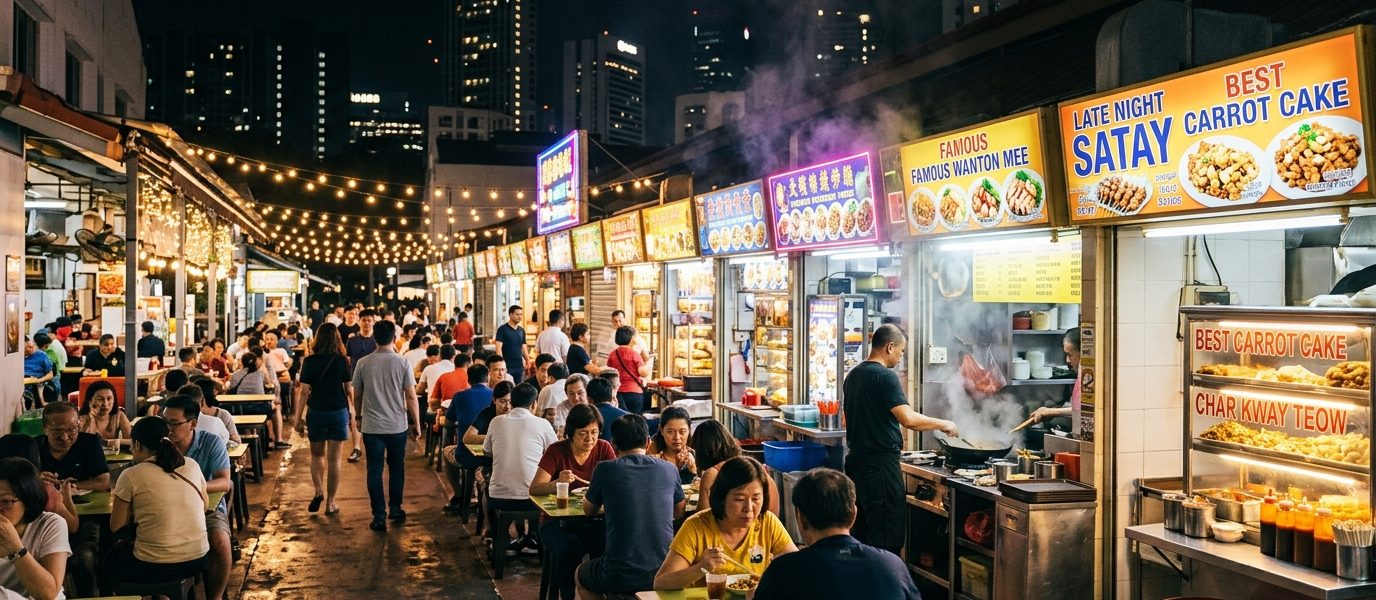
The fluorescent lights of hawker centres burn brightest when the rest of Singapore sleeps. While most stalls shutter by 8pm, a dedicated network of late night hawker vendors keeps their woks firing until dawn, feeding shift workers, insomniacs, and jet-lagged travellers who refuse to settle for fast food when authentic hawker fare is still within reach.
Singapore’s late night hawker scene thrives in specific pockets across the island, with dedicated stalls operating from 10pm to 6am. The best after-hours food hunting grounds include Geylang, Old Airport Road, and select 24-hour coffee shops in heartland estates. Knowing which centres stay open late, what dishes to order, and how to navigate safely after dark transforms midnight cravings into memorable hawker experiences.
Where to find authentic late night hawker food in Singapore
Not all hawker centres keep the same hours. Most neighbourhood centres close their shutters by 8pm, leaving only a handful of locations truly equipped for late night dining.
Geylang Serai Market operates until 3am on most nights. The concentration of Malay and Indian Muslim stalls means you’ll find murtabak, nasi lemak, and prata long after midnight. The atmosphere shifts after 11pm when the dinner crowd disperses and night workers arrive.
Old Airport Road Food Centre has select stalls that stay open past midnight. The famous char kway teow and Hokkien mee vendors typically close earlier, but the roast meat and porridge stalls often operate until 2am.
Chomp Chomp Food Centre in Serangoon Gardens keeps irregular late hours. Some stalls remain open until 1am on weekends, particularly the satay and BBQ seafood vendors who cater to the supper crowd.
24-hour coffee shops scattered across heartland estates offer the most reliable late night options. These aren’t technically hawker centres, but the food quality often matches or exceeds what you’d find at tourist-heavy locations. Look for them in Ang Mo Kio, Bedok, and Clementi.
How to eat your way through Geylang in 3 hours covers the after-dark dining landscape in detail, including which specific stalls to target.
The dishes that taste better after midnight
Certain hawker foods seem engineered for late night consumption. The richness, the heat, the immediate satisfaction they deliver hits differently when consumed between midnight and dawn.
Bak chor mee becomes a different experience at 2am. The vinegar cuts through fatigue. The chilli oil wakes you up. The minced pork and liver provide protein when your body needs it most. Several stalls in Bedok and Tampines serve this until 4am.
Char kway teow at midnight carries extra wok hei. The best late night versions come from hawkers who’ve been cooking since 6pm, their woks perfectly seasoned from hours of continuous use. The noodles absorb the smoky flavour more intensely.
Frog porridge might sound adventurous, but it’s become a Geylang institution for good reason. This Geylang frog porridge stall only opens after midnight explains why the timing matters for both flavour and tradition.
Prata and teh tarik form the foundation of Indian Muslim supper culture. Fresh prata dough rested for hours produces the flakiest results. The late shift workers at these stalls have perfected their rhythm, flipping dough while brewing tea in seamless choreography.
Lor mee provides the comfort factor. The thick, starchy gravy soothes without overwhelming. It’s substantial enough to satisfy hunger but doesn’t leave you uncomfortably full at 3am.
How to plan your late night hawker hunt
Successful after-hours hawker hunting requires strategy. You can’t just show up and hope for the best.
- Call ahead to confirm operating hours. Many stalls list closing times optimistically but shut early on slow nights.
- Arrive before 1am for the widest selection. After that, popular items start running out.
- Bring cash in small denominations. Late night vendors rarely have change for $50 notes.
- Check the last train times if you’re using public transport. Many late night hawker spots sit far from MRT stations.
- Travel in groups when possible, especially in less central locations.
- Keep expectations flexible. If your target stall closed early, have backup options identified.
The rhythm of late night hawker centres differs from daytime operations. Crowds thin out. Conversations with hawkers become easier. You’ll often find yourself sharing tables with taxi drivers, security guards, and hospital staff on break.
Regional differences in late night hawker availability
Geography determines your late night options more than most people realise.
East Side Advantage
The eastern region from Geylang to Bedok offers the highest concentration of late night hawker food. This stems from the area’s historical role as an entertainment district and the presence of Changi Airport, which requires 24-hour food services for shift workers.
Bedok North particularly excels. Several coffee shops near Bedok North MRT operate around the clock, serving everything from chicken rice to zi char.
Central Limitations
Central Singapore disappoints late night food hunters. Most stalls around Orchard and the CBD close by 9pm. Lau Pa Sat extends hours for the satay street vendors, but options remain limited compared to heartland areas.
Northern Surprises
Woodlands and Yishun hide unexpected late night gems. The Malaysian influence in these northern estates means more 24-hour operations, particularly for mamak-style food.
Western Gaps
The western region struggles with late night hawker availability. Jurong and Clementi have scattered 24-hour coffee shops, but dedicated hawker centres mostly close early.
| Region | Best Late Night Area | Operating Hours | Signature Dishes |
|---|---|---|---|
| East | Geylang Serai | Until 3am | Murtabak, nasi lemak, satay |
| East | Bedok North | 24 hours | Bak chor mee, char kway teow |
| Central | Lau Pa Sat | Until 2am weekends | Satay, BBQ seafood |
| North | Woodlands | 24 hours (select shops) | Roti prata, nasi briyani |
| West | Clementi | Until 1am | Mixed rice, porridge |
Common mistakes that ruin late night hawker experiences
First-timers often sabotage their own after-hours food adventures through predictable errors.
Ordering too much too fast leads to waste and discomfort. Your appetite at midnight differs from your capacity. Start with one dish, assess, then order more if needed.
Ignoring safety basics creates unnecessary risk. Stick to well-lit areas. Keep valuables secure. Trust your instincts about locations that feel off.
Expecting daytime variety guarantees disappointment. Late night menus shrink. Stalls run out of ingredients. The char kway teow you wanted might be gone by 2am.
Treating hawkers like 24-hour vending machines breeds resentment. These are real people working brutal hours. A simple “thank you” and patience during busy periods goes far.
Skipping the hidden neighbourhood gems means missing the best late night food. Tourist-heavy centres close early. The real action happens where locals eat.
“The best late night hawker food comes from stalls that choose to stay open, not those forced to by location. Look for the uncles and aunties who genuinely enjoy the night shift crowd. Their food always tastes better.” – Veteran food writer who’s spent 15 years documenting Singapore’s after-dark dining scene
The culture and etiquette of after-hours hawker dining
Late night hawker culture operates by different social rules than daytime dining.
Table sharing becomes mandatory, not optional. Seats fill fast even at 2am. Don’t hog a table for four when you’re dining alone. Squeeze in, make space, acknowledge your tablemates with a nod.
Noise levels drop naturally. The boisterous lunch crowd energy gives way to quieter conversations. Keep your voice down. Others might be winding down from work or seeking peaceful moments before heading home.
Hawker interactions become more personal. With fewer customers, stalls owners have time to chat. Ask about their hours, their recipes, how long they’ve been operating. These conversations preserve hawker heritage as much as any formal documentation.
Tipping remains unnecessary but appreciated. If a hawker stays open past their usual closing time to serve you, rounding up your bill shows respect for their effort.
The hawker stalls that open at odd hours often develop loyal followings precisely because of these intimate late night interactions.
What makes certain stalls stay open late
Economics and passion drive late night hawker operations in different proportions.
Some stalls target specific customer bases. The workers from nearby hospitals, airports, or 24-hour facilities provide steady demand. These hawkers calculate that fewer competitors after midnight offset lower overall traffic.
Others simply prefer night work. Older hawkers sometimes find the cooler temperatures and slower pace easier on their bodies. The absence of lunch rush stress appeals to those who’ve spent decades in the trade.
Family dynamics play a role. Multi-generational stalls might split shifts, with younger family members taking the late night hours while older relatives handle daytime service.
Location advantages matter. Stalls near entertainment districts, transport hubs, or shift-work employment centres naturally extend hours to capture available customers.
Young hawkers under 35 increasingly experiment with late night operations as a market entry strategy, avoiding direct competition with established daytime vendors.
Seasonal and weekly patterns in late night availability
Late night hawker operations follow predictable rhythms once you know what to watch for.
Weekend Extensions
Friday and Saturday nights see the most extended hours. Stalls that normally close at midnight might stay open until 3am. The supper crowd swells with people finishing nights out.
Public Holiday Variations
Major holidays create unpredictable patterns. Some hawkers close entirely to spend time with family. Others capitalise on increased late night foot traffic. Chinese New Year particularly disrupts normal schedules.
Month-End Patterns
The last weekend of each month often brings better late night availability. Hawkers anticipate higher spending as people receive salaries.
Weather Impact
Heavy rain kills late night hawker business faster than anything else. Many stalls close early on stormy nights rather than waste ingredients on customers who won’t brave the weather.
Understanding these patterns helps you plan successful late night food hunts. Check weather forecasts. Avoid the nights immediately before major holidays. Target weekend midnights for maximum options.
Safety considerations for late night hawker hunting
After-hours food adventures require basic safety awareness without paranoia.
- Stick to well-populated hawker centres and coffee shops with good lighting
- Use registered taxis or ride-hailing apps rather than walking long distances at night
- Keep your phone charged and share your location with someone
- Avoid excessive alcohol before or during your food hunt
- Trust established stalls with visible customer flow over empty, isolated operations
- Stay aware of your surroundings, particularly in less central neighbourhoods
Most late night hawker areas in Singapore remain remarkably safe. The presence of other diners, the lighting, and general urban density provide natural security. Still, basic precautions prevent the rare incident from ruining your experience.
Women dining alone at late night hawker centres generally report feeling safe, though many prefer sitting at tables with other customers nearby rather than isolated corners.
The future of late night hawker culture
Singapore’s after-hours hawker scene faces mounting pressures.
Rising costs push some late night operators to reconsider their hours. Electricity, ingredients, and labour all cost the same whether you’re serving 10 customers or 100. The math works less favourably at 3am.
An ageing hawker population means fewer willing to work brutal overnight shifts. The physical toll of standing over a hot wok from midnight to dawn doesn’t appeal to younger generations.
Yet new opportunities emerge. Career switchers running successful hawker stalls sometimes choose late night operations specifically to differentiate themselves.
Food delivery platforms extend the reach of late night hawker food beyond those willing to visit physical locations. A Geylang satay stall can now serve customers island-wide at 2am.
The key question remains whether enough new blood enters the trade to replace retiring late night hawkers. Each closure of a 24-hour operation represents lost cultural heritage and diminished food access for shift workers who depend on these stalls.
Building your personal late night hawker map
The best approach to late night hawker hunting involves systematic exploration rather than random attempts.
Start with one neighbourhood. Master its late night options completely before expanding. Learn which stalls open when, what they do best, and how quality varies by day of week.
Document your findings. A simple notes app entry with stall names, operating hours, and dish recommendations builds into an invaluable personal resource.
Connect with other late night food enthusiasts. Online communities share real-time updates about stall closures, new openings, and quality changes.
Revisit favourite stalls regularly. Building rapport with late night hawkers often leads to better service, insider tips about other good stalls, and sometimes off-menu specials.
The 10 hawker stalls only locals know about methodology applies perfectly to late night hunting. The same principles of exploration, documentation, and relationship-building work regardless of operating hours.
When hunger strikes after dark
Late night hawker hunting in Singapore rewards those who approach it with intention and flexibility. The island’s after-hours food scene exists in specific pockets, requires basic navigation skills, and offers rewards beyond just satisfying hunger.
You’ll discover a different side of hawker culture when you eat at 2am. The conversations flow differently. The food tastes more personal. The experience connects you to the shift workers, insomniacs, and dedicated hawkers who keep Singapore’s food heritage alive while others sleep.
Start with one late night adventure. Pick a neighbourhood, identify a few target stalls, and experience hawker food when the crowds thin and the city’s rhythm slows. You might find that the best char kway teow you’ve ever tasted comes not from a famous daytime stall, but from an uncle who’s been working the midnight shift for 30 years, perfecting his craft one plate at a time.