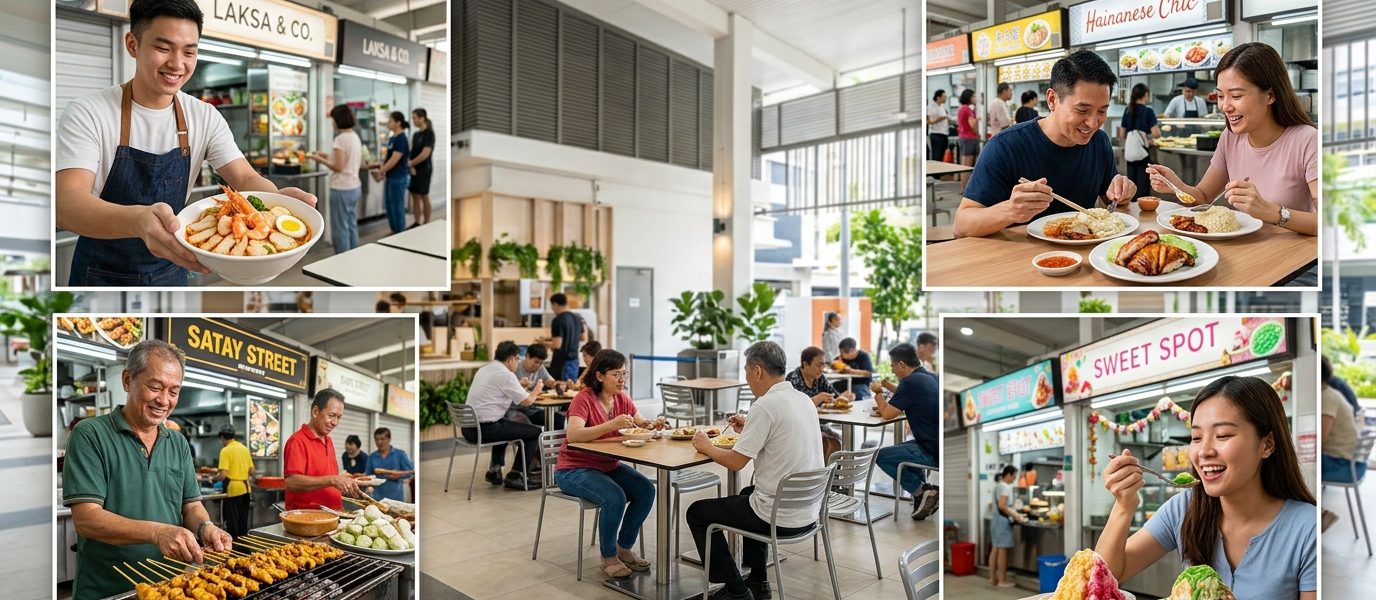
Singapore’s hawker centres are where the city’s soul lives. Not in fancy restaurants or hotel buffets, but in open-air complexes where aunties ladle curry at 6AM and uncles flip char kway teow over roaring flames. These are the places where three generations gather over breakfast, where office workers queue 30 minutes for their favourite stall, and where tourists discover why Singaporeans are so obsessed with food. Finding the best hawker centres isn’t about chasing Michelin stars or Instagram fame. It’s about understanding which centres serve your needs, whether you’re after heritage flavours, air-conditioned comfort, or that one dish you’ll think about for months.
Singapore’s best hawker centres combine accessibility, variety, and quality stalls that locals actually visit. Maxwell Food Centre dominates for tourists with Tian Tian Chicken Rice, while Tiong Bahru Market offers heritage charm. Old Airport Road leads for sheer stall count, Lau Pa Sat provides CBD convenience, and Chomp Chomp excels for supper. Choose based on location, timing, and specific dishes you’re chasing rather than following generic rankings.
What makes a hawker centre truly great
Not all hawker centres are created equal. Some have 200 stalls but only five worth eating at. Others have 30 stalls with queues at half of them.
The best centres share common traits. They have multiple stalls where locals queue even during off-peak hours. They’re clean but not sterile. The tables fill up during proper meal times. You’ll hear multiple languages and see different generations eating together.
Great hawker centres also have staying power. The stalls aren’t constantly changing. When a chicken rice uncle has been at the same spot for 20 years, that tells you something about the food and the rent structure.
Location matters too. Centres near residential areas tend to have better breakfast options because they serve the morning crowd. CBD centres excel at lunch. Neighbourhood centres in the east often have the best supper stalls.
Top hawker centres you should visit first
Maxwell Food Centre
Maxwell sits in Chinatown and pulls both tourists and locals. Why Maxwell Food Centre remains the top tourist hawker destination in 2024 explains its enduring appeal, but here’s the short version.
Tian Tian Hainanese Chicken Rice anchors the centre. Yes, the queue is real. Yes, it’s worth it if you arrive before 11AM or after 1:30PM. The chicken is tender, the rice fragrant, the chilli sauce perfectly balanced.
But Maxwell has more. China Street Fritters does crispy you tiao. Zhen Zhen Porridge serves comforting congee. Jin Ji Teochew Braised Duck and Goose competes with Tian Tian for queue length.
The centre gets crowded between 11:30AM and 1PM on weekdays. Seats are gold. The upstairs section often has more available tables.
Tiong Bahru Market
This art deco building from the 1950s houses one of Singapore’s most beloved hawker centres. The ultimate guide to Tiong Bahru Market where heritage meets hawker excellence covers every stall worth trying.
Tiong Bahru excels at breakfast. Jian Bo Shui Kueh serves steamed rice cakes with preserved radish. Tiong Bahru Lor Mee has a loyal following. Zhong Yu Hainanese Boneless Chicken Rice draws neighbourhood regulars.
The market upstairs sells fresh produce and flowers. The hawker centre downstairs feeds the entire neighbourhood. This combination creates an atmosphere you won’t find in newer centres.
Come before 9AM on weekends if you want a seat without hovering. The breakfast crowd is serious here.
Old Airport Road Food Centre
This centre has over 100 stalls. The variety is staggering. You could eat here daily for two months and not repeat a stall.
Famous names include Albert Street Prawn Noodle, Nam Sing Hokkien Fried Mee, and Roast Paradise. But the lesser-known stalls often surprise you more.
The centre serves the Geylang and Kallang neighbourhoods. It’s not designed for tourists, which means authenticity runs high. Prices stay reasonable. Portions are generous.
Parking can be challenging during peak hours. The centre sits near Dakota MRT, making public transport the smarter choice.
Lau Pa Sat
The Victorian cast-iron structure makes Lau Pa Sat architecturally stunning. But looks aren’t everything.
During lunch, office workers from Raffles Place flood the centre. The crowd thins by 2PM. Evening brings the satay street closure on Boon Tat Street, where multiple stalls set up grills and tables spill onto the road.
The satay here isn’t Singapore’s best, but the atmosphere compensates. Eating skewered meat on a closed street in the financial district feels uniquely Singaporean.
How to navigate Lau Pa Sat like a local helps you avoid the tourist traps inside and find the stalls locals actually visit.
Chomp Chomp Food Centre
This open-air centre in Serangoon Gardens operates mainly at night. It’s a supper institution.
BBQ Chicken Wing, Ng Ah Sio Pork Ribs Soup, and Xin Mei Xiang Zheng Zong Lor Mee are the big draws. But nearly every stall has its devotees.
The centre fills up after 7PM. By 9PM, finding a table requires patience or strategic hovering. Weekends see even bigger crowds.
Bring mosquito repellent. The open-air setup means bugs join you for dinner. It’s part of the experience.
How to choose the right hawker centre for your needs
Your priorities determine which centre suits you best. Here’s a practical framework.
For first-time visitors: Maxwell Food Centre or Lau Pa Sat. Both are central, have famous stalls, and are easy to reach.
For authentic local experience: Old Airport Road or hidden neighbourhood gems that locals swear by. These centres serve residents first, tourists second.
For comfort: 15 air-conditioned hawker centres solve Singapore’s heat problem. You’ll pay slightly more, but you won’t leave drenched in sweat.
For breakfast: The complete breakfast hunter’s map breaks down the best morning spots by region. Tiong Bahru Market, Toa Payoh Lor 8, and East Coast Lagoon excel here.
For supper: Chomp Chomp, Geylang Serai, or after-dark supper trail locations. These centres come alive when others close.
Navigating hawker centres like you belong there
Walking into a packed hawker centre can feel overwhelming. Here’s how to handle it.
-
Scout first. Walk around the entire centre before deciding what to eat. Note which stalls have queues and which tables might open up soon.
-
Chope your seat. Place a packet of tissues or an umbrella on a table to reserve it. This is standard practice. Don’t feel awkward about it.
-
Order from multiple stalls. You can eat chicken rice from one stall and laksa from another at the same table. Nobody cares.
-
Bring small notes. Many stalls don’t accept cards. A fifty-dollar note might cause problems at a stall selling four-dollar noodles.
-
Return your tray. Newer centres have tray return stations. Use them. It’s becoming the norm.
-
Eat during off-peak hours. 10AM, 2:30PM, and 4:30PM see fewer crowds. You’ll get fresher food and easier seating.
Must-try dishes at each major centre
| Centre | Signature Dish | Stall Name | Best Time to Visit |
|---|---|---|---|
| Maxwell | Hainanese Chicken Rice | Tian Tian | Before 11AM or after 1:30PM |
| Tiong Bahru | Shui Kueh | Jian Bo Shui Kueh | 7AM to 9AM |
| Old Airport Road | Hokkien Mee | Nam Sing | Lunch or early dinner |
| Lau Pa Sat | Satay | Various stalls on Boon Tat Street | After 7PM |
| Chomp Chomp | BBQ Chicken Wings | BBQ Chicken Wing | After 8PM |
| Tekka Centre | Fish Head Curry | Allauddin’s Briyani | Lunch |
| East Coast Lagoon | BBQ Seafood | Various stalls | Dinner |
Common mistakes tourists make at hawker centres
Ordering too much food ranks first. Portions are larger than they look. One main dish per person is usually enough, especially if you’re trying multiple stalls.
Sitting at a table with someone’s belongings on it causes awkward confrontations. That tissue packet isn’t litter. It’s a reservation system older than most MRT lines.
Expecting table service leads to confusion. You order at the stall, pay there, and either carry your food back or wait for them to deliver it using your table number.
Visiting only famous stalls means missing hidden gems. 10 hawker stalls only locals know about often serve better food with shorter queues.
Skipping neighbourhood centres because they’re “too far” robs you of authentic experiences. The best char kway teow might be in Ang Mo Kio, not Chinatown.
Regional differences in hawker centre culture
The east side has different food culture than the west. Eastern centres like Bedok or Marine Parade lean heavier on Malay and Peranakan dishes. Western centres near Jurong show more Chinese influence.
Northern centres in Woodlands and Yishun serve residents who want value. Portions tend to be larger, prices slightly lower. The food is no less good, just less hyped.
Central area centres cater to mixed crowds. You’ll find more variety but also more tourists and higher prices.
A veteran hawker once told me: “The best centres are where you see old people eating slowly and young people eating quickly at the same time. That means the food brings everyone together.”
What UNESCO recognition means for hawker culture
Singapore’s hawker culture received UNESCO recognition in 2020. This acknowledgment matters beyond prestige.
It validates hawker culture as intangible heritage worth preserving. It puts Singapore’s food culture on the same level as French gastronomy or Japanese washoku.
But recognition also brings challenges. More tourists mean longer queues. Rising rents pressure hawkers. Young hawkers under 35 redefining Singapore’s food scene face different economics than their predecessors.
The government has responded with schemes to keep rentals affordable and attract younger hawkers. Success varies by centre.
Finding your personal favourite hawker centre
The “best” hawker centre is subjective. What matters to you?
Some people prioritize specific dishes. If you’re chasing the perfect Hokkien mee, the Hokkien mee rivalry that’s divided Singaporeans for decades guides you to the key battlegrounds.
Others want atmosphere. Tiong Bahru’s heritage architecture creates a different vibe than Chomp Chomp’s open-air night market feel.
Convenience matters for locals. The best hawker centre might simply be the one near your home with consistent quality.
Food trails help you compare. The ultimate Tiong Bahru food crawl or Chinatown’s secret food route let you sample multiple centres in one outing.
Hawker centres changing with the times
Modern hawker centres look different from their 1970s predecessors. Tray return systems, cashless payments, and improved ventilation are becoming standard.
Air-conditioned hawker centres attract crowds willing to pay slightly more for comfort. These centres often house younger hawkers experimenting with fusion concepts.
But something gets lost in overly sanitized spaces. The best centres balance cleanliness with character. They’re clean enough to feel safe but retain the energy and slight chaos that makes hawker culture vibrant.
Traditional trades are disappearing. 5 dying hawker trades you need to try before they’re gone documents skills and dishes that might not survive another generation.
Seasonal considerations for hawker centre visits
Singapore’s weather is consistent, but hawker centre crowds aren’t. School holidays bring families during lunch. December sees more tourists.
Rainy season means covered centres get more crowded. Open-air centres like Chomp Chomp see smaller crowds during heavy rain but better ventilation afterward.
Chinese New Year and Hari Raya periods change operating hours. Many stalls close for several days. Plan accordingly if you’re visiting during major holidays.
Weekday mornings at neighbourhood centres reveal a different side of hawker culture. Retirees gathering for coffee, morning exercise crowds refueling, shift workers ending their night. It’s quieter and more intimate than weekend chaos.
Why these centres matter beyond the food
Hawker centres function as community living rooms. They’re where neighbours become friends, where deals get discussed, where families celebrate small victories.
The affordability matters. A filling meal for under six dollars exists nowhere else in Singapore. This accessibility preserves social mixing across income levels.
When Hainanese cooks left the British kitchens and how Singapore’s Indian Muslim community built the mamak stall legacy show how hawker culture preserves immigrant stories and adaptation narratives.
These aren’t just places to eat. They’re archives of recipes, techniques, and family histories passed through generations.
Where your hawker centre journey starts
Start with one centre near where you’re staying. Eat there three times at different hours. You’ll notice patterns, find your favourite stalls, and understand how that centre breathes.
Then branch out. Try a neighbourhood centre far from tourist areas. Visit during breakfast to see the morning regulars. Go for supper to experience the night market energy.
Don’t chase every famous stall. The best hawker dishes you’ve never heard of but must try often come from stalls with no queue and no Instagram presence.
Talk to people. Ask the uncle at the drink stall which food stall he eats at. Ask the auntie clearing tables where she goes on her day off. Locals love sharing their favourites.
The best hawker centres aren’t always the most famous ones. They’re the ones where you find your dish, your stall, your table. Where you stop being a tourist and start being a regular. That’s when you’ve really found Singapore’s food soul.