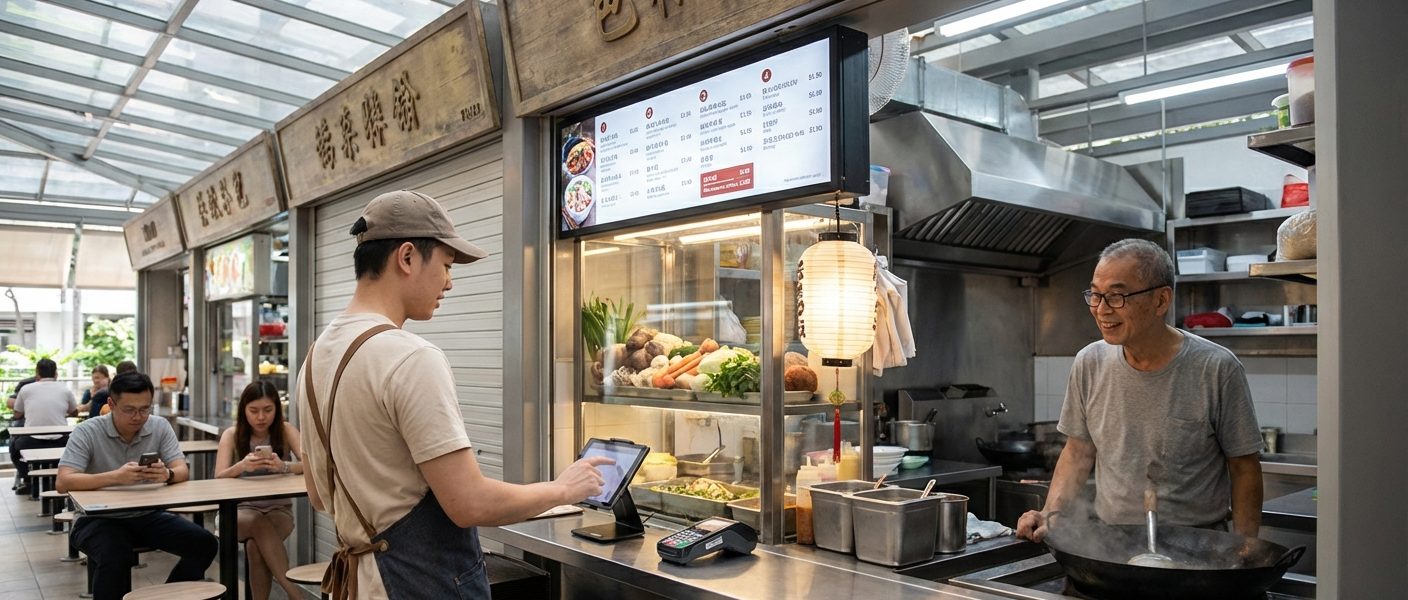
Walk into any hawker centre in Singapore today and you’ll spot something interesting. The uncle flipping char kway teow with decades of muscle memory has a tablet mounted beside his wok. The auntie ladling laksa still uses her grandmother’s recipe, but she’s taking orders through WhatsApp. Technology has crept into these spaces, yet the soul of hawker food remains untouched.
Singapore’s hawker stalls are adopting digital payment systems, online ordering platforms, and inventory management tools without compromising their authentic cooking methods. The smartest operators use technology to handle admin work and customer service, freeing up time to perfect their craft. This balance keeps queues moving faster while preserving the flavours that made these stalls legendary in the first place.
Digital payments transform the customer experience
Cash was king at hawker centres for generations. Today, almost every stall displays at least three QR codes.
PayNow, GrabPay, and FavePay stickers cover cash register areas. Some stalls even accept card payments through portable terminals. This shift happened remarkably fast, accelerated by the pandemic and government incentives.
The benefits go beyond convenience. Hawkers no longer need to rush to the bank with heavy coin bags. They can track daily sales digitally. Reconciling accounts becomes simpler. Young customers who rarely carry cash can now support their favourite stalls without ATM detours.
But here’s what matters most. These payment upgrades don’t change how the food tastes. The chicken rice uncle still marinates his birds the same way. The roti prata auntie still flips dough with the same rhythm. Technology handles the transaction while tradition handles the taste.
Online ordering platforms expand reach without expanding kitchens
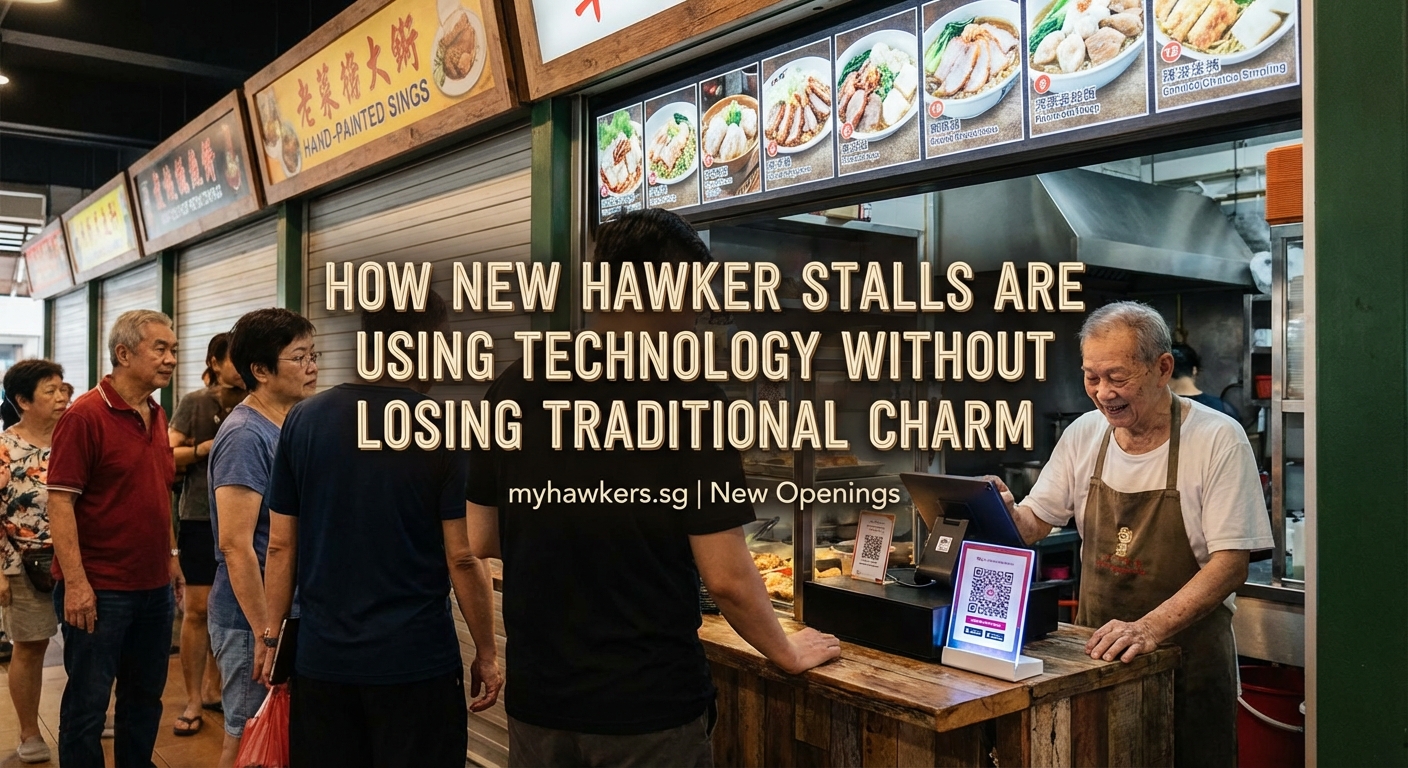
Food delivery apps changed the game for hawker stalls. Suddenly, a stall tucked in hidden neighbourhood gems could serve customers across the island.
GrabFood and Foodpanda partnerships let hawkers reach office workers during lunch peaks. Evening crowds can order supper from home. Weekend warriors can sample dishes from multiple centres without leaving their flats.
Smart hawkers treat online orders as a separate revenue stream. They don’t let delivery demands slow down in-person service. Some dedicate specific time slots for app orders. Others hire part-time help specifically for packing takeaway meals.
The challenge lies in maintaining quality during transit. Crispy items get soggy. Hot soups cool down. Successful hawkers adapt their packaging. They use vented containers for fried food. They separate gravy from noodles. They include reheating instructions for certain dishes.
“Technology should make our work easier, not harder. If it complicates the cooking, we’re using it wrong.” – Third-generation hawker at Tiong Bahru Market
Inventory management systems reduce waste and costs
Running out of ingredients at 2pm means lost sales. Over-ordering means spoilage and waste. Traditional hawkers relied on experience and gut feeling. Modern ones add data to the mix.
Simple spreadsheet systems help track ingredient usage. More sophisticated stalls use inventory apps designed for food businesses. These tools predict demand based on historical patterns. They account for weather, holidays, and special events.
The result? Less food waste. Better cost control. More consistent availability of popular dishes.
Here’s how three different stalls approach inventory management:
| Stall Type | Technology Used | Key Benefit |
|---|---|---|
| Chicken rice specialist | Custom Excel tracker with daily logs | Predicts chicken orders 3 days ahead |
| Laksa vendor | Smartphone app with supplier integration | Auto-reorders coconut milk when stock hits threshold |
| Mixed vegetable rice | Manual counts with digital photo archive | Visual reference prevents over-prep of slow-moving items |
Social media builds community and manages expectations
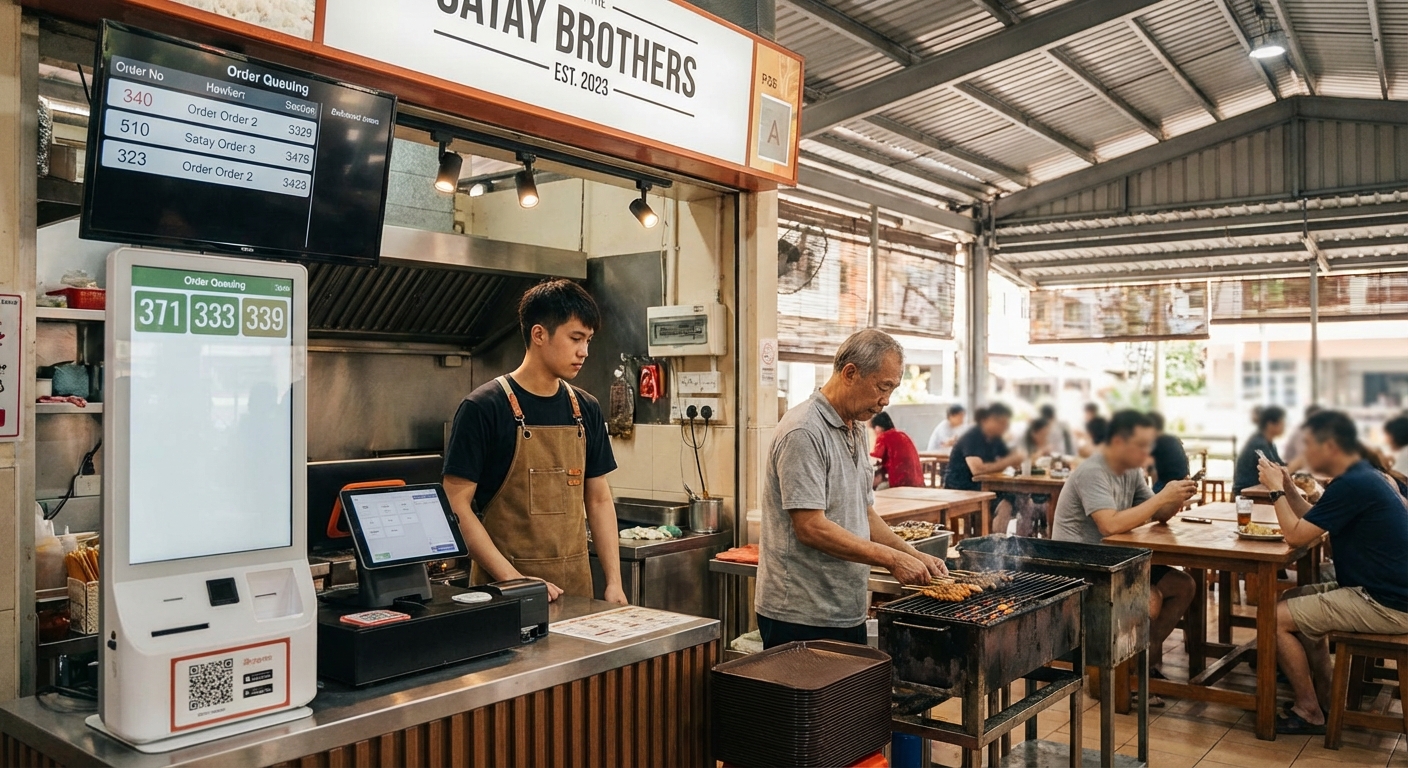
Instagram and Facebook transformed how hawkers connect with customers. A simple post announcing “Sold out for today” saves people wasted trips. A photo of tomorrow’s special gets appetites ready.
Young hawkers under 35 tend to be more active on social platforms. They share behind-the-scenes prep videos. They respond to comments and questions. They build personal brands around their stalls.
Older hawkers often delegate social media to family members. A daughter posts updates before school. A grandson handles Instagram stories during university breaks. The hawker focuses on cooking while the next generation handles digital engagement.
This division of labour works beautifully. The person who spent 40 years perfecting wonton mee doesn’t need to learn hashtag strategy. They need to keep making excellent wonton mee. Technology enables specialisation without forcing everyone to become a digital expert.
Smart kitchen equipment maintains consistency
Temperature-controlled fryers ensure every batch of you tiao comes out equally crispy. Timer apps prevent over-steaming of chee cheong fun. Digital scales guarantee precise seasoning ratios.
These tools don’t replace skill. They support it. A hawker still needs to know when char kway teow reaches the perfect wok hei moment. But consistent oil temperature means they can focus on technique rather than guessing if the oil is hot enough.
Modern rice cookers with precise temperature settings help chicken rice stalls achieve that signature glossy finish. Induction burners give better heat control than traditional gas, especially important for delicate dishes like steamed fish.
The equipment costs more upfront. But it often pays for itself through energy savings and reduced ingredient waste. Plus, it makes the physically demanding work slightly less punishing on aging bodies.
Customer relationship management without losing the personal touch
Regular customers are the backbone of any successful hawker stall. Technology helps track preferences without replacing genuine human connection.
Some hawkers use simple note apps to remember regular orders. Others maintain WhatsApp broadcast lists for loyal customers. A few tech-savvy operators use actual CRM software designed for small businesses.
The goal isn’t to automate relationships. It’s to remember details that make customers feel valued. “Auntie, you want the usual?” still beats any app notification. But when you serve 200 people daily, a digital reminder that Mr Tan always asks for extra chilli helps maintain that personal service.
How to implement technology without losing your identity
Not every tool fits every stall. The key is choosing technology that solves actual problems rather than adopting it for appearances.
- Start with payment systems because customers expect them and setup is straightforward.
- Add inventory tracking only if you currently struggle with waste or stockouts.
- Consider delivery platforms if your food travels well and you can handle extra volume.
- Try social media if you have someone willing to maintain it consistently.
- Upgrade equipment when old gear breaks rather than replacing working tools.
This gradual approach prevents overwhelm. It lets you test each addition and adjust before moving to the next upgrade.
Common mistakes to avoid:
- Accepting every delivery platform without calculating actual profit after commissions
- Buying expensive equipment that duplicates what you already do well manually
- Letting technology distract from core food quality
- Ignoring customer feedback about new systems that frustrate rather than help
- Assuming younger means better when traditional methods already work perfectly
The next generation brings fresh perspectives
Second and third-generation hawkers often drive technological adoption. They grew up with smartphones. They understand e-commerce. They see opportunities their parents might miss.
But the best ones respect what made the stall successful originally. They don’t change recipes that took decades to perfect. They don’t abandon techniques that give dishes their character.
Instead, they apply technology to pain points. They streamline ordering to reduce queue times. They use social media to share the story behind family recipes. They implement systems that let aging parents work fewer hours while maintaining income.
This collaboration between generations creates the ideal balance. Experience guides what stays sacred. Fresh thinking identifies what can improve. Career switchers running successful hawker stalls often bring corporate efficiency tools without corporate blandness.
Real examples of technology enhancing tradition
A Hokkien mee stall at Maxwell Food Centre uses a tablet to take orders during peak lunch. Customers select their preferred noodle type and add-ons. The system sends orders to the wok station in sequence. The hawker never loses track of who ordered what. The food still tastes exactly like it did 30 years ago.
A bak chor mee vendor implemented a simple numbering system via QR code. Customers scan, place orders, and receive a number. They can sit down instead of crowding the stall. The hawker prepares bowls in order without confusion. The noodles still get that perfect vinegar-chilli balance that built the reputation.
An Indian rojak stall uses WhatsApp Business for pre-orders. Office workers order morning tea breaks in advance. The hawker preps ingredients accordingly. Nobody waits 20 minutes during the lunch crush. The peanut sauce recipe hasn’t changed since 1987.
Equipment choices that respect tradition
- Rice cookers with fuzzy logic: Better than old models but still just cooking rice the way it should be cooked
- Digital thermometers: Confirm what experienced hawkers already know by feel, useful for training helpers
- Induction woks: Controversial because some insist gas is essential, but newer models achieve comparable heat
- Vacuum sealers: Preserve pre-prepped ingredients without freezer burn, extending shelf life naturally
- Commercial blenders with preset programs: Consistent spice pastes without the arm fatigue of traditional grinding
The common thread? These tools do traditional tasks more efficiently or consistently. They don’t fundamentally alter cooking methods or flavour profiles.
When technology genuinely threatens tradition
Not every technological shift deserves celebration. Some changes do risk eroding what makes hawker food special.
Pre-made sauce packets replace hand-ground spice pastes. Frozen pre-portioned proteins replace daily market trips for fresh ingredients. Standardised cooking times replace the intuition developed over thousands of repetitions.
These shortcuts might save time and labour. But they often produce noticeably inferior results. Customers can taste the difference between fresh-ground chilli paste and factory-made versions. They notice when chicken lacks the bounce of truly fresh poultry.
The hawkers who thrive long-term resist these compromises. They use technology for administration, customer service, and equipment efficiency. They keep human skill and fresh ingredients at the centre of their operation.
What customers can do to support smart adoption
Visit stalls that balance innovation with authenticity. Pay with whatever method the hawker prefers, whether that’s cash or QR code. Order through delivery apps occasionally but also show up in person regularly.
Share genuine reviews online. Constructive feedback helps hawkers understand which technological additions work and which frustrate customers. Positive posts drive traffic to deserving stalls.
Be patient during transition periods. When a favourite stall implements a new ordering system, expect some initial hiccups. The goal is improvement, not perfection on day one.
Support newer halal hawker stalls and other fresh concepts that use technology thoughtfully. These operators often set examples that traditional stalls eventually follow.
Preserving what matters while improving what can be better
The heart of hawker culture beats in the wok, the steamer, the grill. It lives in recipes passed down through generations. It thrives in the relationship between hawker and regular customer.
Technology should never replace these elements. But it can absolutely support them.
Digital payments speed up transactions. Inventory apps reduce waste. Social media builds community. Modern equipment eases physical strain. Online ordering expands reach.
None of these tools need to compromise the authentic flavours and techniques that make Singapore’s hawker food worth celebrating. The hawkers getting it right prove daily that tradition and technology can coexist beautifully.
The future looks delicious and authentic
Singapore’s hawker scene is evolving, not disappearing. The stalls surviving and thriving are those that embrace helpful technology while protecting their culinary soul.
You’ll find QR codes next to handwritten menu boards. You’ll see tablets beside charcoal grills. You’ll watch hawkers check their phones between stirring pots that have simmered for hours using recipes unchanged for decades.
This is how food culture stays alive in a modern city. Not by freezing in amber. Not by abandoning roots. But by thoughtfully adopting tools that make the hard work sustainable while keeping the good work unchanged.
The next time you visit a hawker centre, notice how stalls blend old and new. Appreciate the uncle who takes PayNow but still eyeballs his seasoning. Respect the auntie who posts on Instagram but won’t rush her slow-cooked rendang.
These are the people keeping hawker culture vibrant. They’re using technology as a servant, not a master. And they’re proving that the best char kway teow, chicken rice, and laksa can come from stalls that are both deeply traditional and thoughtfully modern.