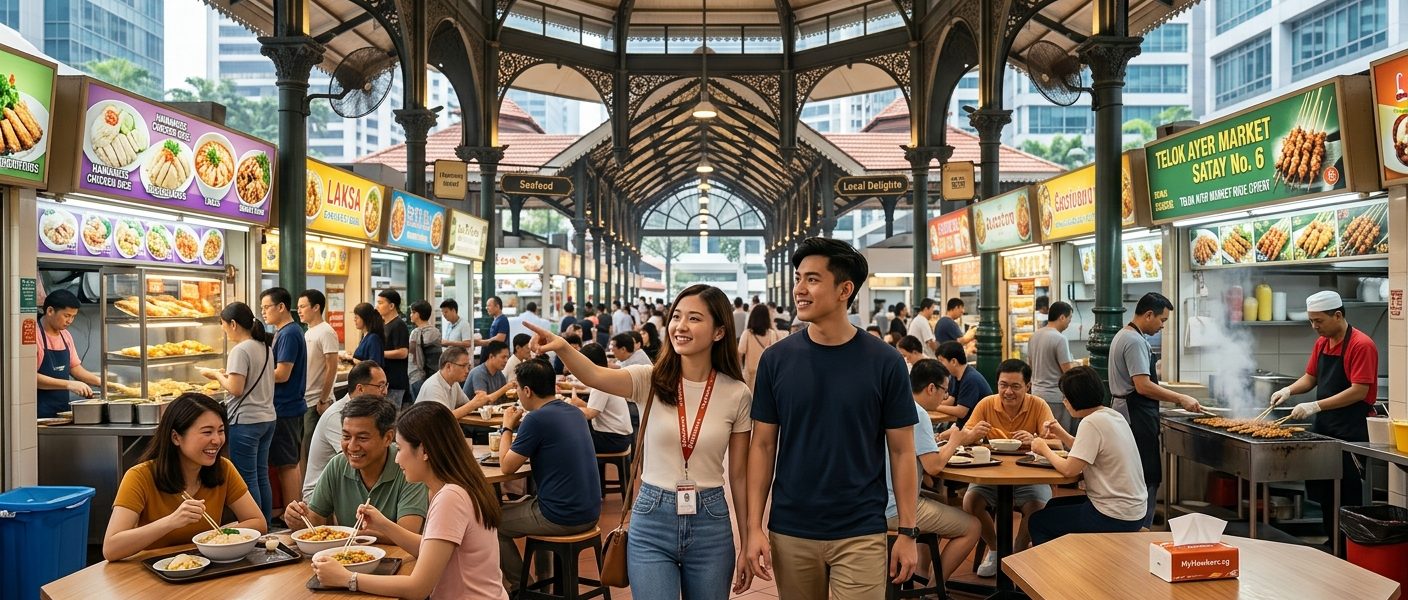
You’re standing outside a massive Victorian building with wrought iron columns and a clock tower, surrounded by office workers and tourists. The smell of satay smoke fills the air. Welcome to Lau Pa Sat, one of Singapore’s most iconic hawker centres, and possibly the most intimidating one for first timers.
Lau Pa Sat is a Victorian-era hawker centre in Singapore’s financial district serving everything from satay to chicken rice. First timers should arrive outside peak lunch hours, secure a seat before ordering, bring cash for most stalls, and try the famous satay street that opens after 7pm. The centre operates 24 hours but different stalls have varying schedules.
What Makes Lau Pa Sat Different From Other Hawker Centres
Lau Pa Sat isn’t your typical neighbourhood hawker centre. Built in 1894, this national monument sits right in the heart of Raffles Place, Singapore’s central business district.
The building itself is stunning. Cast iron filigree work. A distinctive octagonal structure. High ceilings that actually help with ventilation.
But here’s what matters more for your visit: Lau Pa Sat attracts a mixed crowd. Office workers grabbing lunch. Tourists following guidebooks. Late night satay hunters. Weekend families.
This mix creates a unique atmosphere but also means you need different strategies depending on when you visit.
The centre operates 24 hours, but individual stalls keep their own schedules. Some open at 6am for breakfast. Others don’t start until 10am. A few specialize in late night service.
Unlike smaller hawker centres such as Tiong Bahru Market, Lau Pa Sat doesn’t have a strong residential community around it. The vibe changes dramatically between weekday lunch rush and Sunday morning.
Getting There and Finding Your Way Around
Lau Pa Sat sits at 18 Raffles Quay, right next to Telok Ayer MRT station on the Downtown Line. Exit B leads you directly to the hawker centre within 2 minutes.
From Raffles Place MRT, it’s a 5 minute walk through the financial district. Follow the crowd during lunch hours and you’ll find it.
The building layout is straightforward. One main octagonal hall with food stalls arranged in rows. Seating fills the centre and wraps around the perimeter.
Here’s what confuses most first timers: Boon Tat Street, the road adjacent to Lau Pa Sat, transforms into Satay Street every evening. The road closes to traffic after 7pm, and satay stalls set up outdoor tables.
Many visitors don’t realize these are two separate dining areas. The main hawker centre inside. Satay Street outside. Both worth visiting, but at different times.
The Seat Hunting Strategy That Actually Works
Rule number one at Lau Pa Sat: secure your seat first, then order food.
This isn’t like air-conditioned hawker centres where you can leisurely browse. During peak hours (12pm to 2pm on weekdays), empty tables disappear in seconds.
Here’s the local method:
- Send one person to find and “chope” (reserve) a table using a packet of tissues, a phone, or any personal item
- Other members of your group go order from different stalls
- Everyone returns to the reserved table with their food
- Share and eat family style
If you’re traveling alone, look for tables with solo diners who might not mind sharing. Just ask politely. Most people say yes during peak hours when seats are scarce.
Avoid these common mistakes:
| What First Timers Do | What Locals Do |
|---|---|
| Order food first, then hunt for seats while carrying hot plates | Secure seats first, order later |
| Sit at large tables meant for groups when alone | Share tables or find appropriately sized seating |
| Leave belongings unattended for long periods | Keep valuables close, use tissues for short reservations only |
| Give up and leave when the centre looks full | Check the perimeter areas and second floor seating |
The second floor exists but many tourists miss it entirely. Fewer stalls up there, but more breathing room and available seating.
What to Order and Which Stalls Actually Deliver
Lau Pa Sat houses over 50 food stalls. Not all of them maintain consistent quality. Some trade on location rather than taste.
Here’s what’s genuinely worth eating:
Satay (Satay Street, after 7pm)
Multiple satay stalls compete on Boon Tat Street each evening. The quality varies minimally between them. Order a mix of chicken, mutton, and beef. Ten sticks minimum per person if you’re hungry. The peanut sauce and rice cakes come standard.
Hainanese Chicken Rice
Several stalls serve this Singapore staple. Look for the one with the longest queue of office workers, not tourists. Locals know which uncle has the most fragrant rice and tender chicken.
Char Kway Teow
The flat rice noodles fried with eggs, Chinese sausage, and cockles. A proper plate should arrive slightly charred (that’s the “char” part) with visible wok hei (breath of wok).
Laksa
The spicy coconut curry noodle soup. Different stalls offer varying spice levels. Ask for “less spicy” if you’re not used to Singapore heat levels.
Pro tip from a regular: The best stalls at Lau Pa Sat aren’t necessarily the most famous ones. Watch where the office workers in shirts and ties queue up during lunch. They eat here daily and know which hawkers maintain standards.
Avoid ordering these unless you see locals actively queuing:
- Western food (better options elsewhere in Singapore)
- Sushi or Japanese food (not what hawker centres do best)
- Anything labeled “fusion” (usually means neither cuisine done well)
The Money and Payment Situation You Need to Know
Most stalls at Lau Pa Sat still operate on cash. Bring Singapore dollars in small denominations. Twenty dollar notes and below work best.
Some newer or renovated stalls accept PayNow or credit cards, but don’t count on it. The satay vendors on Boon Tat Street especially prefer cash.
ATMs exist nearby in the surrounding office buildings, but you don’t want to leave your reserved seat to find one during peak hours.
Prices at Lau Pa Sat run slightly higher than neighbourhood hawker centres. You’re paying for the central location and the heritage building upkeep.
Expect to spend:
- $4 to $6 for chicken rice or noodle dishes
- $0.60 to $0.80 per satay stick
- $5 to $8 for laksa or curry dishes
- $2 to $3 for drinks
A filling meal for one person typically costs $8 to $12. Families of four should budget $40 to $50 for a comfortable meal with variety.
Timing Your Visit for the Best Experience
Lau Pa Sat operates 24 hours, but the experience changes dramatically by time of day.
Weekday Breakfast (7am to 9am)
Relatively calm. Office workers grabbing kaya toast and coffee before work. Good time for first timers who want to ease into the hawker centre experience without crowds.
Weekday Lunch (12pm to 2pm)
Absolute chaos. Every seat taken. Queues at popular stalls stretch 15 to 20 people deep. Only attempt this if you want the full frenetic energy of Singapore’s working culture.
Weekday Dinner (6pm to 8pm)
Moderate crowds. Satay Street starts setting up around 7pm. Better time for tourists who want to experience both the main centre and the outdoor satay scene.
Weekend Mornings (8am to 11am)
Much quieter than weekdays. Fewer stalls open, but plenty of seating. Families with young children prefer this timing.
Late Night (10pm to 2am)
Surprisingly active. Late shift workers. People leaving nearby bars. A different crowd entirely. Some stalls close, but the 24 hour operations keep going.
The absolute best timing for first timers: weekday around 3pm to 5pm, or weekend around 10am. You’ll find seats easily, most stalls are open, and you can take your time without feeling rushed.
The Satay Street Experience After Dark
Boon Tat Street transforms every evening into one of Singapore’s most atmospheric dining spots.
The road closes to vehicles. Satay vendors wheel out their grills. Smoke fills the air. Tables and plastic stools line both sides of the street.
This happens seven days a week, starting around 7pm and running until late (often past midnight on weekends).
Here’s how Satay Street works:
- Find a table at any of the satay stalls (they’re all quite similar)
- Order your satay by the stick (minimum 10 sticks usually)
- Choose your meat: chicken, mutton, beef, or a mix
- Order drinks separately (beer, soft drinks, fresh coconut)
- The satay arrives freshly grilled with peanut sauce and rice cakes
- Pay at the end of your meal
The atmosphere matters as much as the food here. Sitting outdoors in Singapore’s financial district, surrounded by colonial architecture and modern skyscrapers, eating satay grilled right in front of you.
Fair warning: it gets smoky. Your clothes will smell like satay smoke. That’s part of the experience.
Also, Satay Street prices run higher than satay elsewhere in Singapore. You’re paying for the location and atmosphere. If you want cheaper satay, head to neighbourhood centres. If you want the iconic experience, Satay Street delivers.
What First Timers Get Wrong About Hawker Centre Etiquette
Singapore hawker centres have unwritten rules that locals follow automatically. Break them and you’ll get annoyed looks.
Clearing your own table
This confuses many tourists. At Lau Pa Sat, you don’t need to clear your plates and bowls after eating. Cleaning staff handle this. Just leave your used dishes on the table when you’re done.
However, don’t leave excessive mess. Stack your plates reasonably. Don’t scatter trash everywhere.
Sharing tables
Perfectly acceptable and often necessary during peak hours. If you’re sitting at a table for four but only two people are eating, expect others to ask if the empty seats are available.
The polite response: “Can” or a nod. Don’t spread your belongings across empty chairs during busy periods.
Ordering from multiple stalls
Completely normal. Each person in your group can order from different stalls and bring everything back to one table. This is how locals experience variety.
Drinking water
Most stalls sell drinks, but if you bring your own water bottle, nobody minds. Just buy at least one drink per group to support the drink stall holders.
Taking photos
Fine for the food and the architecture. Be respectful about photographing other diners or stall workers without asking. The heritage building itself makes for great photos, especially the ceiling ironwork.
Beyond Lau Pa Sat for Your Hawker Centre Journey
Lau Pa Sat makes an excellent introduction to Singapore’s hawker culture, but it’s just the beginning.
After you’ve mastered the basics here, consider visiting Maxwell Food Centre for a more concentrated tourist-friendly experience, or branch out to lesser-known neighbourhood centres where prices drop and authenticity increases.
Each hawker centre has its own personality. Lau Pa Sat’s strength lies in its central location, historical architecture, and the Satay Street experience. Its weakness is higher prices and inconsistent quality at some stalls due to the transient tourist traffic.
For specific famous dishes, you might need to travel to other centres. The legendary chicken rice at Maxwell remains unmatched, for instance.
Your First Visit Checklist
Before you head to Lau Pa Sat, make sure you have:
- Cash in small denominations ($50 to $100 for a group)
- Tissues or a small item for reserving seats
- Comfortable clothes (it gets warm and smoky, especially at Satay Street)
- An appetite (don’t eat a big meal before coming)
- A flexible schedule (rushing through hawker food misses the point)
Know before you go:
- The centre never closes, but individual stalls have varying hours
- Satay Street only operates in the evenings after 7pm
- Peak lunch crowds (12pm to 2pm weekdays) can be overwhelming
- The second floor offers overflow seating that tourists often miss
- Most stalls prefer cash over cards
- You’re expected to share tables during busy periods
Making the Most of Singapore’s Hawker Heritage
Lau Pa Sat represents more than just cheap food in a pretty building. It’s part of Singapore’s UNESCO-recognized hawker culture, a living tradition where multiple generations of families have operated stalls, perfecting recipes, serving communities.
The hawker uncle who’s been grilling satay for 30 years. The auntie who still hand-makes her laksa paste every morning. These aren’t museum pieces. They’re working food businesses that happen to preserve culinary heritage.
When you visit Lau Pa Sat as a first timer, you’re participating in something that Singaporeans genuinely care about protecting. The government subsidizes hawker centre operations. Communities rally to save closing stalls. Food bloggers document recipes before they disappear.
Your visit matters. Tourism dollars help keep these centres viable. Your appreciation encourages the next generation to continue the tradition rather than abandoning it for office jobs.
So take your time. Try dishes you can’t pronounce. Ask the stall holder what they recommend. Sit with locals and observe how they eat. Accept that some meals will be better than others.
That’s the real Lau Pa Sat experience. Not just ticking off a guidebook recommendation, but understanding why Singapore fought to keep hawker culture alive when every economic incentive pushed toward air-conditioned food courts and chain restaurants.
Start at Lau Pa Sat. Learn the rhythms of hawker centre life. Then carry those skills to every other centre you visit during your time in Singapore.