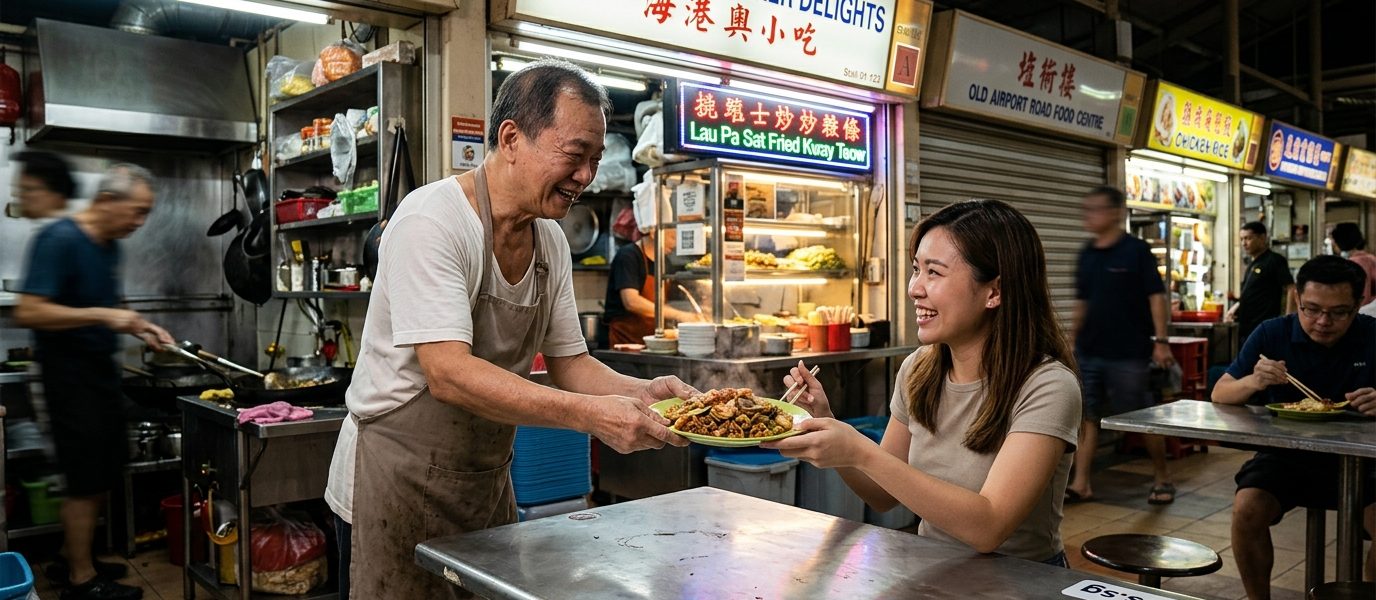
Walk up to any hawker stall in Singapore and you’ll see the same laminated menu everyone else sees. But watch the regulars closely. They’re ordering dishes that don’t appear anywhere on the signboard. They’re requesting modifications the aunty only makes for people who know to ask. They’re getting extra ingredients, special cooking methods, and combinations that transform standard hawker fare into something else entirely.
Singapore hawker secret menu items exist at nearly every stall, passed down through word of mouth between regulars and hawkers. These off-menu dishes, custom modifications, and insider combinations require knowing what to ask for and when. This guide reveals the hidden orders that separate tourists from locals, including exact phrases to use, timing considerations, and which stalls honour these requests.
Why Secret Menu Items Exist at Hawker Stalls
Hawker culture thrives on relationships. When you visit the same stall repeatedly, the uncle or aunty learns your preferences. They start making small adjustments without you asking. Over time, these modifications become standardized for their regular customers.
Some secret items stem from the hawker’s original training. An uncle who learned Teochew porridge from his father might still know how to make dishes his father served decades ago, even though they’re not on the current menu. He’ll prepare them for customers who remember or who ask the right way.
Other off-menu items exist because of ingredient availability. A chicken rice stall might have duck on certain days when their supplier has extra stock. Regulars know which days to come and what to request.
The economics matter too. Some preparations take longer or use premium ingredients. Hawkers can’t advertise them widely at standard prices, but they’ll make them for loyal customers who appreciate the extra effort.
How to Identify Stalls with Hidden Offerings
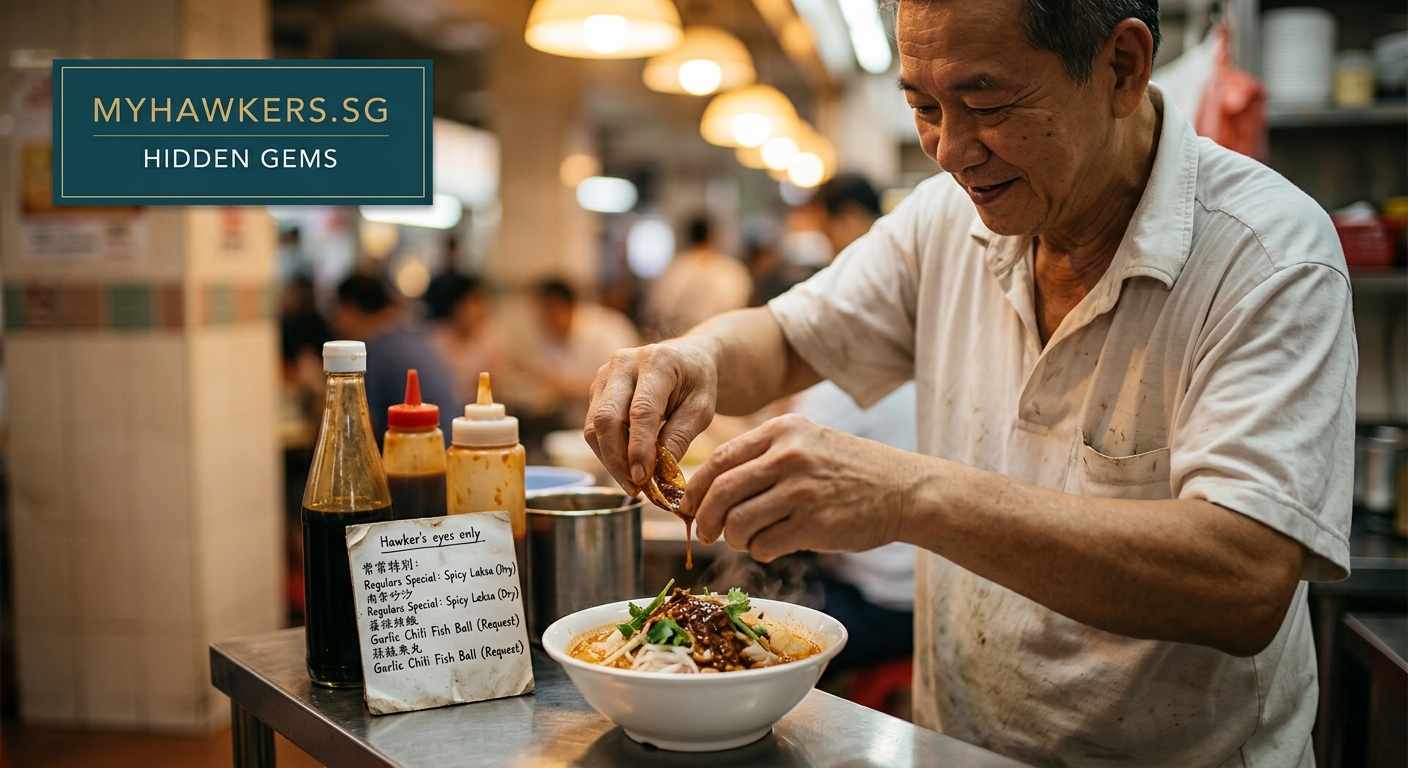
Not every hawker stall has secret menu items, but certain signs indicate you’re at one that does.
Look for these indicators:
- Customers ordering without looking at the menu
- The hawker asking “the usual?” before taking orders
- Visible ingredients that don’t appear in any listed dish
- Older customers who clearly have rapport with the stall owner
- Handwritten notes or faded menu items partially covered by newer signs
Stalls run by second or third generation hawkers often maintain recipes from earlier eras. Ask politely if they still make dishes their parents served. Many do, especially if you visit during off-peak hours when they have time for special requests.
Hidden neighbourhood gems typically have more secret menu items than tourist-heavy centres. The regular customer base creates the conditions for these insider offerings to develop.
The Most Common Secret Menu Categories
Off-Menu Combinations
Many hawkers will combine elements from different dishes if you know to ask. A char kway teow stall might add extra wok hei by cooking your portion separately at higher heat. A chicken rice stall could give you half white chicken, half roasted on the same plate.
At Tiong Bahru Market, regulars at the chwee kueh stall request extra preserved radish on the side. The stall doesn’t advertise this, but they’ll provide it in a small container for customers who ask.
Ingredient Upgrades
Standard menu prices reflect standard ingredients. But many stalls keep premium versions for customers willing to pay a bit more.
Bak chor mee stalls often have better quality minced meat they reserve for regulars. You won’t see it listed, but if you ask for “the good mince,” they’ll know what you mean and quote you a higher price.
Prawn mee stalls might have larger prawns available. The menu shows one price, but asking for “big prawns” or “tiger prawns” gets you an upgraded version at an additional cost.
Preparation Modifications
How a dish is cooked matters as much as what goes into it. These preparation secrets separate adequate hawker food from exceptional meals.
| Standard Preparation | Secret Modification | What to Say |
|---|---|---|
| Mixed char kway teow | Separate high-heat wok | “Can cook separate?” |
| Regular chilli on the side | Extra spicy house blend | “Got special chilli?” |
| Standard noodle texture | Springier or softer | “Harder” or “Softer” |
| Pre-mixed sauce | Sauce on the side | “Sauce separate” |
| Regular cooking time | Extra crispy or tender | “More crispy” or “More soft” |
At Maxwell Food Centre, several stalls will adjust cooking times if you specify. The Hainanese curry rice stall can make your pork chop extra crispy if you ask when ordering.
Portion Adjustments
The listed portion size serves most customers, but regulars know how to customize.
Asking for “less rice, more veg” at a mixed rice stall costs the same but gives you a better ratio. Requesting “extra gravy” at a lor mee stall usually comes free if you’re polite about it.
Some stalls offer “small plate” options not on the menu, perfect for trying multiple dishes. Others will do “large” versions with significantly more ingredients for a modest upcharge.
Specific Secret Menu Items Worth Trying
Chicken Rice Variations
Standard chicken rice comes with steamed chicken. But many stalls descended from Hainanese cooks know how to prepare “kampung chicken” using older, tougher birds that have more flavour. This takes longer to cook and costs more, so it’s not advertised.
Ask if they have kampung chicken available. If they do, specify whether you want it steamed or roasted. The texture differs from regular chicken, chewier but more aromatic.
Some chicken rice stalls make “chicken liver rice” using the organs they’d otherwise discard or sell separately. Request it if you see chicken liver displayed. They’ll chop it over rice with the regular sauces.
Hokkien Mee Extras
The standard Hokkien mee comes with prawns, squid, pork belly, and egg. Regulars know to ask for “extra lard” or “extra crispy lard,” which adds another dimension of flavour and texture.
Some stalls keep sotong (cuttlefish) separate from squid. If you prefer the firmer texture and stronger taste of sotong, ask specifically for it instead of the standard squid.
During certain seasons, stalls might have “prawn paste” made from prawn heads and shells. This isn’t listed but adds intense umami. Ask if they have “hae ko” (prawn paste) to add to your dish.
Laksa Modifications
Tourist-oriented laksa comes mild. Locals know to request “extra hae ko” (shrimp paste) and “more chilli” for the authentic punch.
Some laksa stalls will add “century egg” if you ask. This isn’t standard but works surprisingly well with the coconut broth. Others keep “fish cake” or “fried tofu puffs” that aren’t on the regular menu.
At certain stalls, asking for “dry laksa” gets you the noodles and ingredients with the gravy on the side, letting you control the soup-to-noodle ratio.
Bak Chor Mee Secrets
The menu shows “mee kia” or “mee pok” as noodle options. Regulars request “mee kia and mee pok mixed” for varied texture in one bowl.
Ask about “liver” or “kidney” additions. Many bak chor mee stalls prepare these organs for customers who want them but don’t list them prominently.
The “dry” version typically comes with sauce mixed in. Request “sauce on the side” to control how much you use and taste the noodles’ texture first.
Carrot Cake Insider Orders
Black or white carrot cake is the standard choice. Regulars order “half-half” or “mixed,” getting both versions in one portion.
Some stalls will make “extra crispy” carrot cake by frying it longer. This isn’t advertised because it takes more time and attention, but asking politely during non-peak hours often works.
Request “less oil” if you prefer a less greasy version. Most hawkers will accommodate this, especially if you’re a repeat customer.
The Etiquette of Ordering Secret Menu Items
Timing matters enormously. Never request special preparations during peak lunch or dinner rush. The hawker is managing dozens of orders and can’t give your modification proper attention.
Visit during off-peak hours, ideally between 10am-11:30am or 3pm-5pm. The hawker has time to chat and accommodate special requests.
A veteran hawker at Chomp Chomp once told me: “Regulars know when to ask for special things. They come early or late, never when we’re slammed. They also accept if I say no because we’re too busy. That’s respect.”
Always phrase requests as questions, never demands. Say “Can you make it less sweet?” instead of “Make it less sweet.” The difference in tone determines whether the hawker views you as entitled or respectful.
If the hawker says no, accept it gracefully. They might be too busy, out of ingredients, or simply not comfortable with that particular modification. Thank them anyway and order something standard.
Pay the asking price without negotiating. If they quote a higher price for premium ingredients or extra work, that’s fair. Regulars understand that better ingredients and special preparation deserve appropriate compensation.
How to Build Relationships That Unlock Secret Items
The best secret menu access comes from being a regular. This doesn’t mean visiting daily, but it does mean consistent patronage over time.
Follow this progression:
- Visit the same stall multiple times ordering standard items
- Make small talk when the hawker isn’t busy
- Ask about their background and how long they’ve been cooking
- Mention you’ve noticed regulars ordering differently
- Politely inquire if they do any special preparations
- Accept whatever answer they give without pushing
Some hawkers need to see you five or six times before they’ll offer modifications. Others are more open from the start. Reading the situation matters.
Bring friends and family once you’ve established rapport. Hawkers appreciate customers who spread word-of-mouth, especially if those new customers also become regulars.
Remember names if the hawker introduces themselves. Using someone’s name when greeting them shows respect and helps cement the relationship.
Regional Differences in Secret Menu Culture
Neighbourhood hawker centres have more secret menu items than central tourist locations. The regular customer base at places like Ang Mo Kio creates conditions for these offerings to flourish.
Older hawker centres tend to have more hidden menu items because the stalls have been there longer. Multi-generational businesses particularly maintain recipes and preparations from earlier eras.
Air-conditioned hawker centres sometimes have fewer secret items because the modernized setting attracts more casual diners than dedicated regulars. But exceptions exist.
Certain cuisines lend themselves more to secret menu items. Chinese stalls often have the most variations because of the cooking techniques involved. Malay and Indian stalls tend to have fewer off-menu items but more customization options for spice levels and accompaniments.
Common Mistakes When Ordering Off-Menu
Assuming every stall has secret items leads to disappointment. Some hawkers stick strictly to their menu, and that’s perfectly fine. Their standard offerings are excellent without modifications.
Asking for secret items loudly in front of other customers creates awkwardness. The hawker might feel pressured to offer the same to everyone, which defeats the purpose of insider offerings. Keep your voice low when making special requests.
Expecting the same modification every time doesn’t work. Ingredient availability changes. The hawker might be training a new helper. Some days they’re simply too busy. Flexibility matters.
Sharing secret menu knowledge on social media ruins it for everyone. Once something goes viral, the hawker gets overwhelmed with requests and often stops offering it entirely. Keep good discoveries to yourself or share only with close friends.
Trying to order secret items at famous touristy stalls rarely works. Places like Tian Tian Chicken Rice are too busy managing standard orders to accommodate special requests for non-regulars.
The Future of Secret Menu Culture
Younger generation hawkers have different relationships with customers than their parents did. Some embrace the secret menu tradition, while others prefer standardized offerings that scale better.
Rising costs and labour shortages make special preparations harder to maintain. Hawkers operating alone can’t spare time for modifications during busy periods.
Yet the culture persists at stalls only locals know about. These hidden gems continue serving regulars with personalized dishes that honour the original spirit of hawker food.
Social media presents a double-edged sword. It can destroy secret menu culture through over-exposure, but it also documents preparations that might otherwise be lost when older hawkers retire.
The key is balance. Appreciate secret menu items when you encounter them, but don’t exploit the privilege. Treat them as special occasions rather than entitlements.
What This Means for Your Next Hawker Visit
Singapore hawker secret menu items represent the deepest layer of our food culture. They’re not about exclusivity for its own sake. They’re about relationships, trust, and the understanding that great food requires both skill and time.
Start your journey at neighbourhood centres where you can become a regular. Order standard items first. Watch how others interact with the hawkers. Ask polite questions during quiet periods. Build relationships slowly.
The best secret menu items aren’t just about taste. They’re about connection to the people who cook for you and the heritage they carry forward. That’s worth more than any off-menu dish, no matter how delicious.
Next time you’re at a hawker centre, look beyond the signboard. The most memorable meals in Singapore often come from what you don’t see written down.