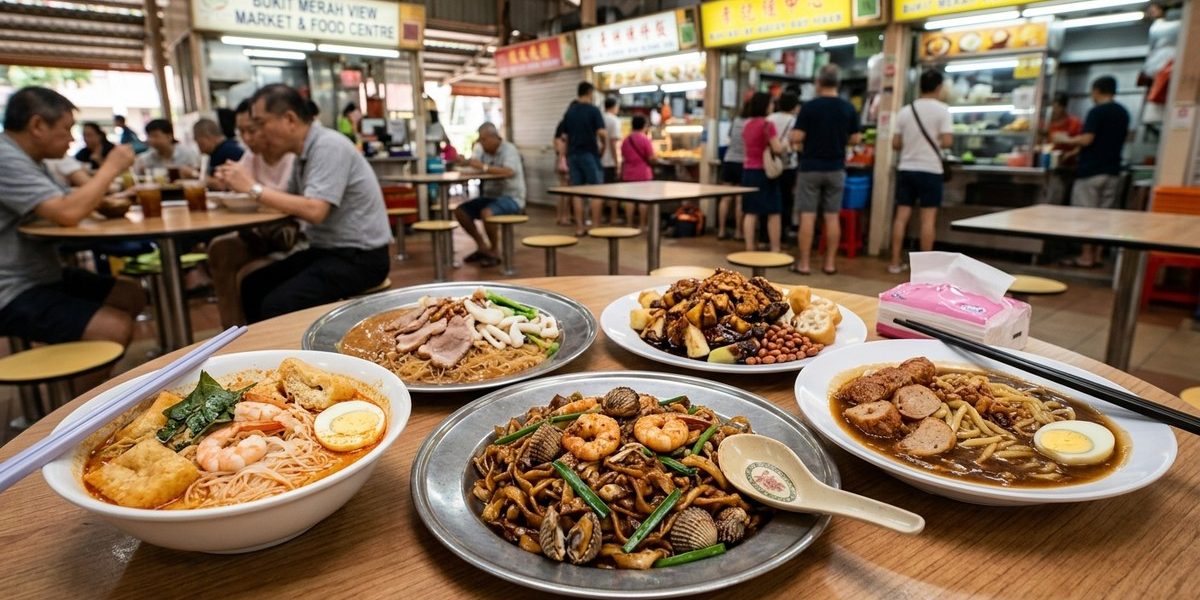
Most visitors to Singapore zip straight from Maxwell to Lau Pa Sat, chasing the same Instagram shots. Meanwhile, a different Singapore simmers quietly in the central south, just minutes from the city. Bukit Merah, which means “red hill” in Malay, holds some of the island’s most honest hawker food. You will find stalls where the uncle making your noodles has been at it for four decades, where the recipe has not changed since 1985, and where the queue is made up entirely of retirees who know where value hides.
If you want to taste the real Singapore, the one that does not appear on glossy travel blog lists, you need to walk the Bukit Merah food trail. Let us show you how to do it right.
Bukit Merah offers an authentic hawker experience far from tourist crowds. This guide walks you through planning a self-guided food trail, spotting real hidden gems, understanding the heritage behind the wok, and knowing what separates a genuine neighbourhood stall from a hype machine. Use the practical checklist inside, then head straight to our curated list of five specific stalls you cannot miss.
Why Bukit Merah Deserves a Spot on Your Food Radar
Bukit Merah sits in a sweet spot. It is close enough to the city centre to be convenient, yet far enough to escape the Maxwell-style queues. The area covers several hawker centres: Bukit Merah View Market & Food Centre, Alexandra Village Food Centre, and the newer but underrated Bukit Merah Central Food Centre. Each one has a distinct personality.
Bukit Merah View is the old soul. Built in the 1970s, it houses stalls that have been feeding the same families for generations. Alexandra Village, just a ten minute walk away, leans more industrial and serves the lunch crowd from the nearby offices and workshops. Bukit Merah Central is smaller but holds a few surprises.
What makes this area special is the mix of traditional Hainanese, Teochew, and Cantonese influences, combined with a healthy dose of Malay and Indian Muslim fare. You can go from a bowl of Teochew fish soup to a plate of nasi lemak to a slice of traditional kueh in the span of three hundred metres.
The hawkers here do not chase virality. They chase taste. That is exactly why you should come.
Common Mistakes When Exploring a New Food Area
Even experienced food hunters make errors that cost them time and flavour. Here is a table of common pitfalls versus what the pros do:
| Mistake | What local experts do instead |
|---|---|
| Relying only on online reviews (many are paid) | Look for stalls with handwritten signs and aunties queuing patiently |
| Visiting at peak lunch hour (12pm 1pm) | Arrive at 11am or 2.30pm to avoid the worst queues |
| Ordering the same famous dish at every stall | Ask the stallholder what they are known for, then order that |
| Chope-ing a table before buying food | Buy food first, then find a seat, or go with a friend to split tasks |
| Paying with a $50 note for a $3 meal | Bring small change, especially $2 and $5 notes |
| Leaving without trying desserts | Hawker kueh and cheng tng are often the best part of a meal |
Get these basics right, and your trail will be smoother and more rewarding.
How to Plan Your Own Bukit Merah Food Trail
A successful food trail needs structure. Here is a step by step method used by our team.
-
Choose your starting point. The most logical hub is Bukit Merah View Market & Food Centre. It has the highest concentration of heritage stalls and is closest to the MRT. Alight at Tiong Bahru station (it is a 15 minute walk) or take bus 5, 16, or 57 from town.
-
Map your stops by dish, not by distance. Decide what you want to eat first. If you crave fish soup, hit that stall early because the best ones sell out by 1pm. If you want traditional kueh, visit after 10am when the fresh batches are ready.
-
Share everything. The best strategy is to go in a group of two or three. Order one dish per person and share. That way you can try five or six different stalls without getting stuffed after two.
-
Stagger your timing. Eat a light savoury dish first, then walk around the market to digest, then come back for a second round. Use the walk to explore the wet market section where you often find hidden snacks like freshly made popiah.
-
Keep a small notebook or phone note. Jot down the stall number and what you ordered. It helps when you want to recommend later or remember what to avoid.
-
Be flexible. If a stall is closed (many hawkers take unpredictable off days), have a backup in mind. Know at least two stalls for each dish.
-
Take photos of the stall sign and the dish. Good documentation helps us preserve hawker culture and helps you share your finds with others.
Dishes You Should Keep an Eye Out For
Not every hawker centre has the same strengths. In Bukit Merah, these are the dishes that consistently shine:
- Teochew fish soup. The broth is clear, packed with ginger and preserved vegetables. Look for stalls with a long queue of elderly customers.
- Hainanese chicken rice. Some of the most underrated versions in Singapore hide here. The rice is fragrant with pandan and ginger.
- Char kway teow. A few stalls still use charcoal fire. The wok hei is unmistakable.
- Traditional kueh. Kueh kosui, ondeh ondeh, kueh lapis. These are dying arts. You can read more about the vanishing art of traditional kueh-making.
- Nasi lemak. The coconut rice is steamed in individual banana leaf packets. The sambal is usually made in house.
- Bak chor mee. Vinegary, spicy, with minced pork and liver. Some stalls have been refining their mix for decades.
- Rojak. The black shrimp paste sauce should be thick and pungent, not watery.
The Heritage Behind the Wok
Bukit Merah is not just about eating. It is about meeting the people who feed the neighbourhood. Many hawkers here started as young apprentices and are now in their seventies. They have seen the area transform from kampungs to HDB blocks.
“When I first opened this stall in 1985, the market was surrounded by attap houses. Now everything is new, but I still use the same granite mortar for my rempah. My customers tell me that my curry tastes exactly like their grandmother’s. That is the best compliment.”
* Third generation hawker at Bukit Merah View. Name withheld to avoid turning his quiet corner into a viral queue.
That spirit of continuity is what makes the Bukit Merah food trail special. You are not just eating a bowl of lor mee. You are tasting a lineage. If you want to understand more about how these recipes survive, read our article on the secret recipes they guard with their lives.
Many of these stalls are also family run. The father handles the wok, the mother takes orders, and the children help with cleaning. Some younger hawkers are now taking over, but they stick to the traditional methods. Our piece on three generations behind the wok dives deeper into this family dynamic.
How to Tell a True Hidden Gem from a Tourist Trap
Not every stall with a long queue is worth your time. Here is a simple checklist:
| True hidden gem | Tourist trap or overhyped stall |
|---|---|
| Handwritten menu board with faded prices | Brand new acrylic menu with high prices |
| Only two or three dishes on the menu | Menu with twenty plus items including pasta |
| Stallholder looks busy, focused, slightly grumpy | Stallholder is smiling for selfies with customers |
| No social media presence or only a few posts | Active Instagram with influencer tags |
| Queue moves fast because locals know the routine | Queue moves slowly because tourists are taking photos |
| The stall closes when it sells out, often by 1pm or 2pm | Stays open all day and has food sitting under heat lamps |
Trust your nose too. Good hawker food smells like garlic, shallots, and caramelised soy sauce. If you smell nothing, walk away.
How to Support Hawker Culture While You Eat
Hawker culture was inscribed as a UNESCO intangible cultural heritage in 2020. But it needs active support to survive. Here are practical ways you can help:
- Pay with exact change. Many stallholders are elderly and prefer not to handle digital payments. Small notes and coins save them time.
- Do not chope a seat for ages. If you are eating alone, be mindful. Share tables if the centre is crowded.
- Speak up and give feedback politely. If a dish is good, tell them. If it is too salty, mention it nicely. Hawkers value honest customers.
- Return to the same stall. Building a relationship with a hawker means they remember your order and your preferences.
- Share your finds responsibly. Do not post specific stall names on massive Facebook groups that will overwhelm them. Instead, direct friends to the food trail approach, so they can discover on their own.
Your Next Stop on the Trail
By now you have a solid foundation for exploring the Bukit Merah food trail. You know where to go, what to look for, and how to behave respectfully. But you need a concrete list of stalls to target first.
That is exactly what we have prepared in our companion article: 5 hidden gems on the Bukit Merah food trail you must try in 2026. It profiles five specific stalls that exemplify everything we talked about here. Each one has a story, a legacy, and a dish that will stay with you long after you leave Singapore.
Bukit Merah is waiting. The kopitiam chairs are stacked, the fish soup broth is simmering, and the uncle at the wok is about to start his morning shift. Go find him, order with a smile, and taste what real neighbourhood Singapore sounds like. You will not regret it.