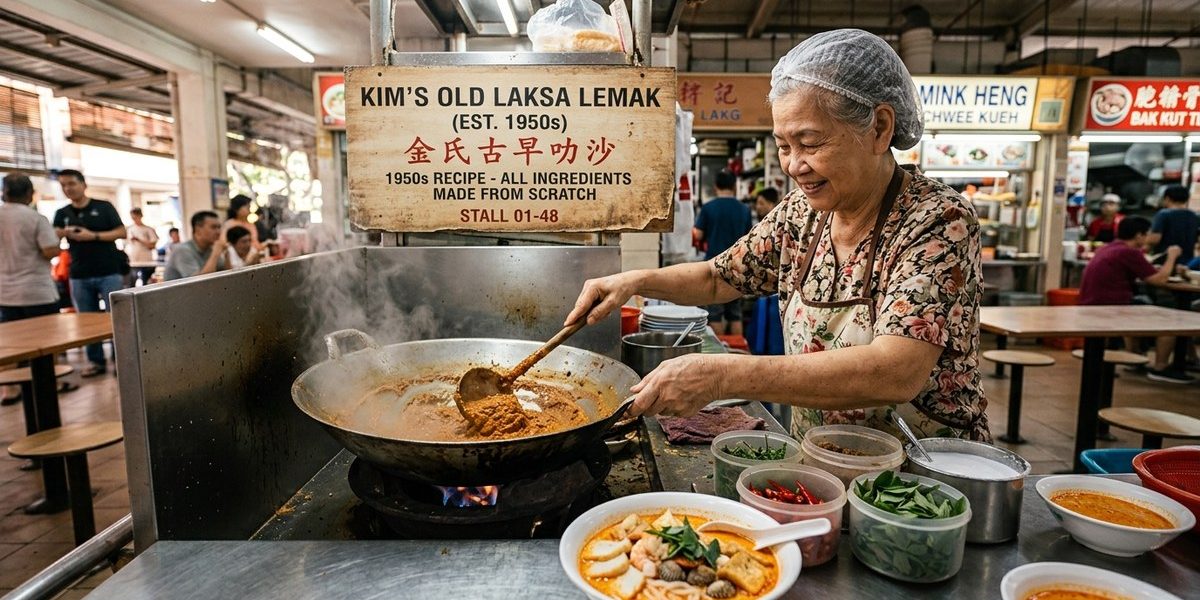
The queue snakes around Roxy Square well before the shutters go up. Locals in shorts and slippers stand alongside tourists clutching maps. They are all waiting for the same thing: a bowl of Janggut Laksa. Not just any laksa. This is the last surviving bowl of laksa lemak in Singapore made entirely from scratch using a recipe that dates back to the 1950s. In a city where progress often means convenience, Janggut Laksa is a delicious act of defiance.
Janggut Laksa at Roxy Square is the only stall in Singapore that still prepares laksa lemak using the original 1950s recipe. This means painstakingly grinding fresh rempah, simmering real coconut milk for hours, and serving it with whole sprigs of laksa leaf. Every spoonful is a direct link to Singapore’s Peranakan culinary past. No shortcuts. No instant paste. Just pure, unadulterated heritage.
A Legacy Written in Coconut Milk
The story of Janggut Laksa is the story of Singapore itself. It began in the 1950s along East Coast Road, long before the condos and the expressways. The stall was founded by a gentleman whose trademark beard earned him the nickname “Janggut” (beard in Malay). For decades, it was a humble shophouse operation, a beacon for anyone craving a rich, aromatic bowl of laksa lemak.
The move to Roxy Square in the 2000s was a turning point. Many thought the magic would be lost. But the family behind Janggut Laksa held onto the recipe. They refused to compromise. While other stalls switched to factory-made pastes to cut costs and time, Janggut Laksa kept grinding. And in 2026, that commitment to the 1950s way of cooking makes them an absolute rarity.
The original recipe was passed down through the family, surviving urbanization and the demanding pace of modern food service. Today, the stall is run by the second generation. They wake up before dawn to start the rempah. They taste every batch. They reject shortcuts. This level of dedication is almost unheard of in Singapore’s modern hawker scene, where speed often trumps tradition.
What Makes a 1950s Laksa Lemak So Different
The difference between Janggut Laksa and most laksa stalls in Singapore today comes down to one word: process. Modern laksa often relies on pre-packaged rempah. You can taste the uniformity. It lacks depth. The 1950s method is brutal, hot, and slow.
The Rempah: Fresh shallots, garlic, galangal, turmeric, lemongrass, candlenuts, and dried chilies are ground manually. Some days they use a machine to help with the volume, but the spirit of the recipe remains. The paste is slow roasted until the oil separates. This is where the flavour builds.
The Broth: Real coconut milk is used. Not the diluted, stabilised carton stuff. It is simmered gently to prevent it from splitting. The heat is low. The time investment is high. The result is a gravy that is thick, creamy, and capable of clinging to every strand of thick bee hoon.
The Laksa Leaf: Also known as laksa mint or violet basil. At Janggut Laksa, they serve it whole. Not chopped. This is the traditional Peranakan way. When you bite into a whole leaf, you get a burst of minty, peppery freshness that cuts through the rich coconut gravy. It is an integral part of the experience.
Let us compare the traditional method against the modern shortcuts you find everywhere else:
| Aspect | 1950s Janggut Laksa Method | Common Modern Laksa Method |
|---|---|---|
| Spice Paste (Rempah) | Freshly ground daily, slow roasted | Pre-packed, factory processed pastes |
| Coconut Milk | Fresh cow or coconut milk, high fat | UHT processed, low fat, stabilised |
| Key Protein | Fresh prawns, fish cake, cockles | Frozen or pre-boiled ingredients |
| Laksa Leaf (Violet Basil) | Whole sprigs on top | Chopped, sometimes omitted entirely |
| Broth Simmering | Minimum 4 to 6 hours | 1 hour or less |
| Overall Flavor Profile | Rich, layered, deeply savoury | One-dimensional, sweet, watery |
This table shows exactly why Janggut Laksa is worth the hype. You are paying for time and skill, not convenience.
How to Eat Janggut Laksa in 2026
Visiting Janggut Laksa is a rite of passage. If it is your first time, here is how to make the most of it.
Before you go, keep these tips in mind:
- Bring cash. Many heritage stalls still operate on a cash only basis. Do not get caught off guard at the counter.
- Queue patiently. The line moves slower than a normal stall because each bowl is prepared with care. There are no assembly lines here.
- Look for the laksa leaf. Your bowl should arrive with whole green leaves floating on top. That is the sign of authenticity.
- Always add sambal. The house sambal belacan is a punch of umami. Start with a small spoonful and adjust to your spice tolerance.
- Eat it immediately. Laksa lemak does not travel well. The gravy will soak into the bee hoon and lose its silky texture. Eat it at the hawker centre.
Here is the step by step game plan for a successful visit:
- Check the hours. They typically open for lunch and close when the broth runs out. This is often by late afternoon, sometimes earlier.
- Arrive before 11:30 AM. This gives you a strong chance to beat the lunch rush. Weekdays are significantly less crowded than weekends.
- Order at the counter. There is no table service. State your size clearly. Small is enough for a light meal. Large is for the serious eaters.
- Find a seat first. Have a friend chope the table while you queue. This is classic Singapore style.
- Collect and enjoy. Carry your tray to the table, snap a photo for memories, but do not wait too long. The broth waits for no one.
The Taste of Heritage
What does it actually taste like? It is not a sharp, asam curry. It is laksa lemak. The star is the coconut milk. It coats your lips. The spice hits your throat gently, not harshly. The whole laksa leaf provides that burst of minty freshness when you bite into it. The thick bee hoon soaks up the gravy perfectly.
I spoke to a regular who has been eating here since the 1980s. He told me:
“My grandmother brought me here when I was a boy. Now I bring my grandchildren. The taste has never changed. In this country, that is a miracle. When I eat this laksa, I remember what Singapore used to taste like. It is a connection to my childhood that no other food can give me.”
This is the power of a recipe that has not been altered for profit. It is a time capsule.
Why We Must Protect This Heritage
Janggut Laksa is more than just a meal. It is a living archive of Singapore’s culinary history. As hawkers retire and younger generations balk at the demanding hours, the 1950s recipe is at risk of disappearing forever.
This is why supporting stalls like Janggut Laksa is vital. Every bowl purchased is a vote for heritage over convenience. It encourages the next generation to see the value in traditional food crafting.
The hawker trade is evolving. Newer stalls often focus on Instagram appeal and viral gimmicks. But the backbone of our food culture comes from places like this. Places that do not compromise. If this story speaks to you, you might also appreciate learning about Uncovering Singapore’s Heritage Hawker Recipes Passed Down Through Generations or reading about The Last Traditional Popiah Stall in Katong That Locals Guard Jealously. These are the stalls that define our nation’s taste.
A Bowl of History at Roxy Square
Janggut Laksa Singapore is a bucket-list experience for anyone who claims to love food. It is not just about ticking off a famous name. It is about tasting a piece of history that very few places on this island can still offer.
Yes, the queue is long. Yes, the seating is cramped. But the moment that bowl hits your table, the fragrant steam rising up to meet your face, you will understand why a 1950s recipe is still worth the wait in 2026. Go on a weekday. Go with an empty stomach. And prepare to taste the real Singapore.