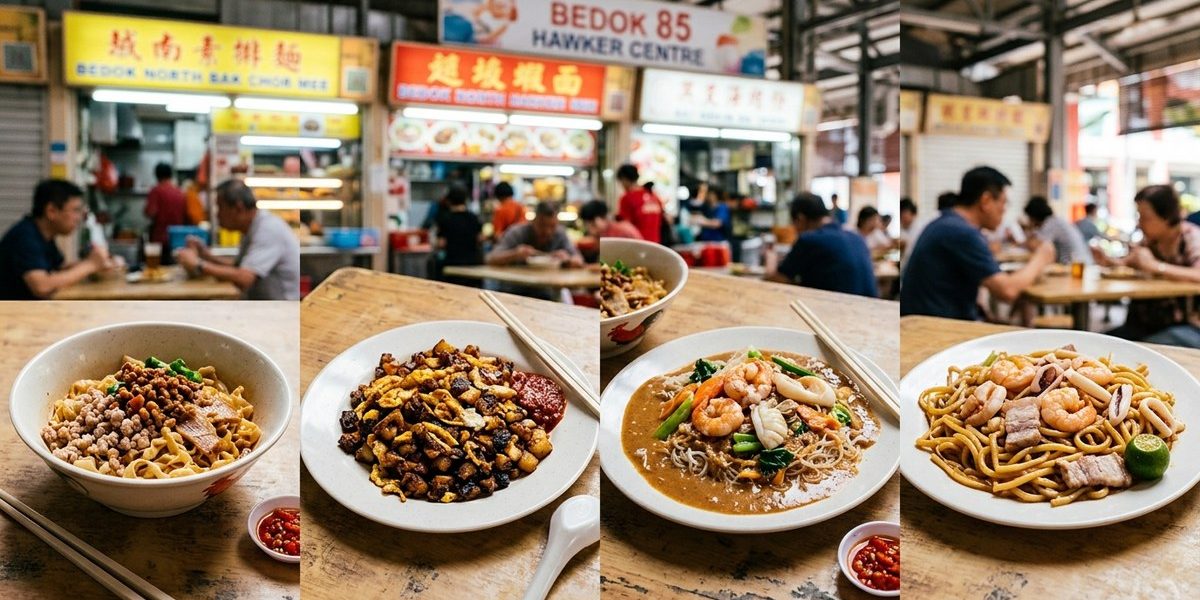
Bedok North is the kind of neighbourhood that doesn’t shout about its food. There is no Michelin buzz here, no long queues of tourists with cameras. But the locals know. They have been quietly eating at the same stalls for decades, passing down orders like family heirlooms. If you want to taste Singapore’s hawker heritage without the crowds, this is where you head. And the best way to do it is on a 4-stop trail that takes you from a fiery wok of noodles to a cool bowl of traditional desserts. Ready to eat your way through one of the East’s most underrated food enclaves? Let us show you the stops.
This Bedok North hawker trail packs four unforgettable stops into one afternoon. You will taste a legendary bak chor mee that draws queues before lunch, a crispy oyster omelette that flips tradition on its head, a charcoal grilled satay that uses a secret marinade, and a family run kueh stall that has been operating for over 40 years. Each stop teaches you something about Singapore’s hawker soul.
Why Bedok North Deserves Your Attention
Bedok North sits in the heart of the East, surrounded by newer estates and shopping malls. But its hawker centres tell a different story. The two main food hubs here are Bedok North Market and Food Centre, and the nearby Block 85 Bedok North Street 4 hawker centre. Together they house stalls that have been feeding generations of residents since the 1970s.
What makes this trail special is the absence of hype. You will not find Instagram influencers blocking the walkway. You will find uncles and aunties who have been frying, grilling, and steaming the same dishes for decades. Their recipes are passed down through memory, not written in books. And the flavours? They are honest, bold, and deeply satisfying.
This is also a place where hawker heritage is still alive. Many of the stallholders learned from their parents or grandparents. They keep traditional techniques alive like using charcoal fire, grinding spices by hand, and making kuih from scratch every morning. Visiting these stalls is like stepping into a living museum of Singapore’s food history.
The 4-Stop Bedok North Hawker Trail
The trail is designed for one afternoon. You can walk between stops in under 10 minutes, or drive from one hawker centre to another. Here is the route.
-
Stop 1: Bak Chor Mee at Bedok North Market
Start at the bustling Bedok North Market and Food Centre. Head to stall 01 29, a bak chor mee stall that has been operating since the 1980s. The owner, an uncle in his 60s, still mixes his own vinegar and chilli sauce. The noodles are springy, the minced pork is seasoned perfectly, and the soup comes with crunchy pig innards. Go before 11am, because the queue builds up fast and they often sell out by 1pm. Price: $4 to $6. -
Stop 2: Oyster Omelette at the same centre
A few stalls down, you will find a famous oyster omelette that uses a surprisingly light batter. The stallholder fries each batch fresh, using fresh eggs and plump oysters from the wet market downstairs. The texture is crisp on the edges, soft in the middle. Ask for extra chilli if you want a kick. Price: $5 to $7. -
Stop 3: Charcoal Satay at Block 85
Walk over to Block 85 Bedok North Street 4. Look for the satay stall that has a charcoal grill set up right in front. The skewers are marinated in a secret blend of turmeric, lemongrass, and coconut milk. The grill gives them a smoky char that gas grills cannot replicate. Order a mix of chicken and mutton, and dip into the thick peanut sauce that has just the right amount of sweetness. Price: 60 cents per stick, min 10 sticks. -
Stop 4: Traditional Kueh at a family run stall
For dessert, head back to Bedok North Market or look for a small stall near the entrance. A grandmother and her daughter run this kueh stall. They make about 10 varieties daily, including ondeh ondeh with fresh pandan juice, kueh kosui with grated coconut, and ang ku kueh with mung bean filling. Everything is steamed in small batches. Go early, because the best ones like the ondeh ondeh are gone by 3pm. Price: 3 pieces for $2.
Common Mistakes on the Bedok North Trail and Pro Tips
I have seen first timers make the same mistakes over and over. Here is a table that shows what to avoid and what to do instead.
| Common Mistake | Pro Tip |
|---|---|
| Arriving at lunchtime expecting short queues | Go at 10.30am for the noodle stalls, 2pm for the satay |
| Ordering only one dish at each stop | Share with a friend so you can try more items |
| Paying with a $50 note | Bring smaller denominations; many stalls prefer exact change |
| Sitting at a table without chopeing | Chope with a packet of tissue or a drink order first |
| Ignoring the specials board | Some stalls have off-menu items like fried chicken skin or homemade sambal |
“I have been eating at this market since I was a kid. The bak chor mee stall owner used to be my neighbour. His father taught him everything. The secret is in the vinegar blend. He never tells anyone the exact recipe.”
A regular at Bedok North Market, who asked to remain anonymous
Making the Most of Your Hawker Trail
Here are a few practical tips that will make your trail smoother and more enjoyable.
- Timing matters. The best time to start is 10.30am. You avoid the lunch rush and get the freshest batches. By 12pm, the queues at Stop 1 can be 20 people long.
- Bring cash. Most stalls do not accept cards or PayNow. The market does have an ATM, but it runs out on weekends.
- Chope like a local. When you find a table, place a packet of tissues or a drink on it. This tells others that the seat is taken. Do not leave valuables behind though.
- Drink lots of water. Hawker food is flavourful but can be heavy. The market has a drinks stall that sells sugarcane juice and iced lemon tea.
- Talk to the stallholders. Many of them love sharing their stories. Ask them how long they have been cooking, or what their most popular dish is. You will often get a free tasting or a generous portion.
If you are a tourist, consider visiting on a weekday. Weekends can be packed, especially during lunch hours. But even on a busy day, the energy is part of the experience.
The Heritage Behind the Food
Every stall on this trail carries a piece of Singapore’s hawker history. The bak chor mee recipe, for example, traces back to Teochew immigrants who settled in the East after World War II. The oyster omelette is a Fujian classic that evolved in Singapore with the addition of fresh local oysters and a crispier batter. The satay grill method is unchanged from the pushcart days of the 1960s. And the kueh stall represents a vanishing art form. Fewer young hawkers are learning to make traditional kuih from scratch.
These stalls are not just food outlets. They are living archives. They preserve techniques, flavours, and community bonds that are at risk of disappearing. By eating at these stalls, you are supporting a culture that the government officially recognised as a UNESCO Intangible Cultural Heritage in 2020. That is something to be proud of.
If you want to understand more about the people behind the wok, check out this article about three generations behind the wok. It tells the story of another family run stall that has been operating for over 50 years. Their dedication mirrors what you see in Bedok North.
Your Bedok North Hawker Trail Checklist
Before you head out, here is a simple checklist to ensure you do not miss anything.
- Wear comfortable shoes. You will be walking between centres.
- Bring a reusable bag to carry takeaway containers.
- Have a wet tissue pack ready for sticky fingers.
- Download a map of the area offline, just in case.
- Check the weather forecast. Some stalls are in open air sections.
- Bring an appetite. Each stop is generous.
Why This Trail Matters for Hawker Preservation
Hawker culture is under pressure. Rising rental costs, an ageing workforce, and changing tastes are making it harder for traditional stalls to survive. Trails like this one help by driving foot traffic and awareness. When visitors come, they spend money, they take photos, they share on social media. That exposure can make a difference for a stall that might otherwise close.
But more than that, trails create stories. When you tell a friend about the satay uncle who grills over charcoal, you are passing on a piece of Singapore’s identity. You become part of the preservation effort without even trying.
If you want to dive deeper into how hawker culture evolved, read this piece about the 1960s hawker relocation programme. It explains how Singapore moved from street pushcarts to the organised centres we know today.
Start Your Bedok North Food Adventure Today
The best time to visit is this weekend. Pick a sunny Saturday morning, grab a friend, and follow the 4-stop trail. Order the bak chor mee with extra vinegar. Share the satay with your companion. Save room for the ondeh ondeh. And when you are done, take a walk around the estate. You might discover a hidden coffee shop or a provision store that sells homemade pickles.
Bedok North may not be as famous as Tiong Bahru or Maxwell, but that is exactly why it is worth your time. The food here is not designed for tourists. It is made for the people who live here. And that authenticity is something you cannot find on a postcard.
So go. Eat. Talk to the uncles. Try something you have never tried before. And when you come back, tell us which stop became your favourite. That is how hawker culture stays alive. One bite at a time.