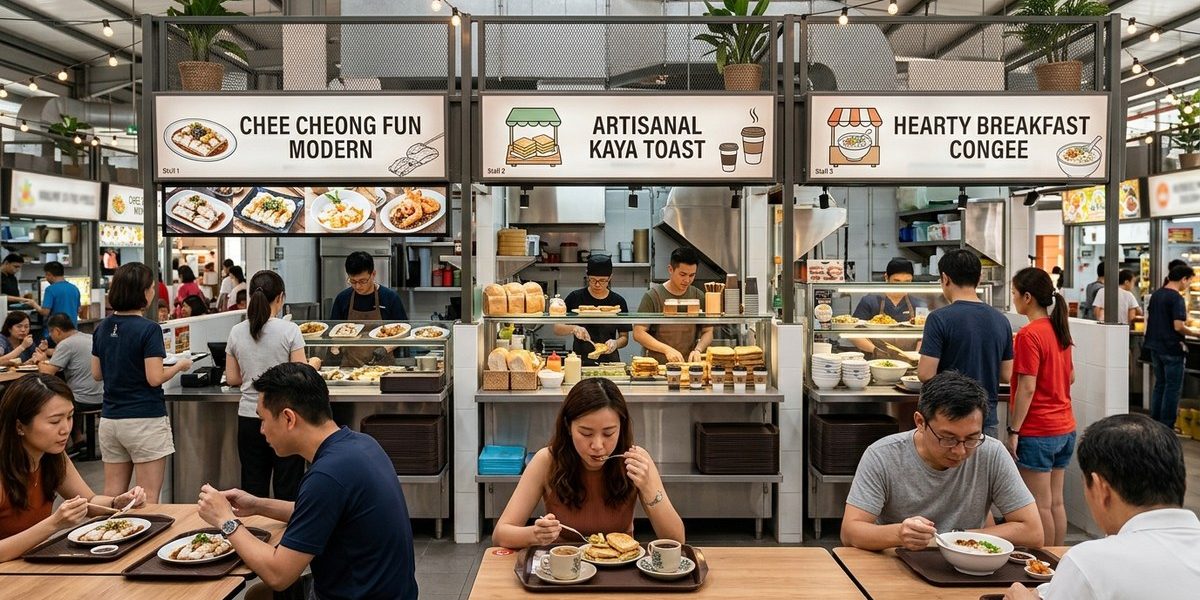
Singapore’s breakfast table is changing. For decades, the morning meal followed a comforting rhythm: kopi at the coffeeshop, kaya toast with runny eggs, or a steaming bowl of fishball noodles from the uncle who never changes his recipe. But 2026 has brought something different. A wave of new hawker stalls is rethinking what breakfast means in our little red dot. They are not just serving food. They are telling stories, blending traditions, and creating dishes that make you stop scrolling Instagram to pay attention.
These three new hawker stalls do not simply serve breakfast. They reinvent it. Each one takes a classic Singaporean morning dish and turns it into something fresh, something unexpected, yet something that still tastes like home. If you think you have tried it all before, think again. Let us look at the stalls that are making Singaporeans wake up earlier.
Singapore’s breakfast scene is getting a refresh in 2026, led by three new hawker stalls that blend heritage with modern techniques. From a reimagined chwee kueh that uses fermented black beans in a surprising way, to a nasi lemak that swaps coconut rice for black glutinous rice, and a kopitiam toast that experiments with gula melaka butter. These stalls prove that tradition can evolve without losing its soul. Expect queues, but also expect joy.
Stall One: The Chwee Kueh That Broke the Mould
Chwee kueh has always been a humble breakfast. Steamed rice cakes topped with preserved radish. Simple. Reliable. But at the new stall called “Kueh Calling” inside the revamped Bedok South Market and Food Centre, the owner Jason Tan has turned this Teochew classic into a canvas for something bolder.
Jason, a 34-year-old former software engineer, spent two years in his mother’s kitchen testing over 60 variations before opening his stall in early 2026. His signature version uses a house-made chai poh (preserved radish) that is caramelised with palm sugar and a hint of lemongrass. He then adds a dollop of homemade sambal belacan that he ferments for three days. The result? A chwee kueh that is sweet, savoury, and gently spicy. It still tastes familiar, but it sings a new tune.
“I wanted to keep the texture of the rice cake exactly like my grandmother made it,” Jason told us during a morning rush. “But the topping? That needed a conversation with modern palates.”
His stall opens at 6.30am and usually sells out by 9.30am. Regulars include retirees who remember the old school version and young office workers from the nearby business park who discovered Kueh Calling on TikTok.
What Makes It Worth the Queue
- The rice cakes are steamed fresh in small batches every hour.
- He uses only premium Teochew chai poh from a third-generation supplier in Geylang.
- The sambal is vegan and uses no belacan for those who avoid shrimp paste. Yes, you read that right. He makes two versions.
- Prices start at $3.50 for six pieces, still cheaper than a Starbucks breakfast sandwich.
“My grandmother used to say, if you respect the base, you can play with the top. I play a lot, but I never disrespect the kueh.” — Jason Tan, owner of Kueh Calling
For more stories about heritage hawkers who have passed down their recipes, check out this feature on traditional chwee kueh masters.
Stall Two: Nasi Lemak’s Dark Horse
Nasi lemak is Singapore’s unofficial national breakfast. Coconut rice, fried chicken wing, sambal, ikan bilis, peanuts, cucumber. You know the drill. But a stall called “Gelap (Black Rice) Lemak” in Tampines Round Market is turning that script inside out. The owner, 27-year-old Fatimah Rahmat, uses black glutinous rice instead of the usual white jasmine rice. She steams it with coconut milk and pandan, which gives it a deep purple hue and a chewy, almost sticky texture that is closer to a traditional pulut hitam dessert than a savoury rice.
“I grew up eating pulut hitam for breakfast at my grandmother’s house in Kampong Glam,” Fatimah said. “One day I thought, why not treat it like nasi lemak? The coconut milk is already there. I just needed to add the soul.”
Her “soul” includes a sambal made with dried shrimp and tamarind that is cooked down for four hours, a fried chicken wing marinated in turmeric and lemongrass, and a side of keropok lekor from a Terengganu supplier. The combination sounds strange. It tastes like the best kind of surprise.
Fatimah opened Gelap in March 2026. By April, she had a line stretching past the drink stall every morning. Her nasi lemak set goes for $5.50 and includes a boiled egg half that she seasons with a pinch of MSG and white pepper. She does not apologise for the MSG. “It is a flavour enhancer, not a sin,” she says with a laugh.
The Nasi Lemak Cheat Sheet
If you are new to her stall, here is how to order like a regular:
- Choose your rice base: black glutinous rice or traditional white. Her white rice is also above average, though most people go for the black.
- Pick your protein: fried chicken wing, otah omelette, or beef rendang (weekends only).
- Add extra sambal: she offers a “pedas gila” version for $0.50 more. It uses bird’s eye chilli.
- Do not skip the sides: her acar (pickled vegetables) is crisp and tangy, a perfect contrast to the sweet rice.
For a deeper look at how nasi lemak has evolved in Singapore, read our ranking of coconut rice perfection.
Stall Three: The Kopitiam Toast That Went Gourmet
The third stall on our list does not serve rice or noodles. It serves toast. But not just any toast. “Toast & Co.” at the newly renovated Our Tampines Hub hawker centre has taken the classic kaya toast and elevated it with artisanal ingredients and a twist on the traditional butter.
Owner Daniel Lee, 32, spent five years as a pastry chef at a five-star hotel in Sentosa. He left the fine dining world to open a hawker stall because he missed the energy of a busy breakfast crowd. His signature item is the “Gula Melaka Butter Kaya Toast” — thick slices of brioche (made from a sourdough starter he maintains himself) grilled over charcoal, then slathered with a homemade gula melaka butter and a pandan kaya that uses free range eggs and coconut cream from a farm in Malaysia.
“The butter is the star,” Daniel explained. “I whip it with reduced gula melaka and a pinch of sea salt. It is sweet, salty, and creamy all at once. When it melts into the warm brioche, you get this caramelised edge that no ordinary toast can match.”
He also offers a savoury option: a “Sambal Egg Mayo Toast” that uses his own fermented sambal mixed into a creamy egg salad. It sounds like a brunch item from a hipster cafe, but it costs only $4.50 and comes wrapped in brown paper like you remember from your primary school days.
How to Choose Your Toast
| Toast Type | Key Ingredient | Price | Best For |
|---|---|---|---|
| Gula Melaka Butter Kaya | Gula melaka butter, pandan kaya, charcoal brioche | $4.00 | Sweet breakfast lovers |
| Sambal Egg Mayo | Fermented sambal, free range egg salad, charcoal brioche | $4.50 | Those who want savoury |
| Old School Kopi Butter | Ice cream butter, kaya, traditional white bread | $3.00 | Nostalgia seekers |
Daniel also serves kopi made from single origin beans roasted by a micro roastery in Ang Mo Kio. His kopi peng comes with a thick foam, and he offers oat milk for an extra $0.80.
For more innovative hawker concepts, you might enjoy this article on how new hawker stalls are using technology without losing traditional charm.
The Common Thread: Heritage Meets Curiosity
What unites these three stalls is not just their willingness to experiment. It is their deep respect for the foundation. Jason of Kueh Calling still uses his grandmother’s rice cake ratio. Fatimah of Gelap sources her black glutinous rice from the same supplier her grandmother used. Daniel of Toast & Co. borrowed his kaya recipe from his mother and simply improved the technique.
They are not trying to replace tradition. They are extending it.
In many ways, this mirrors what is happening across Singapore’s hawker scene. The new hawker stalls that are succeeding in 2026 are not the ones that copy what is already popular. They are the ones that ask: “What if?” and then back that question with skill, research, and love for the original dish.
If you want to understand why certain hawker stalls stand the test of time, read the story behind Tian Tian Hainanese Chicken Rice and why queues persist after 30 years. That same principle of consistency and character applies to these new breakfast players too.
A Practical Guide to Visiting These Stalls
Before you rush out on a Saturday morning, here are a few tips to make your visit smooth.
- Arrive early. All three stalls open by 7am at the latest. Kueh Calling sells out by 9.30am. Gelap’s black rice runs out around 10am. Toast & Co. stays open till noon, but the best brioche goes by 9am.
- Bring cash. Only Toast & Co. accepts PayNow as of now. The other two are cash only, though they plan to upgrade by year end.
- Go on a weekday if you can. Weekends see double the queues. Tuesday and Wednesday mornings are the calmest.
- Order one thing first. Do not buy the whole menu on your first visit. Try the signature item, then go back another day for more.
- Talk to the owners. They love explaining their process. You will learn something and they will appreciate the interest.
If you are planning a breakfast hunt across Singapore, consider using the complete breakfast hunter’s map we put together. It includes timings for over 40 stalls across different regions.
Why Breakfast Deserves Fresh Attention
Breakfast in Singapore has often been an afterthought in the hawker conversation. Lunch and dinner get the glory. But the morning meal is where memory lives. Many of us remember the taste of kaya toast before school, or the nasi lemak our parents bought from the market on Sunday mornings. These new stalls are tapping into that nostalgia while giving us a reason to wake up early again.
They are also part of a larger movement: younger hawkers who left corporate careers to pursue their culinary dreams. Jason was a software engineer. Fatimah was a graphic designer. Daniel was a pastry chef in a hotel. All three chose the hawker life because they wanted direct connection with customers and the freedom to create without a manager’s approval.
Their stories echo that of other career switchers in the scene. For more inspiration, read about five career switchers now running successful hawker stalls.
Your Next Saturday Morning Plan
Here is a challenge for you. Pick one Saturday in the next two weeks. Wake up at 6.30am. Head to one of these stalls. Order the signature dish. Eat it at the table, not on the go. Let the flavours settle. Then ask yourself: does this taste like Singapore? The answer, I think, will be yes. But it will also taste like a Singapore that is looking forward.
Go ahead, start your weekend with a new breakfast ritual. Your taste buds will thank you.