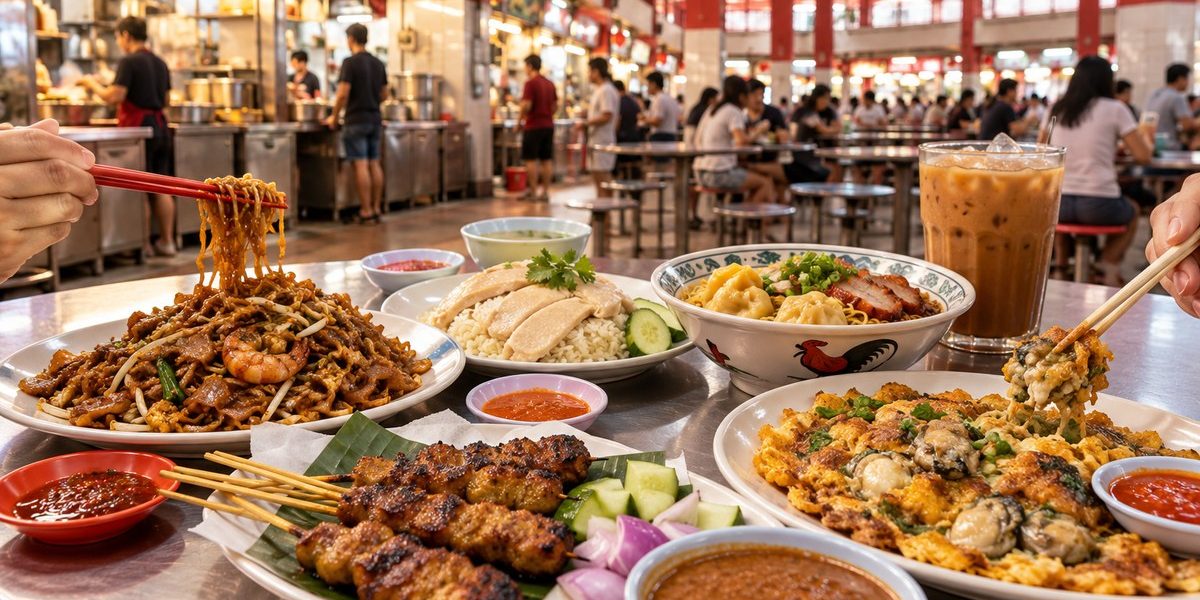
You are standing at the entrance of Chinatown Complex, the humid air thick with the scent of soy sauce, wok hei, and sizzling lard. Around you, aunties zip past with trays of steaming kueh, uncles shout orders in a mix of dialect and English, and somewhere in the distance, a queue snakes around a stall that holds a Michelin star. This is not just a food centre. It is a living museum of Singapore’s hawker culture, a place where a $3 plate of noodles can hold a century of family history. But if you walk in without a plan, you will leave overwhelmed and full of regret. A successful Chinatown Complex food tour requires strategy, not just hunger.
To eat your way through Chinatown Complex like a local, arrive before 11am to beat the lunch crowd, bring cash and tissue packets for chope seats, and order in rounds. Start with lighter dishes like popiah, then move to heavier noodles, and finish with dessert. Share everything so you can try more stalls in one visit.
Why Chinatown Complex Deserves a Dedicated Food Tour
Chinatown Complex is not your average hawker centre. It is the largest in Singapore, housing over 200 stalls across two levels. Unlike the polished corridors of Maxwell Food Centre or the tourist-friendly lanes of Lau Pa Sat, this complex feels raw, chaotic, and deeply authentic. The wet market downstairs sells live frogs and fresh herbs. The upstairs food centre holds some of the most legendary hawkers in the country, including a Michelin Bib Gourmand stall for chicken rice and a char kway teow uncle who has been frying since the 1970s.
A well-planned Chinatown Complex food tour gives you access to dishes you cannot find anywhere else. You will taste recipes that have been passed down through three generations. You will eat at stalls that have no English signage and no Instagram presence. And you will do it without wasting time wandering in circles.
The Three Rules of a Successful Hawker Hunt
Before you step into the complex, understand the etiquette. These rules separate a confused tourist from a seasoned hunter.
-
Chope your seat before you order. In Singapore, we use packets of tissue to reserve tables. Spot an empty table, place your pack down, and it is yours. Do not skip this step. During peak hours, you will spend more time hunting for a seat than waiting for food.
-
Pay with cash, not cards. Many of the older stalls at Chinatown Complex do not accept digital payments. The aunties prefer exact change. Withdraw $30 to $50 before you arrive. It will save you from awkward moments at the counter.
-
Order in rounds, not all at once. Do not try to order everything from one stall. The best strategy is to send one person to queue for a popular item while another scouts for seats. Then repeat. This way, you eat everything hot and fresh.
Must-Try Stalls for Your Chinatown Complex Food Tour
Not all stalls are created equal. Some are famous for a reason. Others are hidden gems that only regulars know. Here is a breakdown of the stalls you should target.
| Stall Name | Dish | Why It Stands Out | Best Time to Visit |
|---|---|---|---|
| Lian He Ben Yao Tang | Herbal soup | 50-year-old recipe, slow-cooked for hours | Before 12pm, they sell out |
| Zhong Guo Yuan Yang | Chicken rice | Tender, silky meat with fragrant rice | 11am to 1pm for peak quality |
| Fried Carrot Cake (No. 02-078) | Black carrot cake | Crispy exterior, tangy sweet sauce | Mid-afternoon, less queue |
| Ah Heng Osman | Satay | Charcoal-grilled, smoky, tender | Evening time, 5pm onwards |
| Heng Heng Hokkien Mee | Hokkien mee | Rich prawn stock, crispy pork lard | Lunch, but expect a 20-minute wait |
These five stalls form the backbone of any good Chinatown Complex food tour. But do not stop there. Walk the corridors and look for stalls with long queues of older Singaporeans. That is usually a sign of quality.
How to Order Like a Local
Ordering at a hawker centre is an art. Here is a numbered guide to getting it right.
-
Scan the menu board before you queue. Some stalls have a board above the counter with prices. Decide what you want before you reach the front. The aunties do not have time to wait while you read.
-
Use the correct dialect name for your dish. If you ask for “fried carrot cake” at a Teochew stall, they will know what you mean. But if you say “chai tow kway,” you will sound like a local. It builds rapport and sometimes gets you a slightly larger portion.
-
Specify your preferences clearly. Want your noodles wet or dry? More chilli? Less oil? Say it before they start cooking. Most hawkers are happy to customise if you ask politely.
-
Pay and collect your number. Many stalls give you a number on a piece of paper. Take it back to your seat. They will call you when your food is ready. Do not hover at the counter. It makes the hawker nervous.
Common Mistakes on a Self-Guided Food Tour
Even experienced foodies make errors. Here are the most frequent ones, and how to avoid them.
-
Arriving at 12pm sharp. This is the worst time. The queues are longest, the seats are gone, and the hawkers are stressed. Aim for 10.30am or 3pm instead.
-
Ordering too much at the first stall. You will see a plate of sambal stingray that looks incredible. Resist the urge. Pace yourself. Six small dishes from six stalls are better than two large plates from one.
-
Ignoring the wet market level. The basement wet market sells fresh produce, but it also has a few food stalls that serve breakfast items like chwee kueh and dim sum. These are often overlooked by tourists.
-
Forgetting to bring a tissue pack. You cannot chope a table without one. If you forget, buy a pack from the provision shop near the entrance.
Expert tip from a third-generation hawker: “The best time to visit is on a weekday morning, right after the market opens. The ingredients are freshest, and the hawkers are in a good mood because they have not been stressed by the lunch rush yet. Also, always ask what the stall owner recommends. They know their menu better than any food blog.”
What to Eat in One Visit: A Suggested Route
If you only have two hours, here is a route that covers the classics without doubling back.
Start at the upper level. Head straight to Lian He Ben Yao Tang for a bowl of herbal soup. It is light, warming, and wakes up your palate. Next, walk towards the centre aisle for Heng Heng Hokkien Mee. Order one plate to share. While you wait, send a friend to queue at the chicken rice stall.
After the noodles, move to the fried carrot cake stall. Get the black version with extra chilli. Then, walk to the satay stall near the corner. Order 10 sticks of mixed meat. By now, you will have a table full of food.
Finish with dessert. Look for a stall selling ice kacang or chendol. The shaved ice version at the corner stall is refreshing after all that savoury food.
If you have room, head downstairs to the wet market level for a final treat. The popiah stall there makes fresh rolls with a thin, crispy skin. It is a light, clean finish.
When to Join a Guided Tour vs Going Solo
A self-guided Chinatown Complex food tour works well if you have done your research and are comfortable navigating chaos. But a guided tour has advantages.
Guides know the stall owners personally. They can tell you the story behind each recipe. They know which stalls have the freshest ingredients on any given day. And they handle the ordering, the queueing, and the chope-ing. You just eat.
If you are short on time, or if you want to learn the deeper cultural context behind each dish, a guided tour is worth the investment. If you are on a budget and enjoy the thrill of discovery, go solo.
For more background on the people behind the woks, read our story on the 78-year-old uncle behind Chinatown’s best char kway teow. It will give you a new appreciation for the hands that cook your meal.
Preserving Hawker Culture Through Eating
Every time you order a plate of noodles at Chinatown Complex, you are helping keep a tradition alive. Hawker culture was inscribed on the UNESCO Representative List of the Intangible Cultural Heritage of Humanity in 2020. But the reality is that many older hawkers are retiring, and younger Singaporeans are not always stepping in.
By eating at these stalls, by queuing patiently, by sharing photos and stories, you contribute to the ecosystem. You show that there is still demand for handmade, heritage food. You help ensure that the next generation of Singaporeans can still taste the same flavours their grandparents grew up with.
To understand the full scale of this shift, read about how the 1960s hawker relocation programme forever altered Singapore’s food landscape. It explains how we went from street pushcarts to the modern hawker centres we love today.
Your Chinatown Complex Food Tour Checklist
Before you head out, run through this checklist.
- Cash in hand (at least $30)
- Tissue pack for chope-ing
- Comfortable walking shoes
- An empty stomach
- A friend or two to share dishes
- A phone with battery for photos
- An open mind
That last point matters more than you think. Some of the best dishes at Chinatown Complex look unappealing. The black carrot cake looks like a pile of dark sludge. The herbal soup looks like murky tea. But taste them, and you will understand why locals queue for them.
Making the Most of Your Visit in 2026
The hawker scene in Singapore continues to evolve. In 2026, several stalls at Chinatown Complex have introduced digital payment options, but the older ones remain cash-only. Some stalls have shortened their operating hours as their owners age. Always check current opening times on the My Hawkers SG app before you go.
The complex itself is undergoing gradual upgrades. New lighting and ceiling fans have improved the comfort level, but the layout remains the same. The best stalls are still the ones tucked into corners, away from the main walkways.
If you are visiting during a public holiday or during Chinese New Year, expect reduced hours. Many hawkers take a week off to rest. Plan your visit around these dates to avoid disappointment.
The Final Bite
Chinatown Complex is not a place for passive eating. It demands your attention, your patience, and your respect. But if you approach it with the right mindset, it rewards you with some of the best food in Singapore. Every plate tells a story. Every stall holds a legacy.
So go. Grab your tissue pack. Withdraw your cash. Bring a friend. And eat your way through the complex like a seasoned hawker hunter. You will leave with a full stomach and a deeper appreciation for the culture that makes Singapore truly special.