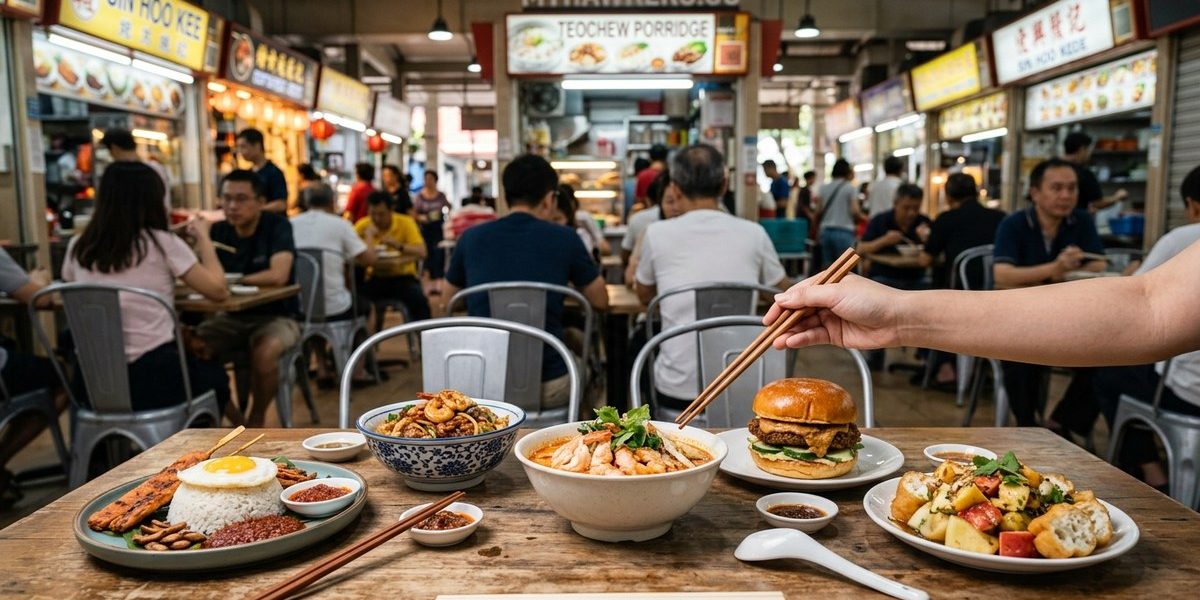
The smell of wok hei still hangs thick in the air at our favourite hawker centres. The familiar clatter of metal spatulas against hot woks has not changed. But something new is happening across Singapore’s food scene. A fresh wave of hawkers is opening stalls that honour the old ways while adding their own creative spin. These are not your typical fusion experiments. These are serious cooks who respect the foundations of our hawker heritage. And the best part? The traditionalists, the uncles and aunties who have been eating at the same stalls for decades, are actually lining up for these new spots.
The best new hawker stalls 2025 are not trying to replace tradition. They are building on it. From a third-generation hawker who tweaked his grandfather’s Hokkien Mee recipe to a former fine dining chef now making laksa from a 1950s family formula, these 5 stalls prove that modern flavours can win over even the most loyal traditionalists.
What Makes a New Hawker Stall Worth the Hype?
Before we get to the stalls, let’s talk about what separates a gimmick from a genuine hit. A new stall with modern flavours needs more than a pretty Instagram photo. It needs soul. Here are the three things we looked for when curating this list of the best new hawker stalls 2025:
- Respect for the base recipe. The best modern hawkers start with a classic technique and only improve one or two elements. They do not throw away the original.
- Consistency from day one. A stall that sells out daily within two hours of opening is a sign that the food is good. We looked for stalls that have maintained their quality since opening.
- Approval from the regulars. We watched who was eating at these stalls. When we saw uncles who usually queue at heritage stalls waiting patiently for a new vendor, we knew something was working.
The 5 Best New Hawker Stalls 2025 That Even Traditionalists Approve
1. Siblings Wok (Old Airport Road Food Centre)
This stall is run by two sisters in their late twenties. They grew up helping their father at his char kway teow stall in the same food centre. When he retired, they took over the space but changed the menu. Instead of just char kway teow, they now serve a version that uses a house-made sambal belacan with a hint of lime zest. The noodles are still fried in the same charcoal-fired wok their father used for 30 years.
The traditionalists were sceptical at first. But after one taste, many regulars admitted the new version is even better. The lime cuts through the richness of the lard without overpowering the shrimp paste. One uncle told us he now comes three times a week instead of two.
2. Lemak by Nenek (Golden Mile Food Centre)
A former fine dining chef opened this stall after finding his grandmother’s handwritten laksa recipe from the 1950s. He modernised the technique by using a sous-vide method for the chicken, resulting in meat that is impossibly tender. But the rempah, the spice paste, is still ground by hand using a mortar and pestle every morning.
The queue forms before 11am. What is remarkable is that many of the people waiting are older Peranakan aunties who claim this tastes exactly like the laksa they ate as children. The chef’s modern cooking method does not interfere with the flavour. It just makes the experience better.
3. Third Gen Mee (Tiong Bahru Market)
You might remember our article on how a former banker built Tiong Bahru’s most talked-about lor mee stall. This stall is different. The owner here is a third-generation hawker who left a corporate job to continue his family’s legacy. His twist? He uses a blend of two different pork broths, one from his grandfather’s recipe and one he developed himself using slow-roasted pork bones.
The result is a bowl of lor mee with a depth of flavour that makes you stop talking mid-conversation. Traditionalists who have been eating at the original stall for 40 years now split their visits between the old location and this new one.
4. Chilli Crab Wanton (Bedok Interchange Hawker Centre)
This stall takes a classic wanton mee and adds a Singaporean twist. The wantons are filled with a cream cheese and chilli crab mixture, then deep fried. It sounds like a gimmick. But the owner spent six months perfecting the ratio so that the chilli flavour does not overwhelm the pork.
The wantons are served on a bed of egg noodles tossed in a dark soy sauce that tastes like it was aged for months. The traditionalists were the hardest to convince here. But after the stall was featured on a local food show, even the most stubborn uncles started ordering the “chee chee fun” wantons.
5. Heritage Toast (Chinatown Complex)
This stall does not serve noodles or rice. It serves kaya toast with a twist. The owner uses a traditional Hainanese bread recipe but bakes it with a layer of pandan coconut butter folded into the dough. The toast is grilled over charcoal, giving it that smoky flavour that modern toasters cannot replicate.
The kaya is made using a recipe that has been in the owner’s family for three generations. The only change is that he uses gula melaka instead of white sugar, which gives the spread a deeper, more complex sweetness. Older customers say it reminds them of the toast they ate at kopitiams in the 1970s.
How to Spot a Truly Great Modern Hawker Stall
Not all new stalls are created equal. Here is a simple table to help you separate the ones that respect tradition from the ones that are just chasing trends.
| What to Look For | What to Avoid |
|---|---|
| Uses traditional base techniques (wok hei, charcoal grilling, hand-ground spices) | Relies entirely on pre-packaged sauces or frozen ingredients |
| Changes only one or two elements of a classic dish | Overhauls the entire recipe until it is unrecognisable |
| Has a clear story or reason for the modern twist | Cannot explain why they changed the recipe |
| Regular customers include older Singaporeans | Only young people in queues for photos |
| Maintains affordable pricing (under $6 for a main dish) | Charges premium prices without premium ingredients |
Why Traditionalists Are Embracing These New Stalls
Some people think older Singaporeans are resistant to change. That is not true. They just have higher standards. They have been eating hawker food for decades. They know when a dish is made with care.
The best new hawker stalls 2025 succeed because they do not try to reinvent the wheel. They understand that the secret recipes they guard with their lives are sacred. Instead of replacing those recipes, they find ways to enhance them.
Take the Hokkien Mee rivalry that has divided Singaporeans for decades. The new stalls are not entering that fight. They are creating their own lane. They respect the old masters while offering something fresh.
A Note on the Business of Modern Hawker Stalls
Running a hawker stall is not easy. The margins are thin. The hours are long. Many of the best new hawker stalls 2025 are run by young people who left higher-paying jobs to pursue their passion. They are not doing it for the money. They are doing it because they love the food and want to keep the culture alive.
We have seen this before. From corporate jobs to coffee shops, more career switchers are entering the hawker trade. The difference now is that they are bringing modern techniques and a deep respect for heritage.
“If you want to change a dish, you must first master the original. You cannot skip the basics. I spent two years learning my grandmother’s laksa recipe before I changed a single ingredient.” – Chef Rizal, Lemak by Nenek
Common Mistakes New Hawker Stalls Make (And How These 5 Avoid Them)
- Mistake: Overcomplicating the dish. Some new stalls add too many ingredients. The best new hawker stalls 2025 keep it simple. They focus on perfecting one or two elements.
- Mistake: Ignoring the regulars. The stalls on this list actively listen to feedback. When older customers said the wanton was too spicy, Chilli Crab Wanton adjusted the recipe.
- Mistake: Using poor quality ingredients to save costs. These stalls source premium ingredients because they know their customers can tell the difference.
Your 3-Step Plan to Try the Best New Hawker Stalls 2025
- Go early. Most of these stalls sell out by 1pm. Arrive before 11am to avoid disappointment.
- Talk to the owner. Ask them about their inspiration. Every stall on this list has a story worth hearing.
- Order the classic version first. Before you try the modern twist, taste the original dish at a heritage stall. This way, you can appreciate what the new stall is doing differently.
How These Stalls Are Shaping the Future of Hawker Culture
The hawker scene is evolving. But it is not dying. The best new hawker stalls 2025 prove that young hawkers can innovate without losing the soul of our food. They are preserving our heritage by keeping it relevant.
If you want to understand this evolution better, read our article on how new hawker stalls are using technology without losing traditional charm. It explains how these vendors balance modern efficiency with old-school quality.
What the Next Generation of Hawkers Can Learn from These Stalls
- Respect the past. Every great modern hawker stall starts with a deep understanding of tradition.
- Be patient. It takes time to build trust with customers. Do not expect to be an overnight success.
- Stay affordable. Hawker food is for everyone. If your prices are too high, you lose the soul of the experience.
Keeping the Hawker Flame Alive
Singapore’s hawker culture is a UNESCO-recognised treasure. But it only survives if new generations step up to carry the torch. The best new hawker stalls 2025 are doing exactly that. They are not trying to replace the old masters. They are standing on their shoulders.
Next time you are at a hawker centre, skip the usual stall and try one of these new spots. Order the dish. Taste the difference. And if you like it, tell the owner. They need to know that their hard work is appreciated. Because the future of our hawker heritage depends on stalls like these staying open and thriving.
Go hungry. Go curious. And bring an open mind.