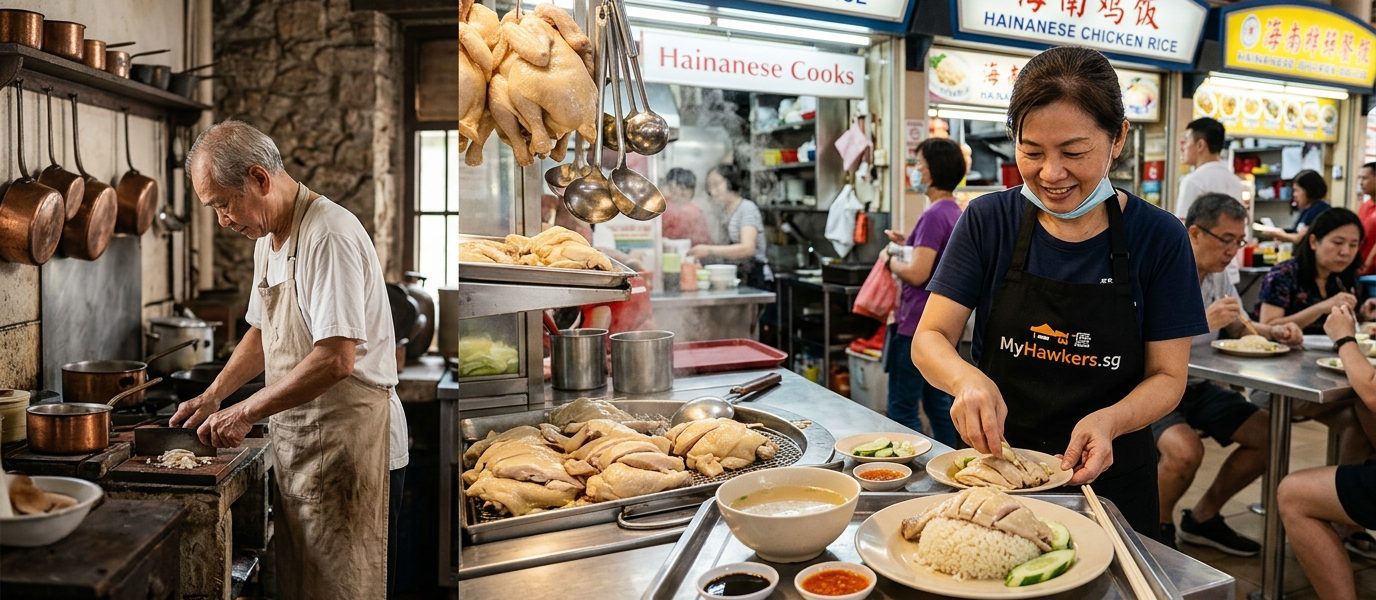
A plate of silky poached chicken, fragrant rice cooked in chicken fat, and three simple condiments tells a story that spans continents, colonial empires, and generations of migration. What we now call Hainanese chicken rice didn’t start in hawker centres. It began in the private kitchens of British colonial homes, prepared by cooks who had travelled thousands of miles from a small island off China’s southern coast.
Hainanese chicken rice evolved from Wenchang chicken, a ceremonial dish from Hainan Island. Migrant cooks working in British colonial households adapted it using local ingredients and techniques learned in Western kitchens. After World War II, these cooks opened street stalls, transforming an elite meal into Singapore’s most democratic dish and creating a culinary empire that spread across Southeast Asia.
The Wenchang Roots Nobody Talks About
The dish we recognise today started as Wenchang chicken, named after a county in northeastern Hainan.
Wenchang chickens are a specific breed. Smaller than typical chickens. Raised on a diet that includes coconut and peanut cake. The meat develops a particular texture and flavour that locals prize.
In Hainan, families served Wenchang chicken during festivals and ancestral ceremonies. The preparation was simple. Poach the bird gently. Serve it at room temperature with ginger paste and soy sauce. Rice came separately, cooked in regular water.
Nothing fancy. Nothing complex.
But when Hainanese men began leaving their island in the late 1800s, they carried this preparation method with them. Most headed to British Malaya and the Straits Settlements, looking for work that didn’t exist back home.
From Hainan to Colonial Kitchens
Hainanese migrants faced a peculiar employment landscape.
Other Chinese dialect groups had already established themselves in specific trades. Hokkiens controlled shipping and trade. Teochews ran provision shops. Cantonese dominated carpentry and metalwork.
The Hainanese arrived late to the party.
Many found work in the only sector still open to newcomers: domestic service in European households. They became cooks, waiters, and stewards in colonial homes, hotels, and private clubs.
This wasn’t their first choice. But it gave them something valuable.
Access to Western cooking techniques and ingredients that other dialect groups never learned.
They mastered European sauces, roasting methods, and presentation styles. They learned about temperature control, timing, and the British obsession with tender meat. These skills would later transform how they prepared their own food.
“The Hainanese cooks didn’t just serve ang moh food. They watched, learned, and adapted techniques that made their traditional dishes better. That’s why chicken rice tastes different from what you’d find in Hainan itself.” — Culinary historian at the National University of Singapore
The Post-War Transformation
World War II changed everything.
The Japanese Occupation devastated Singapore’s economy. When the British returned, many European families never came back. The colonial lifestyle that supported private cooks was dying.
Hainanese cooks found themselves unemployed.
But they had skills, connections, and a deep understanding of what made food appealing to both Asian and Western palates. Many decided to open their own food businesses.
Here’s where the real innovation happened.
These former private cooks took their Wenchang chicken recipe and reimagined it for street food. They couldn’t replicate the ceremonial version. Street stalls required speed, efficiency, and ingredients that customers would pay for daily, not just during festivals.
The adaptations were brilliant:
- Cooking rice in chicken stock instead of water, adding richness that justified a higher price
- Using chicken fat to flavour the rice, a technique borrowed from European cooking
- Serving the chicken with dark soy sauce, chilli sauce, and ginger paste, giving customers flavour options
- Poaching multiple chickens in succession, building a deeply flavoured master stock
- Serving everything on one plate instead of separately, making it portable and convenient
The Three Elements That Made It Work
Traditional Hainanese chicken rice relies on three components working together.
The Chicken
Poaching sounds simple. It isn’t.
The water temperature must stay between 80 and 85 degrees Celsius. Too hot and the meat toughens. Too cool and it doesn’t cook through. The chicken goes in and out of the pot multiple times, resting between dips.
This technique creates that silky, almost gelatinous texture on the skin. The meat stays incredibly tender. The flesh near the bone might show a slight pinkness, which some customers initially found alarming but came to expect as a sign of proper preparation.
The Rice
This is where former colonial cooks really showed their training.
They treated rice like a European would treat risotto. Each grain needed to be separate yet creamy. The chicken fat gets fried with garlic, ginger, and pandan leaves before the rice goes in. Some cooks added a splash of chicken stock during cooking.
The result is fragrant, rich, and substantial enough to be a meal on its own.
The Sauces
Three condiments became standard: dark soy sauce with sesame oil, ginger paste, and chilli sauce made with fermented soybeans.
Each sauce serves a purpose. The soy adds saltiness and depth. The ginger cuts through the richness. The chilli provides heat and umami complexity.
Customers could customise every bite, mixing and matching according to their preference.
How the Recipe Spread Across Southeast Asia
Singapore became the epicentre, but the dish didn’t stay contained.
| Country | Adaptation | Key Difference |
|---|---|---|
| Malaysia | Chicken rice balls in Malacca | Rice formed into balls, different texture |
| Thailand | Khao man gai | Fermented soybean sauce, different chilli, often with offal soup |
| Vietnam | Com ga Hoi An | Turmeric rice, Vietnamese herbs, different aromatics |
| Indonesia | Nasi ayam Hainan | Sweeter soy sauce, fried shallots on top |
Each country’s Hainanese community adapted the dish to local tastes and available ingredients. But the core technique remained recognisable. Poached chicken. Fragrant rice. Multiple condiments.
The spread happened through migration and family networks. A successful chicken rice seller in Singapore would help a relative start a stall in Kuala Lumpur or Bangkok. Recipes travelled through family lines, each generation adding small refinements.
The Hawker Centre Era
When Singapore began relocating street hawkers into purpose-built centres in the 1970s and 1980s, chicken rice stalls were among the first to move.
The transition from pushcarts to permanent stalls gave chicken rice sellers something they’d never had before: consistent access to electricity and running water.
This changed the game completely.
Sellers could now use rice cookers for more consistent results. Refrigeration meant they could prep ingredients the night before. Better ventilation improved working conditions. The quality became more standardised.
Some of the most famous chicken rice stalls today trace their origins to this period. Tian Tian’s enduring popularity at Maxwell Food Centre exemplifies how hawker centre infrastructure helped certain stalls build reputations that lasted decades.
The Five Stages of Chicken Rice Preparation
Understanding how chicken rice gets made reveals why it’s harder than it looks.
-
Stock Building: Start with chicken bones, ginger, garlic, and spring onions. Simmer for hours to create the master stock that flavours everything else.
-
Chicken Poaching: Submerge whole chickens in stock just below boiling point. Remove after 10 minutes. Rest for 5 minutes. Repeat three times. Plunge into ice water to stop cooking and tighten the skin.
-
Rice Preparation: Fry jasmine rice in rendered chicken fat with crushed ginger, garlic, and pandan leaves. Add stock and cook until each grain is separate but creamy.
-
Sauce Making: Blend fresh ginger with salt and a touch of oil for ginger paste. Mix dark soy with sesame oil and a little stock. Prepare chilli sauce with red chillies, garlic, ginger, lime juice, and fermented soybeans.
-
Assembly: Chop chicken into bite-sized pieces, keeping the skin intact. Arrange over rice. Serve with cucumber slices and all three sauces on the side.
Each stage requires attention and timing. Miss one element and the whole dish suffers.
What Makes a Chicken Rice Stall Stand Out
After visiting dozens of stalls, patterns emerge among the exceptional ones.
Temperature Control
The best stalls serve chicken at room temperature, not cold from the fridge. This lets the natural sweetness come through. The rice arrives hot, creating a temperature contrast that many customers don’t consciously notice but definitely prefer.
Chicken Quality
Top stalls use specific chicken suppliers who raise birds to exact specifications. Age matters. Weight matters. Diet matters. A chicken that’s too young lacks flavour. Too old and the meat gets tough.
Rice Texture
Great chicken rice has individual grains that stick together slightly without becoming mushy. The rice should taste good enough to eat on its own, which is why some customers order extra rice without chicken.
Sauce Balance
Each sauce needs to be strong enough to enhance the chicken but not overpower it. The ginger paste should have bite. The soy sauce should add depth without excessive saltiness. The chilli should build heat gradually.
Common Mistakes Even Good Cooks Make
Preparing chicken rice at home sounds straightforward. It isn’t.
Here are the errors that ruin otherwise decent attempts:
- Overcooking the chicken: Even two extra minutes makes the breast meat dry and stringy
- Using the wrong rice: Long-grain jasmine rice works best; short-grain rice becomes too sticky
- Insufficient chicken fat: The rice needs enough fat to coat every grain; being health-conscious here ruins the dish
- Cold serving temperature: Refrigerating the chicken dulls all the flavours and hardens the fat
- Weak stock: The master stock should be so flavourful it could be soup on its own
- Skipping the ice bath: This step tightens the skin and stops the cooking process at exactly the right moment
Where the Dish Stands Today
Hainanese chicken rice has transcended its hawker origins without abandoning them.
You can find it in food courts inside shopping malls, at air-conditioned hawker centres, and at high-end restaurants charging ten times the hawker price. Some versions use organic chickens and heirloom rice varieties. Others stick to the exact recipe their grandfather used in 1952.
The dish appears on Singapore Airlines flights. It’s sold frozen in supermarkets. Celebrity chefs have deconstructed and reconstructed it. Food bloggers debate which stall makes the best version.
But walk into Maxwell Food Centre or Tiong Bahru Market on any given morning, and you’ll see the real legacy. Office workers queuing before their shift. Retirees meeting friends for breakfast. Tourists trying it for the first time.
The dish that Hainanese cooks created from necessity, refined through colonial kitchen training, and perfected in hawker stalls has become Singapore’s most recognised culinary export.
Why This History Still Matters
Learning where chicken rice came from changes how you taste it.
That seemingly simple plate represents multiple migrations, cultural adaptations, and the resourcefulness of people who turned unemployment into entrepreneurship. The techniques came from watching British cooks. The ingredients came from Hainan. The business model came from Singapore’s unique hawker ecosystem.
Every element tells part of the story.
The next time you sit down to a plate of chicken rice, whether at a famous stall or a neighbourhood gem that locals swear by, you’re tasting more than poached chicken and fragrant rice. You’re tasting a century of adaptation, innovation, and the determination of cooks who refused to let their skills go to waste.
That’s the real recipe. And no amount of chicken fat or ginger paste can replicate it without understanding where it all began.