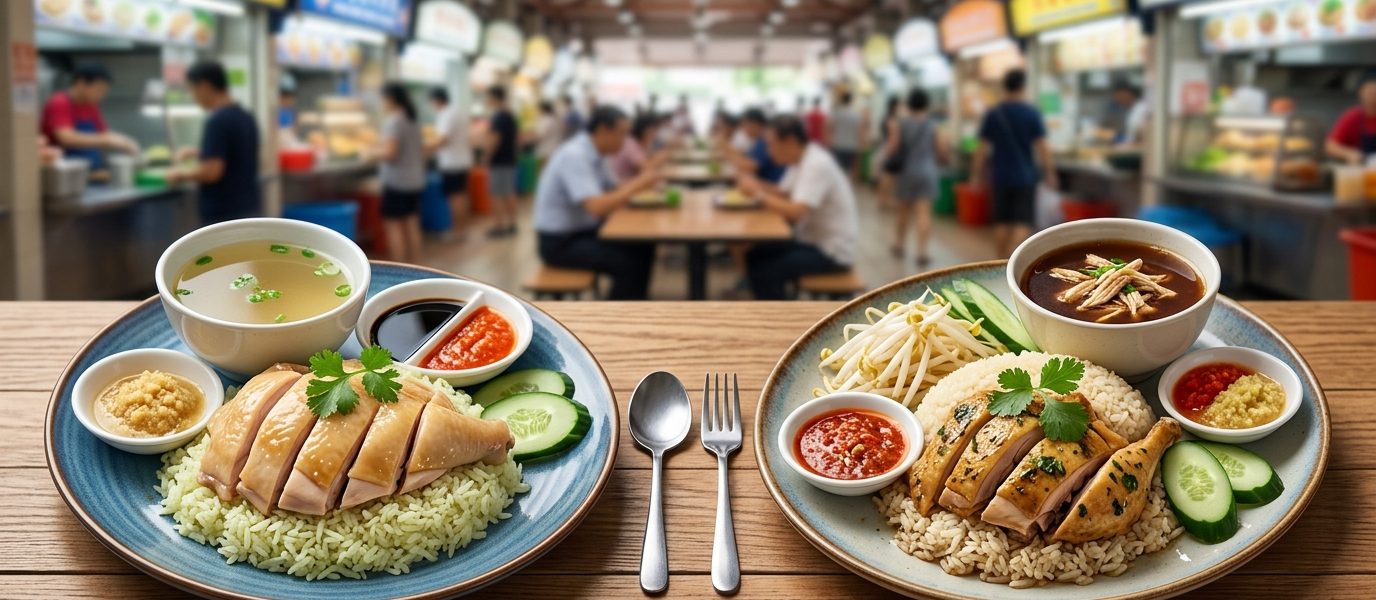
You’ve probably stood in front of a hawker stall menu, staring at “Hainanese Chicken Rice” and “Ipoh Chicken Rice,” wondering if they’re actually different or just marketing speak. The truth is, these two styles come from distinct culinary traditions, and once you know what to look for, you’ll never confuse them again.
Hainanese chicken rice features poached chicken with garlic-ginger rice, served at room temperature with chilli and dark soy sauce. Ipoh chicken rice uses soy-braised chicken served on plain white rice with a distinctive soy-sesame dipping sauce. The difference lies in chicken preparation, rice cooking method, accompaniments, and regional heritage from Singapore versus Malaysia.
What Makes Hainanese Chicken Rice Stand Out
Hainanese chicken rice is Singapore’s national dish for good reason.
The chicken gets poached in a precise temperature bath, usually around 80 to 85 degrees Celsius. This low-heat method keeps the meat silky and tender, with that signature jelly-like skin that wobbles when you touch it with your chopsticks.
After poaching, the chicken takes an ice bath. This sudden temperature drop stops the cooking process and creates that pale, almost translucent appearance on the skin.
The rice is where things get interesting. Hawkers cook it in chicken stock with pandan leaves, ginger, and garlic. Some stalls add chicken fat rendered from the bird itself. The result is fragrant, slightly oily rice that clumps together just enough to hold its shape on your spoon.
You’ll get three condiments on the side:
- Ginger paste mixed with oil
- Red chilli sauce with garlic and lime
- Dark soy sauce, sometimes sweetened
The chicken arrives at room temperature or slightly warm. Never piping hot. This is intentional and traditional, not a sign of poor service.
When Hainanese cooks left the British kitchens, they brought this technique with them and adapted it for hawker centre life.
How Ipoh Chicken Rice Takes a Different Path
Ipoh chicken rice comes from the Malaysian city of Ipoh in Perak state.
The chicken preparation couldn’t be more different. Instead of poaching, the bird gets braised in a soy sauce mixture with herbs and spices. Think star anise, cinnamon, and sometimes a touch of five-spice powder.
This braising creates a darker, caramelised exterior. The meat takes on a savoury, slightly sweet flavour from the soy marinade. No jelly skin here. The texture is firmer, more substantial.
The rice is plain white rice. Full stop. No chicken stock, no garlic, no pandan. Just steamed jasmine rice that acts as a neutral base for the intensely flavoured chicken.
The sauce is the star. You’ll get a small dish of light soy sauce mixed with sesame oil and sometimes spring onions. Some stalls add a drop of oyster sauce. This combination is sharp, nutty, and cuts through the richness of the braised meat.
Ipoh chicken rice also comes with bean sprouts. Not the wimpy, pale ones you find in supermarkets, but thick, crunchy Ipoh bean sprouts blanched just enough to stay crisp. They’re served with a sprinkle of white pepper and a bit of the soy-sesame sauce.
The Rice Tells the Real Story
Let’s break down the rice preparation because this is where you can really taste the difference.
| Aspect | Hainanese Style | Ipoh Style |
|---|---|---|
| Base liquid | Chicken stock | Plain water |
| Aromatics | Garlic, ginger, pandan | None |
| Fat content | Chicken fat or oil | Minimal |
| Texture | Slightly sticky, fragrant | Separate grains, neutral |
| Colour | Light yellow-brown | Pure white |
| Flavour role | Main component | Supporting base |
The Hainanese method treats rice as a dish in its own right. You could eat it alone and feel satisfied.
The Ipoh method treats rice as a vehicle. It’s there to soak up the sauce and balance the strong flavours of the braised chicken.
Some hawkers will tell you they can identify a stall’s origin just by tasting the rice. That’s not an exaggeration.
Spotting the Differences at First Glance
Walk up to any chicken rice stall and you can identify the style before ordering.
Look at the chicken display. Hainanese chicken will be pale, almost white, with that characteristic glossy skin. The pieces are usually arranged neatly, sometimes still glistening with moisture.
Ipoh chicken will be dark brown, with visible soy sauce staining. The skin might look slightly wrinkled from the braising process. The presentation is often less pristine because the cooking method is more rustic.
Check the condiment setup. Three small dishes means Hainanese. One dish of dark sauce means Ipoh.
Notice the sides. A bowl of clear chicken soup suggests Hainanese style. Bean sprouts on the plate point to Ipoh origins.
The serving temperature matters too. Room temperature chicken with warm rice is classic Hainanese. Warm chicken with hot rice leans toward Ipoh style, though this varies by stall.
Understanding the Cooking Techniques Behind Each Style
The poaching technique for Hainanese chicken rice requires precision.
- Bring a large pot of water to a rolling boil with ginger and spring onions
- Submerge the whole chicken and bring back to a boil
- Turn off the heat immediately and cover the pot
- Let the chicken sit in the hot water for 30 to 40 minutes depending on size
- Transfer to an ice bath for 10 to 15 minutes
- Rub with sesame oil and hang to dry before cutting
This method is unforgiving. Five minutes too long and you get dry breast meat. Not cold enough in the ice bath and the skin tears when you cut it.
The braising method for Ipoh chicken is more forgiving but requires different skills.
- Prepare a braising liquid with dark soy sauce, light soy sauce, water, sugar, and spices
- Bring to a boil and add the chicken
- Simmer on low heat for 45 to 60 minutes, turning occasionally
- Let the chicken rest in the braising liquid off heat for 15 minutes
- Remove and chop while still warm
The braising liquid can be reused and improved over time. Some stalls maintain a “master stock” that’s been cooking for decades, adding more liquid and spices as needed.
“The difference between good Hainanese chicken rice and great Hainanese chicken rice is the ice bath. Skip it and you’ll never get that texture right, no matter how perfect your poaching is.” – Veteran hawker at Tiong Bahru Market
Common Mistakes When Identifying Each Style
People often confuse roasted chicken rice with Ipoh chicken rice because both have darker meat.
Roasted chicken rice is a third category entirely. The chicken gets roasted in an oven or over charcoal, creating crispy skin and smoky flavours. Ipoh chicken is braised, never roasted, and the skin stays soft.
Another mix-up happens with “white chicken” versus Hainanese chicken. Some stalls advertise “white chicken” to mean plain poached chicken without much seasoning. True Hainanese style involves specific aromatics in the poaching liquid and always includes that ice bath step.
The rice confusion is real too. Some modern stalls serve Ipoh-style chicken with chicken fat rice to appeal to local tastes. This hybrid approach makes identification harder but isn’t traditional to either style.
Temperature throws people off. If you get cold Hainanese chicken rice, it’s usually because the stall pre-portions their chicken and refrigerates it. Traditional service is room temperature, not cold from the fridge.
Regional Variations Within Each Style
Not all Hainanese chicken rice tastes the same across Singapore.
Some stalls add more garlic to their rice. Others use less chicken fat and more oil. The chilli sauce varies wildly from stall to stall, with some versions being fiery and others mild and sweet.
Tian Tian Hainanese Chicken Rice at Maxwell Food Centre has a distinct chilli sauce that’s become its signature. Other stalls have tried to replicate it with varying success.
Ipoh chicken rice also varies, though less dramatically. The main difference is in the braising liquid’s spice blend. Some stalls go heavy on star anise, creating a more medicinal flavour. Others keep it simple with just soy sauce and sugar.
In Ipoh itself, you’ll find stalls that serve the chicken with hor fun (flat rice noodles) instead of rice. This variation is rare in Singapore but worth trying if you visit Malaysia.
The bean sprouts are non-negotiable in authentic Ipoh chicken rice. Any stall that skips them is taking shortcuts.
What to Order Based on Your Preferences
Choose Hainanese chicken rice if you want:
- Delicate, subtle flavours
- Tender, almost buttery chicken texture
- Fragrant, flavourful rice as the main attraction
- Multiple condiments to customise each bite
- A lighter meal that won’t sit heavy
Choose Ipoh chicken rice if you prefer:
- Bold, savoury flavours
- Firmer chicken with more bite
- Plain rice that lets the chicken shine
- A unified sauce that ties everything together
- A more substantial, satisfying meal
Neither style is “better.” They serve different moods and preferences.
If you’re ordering chicken rice like a true Singaporean, you’d probably have both styles in your regular rotation. Some days call for the elegance of Hainanese. Other days need the punch of Ipoh.
Where to Find Authentic Examples of Each Style
Most hawker centres in Singapore specialise in Hainanese chicken rice. It’s the local standard.
For textbook Hainanese examples, check Maxwell Food Centre or any of the stalls at air-conditioned hawker centres around the island.
Ipoh chicken rice is harder to find but not impossible. Look for stalls with “Ipoh” in the name or those advertising “soy sauce chicken rice.” Some Malaysian-run stalls in neighbourhood centres serve authentic versions.
The hidden neighbourhood gems often have at least one stall doing Ipoh style properly. These places cater to Malaysian expats who know the difference and won’t accept substitutes.
If you’re willing to travel, Johor Bahru has excellent Ipoh chicken rice stalls. The 20-minute drive across the causeway is worth it for the real deal.
The Cultural Context Behind Each Dish
Hainanese chicken rice reflects Singapore’s Hainanese immigrant history. These cooks worked in British colonial households, learning Western cooking techniques while maintaining Chinese flavours. The dish evolved in Singapore’s hawker centres into something uniquely local.
Ipoh chicken rice represents Perak’s Chinese community, particularly the Cantonese and Hakka groups who settled there. The braising method comes from traditional Cantonese soy sauce chicken, adapted for the Malaysian palate with local ingredients.
Both dishes show how Chinese immigrants adapted their cooking to new environments. Neither is “more authentic” Chinese food. They’re both Southeast Asian creations with Chinese roots.
The rivalry between fans of each style mirrors the friendly food competition between Singapore and Malaysia. Each country claims its version is superior, but really they’re just different expressions of similar ideas.
Understanding this context makes the difference between Hainanese and Ipoh chicken rice more meaningful. You’re not just choosing between cooking methods. You’re choosing between two distinct cultural histories.
Why the Difference Actually Matters
Knowing the difference between Hainanese and Ipoh chicken rice helps you order confidently at hawker centres.
You won’t be disappointed when your Ipoh chicken rice arrives with plain white rice. You’ll understand that’s how it should be.
You won’t send back room-temperature Hainanese chicken thinking it’s gone cold. You’ll recognise it as proper technique.
This knowledge also helps you appreciate the skill involved in each style. The precision of Hainanese poaching is different from the patience of Ipoh braising, but both require years to master.
When you travel to Malaysia, you’ll be able to compare versions and understand regional differences. You’ll know what to look for and how to judge quality.
Most importantly, you’ll be able to explain the difference to confused friends and visitors. Singapore’s hawker culture deserves informed eaters who can preserve and share this knowledge.
Two Styles, One Delicious Truth
The difference between Hainanese and Ipoh chicken rice isn’t just academic food history. It’s practical information that changes how you eat and appreciate these dishes.
Next time you’re at a hawker centre, pay attention to the details. Notice the colour of the chicken, the texture of the rice, the condiments on the side. Let your understanding deepen your enjoyment.
Both styles have earned their place in Southeast Asian food culture. Both deserve respect and attention. And both taste incredible when done right by skilled hawkers who’ve spent decades perfecting their craft.