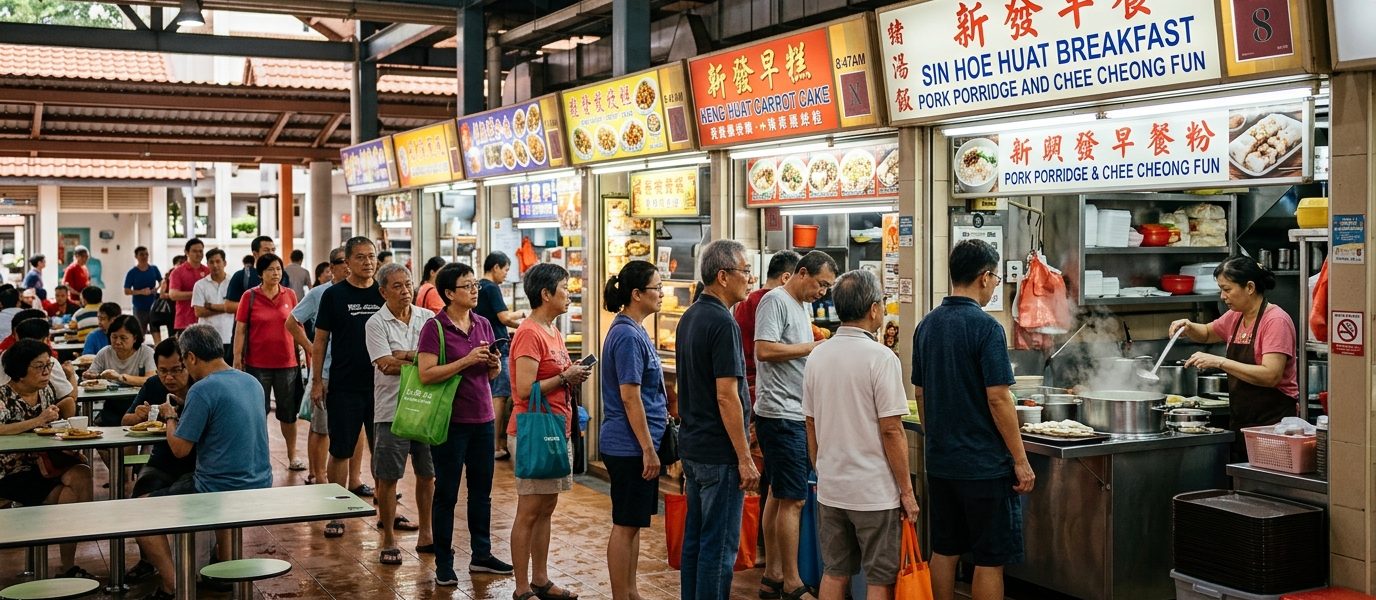
The alarm rings at 6.15am. Most people hit snooze. But along Singapore’s East Coast, a different crowd is already dressed, wallet in hand, heading to hawker centres where the best stalls sell out before the morning commute even begins.
These aren’t your average breakfast spots. They’re institutions where uncles have been flipping char kway teow since before the MRT existed, where aunties hand-pull noodles at 5am, and where the queue at 7.30am means you’ve already missed the best cuts.
The best early morning breakfast spots east coast require strategic timing and local knowledge. Arrive between 6am and 8am for legendary dishes at Bedok, Marine Parade, and Changi Village hawker centres. Most famous stalls sell out by 9.30am. Bring cash, expect queues, and follow the uncles in singlets for authentic finds worth waking up for.
Why East Coast breakfast culture starts before sunrise
East Coast hawker centres operate on a different clock. Many veteran hawkers begin prep work at 4am, with first customers arriving before 6am.
The timing isn’t arbitrary. It’s rooted in decades of working-class rhythms. Fishmongers, market vendors, and shift workers needed hot meals before their day started. The best hawkers catered to this crowd, and their reputation spread.
Today, that early morning energy persists. Regulars know the secret: arrive early or miss out entirely.
The food tastes different at dawn too. Charcoal fires are freshly lit. Ingredients are at peak freshness. The wok hasn’t been overworked. There’s a reason locals set alarms for this.
Bedok 85 Fengshan Centre at first light
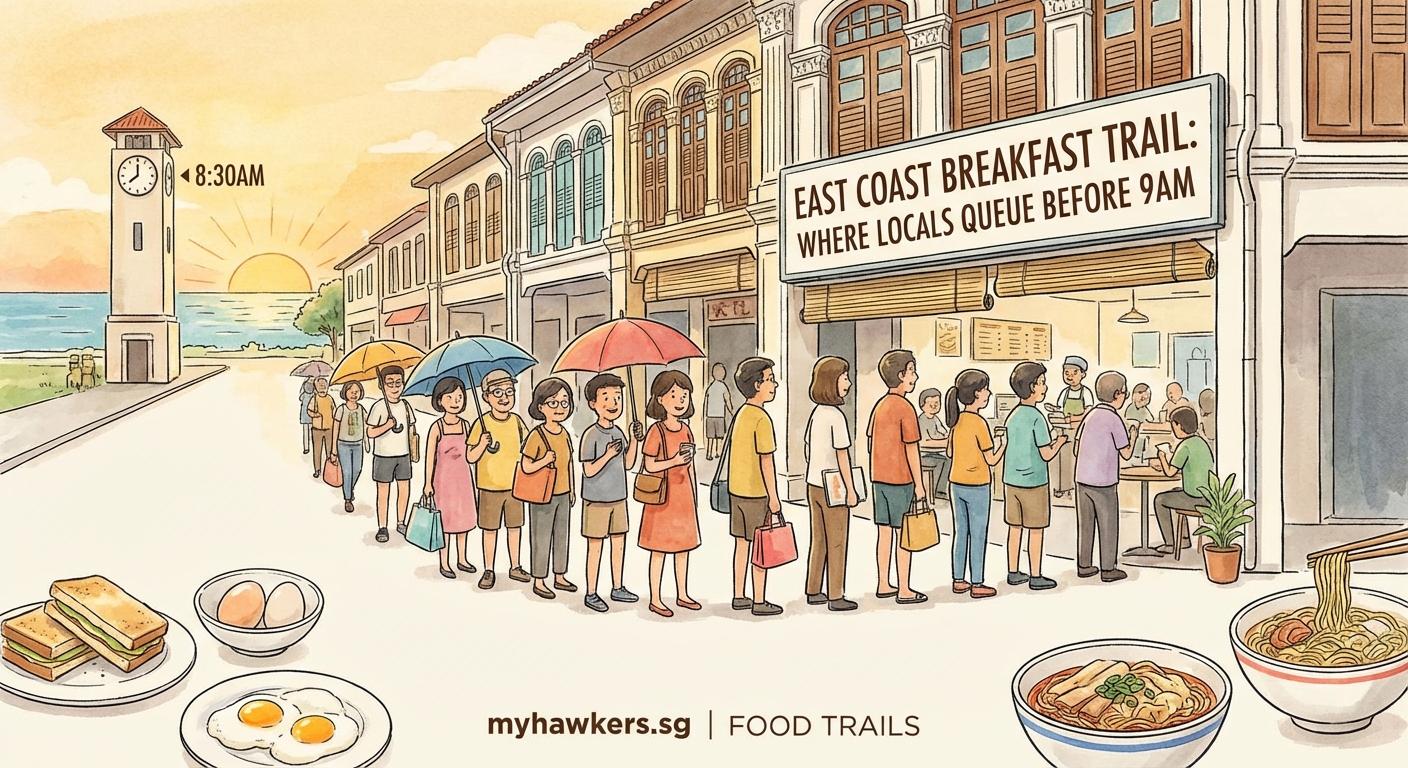
Bedok 85 wakes up before most of Singapore. By 6.30am, the coffee shop downstairs is already packed with regulars nursing kopi and reading newspapers.
The famous chwee kueh stall opens at 6am sharp. The steamed rice cakes are soft, topped with preserved radish that’s been fried to sweet-savoury perfection. Regulars order five at a time because they know the texture changes after 8am when the batch sits longer.
Upstairs, the carrot cake stall starts frying at 5.45am. The uncle uses duck eggs, which gives the white carrot cake a richer flavour than most versions around Singapore. Black or white? Locals get both, mixed.
The economic rice stall deserves attention too. At 6.30am, every dish is freshly cooked. The curry chicken hasn’t been sitting in gravy for hours. The vegetables still have bite. By 9am, it’s a different meal entirely.
“People don’t understand why I wake up at 4am to cook breakfast food. But that’s when it matters most. First batch is always the best batch. After that, you’re just reheating.” — Bedok hawker with 40 years experience
Marine Parade’s hidden morning ritual
Marine Parade Food Centre doesn’t get the tourist attention of Maxwell or Lau Pa Sat. That’s exactly why locals love it.
The lor mee stall here opens at 6am and closes by 11am. Not because business is slow, but because the uncle makes only enough stock for one service. When it’s gone, it’s gone.
The gravy is darker and thicker than most versions. He uses a family recipe that includes dried sole fish, giving it an umami depth that keeps regulars coming back for 30 years.
The fried hokkien prawn mee stall next door operates on similar principles. The wok hei is strongest in the first two hours of service. By 8.30am, the queue stretches 15 people deep. By 10am, they’re sold out.
There’s a nasi lemak stall that only locals seem to know about. It’s tucked in the corner, no fancy signage. The sambal is made fresh every morning, with a sweetness that balances the heat perfectly. The fried chicken wing is massive, marinated overnight, fried to order.
If you’re looking for the complete breakfast hunter’s map across Singapore, Marine Parade represents the East Coast’s best-kept morning secret.
Changi Village where breakfast meets the sea
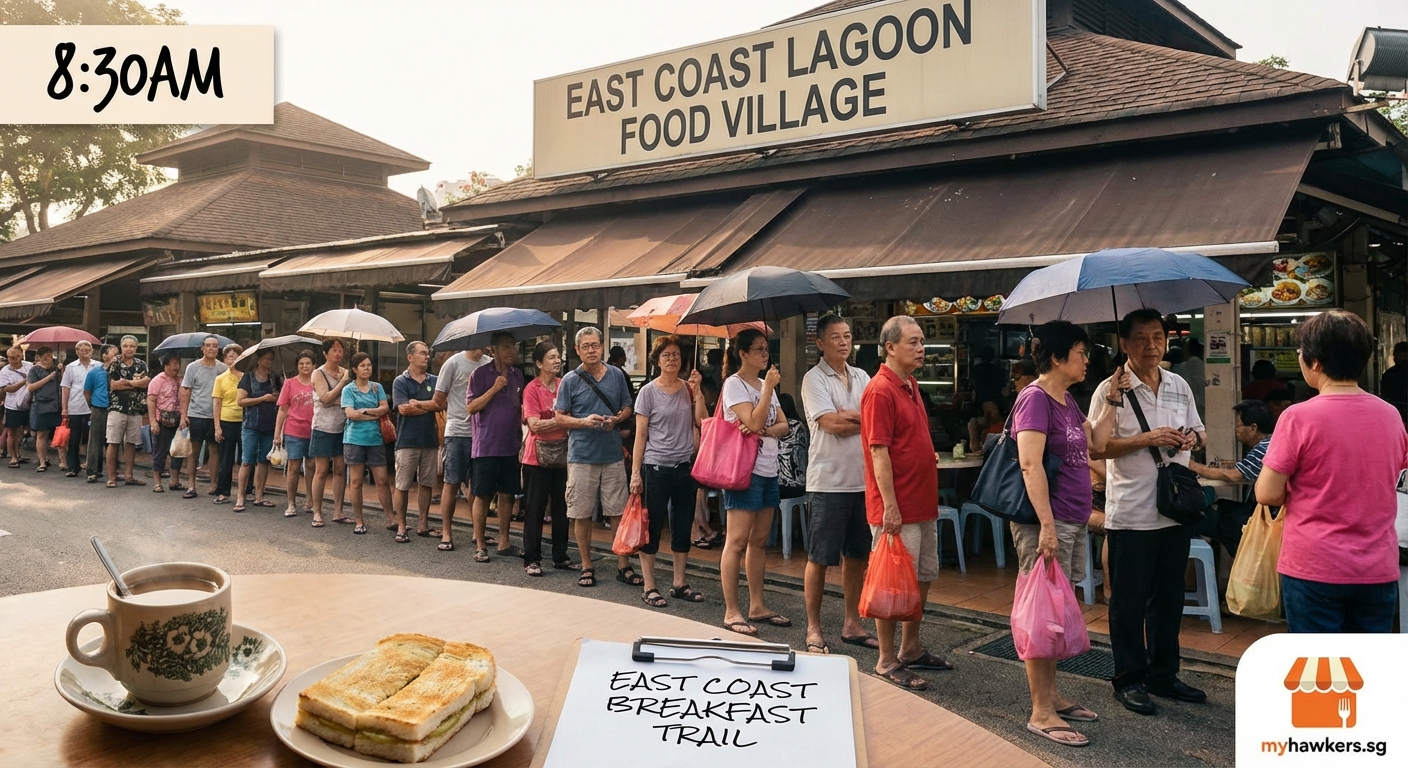
Changi Village Food Centre sits near the ferry terminal, catching both locals and early morning cyclists heading to the coastal park.
The nasi lemak here is legendary. Not the stall everyone photographs, but the one two rows back where the auntie has been wrapping packets since 5.30am. Her coconut rice is fluffier, less oily. The ikan bilis is fried separately, staying crispy even after being packed.
The roti prata shop opens at 6am. The dough has been resting overnight, which gives it that perfect flaky texture. Order the egg prata and watch the uncle toss the dough paper-thin before folding the egg inside. The curry is thinner than most places, meant for dipping rather than drowning.
There’s a congee stall that deserves more recognition. The porridge base is silky, cooked for hours until the rice breaks down completely. You can add century egg, pork, or fish. Regulars get the mixed version and add extra ginger.
The coffee shop at the entrance brews kopi that’s strong enough to wake the dead. The uncle uses a blend that’s heavier on robusta, giving it that bitter kick morning people crave. Pair it with kaya toast from the stall that still uses charcoal grills.
Your step-by-step morning breakfast trail strategy
Getting the most from East Coast’s best early morning breakfast spots east coast requires planning. Here’s how locals do it:
- Set your alarm for 5.45am on weekends, 6.15am on weekdays
- Choose one hawker centre as your main destination rather than trying to hop between locations
- Arrive by 6.30am for the absolute freshest cooking and shortest queues
- Bring exact change in cash as most stalls don’t accept PayNow this early
- Order immediately upon arrival before studying the menu for 10 minutes
- Grab a seat first if you’re in a group, especially at Bedok 85 where tables fill fast
- Watch what regulars order and follow their lead if you’re unsure
- Plan to finish by 8.30am before the second wave of crowds arrives
The timing makes all the difference. A stall at 6.30am serves a completely different quality than the same stall at 9.30am.
What makes a breakfast stall worth the early wake up
Not every hawker centre breakfast is created equal. Here’s what separates the legendary from the average:
- Stalls that prep ingredients the night before but cook everything fresh to order
- Uncles and aunties who’ve been at the same stall for 20-plus years
- Queues that form before the stall officially opens
- Regulars who show up at the exact same time every week
- Limited operating hours that end before lunch
- Handwritten signs showing sold-out items by mid-morning
- The smell of charcoal or high-heat wok cooking from 20 metres away
These aren’t marketing gimmicks. They’re genuine indicators of quality that locals have learned to recognize over decades.
The hawker stalls that open at odd hours often serve the most authentic food because they’re catering to a working crowd, not tourists.
Common mistakes that ruin the morning breakfast experience
| Mistake | Why It Matters | Better Approach |
|---|---|---|
| Arriving after 9am | Best items sold out, food quality drops | Set alarm for 6am, arrive by 6.30am |
| Ordering like it’s lunch | Breakfast portions and dishes differ | Get traditional breakfast items only |
| Using large bills at small stalls | Hawkers run out of change early | Bring coins and small notes |
| Taking forever to decide | Queue backs up, stall pressure increases | Know your order before reaching counter |
| Sitting at tables with reserved signs | Regular customers have unofficial spots | Look for truly empty tables |
| Expecting English menus | Most morning stalls serve local crowd | Learn dish names in advance |
| Assuming all stalls are open | Many operate limited morning-only hours | Check timing before visiting |
The biggest mistake? Assuming you can show up whenever and get the same experience. Morning hawker culture operates on punctuality.
Reading the crowd at dawn
The morning regulars are your best guide. They’re the ones in workout clothes, reading Chinese newspapers, ordering without looking at menus.
Watch where the uncles in singlets queue. They know which stall is on form today and which one has an off day.
Notice the tables where people eat alone, efficiently, then leave. That’s the local crowd. They’re not here for ambience or photos. They’re here because this specific stall makes this specific dish better than anywhere else.
The families with young kids at 7am? Those parents are serious about food. Nobody drags children out of bed before school unless the breakfast is genuinely worth it.
Groups of elderly folks chatting in dialect? That’s your signal that this place has been good for decades. They remember when these hawker centres were brand new.
If you see the hidden neighbourhood gems concept in action, it’s here at dawn in East Coast centres.
The unspoken rules of morning hawker etiquette
Morning regulars follow certain codes. Learning them helps you blend in and get better service.
Don’t take photos of hawkers while they’re cooking. The morning rush is stressful enough. If you want a shot, ask after you’ve ordered and paid.
Return your tray and crockery. Morning crowds mean tables turn over fast. Leaving your mess creates bottlenecks.
Don’t save tables for large groups during peak hours. Grab seats as people finish, not 10 minutes before your food arrives.
If a stall is clearly overwhelmed, don’t ask for customizations. Order what’s on the menu and move along.
Tip by rounding up your payment or leaving coins on the tray. It’s not expected, but morning hawkers remember regulars who show appreciation.
Don’t complain about queues or timing. These stalls have operated the same way for 30 years. You’re the visitor in their routine.
When the breakfast window closes
Most legendary East Coast breakfast stalls wind down between 10am and 11am. Some sell out earlier.
The chwee kueh at Bedok 85? Usually gone by 9.30am on weekends. The lor mee at Marine Parade? Sold out by 10.45am most days.
This isn’t artificial scarcity. It’s genuine limitation. These hawkers make a fixed amount based on decades of experience. They know their capacity and stick to it.
Once the morning batch is gone, the quality drops if they try to rush a second round. Smart hawkers would rather close early than serve inferior food.
This is why timing matters so much. The window of peak quality is narrow. Miss it, and you’re eating a fundamentally different meal.
Understanding what makes bak chor mee worth queuing 45 minutes for applies to all morning hawker dishes. The wait is part of the quality control.
Beyond the famous names
Every East Coast hawker centre has at least one underrated breakfast stall that locals guard jealously.
At Bedok 85, it’s the porridge stall on the second floor that nobody photographs but everyone in the neighbourhood knows.
At Marine Parade, there’s a yong tau foo stall that handmakes every item fresh each morning. The fried tofu skin is impossibly crispy.
At Changi Village, the economic bee hoon stall near the back serves portions that could feed two people, with ingredients that change based on what’s fresh at the market that morning.
These stalls don’t have queues because tourists don’t know about them. But the steady stream of regulars tells you everything.
Ask the coffee shop uncle which stall he eats at. That’s your insider tip.
Weather and the morning breakfast game
Rain changes everything at open-air hawker centres. Bedok 85’s covered areas fill up instantly. Marine Parade’s exposed sections empty out.
On rainy mornings, arrive even earlier. Everyone else has the same idea about staying dry.
Hot mornings mean the char kway teow and hokkien mee stalls get even hotter. The uncles are sweating by 7am. Some regulars tip extra on these days.
Cooler mornings after rain are perfect for porridge and soup-based dishes. The hawkers seem to cook with more energy when it’s not blazing hot.
Public holidays and school holidays shift the timing. The morning crowd arrives 30 minutes earlier because nobody’s rushing to work or school.
The breakfast trail as cultural education
These morning hawker centres aren’t just about food. They’re living museums of working-class Singapore.
The when Hainanese cooks left the British kitchens story plays out here every morning. You’re eating the legacy of those transitions.
The elderly hawkers still operating at 70 or 75 years old represent a generation that built Singapore through manual labour and long hours. Their 4am wake-ups aren’t new. They’ve been doing this for 40 years.
The younger generation slowly taking over some stalls shows the evolution. Some innovate. Others preserve exact recipes. Both approaches matter.
The mix of languages at morning hawker centres reflects Singapore’s multilingual reality. Hokkien, Teochew, Cantonese, Malay, Tamil, and English all blend together in the ordering process.
This is Singapore’s heritage, served on melamine plates at 7am.
Making your first early morning visit count
If you’ve never done the dawn hawker run, start with Bedok 85. It’s the most accessible, with the widest variety.
Go on a Saturday. Set your alarm for 6am. Arrive by 6.45am.
Start with the chwee kueh. Then get the carrot cake. If you’re still hungry, try the economic rice.
Don’t try to eat at multiple centres on your first attempt. Master one location first.
Bring $20 in small notes and coins. Most breakfast items cost between $2.50 and $5.
Wear comfortable clothes. You’ll be sitting on plastic stools, possibly sweating, definitely getting food on yourself.
Take mental notes of what regulars order. Try those dishes on your next visit.
The goal isn’t to eat everything. It’s to understand why people have been coming here every week for 30 years.
Where morning hawker culture goes from here
The future of these early morning breakfast spots east coast faces real challenges. Rental increases, rising ingredient costs, and lack of successors threaten many legendary stalls.
Some of the uncles and aunties are in their 70s with no children interested in taking over. When they retire, decades of technique and flavour disappear.
Younger hawkers entering the scene often can’t sustain the 4am wake-up schedule long-term. The physical toll is real.
Yet demand keeps growing. More Singaporeans are rediscovering hawker breakfast culture. Tourists are catching on too.
The question is whether these stalls can survive their own success. Higher crowds mean more stress, faster burnout, and sometimes, compromised quality.
Supporting these hawkers means more than just buying breakfast. It means respecting their hours, their processes, and their decades of experience.
Why the alarm clock is worth it
The best early morning breakfast spots east coast aren’t convenient. They require commitment, planning, and genuine effort.
But that first bite of perfectly fried char kway teow at 7am, when the wok hei is still singing and the noodles haven’t been sitting under heat lamps, justifies every minute of lost sleep.
The conversations with regulars who’ve been coming here since the 1980s. The sight of an 70-year-old uncle still hand-pulling noodles with the same technique he learned from his father. The taste of recipes that haven’t changed in 40 years.
This is food that connects you to Singapore’s working-class roots, to the generation that built this country through early mornings and hard work.
Set your alarm. Bring cash. Follow the uncles in singlets. The best breakfast in Singapore happens before most people wake up.