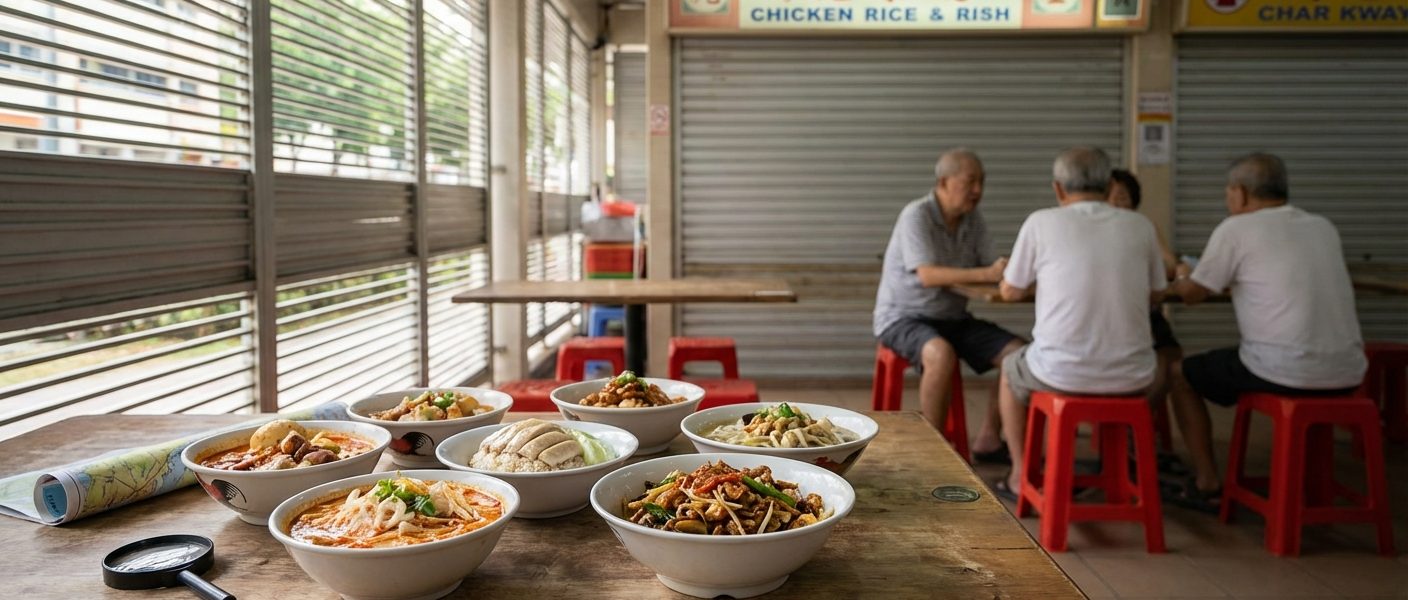
Singapore’s hawker scene never sleeps. While everyone queues at the same famous spots, a fresh wave of new hawker stalls Singapore has been quietly setting up shop across the island. These aren’t your typical openings. We’re talking about ex-bankers flipping char kway teow, third-generation recipes finally getting their own stalls, and young hawkers bringing techniques you won’t find anywhere else.
Singapore’s newest hawker stalls are opening with minimal fanfare but maximum flavour. From Ang Mo Kio to Bedok, these recent additions include career switchers, family recipe revivals, and innovative young cooks. Most opened within the past six months, operate during off-peak hours, and haven’t hit the mainstream food blogs yet. This guide reveals where to find them before the queues form.
Why new hawker stalls deserve your immediate attention
Most food hunters stick to established names. That’s exactly why fresh openings offer something better.
No queues yet. No tourist crowds. Just hawkers working harder than anyone to prove themselves.
New stalls bring urgency. They’re testing recipes, adjusting techniques, and genuinely grateful for every customer. The uncle at a 30-year-old stall might coast on reputation. The auntie who just opened last month? She’s triple-checking every bowl.
Plus, you get to witness food history in the making. Today’s unknown stall could be tomorrow’s Michelin mention. Being there first means something.
Spotting quality before the crowds arrive

Not every new opening deserves your time. Here’s how to separate the real deals from the hype chasers.
Signs of a promising new stall:
- Handwritten signs showing actual operating hours, not just “opening soon”
- Ingredients prepped fresh on-site, visible from the counter
- Owners actively cooking, not delegating to helpers immediately
- Simple menu focusing on 2-3 dishes maximum
- Regulars already forming despite zero social media presence
- Stall setup shows personal investment, not generic rental equipment
The best new hawker stalls Singapore has to offer rarely announce themselves loudly. They just show up, cook well, and let word spread naturally.
“I opened my stall with savings from 15 years in banking. Every plate matters because this is my retirement fund and my reputation. You can’t fake that kind of pressure.” – Former corporate banker now running a laksa stall in Toa Payoh
Where new stalls are actually opening right now
Forget the usual suspects. The newest action is happening in recently renovated hawker centres and neighbourhood centres that just got fresh leases.
The renovation wave bringing fresh blood
When hawker centres close for upgrades, they reopen with new tenants. These spots get first dibs on prime locations.
Ang Mo Kio Avenue 1 just reopened with four new stalls. Bedok South’s renovation brought in three career switchers. Jurong West Street 52 added five young hawkers under 35.
The pattern is clear. Renovated centres equal new opportunities.
Neighbourhood centres flying completely under the radar
Tourist-heavy spots like Maxwell and Lau Pa Sat rarely get new tenants. The real openings happen where locals actually eat daily.
Clementi West, Bukit Merah View, Chong Pang. These centres rotate tenants regularly but nobody writes about them. That’s where the hidden neighbourhood gems appear.
How to track down new openings before anyone else
Waiting for food blogs means you’re already late. Here’s the actual process for finding new hawker stalls Singapore locals haven’t discovered yet.
The systematic approach
- Check NEA’s hawker centre directory monthly for tenant updates
- Visit centres near your home on weekday mornings when stalls are setting up
- Talk to neighbouring stall owners who always know who’s moving in
- Follow hawker centre Facebook groups where uncles and aunties share news
- Look for handwritten “under new management” signs during your regular meals
This method works because most new stalls don’t have marketing budgets. They rely on foot traffic and word of mouth.
Timing your visits strategically
New stalls often test different operating hours before settling on a schedule. That Wednesday afternoon stall might become weekend-only by next month.
Visit within the first two weeks of opening. Owners are still eager, portions might be more generous, and you’ll get their full attention. Plus, you can provide feedback that actually shapes the menu.
Common mistakes versus smart moves when trying new stalls
| What doesn’t work | What actually works |
|---|---|
| Going during peak lunch rush | Visiting at 10am or 3pm for actual conversation |
| Ordering the most expensive item first | Starting with their signature dish |
| Comparing to famous established stalls | Judging the food on its own merits |
| Expecting Instagram-perfect presentation | Appreciating home-style plating |
| Leaving if there’s no queue | Recognizing you might be early to something great |
The biggest mistake? Assuming new means inexperienced. Many recent openings come from career switchers who’ve been cooking for decades or younger hawkers trained by masters.
The types of new stalls worth seeking out
Not all new openings are created equal. Some categories consistently deliver better food experiences.
Family recipes finally going public
These are the most exciting. Someone’s grandmother taught them a recipe that was only made at home for 40 years. Now it’s available to everyone.
Look for stalls with very specific dishes. “Teochew braised duck the way my ah ma made it” beats generic “braised duck rice” every time.
Young hawkers with formal training
The new generation isn’t just winging it. Many attended culinary school, worked in restaurants, then chose hawker life deliberately.
They bring technique. Proper knife skills. Temperature control. Flavour balancing. Combined with traditional recipes, the results can be stunning.
Specialized regional cuisines rarely seen in Singapore
New stalls sometimes introduce dishes from specific Chinese provinces, Malaysian states, or Indonesian regions that aren’t common here.
That’s how you end up with proper Hainanese wenchang chicken, authentic Terengganu nasi dagang, or Sumatran gulai that tastes like someone’s kampung kitchen.
What to expect from your first visit
Managing expectations makes the experience better. New stalls aren’t perfect yet, and that’s fine.
Realistic first-visit scenarios:
- Menu might be limited while they gauge demand
- Service could be slower as they work out kitchen flow
- Prices might adjust after the first month
- Operating hours may change based on crowd patterns
- Some dishes might sell out early
The trade-off? You get to taste food made with maximum effort and zero complacency. That’s worth minor operational hiccups.
Supporting new stalls the right way
Your visit matters more than you think. Here’s how to actually help new hawker stalls Singapore needs to survive.
Leave constructive feedback directly. Not on Google reviews, not on social media. Tell them in person what worked and what could improve. Most appreciate honest input.
Come back if the food was good. New stalls need regulars to survive the first six months. Your repeat visits literally keep them afloat.
Spread word selectively. Tell friends who actually care about food. Mass social media posts can backfire by bringing crowds before the stall is ready.
Pay with exact change when possible. New stall owners often run tight on float money, especially during the first weeks.
The reality check nobody mentions
Opening a hawker stall in 2024 is financially brutal. Rent, ingredients, utilities, and licensing fees add up fast. Most new hawkers operate on razor-thin margins.
That $4.50 plate of chicken rice? After costs, they might clear $1.20. Maybe.
Understanding this context changes how you view new stalls. They’re not just cooking. They’re betting their entire financial future on whether Singaporeans will give them a chance.
Some won’t make it past year one. The food might be excellent, but location, timing, or just bad luck can kill a stall. That’s why finding and supporting good new openings matters for preserving hawker culture overall.
Connecting new discoveries to Singapore’s food heritage
Every established hawker stall was once new. Tian Tian chicken rice started somewhere. That 78-year-old uncle’s char kway teow had a first day.
Today’s new hawker stalls Singapore is watching are tomorrow’s heritage institutions. The only difference is time and survival.
When you eat at a new stall, you’re participating in that continuum. You’re helping decide which recipes and techniques get passed forward. Which cooking styles become part of Singapore’s permanent food landscape.
That’s bigger than just finding good food. It’s active preservation.
Making new stall hunting part of your routine
Turn this into a sustainable habit rather than a one-time adventure.
Set a monthly goal. Try two new hawker stalls every month. That’s 24 new discoveries per year. Some will disappoint. A few will become your new regulars.
Vary your exploration zones. One month focus on eastern Singapore. Next month hit the north. Rotate through regions to build comprehensive knowledge.
Document what you find. Not for social media, but for yourself. A simple notes app entry with stall name, location, what you ordered, and whether you’d return. After a year, you’ll have an incredible personal database.
Bring different people each time. Your colleague might notice flavours you miss. Your parent might recognize traditional techniques you don’t know about yet.
Why this matters more than you realize
Singapore’s hawker scene faces real succession challenges. Older hawkers retire. Younger generations choose office jobs. Every new stall that succeeds is a small victory against cultural erosion.
Your willingness to try new places directly impacts whether hawker culture survives another generation. If new stalls can’t build customer bases, they close. If they close, fewer people try opening new ones. The cycle contracts.
But if new stalls find support? More people see hawker life as viable. More family recipes get commercialized. More culinary diversity enters the ecosystem.
You’re not just eating lunch. You’re voting with your dollars on what Singapore’s food future looks like.
Finding your next great hawker discovery starts now
The newest wave of hawker stalls is already cooking. They’re in neighbourhood centres you pass weekly. They’re operating during hours you normally don’t eat. They’re one conversation with a neighbouring stall owner away from being discovered.
You don’t need insider connections or food blogger status. Just curiosity and willingness to try something before everyone else does.
Start this weekend. Pick a hawker centre you’ve never visited. Walk through slowly. Look for the newest signs, the cleanest equipment, the owners who seem nervous and eager. Order something. Talk to them. Learn their story.
That’s how you find the next great stall before it becomes famous. That’s how you become part of Singapore’s living food heritage. And that’s how you eat better than everyone still queuing at the same old places.
The best new hawker stalls Singapore has to offer are waiting. You just have to show up before everyone else figures it out.