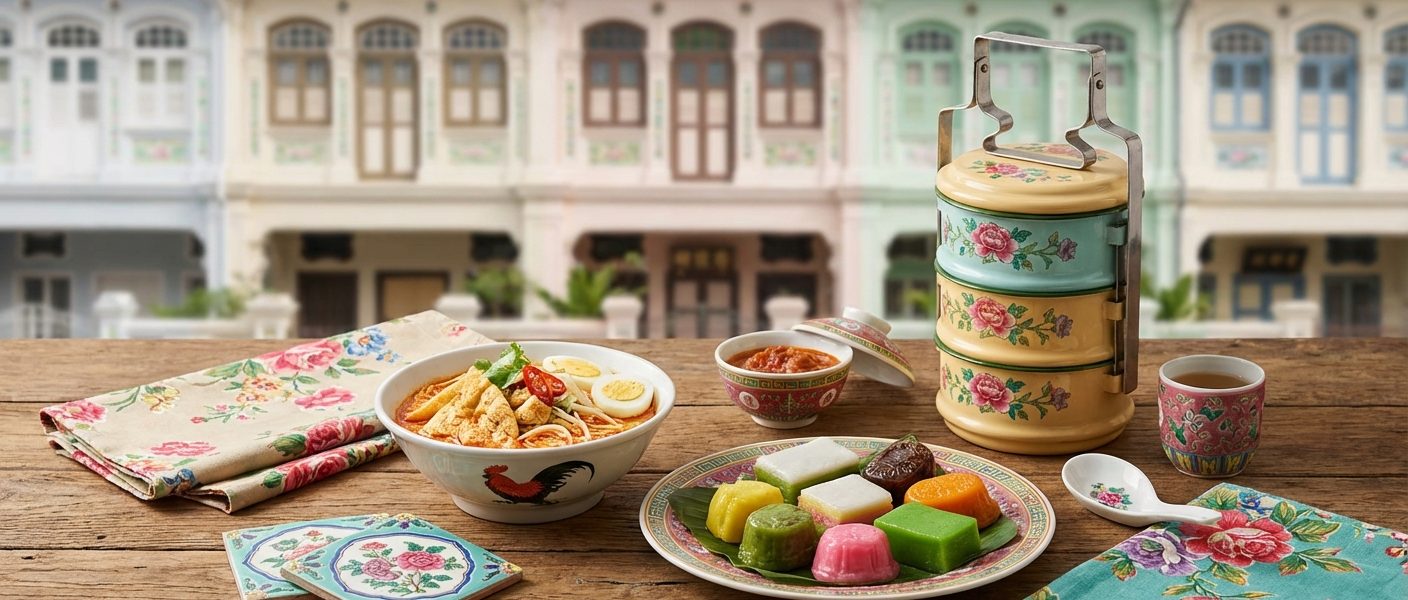
Katong and Joo Chiat form Singapore’s most colourful heritage corridor, where pastel-painted shophouses hide some of the island’s most authentic Peranakan cooking. This isn’t just another tourist trail. It’s where grandmothers still wake at 4am to grind spice pastes by hand, where recipes have passed through five generations, and where a single street corner can tell you more about Singapore’s multicultural story than any museum.
A Katong Joo Chiat food tour takes you through Singapore’s Peranakan heartland, where century-old recipes meet modern hawker innovation. This 3-4 hour walking route covers essential heritage dishes like laksa, kueh, and nasi lemak whilst revealing the cultural stories behind each bite. Best experienced morning or late afternoon to avoid crowds and catch stalls at their freshest.
Why Katong and Joo Chiat matter for food lovers
The Peranakans, also called Straits Chinese, created a unique cuisine by blending Chinese ingredients with Malay spices and cooking techniques. Nowhere preserves this culinary heritage better than Katong and Joo Chiat.
These neighbourhoods escaped major redevelopment for decades. That preservation wasn’t planned. It just happened because the area sat far from the city centre, allowing traditional businesses to survive whilst downtown transformed.
Today, you’ll find fourth-generation laksa sellers working beside young hawkers who left corporate careers to revive their grandmother’s recipes. The mix creates something rare in modern Singapore: authentic heritage food that’s still evolving.
What makes this area different from other food trails
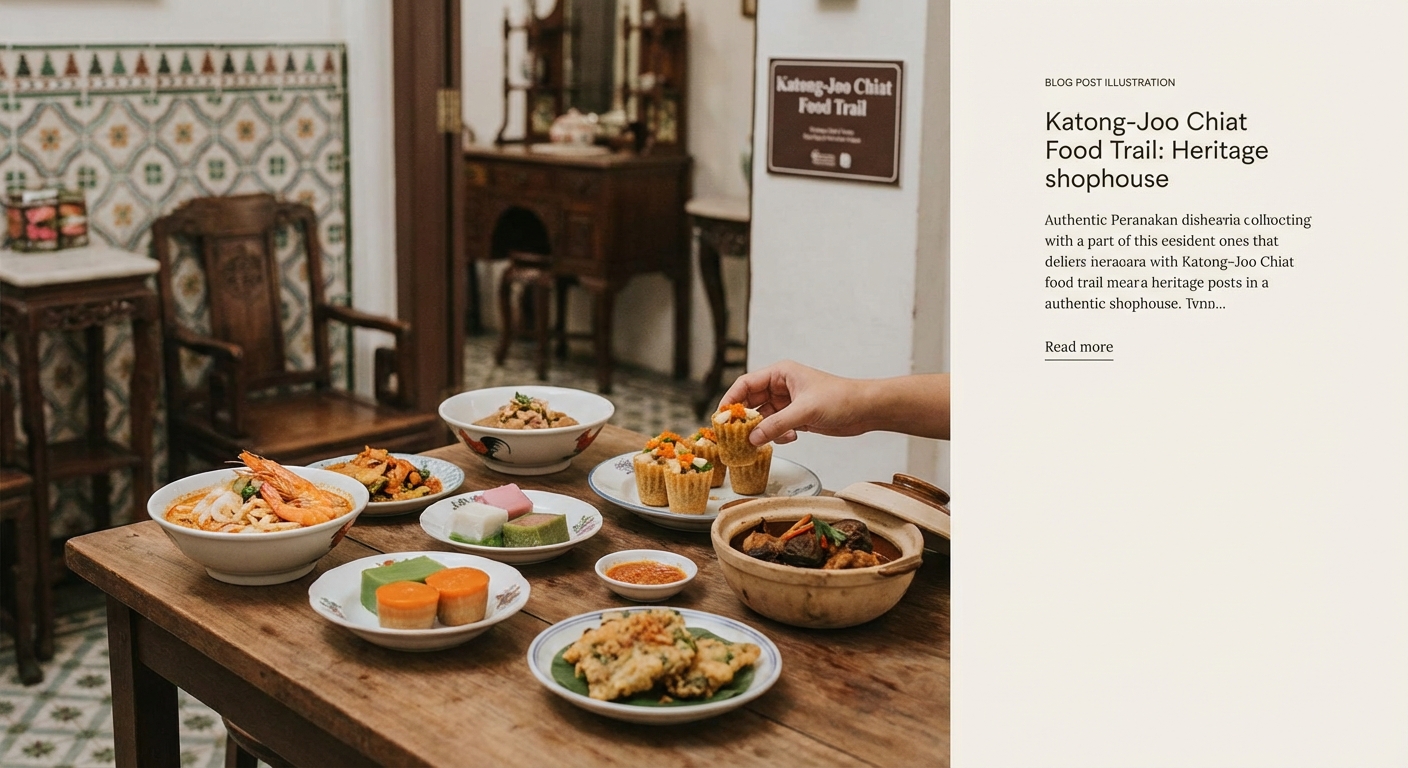
Most Singapore food tours focus on hawker centres. Katong and Joo Chiat spread their best eats across shophouse cafes, market stalls, and family-run kopitiam.
You’ll walk past architecture that tells stories. The ornate facades aren’t just pretty. They reveal which families made fortunes in rubber, shipping, or textiles. The ground-floor businesses often connect directly to those histories.
The food density here outpaces almost anywhere else in Singapore. One 500-metre stretch of Joo Chiat Road contains more heritage recipes than some entire neighbourhoods.
“When my ah ma taught me to make kueh, she said the coconut milk must come from the market that morning. Not yesterday. Not from a can. Some traditions exist because they actually make the food taste better.” – Third-generation kueh maker, East Coast Road
Planning your Katong Joo Chiat food tour
Best times to visit
Weekday mornings between 8am and 11am offer the freshest food and smallest crowds. Many traditional stalls prepare limited quantities and sell out by lunch.
Weekend afternoons work if you prefer a slower pace, but expect queues at popular spots. Avoid public holidays unless you enjoy waiting.
Late afternoons from 4pm onwards suit those who want to catch both afternoon kueh sellers and early dinner stalls. The light at this hour makes the shophouses glow.
How long you’ll need
A proper food tour takes 3 to 4 hours. That includes walking time, eating, and occasional breaks to digest.
Rushing through in 90 minutes means you’ll miss the stories. The best hawkers love talking about their craft if you show genuine interest.
Budget an extra hour if you want to photograph the architecture or browse the vintage shops tucked between food stalls.
Getting there and around
The area sits about 20 minutes from the city centre by taxi or bus. The MRT doesn’t reach the heart of Katong and Joo Chiat, though the new Thomson-East Coast Line brings you closer than before.
Most visitors take bus 16 or 33 along East Coast Road. Get off at Katong Shopping Centre and walk from there.
The entire route covers roughly 2 kilometres, mostly flat and easy walking. Wear comfortable shoes. The five-foot ways (covered walkways) provide shade, but you’ll still sweat in Singapore’s heat.
Essential stops on your walking route
Starting point at Katong Shopping Centre
This aging mall houses several traditional breakfast stalls worth trying. The kaya toast at one particular corner stall uses a family recipe from the 1950s, with butter so thick it barely melts into the bread.
The laksa stall on the second floor opens at 7am. Get there early. They make one pot of broth each morning and close when it runs out.
Joo Chiat Road’s heritage stretch
Walking east along Joo Chiat Road, you’ll pass the famous Peranakan shophouses with their ornate tiles and pastel colours. Stop at the family-run popiah stall that’s operated from the same shopfront since 1958.
Their turnip is sweet, never bitter. The chilli sauce comes mild or volcanic. Order both and mix them yourself.
Three doors down, a kueh stall sells traditional Nonya cakes every afternoon except Monday. The ondeh ondeh (pandan balls with palm sugar) stay soft for exactly 4 hours after steaming. Time your visit right.
East Coast Road’s morning markets
The wet market area comes alive before sunrise. By 8am, you can buy fresh coconut cakes, curry puffs still warm from the oven, and nasi lemak wrapped in banana leaves.
One stall sells only one item: pulut inti, glutinous rice topped with grated coconut and palm sugar. They’ve refused to expand their menu for 30 years. When something works, why change it?
Hidden gems off the main roads
The best char kway teow in the area hides in a coffee shop two streets behind Joo Chiat Road. No sign in English. Just look for the wok flames visible from the street around 11am.
A traditional Peranakan restaurant operates from a converted shophouse on Koon Seng Road. They serve dishes you won’t find anywhere else: ayam buah keluak (chicken with black Indonesian nuts), babi pongteh (pork in fermented bean sauce), and chap chye (mixed vegetable stew) that takes 6 hours to prepare properly.
Must-try dishes and where to find them
| Dish | What to expect | Best time | Price range |
|---|---|---|---|
| Katong laksa | Thick coconut-based broth, no chopsticks needed | 7am-11am | $5-8 |
| Kueh lapis | Multi-layered steamed cake, moist and fragrant | 2pm-5pm | $2-4 per slice |
| Nasi lemak | Coconut rice with sambal, ikan bilis, egg | 6am-10am | $3-6 |
| Popiah | Fresh spring rolls with turnip filling | 11am-7pm | $3-5 |
| Ondeh ondeh | Pandan balls with exploding palm sugar | 2pm-6pm | $1 each |
| Ayam buah keluak | Chicken with black nuts, complex flavours | Lunch/dinner | $18-25 |
The laksa situation explained
Multiple stalls claim to serve the “original” Katong laksa. The truth? Several families developed similar recipes independently during the 1950s and 60s.
Real Katong laksa comes with cut noodles so you can eat it with just a spoon. The broth balances coconut milk richness with dried shrimp intensity. Fresh cockles add a briny punch.
Some stalls serve it too sweet for modern tastes. Others go heavy on the chilli. Try at least two different versions to find your preference.
Kueh varieties worth trying
Traditional Nonya kueh comes in dozens of varieties. Start with these five:
- Kueh lapis: Requires patience to steam layer by layer, each one flavoured differently
- Ang ku kueh: Red tortoise-shaped cakes filled with peanut or coconut
- Pulut inti: Sweet coconut topping over blue glutinous rice
- Ondeh ondeh: The palm sugar inside should burst when you bite
- Kueh dadar: Pandan crepes rolled with grated coconut and gula melaka
Most kueh stalls sell out by late afternoon. Morning buyers get the widest selection.
Common mistakes to avoid
New visitors often make the same errors. Learn from others’ mistakes.
Eating too much at the first stop: Pace yourself. You’ll want room for at least 5 or 6 different dishes across the tour.
Skipping the less photogenic stalls: Instagram-worthy doesn’t always mean authentic. Some of the best food comes from stalls that look like they haven’t updated their signage since 1975.
Going during peak lunch hours: The 12pm to 2pm window brings office crowds. You’ll queue longer and miss the relaxed atmosphere that makes this area special.
Ignoring drinks: Traditional coffee shops serve kopi (coffee) and teh (tea) made with condensed milk. They’re part of the experience, not just beverages.
Rushing the conversations: Hawkers appreciate when customers ask about their food. A simple “How long have you been making this?” often leads to fascinating stories.
How to make the most of your tour
Bring cash in small notes
Many traditional stalls don’t accept cards or digital payments. Come prepared with $2, $5, and $10 notes.
Change for a $50 note at a small kueh stall creates awkward situations. Break larger bills at the coffee shop first.
Come hungry but not starving
Arrive ready to eat, but not so ravenous that you demolish the first three dishes. The best strategy involves small portions at multiple stops rather than full meals at fewer places.
Share dishes if you’re touring with others. One laksa split between two people leaves room for kueh, popiah, and whatever else catches your eye.
Ask before photographing
Most stall owners don’t mind photos of their food. Some prefer you ask first, especially if you’re photographing them working.
The older generation sometimes feels uncomfortable with cameras. A polite “Can I take a photo?” in English works fine. They’ll usually smile and nod.
Follow the locals
Notice where Singaporeans queue. They know which stalls maintain quality and which ones coast on tourist traffic.
An empty stall at 10am on a Saturday morning sends a message. Trust the crowd wisdom, especially for breakfast items.
Comparing guided tours versus self-guided exploration
Guided tour advantages
Professional guides know the family histories behind each stall. They’ve built relationships over years, sometimes gaining access to recipes or preparation areas tourists never see.
Language barriers disappear. Many traditional stall owners speak primarily Hokkien or Malay. Guides translate and facilitate deeper conversations.
Logistics become effortless. Someone else handles timing, reservations for sit-down restaurants, and navigating the back alleys.
Self-guided benefits
You control the pace completely. Want to spend 30 minutes talking to the laksa uncle about his grandmother’s recipe? Go ahead.
Costs stay lower. A self-guided tour might run $20 to $30 per person for food. Guided tours typically start around $80 to $120.
Flexibility allows spontaneous detours. Spotted an interesting-looking stall not on your list? Stop and try it.
The choice depends on your comfort level with independent travel and how much cultural context matters to you. Both approaches work. Similar to how navigating Lau Pa Sat requires different strategies depending on your experience level, Katong and Joo Chiat reward both structured and spontaneous approaches.
Connecting Peranakan food to Singapore’s larger story
Peranakan cuisine didn’t develop in isolation. It emerged from centuries of trade, intermarriage, and cultural exchange between Chinese immigrants and local Malay communities.
The spice pastes (rempah) that form the base of many dishes show clear Malay influence. The cooking techniques, especially braising and stewing, come from Chinese traditions. The end result belongs uniquely to Singapore and the Straits Settlements.
Understanding this background makes the food taste different. That laksa isn’t just coconut curry with noodles. It’s edible history, showing how communities blended and created something new together.
The shophouses themselves tell parallel stories. Chinese architectural elements mix with European-style windows and Malay-inspired courtyards. The buildings and the food developed together, both expressing the same cultural fusion.
Seasonal and time-sensitive considerations
Festival periods
Chinese New Year brings special kueh varieties that appear only during that two-week window. Pineapple tarts, love letters (crispy rolled wafers), and nian gao (sticky rice cake) dominate the stalls.
Hari Raya sees Malay-influenced Peranakan dishes take centre stage. Rendang, ketupat, and special kueh varieties appear that you won’t find other times of year.
Weather impacts
Heavy rain can shut down outdoor stalls. The covered five-foot ways protect some areas, but not all.
Extreme heat (anything over 33°C) makes afternoon walks less pleasant. Morning tours become especially appealing during hot spells.
Stall closures and holidays
Family-run businesses often close for a week or two during major festivals. Chinese New Year typically sees the longest closures.
Some stalls take random days off when the owner needs rest. This unpredictability adds charm but can frustrate rigid itineraries. Build flexibility into your plans.
What to do after eating
Walking off the calories
The beach sits just 10 minutes east. East Coast Park offers a long coastal path perfect for post-meal walks.
The Peranakan-style shophouses along Koon Seng Road and Joo Chiat Place deserve slower exploration. Each facade tells a different architectural story.
Shopping for ingredients and souvenirs
Several shops sell traditional Peranakan ingredients. You can buy the same belacan (shrimp paste), dried spices, and specialty items the hawkers use.
Vintage clothing and antique shops dot the area. Some focus specifically on Peranakan items: beaded slippers, embroidered tablecloths, and porcelain ware.
Extending your food education
Kim Choo Kueh Chang offers kueh-making workshops where you can learn to wrap and fold traditional cakes. They run most weekends and need advance booking.
The Peranakan Museum in the city centre provides historical context for everything you’ve eaten. Visit before or after your food tour to deepen your understanding.
Adapting the tour for different needs
Dietary restrictions
Vegetarian Peranakan food exists but requires more searching. Several dishes naturally contain no meat: kueh varieties, vegetable popiah, and certain curry options.
Halal options appear less frequently in traditional Peranakan cooking, which often features pork. However, the area’s Malay-influenced stalls offer plenty of halal choices.
Gluten-free eating proves challenging. Rice-based kueh works, but many dishes involve wheat noodles or soy sauce. Ask about ingredients before ordering.
Mobility considerations
The five-foot ways have uneven surfaces and occasional steps. Wheelchair access varies by building age. Newer establishments comply with accessibility standards. Older shophouses often don’t.
The walking distance can be reduced by focusing on one main street instead of covering the entire area. East Coast Road alone offers enough variety for a satisfying tour.
Family-friendly adjustments
Children often enjoy the sweeter kueh varieties more than complex dishes like buah keluak. Start them with ondeh ondeh or kueh lapis.
The walking breaks between stalls help restless kids. This isn’t a sit-down meal. The movement keeps them engaged.
Most stalls serve small portions perfect for sharing. Order one of everything and let kids sample without committing to full servings.
How this compares to other Singapore food experiences
The Katong Joo Chiat area offers something different from the more famous hawker centres. While places like Maxwell Food Centre attract tourists with concentrated stall variety, this neighbourhood spreads its treasures across a living community.
You won’t find the same density as Tiong Bahru Market’s heritage scene, but the Peranakan focus creates deeper cultural immersion.
The experience sits somewhere between a structured food court visit and a full neighbourhood exploration. You get the best of both: authentic local eating within a walkable area that tells a coherent cultural story.
Building your perfect route
The classic morning circuit
- Start at Katong Shopping Centre for kaya toast and coffee (7:30am)
- Walk to the laksa stall on East Coast Road (8:00am)
- Browse the wet market for fresh kueh (8:30am)
- Try popiah at the Joo Chiat Road stall (9:30am)
- End with nasi lemak from a banana leaf vendor (10:00am)
This route covers the essentials in under 3 hours while everything stays fresh.
The afternoon heritage focus
- Begin with a late lunch at a Peranakan restaurant (1:00pm)
- Walk off the meal exploring shophouse architecture (2:00pm)
- Stop for kueh at a traditional stall (3:00pm)
- Coffee and kaya toast at an old kopitiam (4:00pm)
- Browse vintage shops and ingredient stores (4:30pm)
This version emphasises culture and architecture alongside food.
The comprehensive all-day approach
Combine both routes with a midday break. Eat breakfast items in the morning, rest during peak heat, then return for afternoon kueh and an early dinner.
This works best for serious food enthusiasts who want to try everything. Pace yourself. Even experienced eaters struggle to sample more than 8 or 9 different dishes in one day.
Preserving what makes this area special
The Katong and Joo Chiat neighbourhoods face constant development pressure. Rising rents push out traditional businesses. Younger generations sometimes choose office careers over the dawn-to-dusk grind of hawker work.
Every visit to these heritage stalls helps preserve them. Your $5 laksa purchase matters more than you’d think. It proves demand still exists for traditional preparation methods and authentic recipes.
Talk to the stall owners. Ask about their histories. Show genuine interest in their craft. This encouragement sometimes tips the balance when a third-generation seller debates whether to continue the family business or close up shop.
The stories you’ll hear rival anything in Singapore’s museums. The 78-year-old kueh maker who still grates coconut by hand every morning. The former banker who quit to learn his grandmother’s laksa recipe before she passed. The family that’s sold popiah from the same corner for 65 years.
These aren’t just meals. They’re living heritage that needs support to survive another generation.
Where heritage meets your plate
A Katong Joo Chiat food tour gives you more than a full stomach. It connects you to Singapore’s multicultural roots through the most direct path possible: taste.
The neighbourhood won’t look the same in 20 years. Development never stops in Singapore. But right now, today, you can still eat laksa made exactly the way someone’s great-grandmother taught them in 1952. You can buy kueh from recipes that predate independence. You can sit in coffee shops where three generations have gathered every morning for decades.
Start your tour soon. Bring an appetite, comfortable shoes, and genuine curiosity. The food will fill you up. The stories will stay with you much longer.