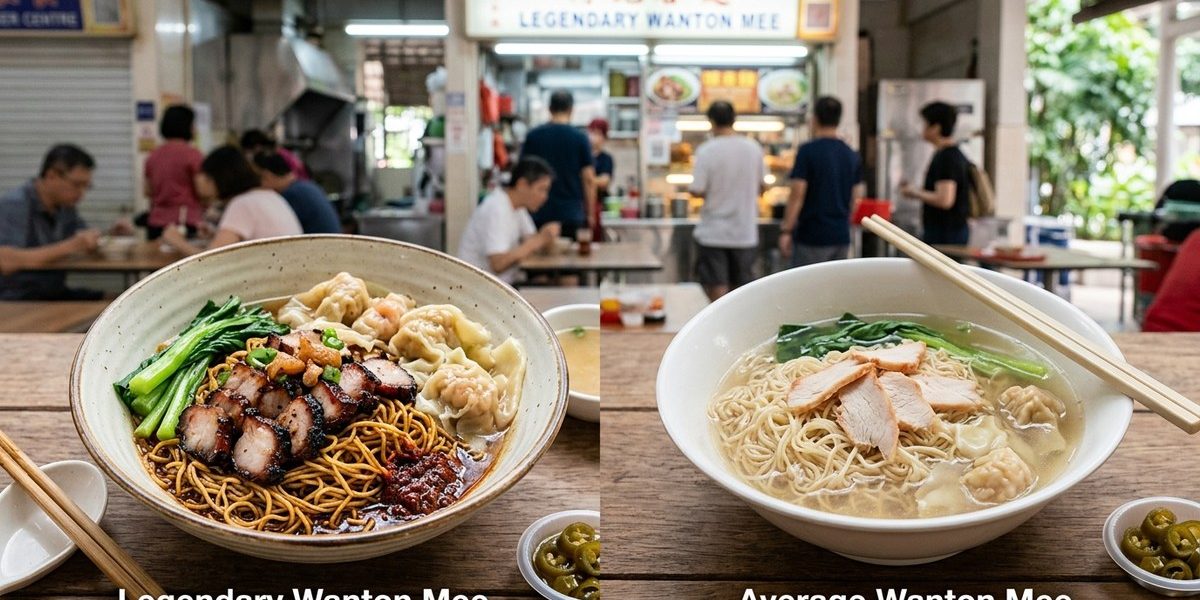
You are standing in front of a wanton mee stall. The queue is four people deep. The uncle behind the counter moves with quiet confidence, tossing noodles in one hand while scooping chilli with the other. You have been here before. The bowl arrives. The vinegar hits your nose first. Then the fragrance of lard. One bite and you know. This is not average. This is the kind of bowl that makes you cancel dinner plans just to come back for seconds.
What exactly creates that gap between a forgettable plate and one people cross the island for? Let us break down the details.
A legendary wanton mee stands on four pillars: springy, alkali-free noodles with the right bite; wantons that stay tender and never mushy; a chilli that balances heat with tang; and char siew that is caramelised at the edges but still moist inside. Master these, and the queue will speak for itself. Average stalls cut corners on at least two of these.
The Noodle Is the Foundation
Everything starts with the noodle. A legendary stall uses thin, yellow egg noodles that are made fresh daily. The texture must be firm but not hard. You should feel a slight resistance when you bite through each strand. That is the sign of proper alkalinity and a short cooking time.
Many average stalls overcook their noodles. The result is a limp, clumpy mess that sticks together. The uncle at a top tier stall will blanch the noodles for no more than 15 to 20 seconds. Then he tosses them in a mixture of dark soy, light soy, vinegar and a touch of sesame oil. The noodles should glisten but not swim in sauce.
One reliable test is the shake test. Pick up a mouthful with your chopsticks and give it a gentle shake. If the noodles hold their shape and do not droop like wet string, you are in good hands.
The Wanton: Small but Mighty
The wanton itself is often the most neglected component at average stalls. A great wanton has a thin wrapper that is pleated carefully. The filling should be predominantly pork with a hint of shrimp. The ratio matters. Too much shrimp and the wanton turns rubbery. Too much pork and it becomes heavy.
Legendary wantons are boiled to order. They should float to the surface within two minutes. The wrapper should remain translucent and delicate, never thick or doughy. When you bite into it, the juices from the filling should release gently. Not burst. Not drip. Just a soft, savoury surprise.
Some stalls fry their wantons as well. A fried wanton must be golden brown and shatter when bitten. But the boiled wanton remains the true test of skill. If a stall cannot get the boiled version right, the fried one will not save them.
The Chilli: The Soul of the Bowl
This is where legends separate themselves from the pack. A legendary wanton mee chilli is not just about heat. It is about complexity. The best versions use a base of fresh red chillies blended with dried shrimp, shallots, garlic and a splash of vinegar. The vinegar cuts through the richness of the lard and gives the whole bowl a lift.
Some stalls add a hint of belacan for depth. Others use cili padi for a sharper kick. But the common thread is balance. You should taste the chilli, feel the heat, and still want more. An average stall uses a one note chilli paste from a bottle. It is either too sweet or too fiery with no middle ground.
Here is a simple rule. Look at the colour of the chilli. A deep, vibrant red suggests fresh ingredients. A dull brown or orange colour usually means the chilli has been sitting out for hours.
The Char Siew: The Sweet Counterpoint
Char siew in wanton mee plays a supporting role, but a legendary stall treats it with respect. The pork should be roasted until the edges caramelise, giving it that sticky, slightly charred finish. Inside, the meat must stay tender and moist.
Average stalls often use leftover char siew from the day before. It is dry, tough and lacks the glossy sheen of freshly roasted pork. A legendary stall will roast their char siew in small batches throughout the day. The result is a piece of meat that yields easily to the teeth and leaves a subtle sweetness on the palate.
The thickness matters too. Thin slices dry out too quickly. Thick slices can feel chewy. The sweet spot is about half a centimetre, with a good ratio of lean to fat.
Table: Legendary vs Average at a Glance
| Component | Legendary Stall | Average Stall |
|---|---|---|
| Noodle texture | Springy, firm, separate strands | Limp, clumpy, overcooked |
| Wanton wrapper | Thin, translucent, boiled to order | Thick, doughy, boiled in bulk |
| Wanton filling | Pork and shrimp, juicy, well seasoned | Mostly filler, dry, bland |
| Chilli | Fresh ingredients, balanced heat, tangy | Bottled paste, one note, overly sweet |
| Char siew | Caramelised edges, moist interior, freshly roasted | Dry, tough, from previous batch |
| Sauce | Light soy, dark soy, vinegar, sesame oil in harmony | Too salty or too sweet, no layers |
| Lard | Crisp, fragrant, added at the end | Soggy, stale, or missing entirely |
The Sauce: Layers of Flavour
A great wanton mee sauce is not poured on. It is built. The noodles are tossed in a mixture that combines savoury, sour and sweet elements in the right proportions. Light soy provides saltiness. Dark soy adds colour and a hint of molasses. Black vinegar gives acidity that balances the richness of the lard.
Some legendary stalls have a secret ingredient. It could be a splash of master stock that has been simmering for days. It could be a special brand of soy sauce imported from Hong Kong. Whatever it is, the result is a sauce that coats each strand evenly without pooling at the bottom of the bowl.
If you see a pool of oily sauce sitting at the bottom after you finish the noodles, that is a sign of poor technique. The sauce should cling to the noodles, not escape them.
The Lard Factor
Do not underestimate the power of good lard. A legendary stall renders their lard fresh every morning. The result is golden, crunchy cubes that add texture and a deep, porky aroma to every bite. Average stalls use pre packaged lard that has been sitting in a tub for days. It tastes stale and leaves a greasy film in your mouth.
The amount of lard matters too. Too little and the noodles lack richness. Too much and the bowl becomes heavy. The best stalls add a small handful just before serving, so the lard stays crisp throughout the meal.
How to Spot a Legendary Stall in 30 Seconds
Here are the signs to look for when you approach a wanton mee stall for the first time:
- The queue moves at a steady pace. No one is waiting more than 10 minutes for a bowl.
- The uncle or auntie handles the noodles with visible care. They do not dump everything into one pot.
- The chilli is kept in a covered container, not left open to the air.
- The char siew hangs in a row, glistening under the heat lamp. It should look freshly roasted.
- The wantons are boiled in small batches. You should see them scooping out a fresh batch every few orders.
- Regulars do not need to specify their preferences. The stall remembers how they like it.
A Four Step Method for Judging Any Bowl
Next time you sit down with a bowl of wanton mee, run through this checklist.
- Smell the bowl before you eat. You should pick up vinegar, sesame oil and the aroma of lard. If it smells flat, the rest will likely be flat too.
- Taste one strand of noodle on its own. No sauce, no chilli. Just the noodle. It should have a clean, slightly alkaline taste with a firm bite.
- Bite into a wanton in two stages. First, test the wrapper. It should break easily. Second, taste the filling. It should be savoury and juicy, not dry or pasty.
- Mix the chilli in slowly. Add a small amount first, taste, then add more. A legendary chilli will not overwhelm the other flavours. It will lift them.
“The secret is not in one ingredient. It is in the timing. Noodles must be tossed at the right moment. Wantons must be boiled only when the order comes in. Chilli must be made fresh every two days. If you miss any of these, the bowl becomes ordinary.” A third generation hawker from a Michelin Bib Gourmand stall shared that with me during a quiet afternoon. He has been making wanton mee for over 40 years.
Why Heritage Matters in Every Bite
A legendary wanton mee stall is not just about technique. It is about continuity. Many of the best stalls in Singapore have been running for three decades or more. The recipes are passed down through generations. The sons and daughters who take over do not change the formula. They refine it.
This is why a bowl from a heritage stall tastes different from a modern upstart. The muscle memory of the person making it has been built over thousands of repetitive motions. Every flick of the wrist, every scoop of chilli, every toss of the noodles is second nature.
If you want to read about other hawkers who have preserved their family traditions, check out our story on five generations of bak chor mee. The same principles of patience and heritage apply.
The Role of the Hawker Centre Environment
The setting matters more than you think. A legendary wanton mee stall thrives in a hawker centre that has good turnover. The constant flow of customers means the noodles are always fresh. The chilli is replenished daily. The lard is rendered every morning.
Stalls that operate in quiet locations often cut corners because they cannot afford to throw away unsold ingredients. That is why the best wanton mee is almost always found in busy hawker centres like Tiong Bahru Market, Maxwell Food Centre or the coffee shops in Geylang and Toa Payoh.
The energy of a busy hawker centre adds to the experience. The clatter of bowls, the hiss of boiling water, the chatter of regulars. These sounds are part of the flavour. A legendary bowl tastes better when eaten in a place that feels alive.
For more insights on how hawkers protect their signature recipes, take a look at the secret recipes they guard with their lives. Every stall has its own story.
Why Consistency Is the Ultimate Test
Anyone can make one great bowl. The question is whether they can make the same bowl a hundred times a day, every day, for years. That is the mark of a legendary stall.
Average stalls are inconsistent. One day the noodles are perfect. The next day they are overcooked. The chilli tastes different from visit to visit. The char siew is sometimes dry, sometimes moist. You never know what you are going to get.
Legendary stalls are predictable in the best way. You know exactly what the bowl will taste like before you order. That consistency comes from discipline. The same ingredients, the same process, the same attention to detail, every single time.
If you want to understand how other hawker classics achieve that level of consistency, read about why char kway teow tastes better at certain stalls. The principles are remarkably similar across different dishes.
Finding Your Own Legendary Bowl
The best way to find a legendary wanton mee stall is to ask a local. Singaporeans love talking about food. Strike up a conversation with the person next to you in the queue. Ask them which stall they swear by. You will get an honest answer.
Do not rely solely on social media. The most famous stalls on TikTok are not always the best. Some of the greatest bowls are served at unassuming coffee shops where the uncle has been working the same wok for 30 years and has never posted a single photo online.
Start with the stalls that have a long history. Look for the ones that close by 2pm because they sell out. Those are the ones where the ingredients are fresh and the standards are high. If a stall is still serving at 5pm and the queue is gone, ask yourself why.
And if you want to venture off the beaten path, check out our list of 10 hawker stalls only locals know about. Some of those hidden gems serve wanton mee that will change your standards forever.
The Bowl That Stays With You
A legendary wanton mee is not about flashy presentation or expensive ingredients. It is about doing the simple things well. The noodles must have bite. The wantons must be tender. The chilli must have depth. The char siew must be caramelised. The lard must be fresh. The sauce must be balanced.
When all these elements come together in one bowl, the result is unforgettable. You finish the last strand, wipe the chilli from your lips, and immediately start planning your next visit. That is the feeling every wanton mee stall should aim for. And that is the feeling you deserve every time you sit down to eat.
Go find your bowl. The one that makes you cancel plans just to have it again. It is out there, waiting at some unassuming hawker centre, made by hands that have been perfecting it for decades.