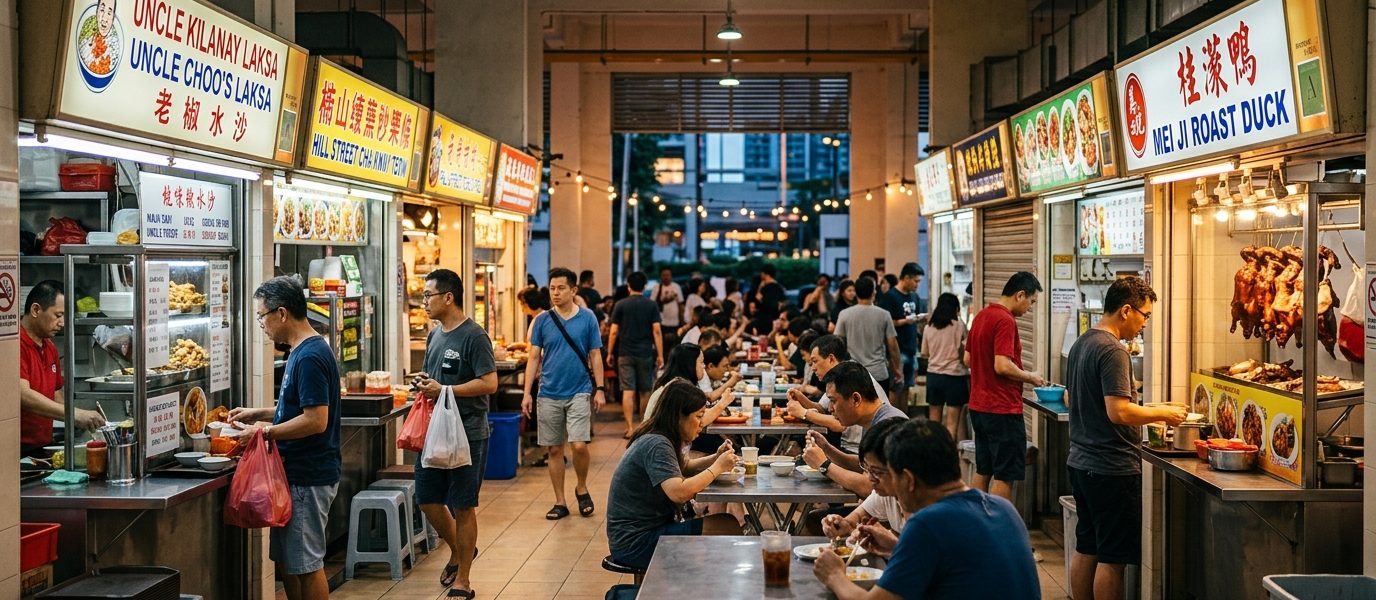
Most tourists eat at the same five hawker centres. They queue for an hour at Maxwell. They photograph their chicken rice at Tian Tian. They tick off the Michelin stalls and call it done.
Meanwhile, locals are eating somewhere else entirely.
The best hawker food in Singapore doesn’t come with Instagram fame or Google reviews in the thousands. It sits in quiet neighbourhood centres where uncles read newspapers at 3pm and aunties know exactly which stall to order from without looking at signs. These are the hidden hawker stalls Singapore locals actually frequent, the ones passed down through family WhatsApp groups and whispered about at office pantries.
Singapore’s best hawker food hides in neighbourhood centres far from tourist maps. These stalls serve regulars who’ve eaten there for decades, operate odd hours, and rarely appear in guidebooks. Finding them requires talking to locals, visiting residential areas, and eating where you see school uniforms and construction workers, not cameras and queues. The reward is authentic flavours at local prices without the tourist markup.
Why hidden stalls taste better than famous ones
Fame changes food.
When a stall gets featured in media or wins awards, something shifts. Prices creep up. Portions shrink. The uncle who used to chat with regulars now rushes through orders. Ingredients get standardised to handle volume.
Hidden stalls don’t face these pressures.
They serve the same 50 to 80 customers daily. The same families who’ve eaten there since the 1980s. The same recipes passed down without modification because there’s no reason to change what already works.
The auntie remembers you asked for less salt last week. The uncle adds extra char siew because your kid looks hungry. This relationship between hawker and regular creates food that tastes like it’s made for someone specific, not for anyone with $5.
Price tells the story too. Tourist hawker centres charge $6 to $8 for chicken rice. Hidden neighbourhood gems charge $3.50 to $4.50 for the same dish, often with bigger portions.
How locals actually find these stalls
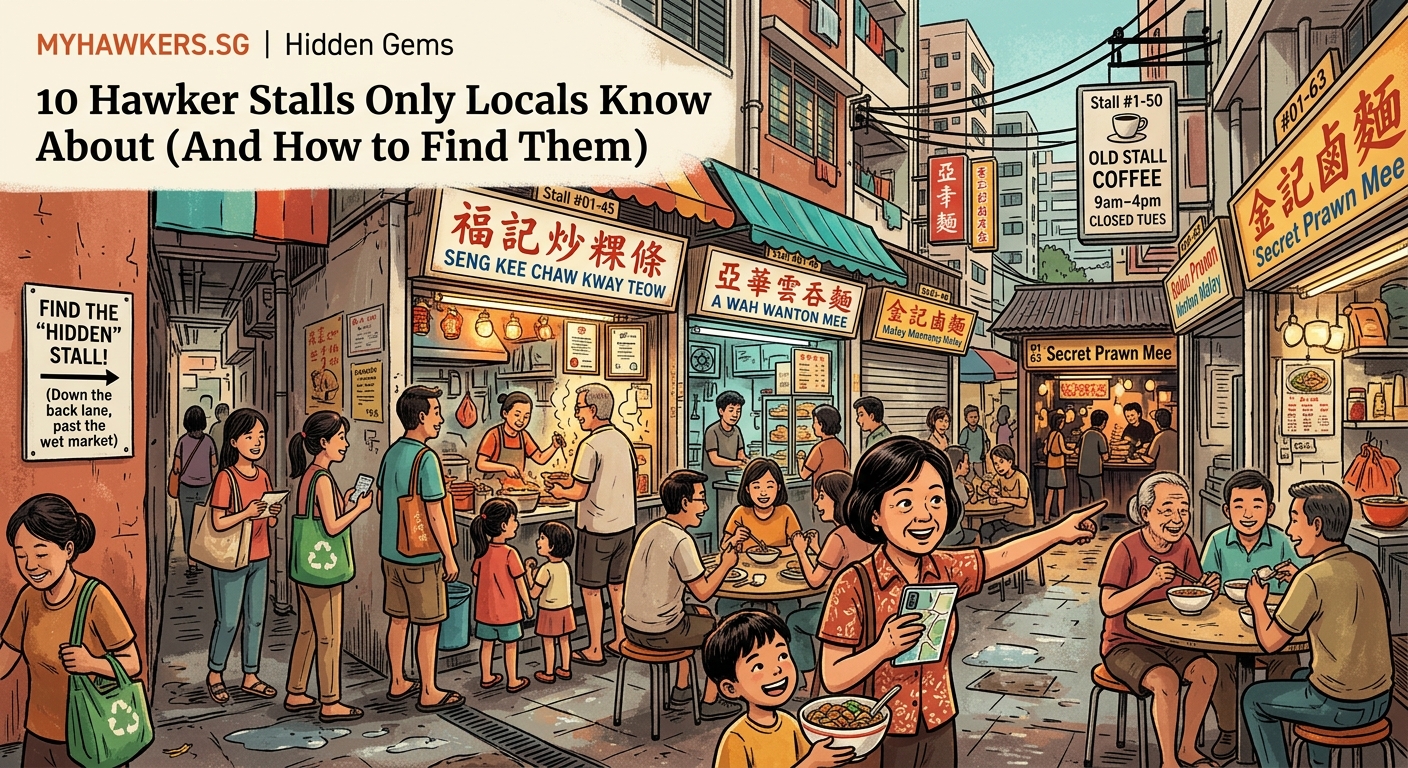
Singaporeans don’t use Google Maps to find good hawker food.
They ask colleagues at lunch. They notice where taxi drivers eat during shift changes. They follow the crowd at 7am near MRT stations, when office workers grab breakfast before heading in.
Here’s how to spot a local favourite:
- Check what the construction workers and delivery riders are eating
- Look for stalls with handwritten signs in Chinese, Malay, or Tamil only
- Notice which stalls have regulars reading newspapers while waiting
- Watch for elderly customers who arrive at the same time daily
- Count how many people order without looking at the menu
The best indicator? School uniforms at 1pm. Students know which stalls give the best value and biggest portions. They’ve tested every option in their neighbourhood and settled on winners.
“I’ve been eating at the same prawn mee stall for 23 years. The uncle knows my order when I walk up. That’s not something you get at tourist centres where they serve 500 people a day.” — Mrs Chen, Bedok resident
The timing secret tourists miss
Hidden hawker stalls keep odd hours.
Some only open for breakfast, closing by 11am. Others don’t start until 4pm and run till midnight. A few operate on weird schedules like Tuesday to Saturday only, or weekends exclusively.
This happens because these hawkers serve specific communities. The breakfast stall near the industrial estate opens at 5am for factory workers. The late-night porridge stall caters to shift workers finishing at 11pm. The weekend-only char kway teow? That uncle has a day job and hawks as a side income.
Tourists miss these stalls because they eat at tourist hours. Lunch at noon. Dinner at 7pm. But locals eat breakfast at 6am before work, lunch at 11.30am to beat the crowd, and dinner at 6pm or 8.30pm depending on their schedule.
The complete breakfast hunter’s map shows how timing affects what you can find. Some of the best hawker food in Singapore only exists in a three-hour window each morning.
Where to look beyond the guidebooks
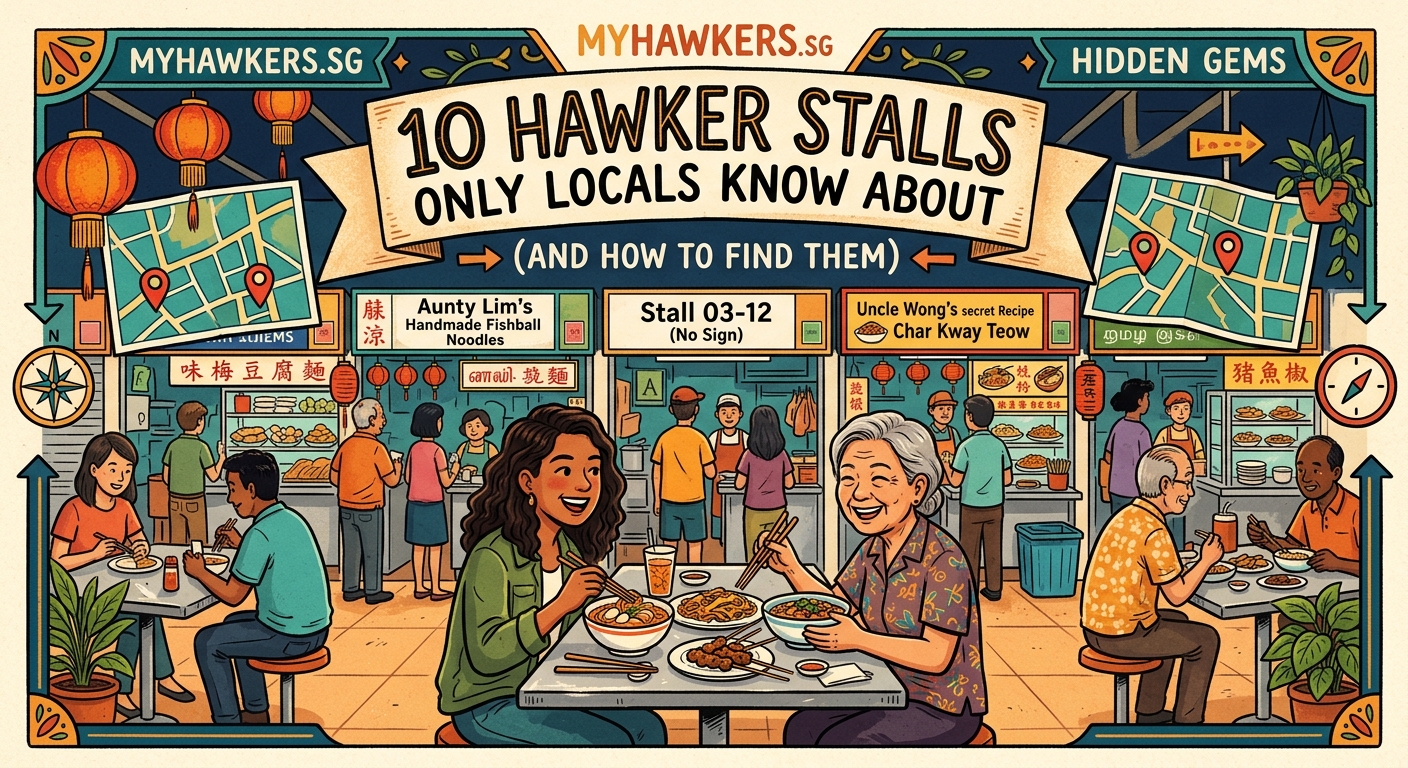
Forget Chinatown Complex and Maxwell. The real food sits in residential estates.
HDB heartland hawker centres serve the people who live within walking distance. No tourists make the trip to Yuhua Village Market or Bukit Merah View. These centres exist purely for residents, which means stalls must be good or they close within months.
Look for these signs of a local centre:
- Located inside or next to HDB estates
- Surrounded by playgrounds and void decks
- Mostly kopitiam-style seating, not fancy tables
- Wet market attached or nearby
- At least three provision shops within 100 metres
The wet market connection matters. Hawkers who buy fresh ingredients daily from the market next door produce different food than those receiving frozen deliveries. You can taste the difference in the prawn noodles, the fish soup, the chicken rice.
Neighbourhood centres also mean neighbourhood prices. A plate of economic rice with three dishes costs $3 to $3.50, not the $5 to $6 charged at CBD centres.
Reading the signs only locals understand
Hidden hawker stalls communicate in code.
A long queue at 10.30am means the stall runs out by noon. A handwritten “sold out” sign at 2pm tells you to come earlier tomorrow. Chairs stacked on tables at 1pm signals the uncle is done for the day, even if the centre stays open.
Here’s what different signals mean:
| Sign | What it actually means | What to do |
|---|---|---|
| Handwritten menu only | Uncle doesn’t care about tourists | Order in dialect if possible, point at what others are eating |
| Queue of elderly folks | Food tastes like it did 30 years ago | Join the queue, it moves faster than it looks |
| Stall closes by 11am | Sells out daily, very popular | Arrive by 9am or miss out |
| No price displayed | Regulars already know | Ask “how much” before ordering |
| Uncle chatting with customers | Relationship matters here | Be patient, don’t rush your order |
| Plastic stools, not chairs | Old-school setup, authentic taste | Expect no aircon, bring tissue |
The absence of English matters too. When signs only appear in Chinese or Malay, the stall targets a specific community. These places serve the most authentic versions of their dishes because they’re cooking for people who grew up eating it.
The unwritten rules of eating at local stalls
Hidden hawker stalls operate on different etiquette than tourist centres.
First rule: don’t take photos of the food before eating. Locals find it weird and disrespectful. The uncle spent 40 years perfecting that char kway teow, not so you can post it on Instagram.
Second rule: return your tray and utensils. Some neighbourhood centres don’t have cleaners constantly circling. Regulars clean up after themselves.
Third rule: don’t customise too much. These stalls make food one way, the way they’ve always made it. Asking for the chicken rice without cucumber or the laksa without cockles marks you as an outsider.
Fourth rule: have exact change or small notes. Many neighbourhood stalls don’t have floats for $50 notes. Paying with a large bill at 7am causes problems.
Fifth rule: if there’s no queue, wait at the side, not directly in front. The uncle needs space to work. Crowding the stall slows everything down.
Why these stalls stay hidden intentionally
Some hawkers don’t want fame.
They’re happy serving 60 customers a day. They know their regulars by name. They work six hours instead of twelve. Life is comfortable.
Then a food blogger shows up. Suddenly there’s a queue. New customers ask for modifications. The uncle has to hire help. Ingredient costs jump because volume increased. The whole rhythm changes.
Some hawkers actively avoid attention. They refuse interviews. They ask customers not to post on social media. They keep operating hours vague so only regulars know when they’re open.
This isn’t unfriendliness. It’s self-preservation.
The moment a stall gets famous, it stops being a neighbourhood spot. Regulars can’t get their usual breakfast anymore because tourists queue for an hour. The uncle gets stressed. Quality drops. Eventually, the very thing that made the stall special disappears.
Respecting this matters. If you find a great hidden stall, enjoy it. Tell close friends. But maybe don’t broadcast it to 10,000 followers.
Common mistakes that mark you as a tourist
Even at hidden stalls, certain behaviours give you away.
Mistake one: ordering too much. Locals know portion sizes and order accordingly. Tourists over-order, then waste food. Start with one dish, see the size, then decide if you want more.
Mistake two: eating alone. Hawker culture is communal. Locals share tables with strangers. Sitting at a four-person table by yourself during peak hours is inconsiderate.
Mistake three: expecting English menus. Many neighbourhood stalls have signs in one language only. Use Google Translate or ask what others are eating.
Mistake four: complaining about heat or flies. These are outdoor food centres in a tropical country. If you need air conditioning, visit one of the cooled centres instead.
Mistake five: rushing the hawker. Food takes time. The uncle is cooking your noodles fresh, not reheating something. Tapping your foot or checking your watch doesn’t make the wok hotter.
What makes a stall worth the hunt
Not every hidden stall deserves the trip.
Some are hidden because they’re mediocre. Others because they’re in inconvenient locations. A few because the uncle is grumpy and drives customers away.
The stalls worth finding share certain qualities:
- The hawker has cooked the same dish for at least 15 years
- Regulars visit multiple times per week, not once a month
- The stall specialises in one or two dishes maximum
- Ingredients are fresh, bought daily from nearby markets
- Flavours taste distinct, not generic
- Prices remain reasonable despite rising costs
The single-dish focus matters most. A stall that makes only chicken rice, nothing else, has perfected that one thing. Compare this to stalls offering 20 different dishes. That’s a different business model, usually with pre-cooked ingredients and less specialisation.
Stories behind generational recipes show how focus creates mastery. When a hawker spends 30 years making only bak chor mee, they understand that dish at a molecular level.
The neighbourhood centres worth exploring
Certain areas of Singapore hide more gems than others.
Older estates like Tiong Bahru, Bedok, and Ang Mo Kio contain hawker centres that have operated since the 1970s. The stalls here have survived decades of competition, which means they’re doing something right.
Tiong Bahru Market exemplifies this. While it gets some tourist traffic, most stalls still cater to residents. The chwee kueh stall, the fried kway teow, the rojak, all have been there for 20 to 40 years.
Industrial areas also hide treasures. Hawker centres near Kallang, Ubi, and Tuas serve workers who need filling, affordable meals. These stalls don’t bother with presentation. They focus on portion size and flavour.
Late-night spots in Geylang offer another dimension. Stalls that only open after midnight serve a completely different crowd. Shift workers, taxi drivers, insomniacs, and people ending their nights out.
How to behave like a regular
Becoming a regular takes time but pays dividends.
First visit: order the signature dish, pay, eat, clean up, leave. Don’t ask questions. Don’t request modifications. Just experience what the stall does best.
Second visit: arrive at the same time you came before. Order the same thing. The hawker might recognise you, might not.
Third visit: try a small variation. If you got the dry version last time, try the soup version. Show you’re interested in their full range.
Fourth visit: you might get a nod of recognition. The uncle might remember your face. This is progress.
Fifth visit: you’re becoming familiar. You might get slightly bigger portions. The auntie might ask if you want the usual.
After ten visits, you’re a regular. Your food might come a bit faster. The uncle might chat while cooking. You’ve earned your place in the community.
This process can’t be rushed. Trying to force familiarity on visit one backfires. Hawkers have seen too many people who eat once and never return.
The cultural context tourists need to understand
Hawker culture isn’t just about food.
It’s about community. About uncles and aunties who’ve worked the same stall for 40 years. About regulars who eat there three times a week. About recipes that connect back to immigrant grandparents who arrived in Singapore with nothing.
The history of hawker culture shows how food stalls became social infrastructure. They fed construction workers building modern Singapore. They gave immigrants a way to earn income. They created third spaces where neighbours gathered.
When you eat at a hidden neighbourhood stall, you’re participating in this tradition. You’re supporting a hawker who chose to stay small and serve their community rather than franchise and expand. You’re keeping alive recipes that might disappear when the uncle retires.
This matters because Singapore is losing hawkers faster than new ones appear. The average hawker is over 60 years old. Many have no succession plan. Every hidden stall you visit might not exist in five years.
Treating these places with respect preserves something valuable. Not just for tourists seeking authentic experiences, but for Singaporeans who want their children to taste the same food they grew up eating.
Finding your own hidden gems
The best hidden stall is the one you discover yourself.
Start by picking a neighbourhood you’ve never visited. Take the MRT to an estate you have no reason to go to. Walk around until you find the hawker centre. It might be called a market, a food centre, or a kopitiam.
Arrive at an off-peak time. 10am or 3pm works well. Observe which stalls have steady customers despite the quiet period. Those are the reliable ones.
Watch what people order. When you see the same dish coming out repeatedly, that’s the signature. Order that.
Eat slowly. Notice the flavours. Compare them to versions you’ve had elsewhere. Better? Different? Worth coming back for?
Talk to people if you can. Ask the uncle at the next table which stall he recommends. Most Singaporeans love sharing food opinions.
Keep notes on your phone. Which centre, which stall, what dish, what time, how much it cost. Hidden stalls are easy to forget if you don’t record details.
Visit again if it was good. Try different dishes. Bring a friend. Start building your own mental map of neighbourhood favourites.
Over time, you’ll develop a personal collection of hidden hawker stalls. Places that feel like secrets even though they’re not. Spots where you can eat well without fighting crowds or paying tourist prices.
Making hidden stalls part of your routine
Once you find a few good spots, integrate them into your life.
If you work near Bedok, make that chicken rice stall your Wednesday lunch spot. If you live near Ang Mo Kio, get your weekend breakfast from the chwee kueh uncle. If you pass through Geylang at night, stop for supper at the claypot rice stall.
Routine creates relationships. The hawker starts recognising you. Your food gets made with a bit more care. You become part of the community that keeps the stall alive.
This is how locals actually eat. Not by hunting Instagram-famous stalls every weekend, but by finding three or four solid neighbourhood spots and rotating through them. The same prawn mee every Tuesday. The same economic rice every Friday. The same carrot cake every Sunday morning.
These routines create food memories that last decades. You’ll remember the uncle’s face years after the stall closes. You’ll tell your children about the best char kway teow you ever had, the one from that stall near your old office that’s not there anymore.
Hidden hawker stalls offer something beyond good food. They offer connection to place, to community, to the everyday rhythms of Singaporean life that tourists usually miss. Finding them takes effort. But the reward is eating like you actually live here, not like you’re just passing through.
Start this weekend. Pick a neighbourhood. Find a hawker centre. Order something you can’t identify. You might discover your new favourite stall, the one you’ll eat at for the next ten years. The one that stays your secret, shared only with people who care enough to make the trip.