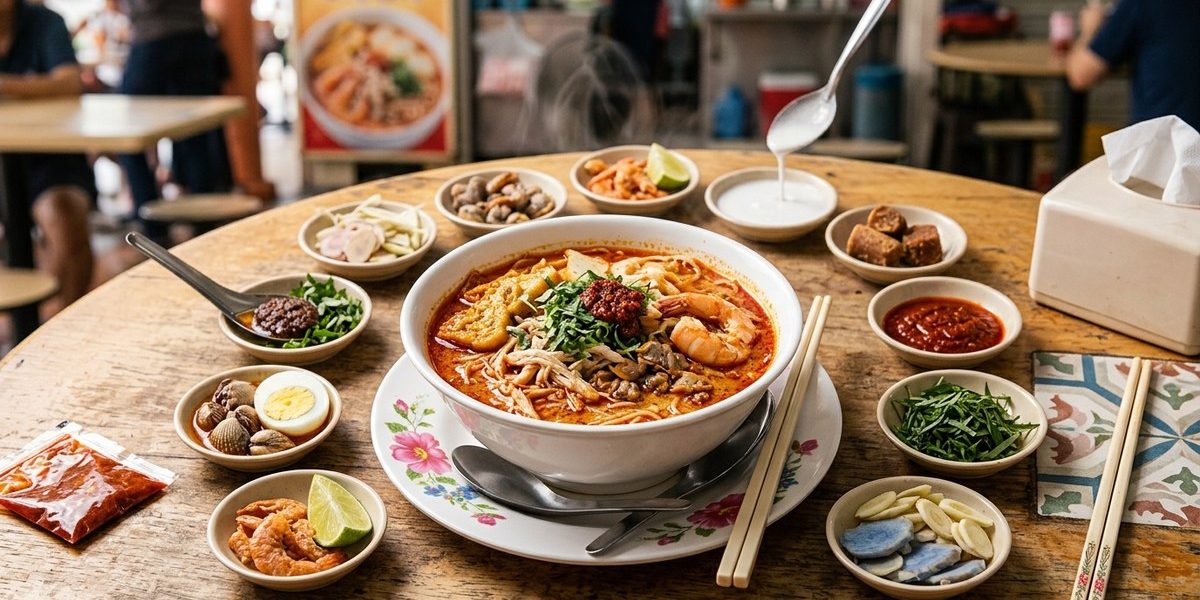
You know that feeling. You sit down at a laksa stall, the steam hits your face, and you take that first spoonful. When it is good, it is a symphony of spice, coconut richness, and briny depth. When it is off, something feels missing. You cannot quite name it, but you know it is not right.
The truth is, the difference between a forgettable bowl and a legendary one often comes down to ingredients you would never guess. Not the obvious players like coconut milk or chilli. We are talking about the hidden heroes. The secret weapons that hawkers have used for generations to build layers of flavour that keep us coming back.
A truly memorable laksa relies on more than just curry powder and coconut milk. Ingredients like hae ko (shrimp paste), candlenuts, and banana bud add crucial depth, texture, and authenticity. Knowing what to look for helps you spot the stalls that care about tradition. This guide reveals the eight surprising ingredients that separate an average laksa from a bowl worth travelling across the island for.
The Fermented Secret: Hae Ko
Ask any seasoned hawker what makes their laksa stand out, and many will point to one ingredient: hae ko. This thick, dark brown shrimp paste is nothing like the bottled versions you find in supermarkets. It is a concentrated fermented paste made from krill and salt. The fermentation process can take months.
A teaspoon of hae ko adds an almost meaty, savoury punch. It is the umami bomb that makes the broth linger on your tongue. Without it, the laksa can taste flat, even if you load it with coconut milk. The best stalls guard their hae ko source like a family heirloom.
“Hae ko is the backbone of our laksa,” says the third-generation owner of a well-known Katong stall. “Without it, you are just eating curry soup.”
Candlenuts for Body, Not Heat
Many home cooks assume the thickness of laksa gravy comes from extra coconut milk or flour. The real trick is candlenuts, known locally as buah keras. These waxy nuts are ground into a paste and added to the rempah (spice paste).
Candlenuts do not add spiciness. Instead, they release natural oils that emulsify the gravy. The result is a silky, rich texture that coats the noodles perfectly. Some stalls use commercial thickeners, but purists insist on candlenuts. They say the difference is night and day.
If you see a stall using fresh candlenuts, you know they respect the craft. It is a sign of a hawker who has not taken shortcuts.
The Sour Note: Tamarind or Asam
Laksa is often thought of as purely rich and spicy. But the best versions have a subtle sourness that cuts through the fat. This comes from tamarind, or asam jawa. A small amount of tamarind pulp is soaked in water and strained into the gravy.
This sour note is not sharp or obvious. It works behind the scenes. It balances the coconut milk and makes each spoonful feel lighter. Without it, the laksa can feel heavy and cloying after a few bites. The tamarind is the reason you can finish the whole bowl without feeling overwhelmed.
Some stalls use vinegar as a substitute. It does not work the same way. Real tamarind adds a fruity complexity that vinegar cannot match.
Vietnamese Mint or Laksa Leaf
You have probably seen the green leaves floating in your laksa. They are not just garnish. These are daun laksa, also known as Vietnamese mint or laksa leaf. The herb has a sharp, peppery flavour with hints of lemon.
When the leaves are bruised or torn into the hot broth, they release volatile oils that wake up the entire dish. The aroma is distinctive. It tells your brain, “This is laksa.” Stalls that skimp on fresh daun laksa are easy to spot. Their broth smells one-dimensional.
Always look for stalls that add the leaves fresh, not dried. The difference in fragrance is huge.
The Sweetness of Dried Shrimp
Another surprising ingredient is dried shrimp, or hee bee. These tiny, sun-dried crustaceans look unassuming. But when they are ground into a powder and added to the rempah, they release an intense, concentrated seafood flavour.
Dried shrimp provide a sweetness that does not come from sugar. It is a natural, savoury sweetness that builds the broth’s complexity. In fact, many stalls use a combination of fresh shrimp and dried shrimp. The fresh shrimp give body. The dried shrimp give depth.
If a laksa tastes “hollow” or lacks a lingering aftertaste, it probably does not have enough dried shrimp in the mix.
The Smoky Secret: Roasted Onions
Some of the most surprising ingredients in laksa are the ones you cannot see. Roasted onions are one of them. Whole shallots are charred over a flame until the skins blacken. Then they are blended into the rempah.
This adds a smoky, slightly bitter note that contrasts with the sweetness of the coconut milk. It is the same principle used in some Thai curries. The bitterness makes the other flavours pop. It is a subtle trick, but once you know it, you can taste it in every great bowl.
Stalls that skip this step often have a one-note sweetness. It is pleasant, but it is not memorable.
The Banana Bud: A Textural Surprise
Not all laksa comes with a banana bud, or jantung pisang. But when it does, you are in for a treat. The banana bud is the dark purple flower that hangs at the end of a banana bunch. It is sliced thin and added to the gravy.
What does it do? It adds a slight crunch and a vegetal bitterness that cuts through the richness. It also absorbs the gravy, so each piece becomes a flavour sponge. Some stalls use it only during certain seasons. Others make it a permanent fixture.
If you see a stall offering laksa with banana bud, order it. It is a mark of a hawker who values texture and tradition.
The Final Touch: Blachan
Blachan is the Malaysian and Singaporean version of shrimp paste. Unlike hae ko, which is a thick paste, blachan is a dried block that is toasted or fried before use. A small pinch of toasted blachan is crumbled into the laksa rempah.
The toasting process releases a pungent, funky aroma that some people find strong. But in the context of the full bowl, it adds a layer of savoury depth that is unmistakable. It is the ingredient that makes you think, “This tastes like real hawker food.”
Blachan is also a common ingredient in other dishes, like the one featured in our article about why this Toa Payoh rojak stall’s shrimp paste has a cult following.
Common Mistakes Home Cooks Make
Many home cooks try to recreate laksa at home and end up disappointed. Here are the most common mistakes and how to avoid them.
| Mistake | Why It Happens | The Fix |
|---|---|---|
| Using too much coconut milk | It makes the gravy oily and heavy | Balance with tamarind and candlenut paste |
| Skipping the fermentation step | The broth lacks depth | Add hae ko or blachan |
| Using dried herbs instead of fresh daun laksa | The aroma is weak | Always use fresh laksa leaf |
| Overcooking the rempah | The spices become bitter | Toast spices gently, do not burn them |
| Not using candlenuts | The gravy is thin and watery | Grind candlenuts into a fine paste |
How to Taste Laksa Like a Pro
Next time you order a bowl, try this simple process. It will help you appreciate the surprising ingredients in laksa.
- Smell the broth first. Can you detect the peppery note of daun laksa?
- Take a small spoonful without noodles. Notice the texture. Is it silky or watery?
- Look for a slight sourness on the sides of your tongue. That is the tamarind.
- Swallow and wait five seconds. Does the flavour linger? That is the dried shrimp and hae ko.
- Check for any smoky or bitter notes. That is the roasted onion or blachan.
If all five elements are present, you have found a top-tier laksa stall.
Where to Find Laksa That Uses These Ingredients
If you want to taste these ingredients in action, head to the Katong and Joo Chiat area. Many of the older stalls still follow traditional methods. For a full list of places to try, check out our guide to 15 laksa variations across Singapore you need to try before you die.
Another great spot is the East Coast area. The stalls there have been serving laksa for decades. They know the importance of these surprising ingredients.
For those interested in the broader heritage of this dish, read about the evolution of Katong laksa and how its heritage recipe has been passed down through time.
The Ingredients That Define a Master
The difference between a good laksa and a great one is not luck. It is knowledge. It is knowing that a pinch of blachan, a spoonful of tamarind, and a handful of fresh laksa leaf can transform a bowl from ordinary to extraordinary.
The next time you eat laksa, pay attention. Look for the signs. Taste for the depth. And appreciate the hawkers who still use these surprising ingredients. They are the ones keeping Singapore’s food heritage alive.
Now go out there and find your perfect bowl. Your taste buds will thank you.