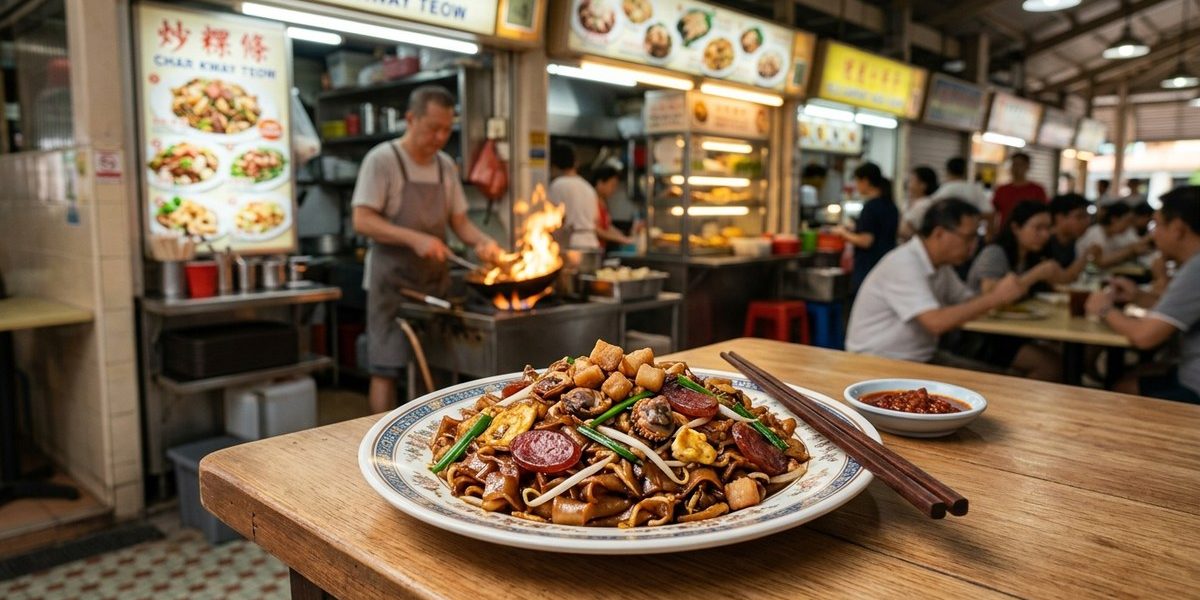
There’s nothing quite like the smell of wok hei drifting through a hawker centre. The sizzle of flat rice noodles hitting a scorching hot wok, the quick toss of dark soy sauce, the pop of cockles and slices of Chinese sausage. For many of us, the search for the best char kway teow is a lifelong pursuit. Every Singaporean has a favourite stall, and every tourist wants to know which one is worth the queue. But with hundreds of stalls across the island, how do you separate the great from the merely decent? This guide gives you a simple method to find the best char kway teow at any hawker centre, so you never waste your calories on a sad plate of soggy noodles again.
To find the best char kway teow, look for three signs: a visible queue of locals, a wok that’s blackened from years of use, and a stall that serves only this dish. The greatest plates come from hawkers who have mastered the art of wok hei. They use fresh cockles, good quality lap cheong, and fry each order separately. Avoid stalls that pre-cook in bulk or use excessive oil.
What Makes a Great Char Kway Teow
Before you can judge a bowl, you need to understand the components. A perfect plate of char kway teow is about balance. The noodles should be flat and slightly chewy, coated evenly in a dark caramelised sauce made from dark soy, light soy, and sometimes a touch of belachan. The wok hei that elusive smoky flavour must be present but not overpowering. The cockles should be plump and barely cooked, while the bean sprouts offer a crunchy contrast. Lap cheong (Chinese sausage) adds sweetness and a slight saltiness. A good hawker knows when to toss and when to rest the wok, letting the heat do its job.
Most stalls offer versions with or without cockles, and some add prawns or fishcake. But the core remains the same. If a stall adds too much oil to prevent sticking, the noodles will be greasy. If they cook in batches and reheat, the wok hei is lost. The best char kway teow is always made to order, one plate at a time.
The Five Signs of an Outstanding Char Kway Teow Stall
When you walk into a hawker centre, use these five indicators to zero in on the top stall.
- A long queue of locals, especially seniors. Tourists might not know the difference, but aunties and uncles who have eaten at that stall for decades will queue patiently. If you see a line of mostly Singaporeans aged 50 and above, you’re in the right place.
- A dedicated stall that specialises in char kway teow. A stall that also sells prawn noodles, fried rice, and chicken chop is likely spreading itself too thin. The best stalls focus on one or two dishes. They know their wok, their heat control, and their sauce exactly.
- The wok looks like it has been through a war. A well seasoned, blackened wok is a sign of countless orders. It holds heat better and imparts deeper flavour. A shiny new wok suggests the stall is either very new or the chef doesn’t use it enough.
- They fry each order individually. Watch the stallholder. If they are tossing small batches one by one, that’s good. If they are stirring a huge pile of noodles in a giant wok and then portioning out, move on. The wok hei comes from small batches with high heat.
- They use fresh cockles and real lap cheong. Some stalls substitute cheaper frozen cockles that are tiny and rubbery. A great char kway teow has plump, juicy cockles that burst in your mouth. The lap cheong should be sliced thin and slightly caramelised.
Common Mistakes to Avoid When Judging Char Kway Teow
Even seasoned foodies can be fooled. Here is a table of common pitfalls and what you should actually look for.
| What you might think | The truth |
|---|---|
| More oil means more flavour | Good char kway teow is not greasy. The noodles should glisten, not pool oil. |
| A dark colour means more taste | Dark soy gives colour, but an authentic plate uses a balanced mix of light and dark soy. Burnt black noodles often mean the wok was too hot or the chef rushed. |
| Expensive ingredients = better quality | Lap cheong and cockles matter, but technique is more important. A humble stall with limited ingredients can still wow you if the hawker has skill. |
| Best served only at lunch | Many old school hawkers open for breakfast or dinner only. Check timings. Some of the best stalls sell out by noon. |
| A celebrity endorsement guarantees a good plate | A photo with a famous person does not guarantee taste. Follow the locals, not the influencers. |
How to Order Like a Local
Once you have spotted a promising stall, do not hesitate. Walk up confidently and place your order. Here’s a step by step guide.
- Say “char kway teow, one plate, no hum” if you want it without cockles. Many stalls also offer “siao hum” (add more cockles).
- For extra wok hei, ask: “Can you fry until a bit more burn?” Some hawkers will happily oblige.
- If you want it wetter (more sauce), ask for “wet”. If you want it dry, say “dry”. Most stalls serve a semi dry version by default.
- Specify “less oil” or “less sweet” if you have dietary preferences. Good hawkers can adjust.
- Always pay attention to the queue number. Some stalls use a colour coded system. Listen for your number or plate.
“The secret to a good char kway teow is patience. You cannot rush the wok hei. Each plate needs exactly 45 seconds of high heat, then a rest. Too long and the noodles burn. Too short and they taste raw.” Uncle Tan, a third generation hawker from Hougang.
Where to Start Your Search
You do not need to travel across the island. Start in your own neighbourhood. Some of the best char kway teow comes from unassuming stalls in heartland hawker centres. For example, the stall at 724 Ang Mo Kio (sometimes called AMK Fried Kway Teow) draws a crowd every morning. Over in the east, Joo Chiat Place Fried Kway Teow has been around for decades. And if you are near Outram Park, the stall there is often cited by Michelin guide inspectors.
To get an even deeper look at the stories behind these stalls, check out our piece on Meet the 78-Year-Old Uncle Behind Chinatown’s Best Char Kway Teow. It’s a wonderful example of how dedication and tradition create something truly special.
If you are open to trying other hawker classics alongside your char kway teow hunt, our guide to 10 Hawker Stalls Only Locals Know About will help you plan a full day of eating.
The Science of Wok Hei
Wok hei is not magic. It comes from extreme heat and precise timing. A professional wok can reach temperatures above 400 degrees Celsius. When the noodles hit the metal, the sugars in the soy sauce caramelise instantly, and the smoke from the charred seasoning infuses the dish. This is why ordering at peak hours matters. The wok is hottest when the stall is busy. A slow weekday afternoon might give you a less smoky plate.
Some hawkers add a touch of lard to boost flavour. Others rely on a well seasoned wok that has been used for years. The best stalls never wash their wok with soap. They simply wipe it clean after each batch, preserving the seasoned layer. That dark coating is pure umami.
Avoiding Tourist Traps
Hawker centres near popular attractions like Chinatown Food Street or Lau Pa Sat often have stalls that cater to tourists. The prices are higher, and the quality can be inconsistent. Do not be afraid to walk 10 minutes away to a residential estate. For instance, the hawker centre at Golden Mile Food Centre has several char kway teow stalls that are beloved by locals but sees less tourist traffic. Similarly, the stalls in Tiong Bahru Market (upstairs) offer excellent versions without the queues of the downstairs chicken rice stalls.
If you are a tourist staying in the city, take a short MRT ride to a heartland centre. The trip will be worth it.
Your Next Plate of Char Kway Teow Awaits
Now you have a clear method. Next time you walk into a hawker centre, scan for the signs. Look at the queue, examine the wok, watch how the hawker works. Order with confidence, and enjoy every smoky, savoury mouthful. The best char kway teow in Singapore is out there, waiting for you to find it. Start with your neighbourhood, then explore further. Each plate tells a story of experience, heat, and love. Happy eating.